
A newborn can ride in a stroller briefly, but only in a fully reclined, newborn-safe position with close supervision.
Knowing how long can a newborn be in a stroller is important because young babies have weak neck muscles and limited head control. The safest choice depends on the stroller design, your baby’s age, and whether your baby is lying flat or sitting upright. This guide explains safe stroller use, sleep risks, time limits, warning signs, and practical tips based on pediatric safety guidance and real-world parenting needs.
How Long Can a Newborn Be in a Stroller?
There is no single time limit that fits every newborn. A healthy baby may go on a short stroller walk in a bassinet or fully flat newborn-approved attachment. However, a newborn should not spend long periods in a standard upright stroller seat.
For most families, a short outing of about 30 to 60 minutes is a sensible starting point. This is a practical guideline, not a strict medical rule. Your baby may need a break sooner if they seem warm, uncomfortable, hungry, or sleepy.
How long can a newborn be in a stroller also depends on the stroller’s instructions. Some strollers are safe from birth with a flat bassinet. Others are designed only for babies who can sit with good head control, often around 6 months.
Check these points before each trip:
- The stroller is approved for newborn use.
- The seat reclines fully or the bassinet provides a firm, flat surface.
- Your baby’s head stays centered and supported.
- The harness fits correctly.
- Your baby’s face remains visible.
- The stroller stays in the shade and has good airflow.
- You check your baby often.
If your newborn falls asleep, move them to a firm, flat sleep surface as soon as practical. Sitting devices are not recommended as routine sleep spaces because a baby’s head can fall forward and affect breathing.
Why Newborns Need Special Stroller Support
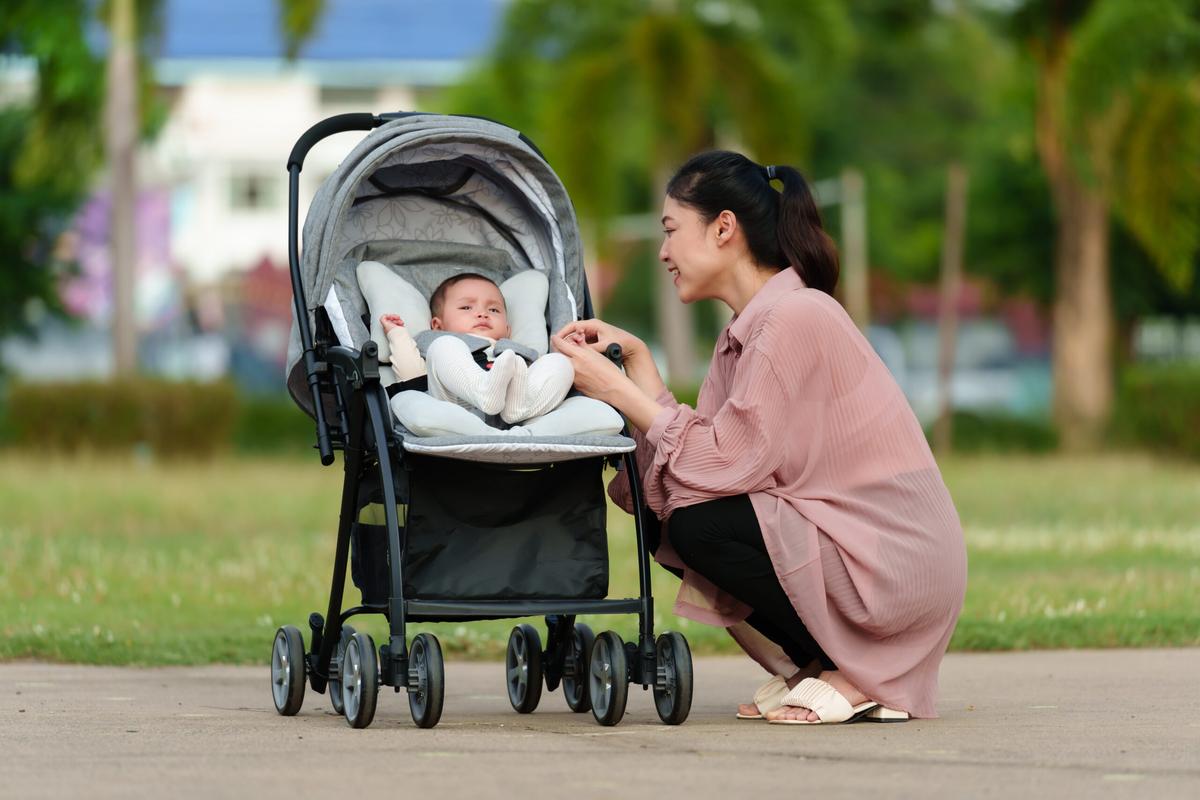
Newborns are not small versions of older babies. Their neck, trunk, and airway muscles are still developing. They cannot reliably lift or reposition their head if their chin drops toward their chest.
An upright or partly reclined stroller can place a newborn in a curled position. This may look comfortable, but the position can reduce airflow. The risk is greater when a baby is asleep, tightly bundled, or placed in a seat that does not fit their body.
A newborn-safe stroller should support the baby like a small bed. Look for:
- A firm, flat bassinet.
- A well-supported head and body.
- A five-point harness when the design requires one.
- No loose pillows, blankets, or padded inserts unless supplied and approved by the manufacturer.
- A clear view of the baby’s face.
- Strong ventilation on warm days.
The American Academy of Pediatrics recommends moving infants from sitting devices to a firm, flat sleep surface when they fall asleep. This guidance includes car seats, swings, bouncers, and similar products. A stroller bassinet designed and approved for sleep may be different, but you should still follow its manual closely.
Stroller Bassinet vs. Upright Stroller Seat
The stroller part matters more than the stroller brand. A newborn may be safe in one configuration but not another.
Newborn stroller bassinet
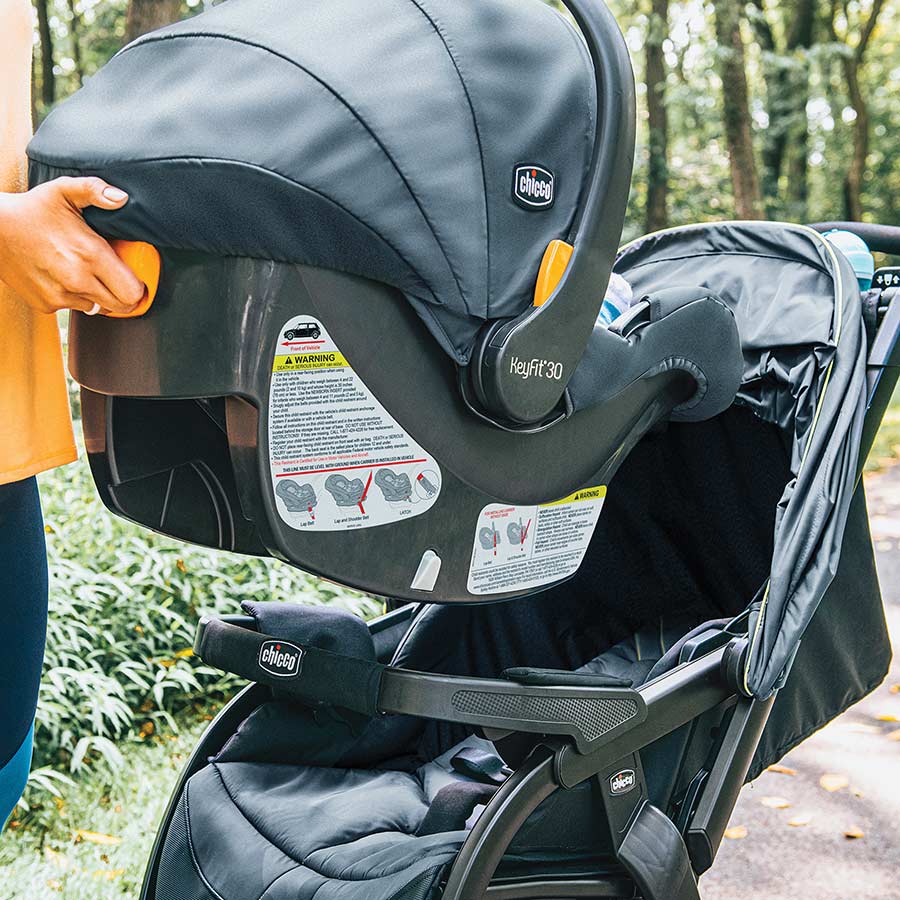
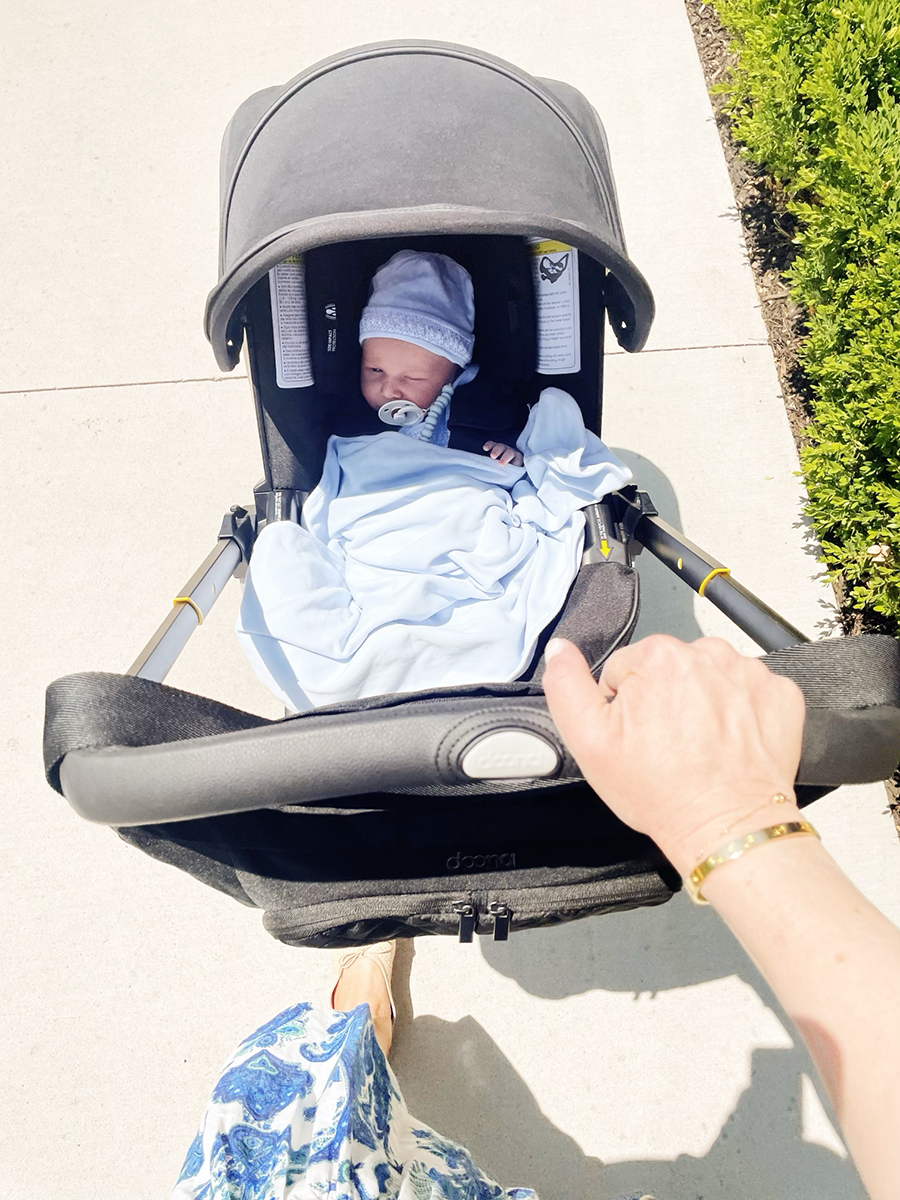
A bassinet lets your baby lie flat. It is often the best stroller option for the first months of life. The mattress should be firm, and the baby should lie on their back with no loose items around the face.
Even with a bassinet, avoid treating every outing as an all-day nap. Check your baby often, take regular breaks, and watch for signs of overheating or discomfort.
Fully reclined stroller seat
Some stroller seats recline flat and are approved for use from birth. Read the manual to confirm that the seat is safe for a newborn, not simply “reclining.”
A flat position does not always mean newborn-safe. The seat may lack enough head support, or the harness may not fit a very small baby.
Upright stroller seat
An upright seat is usually for older babies who can sit with strong head and trunk control. Many manufacturers set this point at about 6 months, but the exact age varies.
Never place a newborn in an upright seat just because they seem calm. A baby’s ability to stay quiet does not show that their airway and body are properly supported.
How Long Can a Newborn Be in a Stroller Car Seat?
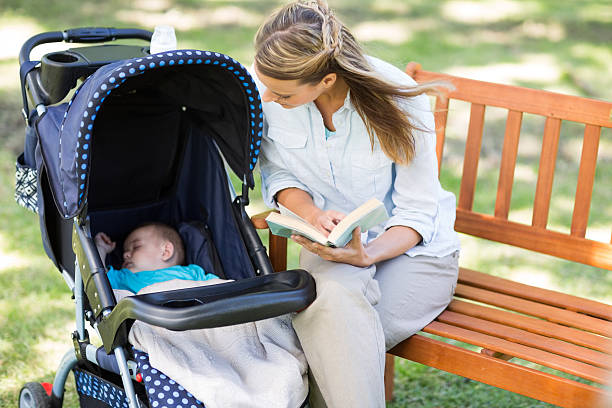
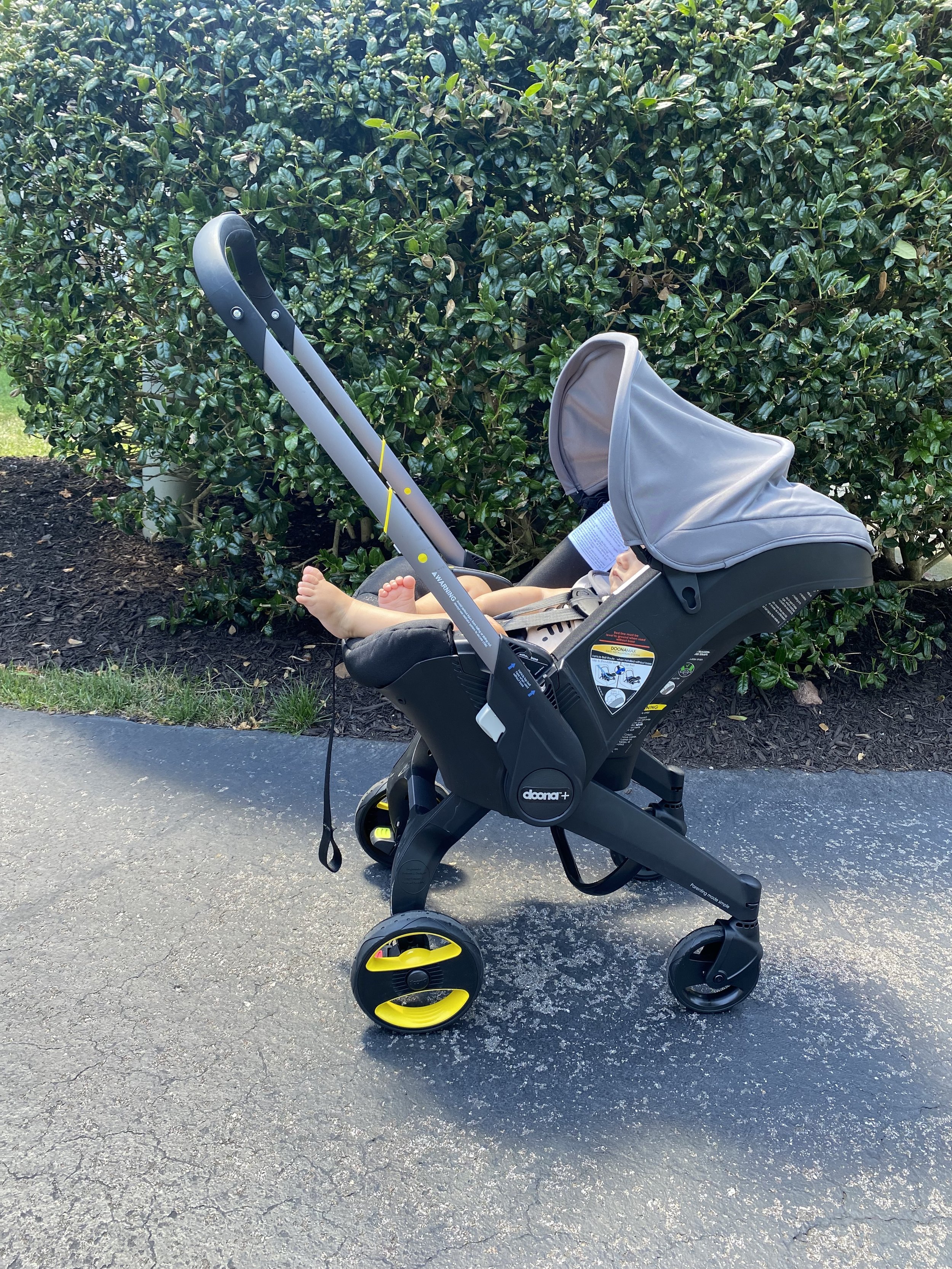
A stroller travel system can be convenient, but a car seat is not a replacement for a bassinet. Car seats are made to protect babies during travel in a vehicle. They are not intended for long walks, routine naps, or extended stroller use.
If you use a car seat with a stroller:
- Use it only when the car seat and stroller are designed to work together.
- Keep the seat at the correct angle.
- Buckle your baby properly.
- Keep the baby’s face uncovered.
- Watch the baby continuously.
- Move the baby to a firm, flat sleep surface after the trip.
- Avoid adding head supports or inserts that did not come with the seat.
How long can a newborn be in a stroller car seat? Keep the time as short as possible outside the vehicle. For a brief transfer or short errand, it may be practical. For a long walk, choose a newborn-approved bassinet instead.
Many child safety experts use two hours as an upper limit for a car seat journey, with breaks during longer travel. This is not a target for stroller use. Less time is better when the car seat is outside the vehicle.

Safe Time Limits for Different Stroller Setups
The safest answer to how long can a newborn be in a stroller changes with the setup.
| Stroller setup | Newborn use | Practical guidance |
|---|---|---|
| Approved flat bassinet | Often safe from birth | Start with short outings and check the baby often |
| Newborn-approved flat recline | May be safe from birth | Follow the manual and watch head position |
| Semi-reclined seat | Usually not ideal for newborns | Use only if the manufacturer clearly approves it |
| Upright seat | Usually for older babies | Wait until the baby has strong head control |
| Infant car seat on stroller | For short trips | Avoid extended walks or routine sleep |
These time suggestions are not a substitute for medical advice. A premature baby, a baby with low muscle tone, or a baby with breathing or heart problems may need different guidance.
If you are unsure, call your pediatrician and ask about your baby’s specific stroller setup. You can also contact the stroller manufacturer. A product label can tell you the intended age and weight, but it cannot assess your individual baby.

Signs Your Newborn Needs a Break
Babies may not cry when they are having trouble. Some become very quiet. That is why visual checks matter during every stroller trip.
Stop and check your baby if you notice:
- The chin drops toward the chest.
- The head leans sharply to one side.
- The face is covered.
- Breathing sounds noisy, strained, or unusual.
- The skin feels hot or sweaty.
- The baby looks pale, blue, flushed, or unusually sleepy.
- The baby keeps slumping despite correct harness use.
- The baby is hard to wake.
- The baby seems distressed or has repeated coughing.
Move your baby to a safe, flat surface if breathing seems difficult or your baby is unusually hard to wake. Call emergency services for serious breathing problems, blue lips or skin, limpness, or unresponsiveness.
Do not cover the stroller with a blanket to block the sun. Even a light cloth can trap heat and reduce airflow. Use the stroller canopy, seek shade, and dress your baby in light layers.
How to Use a Stroller Safely With a Newborn
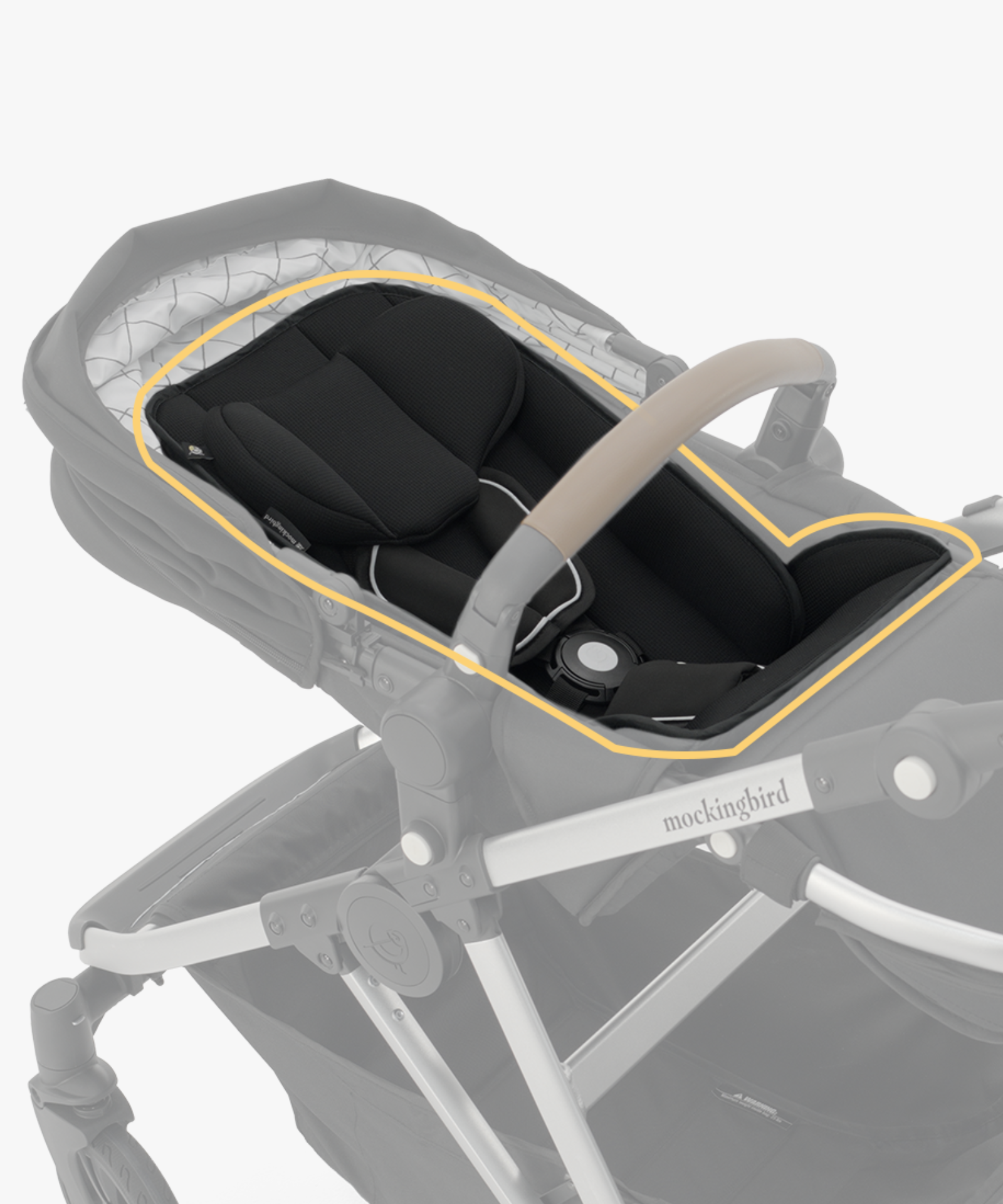
A safe stroller routine starts before you leave home. Read the manual, inspect the frame, and test the brakes. Make sure every accessory is approved for that stroller model.
Use these steps:
- Choose a bassinet or newborn-approved flat position.
- Place your baby on their back.
- Fasten the harness as directed.
- Check that the baby’s head and neck stay in a neutral position.
- Keep the face open and visible.
- Use the canopy for shade, but keep air moving.
- Check your baby every 10 to 15 minutes at first.
- Stop for feeding, diaper changes, and comfort.
- Remove your baby from the stroller when you arrive home if they are asleep.
- Store the stroller safely with the brakes locked.
Avoid thick coats under the harness. Bulky clothing can make the straps too loose during a sudden stop. Use thin layers and place a blanket over the secured harness only when needed.
Never leave a newborn alone in a stroller. Do not use a stroller on stairs, escalators, rough roads, or near traffic without full control.
Weather and Environment Matter
Temperature can change how long can a newborn be in a stroller. Newborns do not control body heat as well as adults, so hot or cold weather calls for extra care.
On warm days:
- Walk during the cooler morning or evening hours.
- Use shade and breathable clothing.
- Check the baby’s chest or back, not just hands and feet.
- Watch for sweating, flushed skin, fast breathing, or unusual sleepiness.
- Avoid placing the stroller in direct sun.
On cold days:
- Dress your baby in layers.
- Keep the face clear.
- Check the chest and back for warmth.
- Avoid long outings in very cold or windy weather.
- Watch for pale, cold skin or unusual fussiness.
Air quality also matters. Avoid busy roads during heavy traffic, wildfire smoke, and poor air quality alerts. A quiet park may be a better choice than a crowded sidewalk beside traffic.
Common Mistakes Parents Make
The most common mistake is assuming that a sleeping baby is always comfortable. Sleep can hide a poor head position, overheating, or a blocked airway. A quiet baby still needs frequent checks.
Another mistake is using a stroller accessory that looks soft and safe but was not made for that model. Extra cushions can change the angle of the baby’s head or interfere with the harness.
Other mistakes include:
- Keeping a newborn in a car seat on the stroller for a long walk.
- Covering the stroller with a blanket.
- Ignoring the manufacturer’s age limits.
- Using an upright seat before the baby has head control.
- Leaving the stroller near stairs or a pool.
- Assuming a reclined position is the same as a flat position.
- Forgetting to lock the brakes during stops.
A useful lesson from many new-parent routines is to plan shorter trips first. A 20-minute walk lets you learn how your baby responds without being far from home. You can increase outings slowly when the setup works well.
Planning a Longer Outing
Sometimes you need to spend several hours away from home. The solution is not to keep a newborn in the stroller continuously. Plan regular stops where you can hold, feed, change, and reposition your baby.
Pack:
- Diapers and wipes.
- Extra clothes.
- A feeding supply.
- A safe, thin blanket.
- Weather-appropriate layers.
- A portable changing pad.
- Water and snacks for the caregiver.
- A phone for emergencies.
During a long day, alternate stroller time with holding your baby or using a safe flat sleep space. If you are visiting a mall, museum, or friend’s home, ask whether there is a quiet place for feeding and a flat crib or bassinet.
For air travel, remember that airport and airline rules may differ from stroller safety advice. A stroller may be checked at the gate, while a car seat may require its own approved airplane seat. Confirm the rules before traveling.
When to Ask a Pediatrician
Most healthy newborns can enjoy short walks in a suitable stroller. However, ask your pediatrician before using a stroller if your baby was premature or has a medical condition.
Get professional guidance if your baby has:
- Breathing problems.
- Heart disease.
- Low muscle tone.
- Reflux with choking or frequent coughing.
- Poor weight gain.
- A recent illness.
- A need for oxygen or other medical equipment.
- Difficulty staying awake or feeding well.
A pediatrician can help you decide whether your baby needs extra head support, a special position, or shorter outings. Do not use homemade supports to solve a positioning problem.
Frequently Asked Questions About How Long Can a Newborn Be in a Stroller
How long can a newborn be in a stroller bassinet?
A newborn may use an approved stroller bassinet for a short outing, often about 30 to 60 minutes at first. Check your baby often, take breaks, and follow the bassinet’s instructions.
Can a newborn sleep in a stroller?
A newborn should not routinely sleep in a stroller unless the stroller attachment is specifically designed and approved as a safe sleep space. If your baby falls asleep in a regular stroller seat, move them to a firm, flat sleep surface as soon as practical.
Can a newborn ride in an upright stroller?
Most newborns should not ride in an upright stroller seat because they lack head and neck control. Use the seat only when the manufacturer approves it for newborns and provides adequate support.
How long can a newborn be in a stroller car seat?
Keep stroller car seat use brief and limited to necessary travel or short transfers. A car seat is designed for vehicle safety, not long walks or routine sleep.
What is the best stroller position for a newborn?
The best position is usually flat, with the baby on their back and the face fully visible. Use a bassinet or flat recline only when the manufacturer clearly approves it for newborn use.
Can I cover my newborn’s stroller with a blanket?
No. A blanket can trap heat and reduce airflow. Use the canopy, stay in the shade, and dress your baby in light layers suitable for the weather.
How do I know if my newborn is ready for a stroller seat?
Look at the manufacturer’s requirements, not only your baby’s age. Most babies need strong head and trunk control before using a standard upright stroller seat.
Conclusion
How long can a newborn be in a stroller depends on the stroller design, the baby’s position, the weather, and the baby’s health. A short outing in a newborn-approved bassinet or fully flat attachment is usually the safest choice. Avoid long periods in upright seats and car seats, and move a sleeping baby to a firm, flat surface.
Start with short walks, check your baby often, and follow the stroller manual closely. If your newborn has medical needs or you are unsure about the safest position, ask your pediatrician before going out. Share this guide with another new parent, and explore more trusted infant safety resources as your baby grows.