
Most babies stop needing a swaddle between 2 and 4 months, or once they can roll.
I’ve helped many parents make the swaddle-to-sleep-sack switch and studied pediatric guidance to give clear, practical advice about when do you stop swaddling a baby. This article explains the signs, risks, step-by-step transitions, and safe alternatives so you can make a calm, confident decision for your child.
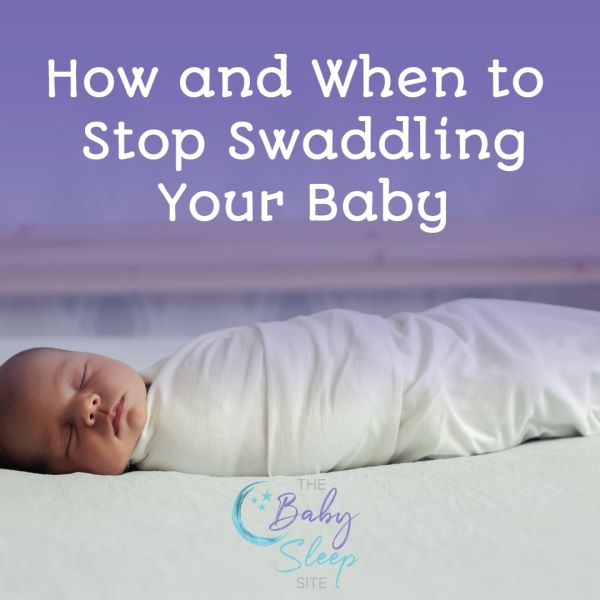
When do you stop swaddling a baby?
Swaddling soothes newborns by mimicking the snug feel of the womb. Parents often ask when do you stop swaddling a baby because sleep needs and safety change quickly in the first months. Most guidance points to stopping swaddling when your baby starts trying to roll, usually between 2 and 4 months. Stopping earlier or later depends on your baby’s development and how they respond to reduced movement.
Swaddling beyond rolling can raise safety concerns. Knowing the key milestones and watching your baby closely helps you choose the right moment to stop swaddling a baby. Use those cues rather than strictly following the calendar.

Signs your baby is ready to stop swaddling
Look for clear signals that answer when do you stop swaddling a baby for your family. Common signs include:
- Rolling over from back to tummy or attempting to roll. This is the most important cue.
- Strong arm movements or persistent pushing against the swaddle.
- Repeated wake-ups and fussiness that don’t improve with swaddling.
- Improved ability to self-soothe with hands near mouth or fingers.
- Physical growth that makes the swaddle too tight or uncomfortable.
When multiple signs appear together, it’s usually time to stop swaddling a baby and begin a gradual transition.

Risks of swaddling too long
Swaddling is safe when done correctly and stopped at the right time. But continuing to swaddle after rolling or using improper technique carries risks:
- Higher chance of rolling onto the stomach while still swaddled and unable to move arms to lift the head.
- Risk of hip problems if legs are tightly bound and cannot move freely.
- Overheating if layered clothing is used with a tight swaddle.
- Loose swaddles can come undone and cover the face, raising suffocation risk.
Understanding these risks helps answer when do you stop swaddling a baby in a safety-first way. Stop or change the swaddle method when your baby can roll or shows strong escape behavior.
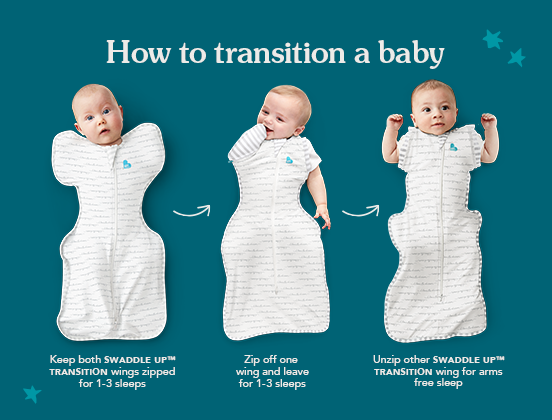
How to transition off swaddling — step-by-step
A gradual plan reduces sleep disruption and keeps safety front and center. Use these steps to transition when do you stop swaddling a baby:
Start with naps first
- Try one nap per day with your baby unswaddled or with one arm free. Naps are shorter and safer for experimenting.
One arm out
- Move to swaddling with one arm free for 3–5 days. This keeps some comfort while allowing self-soothing.
Both arms out or loose swaddle
- Switch to both arms out or a looser wrap for another 3–7 days. Watch how your baby handles movement.
Use a transitional product
- Introduce a zip-up swaddle that lets arms be down, or a wearable blanket. These preserve warmth and reduce startle while allowing movement.
Full unswaddled sleep
- Move to an unswaddled sleep sack when your baby reliably sleeps with arms free and doesn’t roll unexpectedly.
Keep changes gradual and give your baby time to adapt. This method answers when do you stop swaddling a baby in a practical way that reduces night wakings.

Alternatives to swaddling
If you’re wondering what to use after you stop swaddling a baby, consider these options:
Sleep sacks and wearable blankets
- Provide warmth without restricting arms or legs. Look for hip-friendly designs.
Transitional swaddles with adjustable arm options
- Let you free one or both arms while keeping the chest snug.
Swaddle-to-sleepsuits
- garments designed to feel snug but allow natural leg movement.
Calm-sleep routines
- White noise, consistent bedtime routines, and dim lights help replace the comfort of a swaddle.
Test a few options to find what helps your baby settle best after you stop swaddling a baby.

Safety tips for swaddling and stopping
Keep safety at the heart of your approach to when do you stop swaddling a baby. Follow these simple tips:
- Always place baby on their back to sleep.
- Stop swaddling when rolling begins or if baby consistently breaks free.
- Leave room at the hips: allow legs to bend and move.
- Use breathable fabrics and avoid overheating; check neck and chest for sweat.
- Ensure swaddles are snug at the shoulders but not tight around the hips or chest.
- Never cover the baby’s face or head with loose blankets or swaddles.
Safety-first choices make the transition smoother and reduce risks as you stop swaddling a baby.

Personal experience and practical tips
I worked with many parents who worried about when do you stop swaddling a baby. One family I coached switched to one-arm-out after their baby started subtle rolling attempts. Sleep worsened for two nights, then improved as the baby learned to self-soothe. A common lesson: expect short setbacks and stick to small, steady changes. Keep nighttime adjustments minimal at first and celebrate small wins, like longer naps or fewer startle wakes.

Frequently Asked Questions of when do you stop swaddling a baby
When is the earliest I should stop swaddling my baby?
Most experts suggest monitoring development rather than a strict age, but many babies start rolling at 2 months. Stop immediately if rolling begins to reduce risk.
Can I still swaddle a baby who rolls sometimes?
No. Once a baby can roll, swaddling becomes risky because they can roll onto their stomach and cannot use their arms to lift themselves. Transition to arm-free sleep options instead.
How long will my baby sleep better after stopping swaddling?
Some babies adjust within a few nights; others take one to two weeks. Gradual changes like one arm out often shorten the adjustment period.
Could stopping swaddling cause more night wakings?
Yes, you may see temporary increases in night wakings as your baby learns new ways to self-soothe. Consistent routines and quiet reassurance help reduce wakings sooner.
Are there safer swaddles or products for transitioning?
Yes. Look for swaddles that allow adjustable arm positions and hip-friendly designs. Sleep sacks and wearable blankets are also safe alternatives for most infants.
Conclusion
Knowing when do you stop swaddling a baby comes down to watching your child’s cues, prioritizing safety, and transitioning slowly. If your baby shows rolling, strong arm movements, or escape behaviors, begin a gentle plan: naps unswaddled, one arm out, then a sleep sack. Try options patiently, and expect a short adjustment period. Take action now by testing one small change tonight, and share your experience in the comments or subscribe for more practical infant-sleep tips.