
For families in the United States, thumb sucking is usually a normal part of infant development. Babies suck their thumbs because sucking is a built-in reflex that helps them feed, calm down, and feel secure. Most babies do not need treatment. The habit becomes more concerning when it continues often after the early toddler years or starts to affect the teeth, mouth, skin, sleep, or daily life.
The short answer
Babies suck their thumbs because sucking is natural and soothing. It begins as a feeding reflex before birth and may continue after birth as a way to:
- Calm themselves when tired, upset, or overstimulated
- Fall asleep
- Cope with changes or stress
- Explore their hands and surroundings
- Meet a need to suck between feeds


Thumb sucking does not usually mean a baby is hungry or anxious. It is often simply a comfort habit. The child’s age, how often they suck, and how strongly they suck matter more than the habit itself.

Why thumb sucking starts
Thumb sucking starts with a normal reflex called the sucking reflex. This reflex helps newborns draw milk from the breast or bottle. It is present before birth, which is why some babies suck their fingers or thumbs in ultrasound images.
As babies grow, sucking can serve more than one purpose. It may help them settle their bodies and manage strong feelings. A baby may suck a thumb after a loud sound, during a nap routine, or while adjusting to a new caregiver.
Common reasons babies suck their thumbs
Self-soothing: Sucking can lower a baby’s need for outside comfort. The baby has a familiar tool that is always close by.
Sleep support: Many babies suck their thumb as they become drowsy. The repeated motion can become part of their sleep routine.
Comfort during change: Travel, illness, teething, daycare, a new sibling, or a change in sleep can increase thumb sucking for a time.
Hunger or feeding needs: A baby who sucks a thumb between feeds may be hungry, but thumb sucking alone does not prove this. Look for other hunger signs, such as rooting, lip smacking, or increased alertness.
Teething and mouth exploration: Babies learn through their mouths. They may chew or suck on their hands while their teeth and jaws develop.
The habit may increase and decrease over time. A short increase during teething or stress is often temporary.
Is thumb sucking normal for babies?
Yes. Thumb sucking is common and usually harmless in babies and young toddlers. The American Academy of Pediatrics notes that non-nutritive sucking, such as thumb sucking or pacifier use, can be a normal way for infants to comfort themselves.
The main question is not whether a baby sucks a thumb. The better questions are:


- How old is the child?
- Does the child suck lightly or forcefully?
- Is the thumb in the mouth for long periods?
- Is the habit affecting feeding, sleep, skin, or teeth?
- Can the child stop during play or other activities?
A baby who sucks a thumb briefly while falling asleep is different from an older child who sucks forcefully for many hours each day.
Thumb sucking and sleep safety
never attach a thumb, finger, mitten, or other item to a baby’s hand to keep the thumb in or out of the mouth. Loose items can create a safety risk during sleep.
Follow safe-sleep guidance from the American Academy of Pediatrics:
- Place the baby on their back for every sleep.
- Use a firm, flat sleep surface.
- Keep blankets, pillows, toys, and other loose items out of the sleep space.
- Share a room, but not a bed, when possible.
Do not use homemade restraints, tight gloves, tape, or bitter substances on the thumb. These methods can injure the skin, interfere with circulation, or create distress.

Does thumb sucking cause problems?
Thumb sucking can affect the mouth when it is frequent, forceful, and continues as permanent teeth begin to come in. Short-term infant thumb sucking usually does not cause lasting harm.
Possible effects include:
- A gap between the upper and lower front teeth
- An open bite, in which the front teeth do not meet
- Changes in the roof of the mouth
- Narrowing of the upper dental arch
- Chapped, cracked, or infected skin on the thumb
- Soreness or thick skin from repeated sucking
The American Academy of Pediatric Dentistry explains that the effect depends on the habit’s frequency, length, and intensity. In simple terms, a child who sucks strongly and often has a higher chance of dental changes than a child who briefly sucks a thumb at bedtime.
Can thumb sucking delay speech?
Thumb sucking does not automatically cause a speech delay. However, a thumb in the mouth can limit practice with sounds and clear tongue movement. Dental changes may also affect how some sounds are made.
If a child has unclear speech, hearing concerns, trouble eating, or a habit that blocks normal mouth movement, ask the child’s pediatrician or a speech-language pathologist for an assessment. Do not assume thumb sucking is the only cause.
Can thumb sucking cause infections?
The thumb can carry germs into the mouth, especially when a baby crawls, touches shared surfaces, or puts hands in the dirt. This does not mean every thumb-sucking baby will get sick.
Wash the baby’s hands as part of normal hygiene. Keep the skin clean and dry. Seek medical care if the thumb becomes very red, warm, swollen, painful, cracked, or drains pus.
Does thumb sucking change the face?
A long-lasting, forceful habit may affect the position of the teeth and the shape of the developing bite. It does not mean a baby’s face will change permanently. Early dental evaluation can identify changes and help the family decide whether action is needed.

When should parents worry about thumb sucking?
Parents should usually mention the habit at a routine visit if it is intense, causes injury, or continues into the preschool years. The need for help depends on the child’s development and the habit’s effects, not on one exact birthday.


Consider calling the child’s pediatrician or dentist when:
- The thumb has open sores, bleeding, swelling, or signs of infection
- The child cannot eat, drink, sleep, or play without sucking
- The habit causes pain or skin damage
- The child has dental changes or trouble biting food
- The habit continues strongly after age 3 or 4
- The child is being teased or feels upset about it
- Thumb sucking returns suddenly after the child had stopped
- You worry that sucking is replacing needed feeds
The American Academy of Pediatric Dentistry recommends that children establish a dental home by age 1. A dentist can check the teeth and bite without assuming that every thumb-sucking child needs treatment.
A simple age guide
| Child’s stage | What thumb sucking often means | What parents can do |
|---|---|---|
| Newborn to 12 months | Normal sucking reflex and comfort | Keep hands clean and follow safe sleep guidance |
| 1 to 2 years | Common self-soothing habit | Watch the pattern without shaming |
| Around 3 years | Habit may still occur, but regular use deserves attention | Ask the pediatric dentist about the bite |
| Around 4 years and older | Persistent or forceful sucking has a greater chance of affecting teeth | Use a gentle stop plan with professional guidance if needed |
| Any age | Pain, sores, feeding problems, or major distress | Contact the child’s health professional |
These ages are practical guideposts, not strict cutoffs. Some children stop earlier. Others need more time and support.

How to help a baby stop sucking their thumb
Most babies do not need a formal plan. For infants, the goal is not usually to force the thumb out. The goal is to meet the baby’s comfort and feeding needs while allowing the habit to fade naturally.
For babies under 2 years
Try these gentle steps:
- Check basic needs first. Offer a feed if the baby shows hunger cues. Check for a wet diaper, tiredness, heat, cold, or overstimulation.
- Keep a calm routine. Use the same short steps before naps and bedtime, such as dim lights, a quiet voice, and a cuddle.
- Offer other comfort. Hold the baby, rock them, sing, or use skin-to-skin contact when appropriate.
- Use a pacifier only if it fits your family’s plan. A pacifier may meet the need to suck, but it also has trade-offs. Never dip it in honey, sugar, or medicine.
- Avoid pulling the thumb out again and again. This can turn a normal habit into a struggle.
- Protect the skin. Use a clinician-approved moisturizer for dry skin, and ask a health professional before treating cracks or rash.
The American Academy of Pediatrics advises offering a pacifier at nap and bedtime once breastfeeding is well established, if the family chooses to use one. A pacifier should not be forced into a baby’s mouth, and it should not be attached to clothing or stuffed toys during sleep.
For toddlers and preschoolers
Older children can take part in a stop plan. Keep it simple:
- Choose one calm goal. For example, “Thumb stays out during books.”
- Find the trigger. Note whether sucking happens during sleep, car rides, screen time, boredom, or stress.
- Replace the action. Offer a cuddle, song, small toy, water cup, or another safe activity.
- Praise small wins. Say, “You kept your thumb out while we read.”
- Use a visual reminder if the child likes it. A sticker chart can mark effort, not perfection.
- Expect setbacks. Illness, travel, or a new routine may bring the habit back for a while.
Do not shame, threaten, mock, or punish the child. Shame can increase stress, and stress may increase the habit. Avoid bitter nail products, hot sauce, tape, and dental devices unless a qualified clinician recommends a specific treatment.
Thumb sucking versus pacifier use
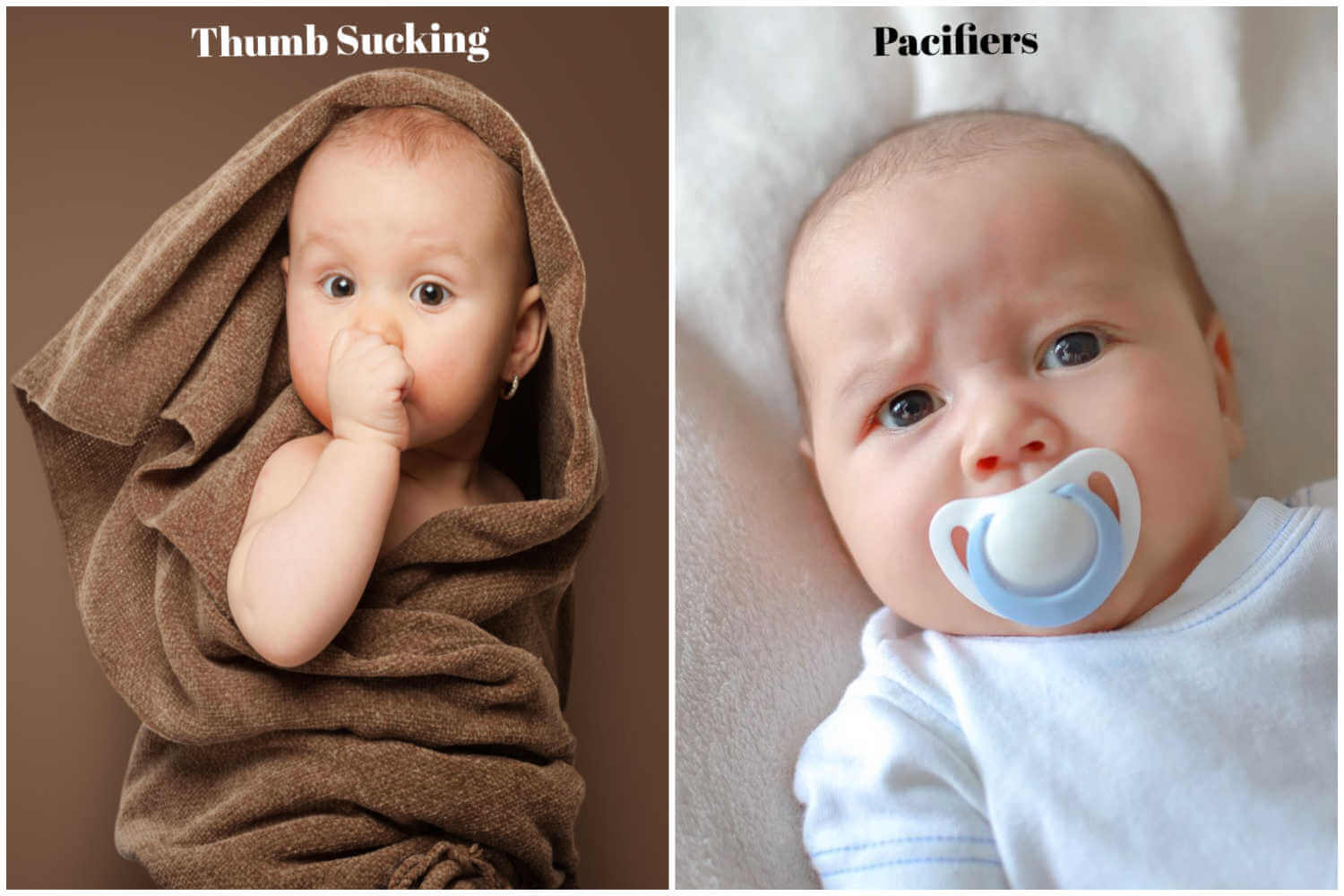
Both thumb sucking and pacifier use can satisfy a baby’s need to suck. Neither option is perfect for every family.
| Factor | Thumb sucking | Pacifier |
|---|---|---|
| Availability | Always with the child | Can be removed |
| Cleaning | The hand may touch many surfaces | Can be washed or replaced |
| Sleep association | May be hard to limit | Parents can set limits |
| Stopping | The child controls access | The caregiver controls access |
| Dental effects | Risk rises with frequent, forceful, long-term use | Risk also rises with prolonged use |
| Sleep guidance | Do not restrain the hand | A pacifier at sleep may reduce SIDS risk, according to AAP guidance |
A pacifier is not required. It is also not a guarantee against sudden infant death syndrome, or SIDS. Parents should continue to follow every part of safe-sleep guidance.
Never use a pacifier with a cord, clip, necklace, or stuffed attachment during sleep. Check the pacifier for cracks and replace it when damaged.
Common mistakes to avoid
Several common responses can make thumb sucking harder to manage.


Removing the thumb by force
Repeatedly pulling the thumb out may upset the child without addressing the reason for sucking. If the child is tired or overwhelmed, comfort may work better than correction.
Treating every thumb suck as a hunger sign
A thumb in the mouth can mean comfort, not hunger. Use the baby’s full set of feeding cues, growth pattern, and health visits to judge feeding needs.
Starting dental treatment too early
Most babies do not need an appliance or special program. Dental treatment is considered when a persistent habit affects the bite or does not respond to a gentle plan.
Using restraints or bitter products
These methods can cause injury and fear. They may also hide a problem instead of solving it. Ask a pediatrician or pediatric dentist for safer options.
Focusing only on stopping
A child may need help with sleep, anxiety, boredom, or transitions. Replace the comfort function, not just the thumb.

What to ask your child’s doctor or dentist
Bring these details to the appointment:
- The child’s age
- When thumb sucking happens
- How long each episode lasts
- Whether the child sucks lightly or forcefully
- Any skin damage
- Any changes in the bite or front teeth
- Feeding, sleep, or speech concerns
- Recent stress, illness, or routine changes
- What methods you have already tried
A pediatrician can assess feeding, growth, sleep, and general development. A pediatric dentist can examine the teeth, gums, palate, and bite. If speech is the main concern, a speech-language pathologist may be helpful.
Frequently asked questions
Why do babies suck their thumb instead of using a pacifier?
A thumb is always available and belongs to the baby. Some babies find it easier to keep a thumb in place than a pacifier. Others use both. This choice does not, by itself, show a problem.
Is thumb sucking a sign of anxiety?
Usually, no. Babies suck their thumbs because sucking is a normal reflex and a way to self-soothe. Older children may suck more during stress, but the habit alone cannot diagnose anxiety. Talk with a health professional if the child has ongoing fear, sleep problems, withdrawal, or major behavior changes.
Should I stop my baby from sucking their thumb at night?
Usually, do not wake or restrain a baby simply because they are sucking their thumb. Keep the sleep space safe. If the habit causes skin injury, feeding problems, or other concerns, ask the child’s pediatrician.
Does thumb sucking mean my baby is not getting enough milk?
Not by itself. Look for hunger cues, wet diapers, weight gain, feeding behavior, and guidance from the baby’s pediatrician. If you worry about intake, contact the pediatrician or a qualified lactation professional.
Will the teeth go back to normal after thumb sucking stops?
Some mild bite changes may improve after the habit ends, but the result depends on the child’s age, the duration and force of sucking, and the type of dental change. A pediatric dentist can monitor the bite and explain what may happen next.


Key takeaways
- Thumb sucking is usually a normal infant reflex and comfort habit.
- Most babies do not need treatment.
- Risk to the bite rises when sucking is forceful, frequent, and long-lasting.
- Do not shame, restrain, tape, or apply bitter products to the thumb.
- Keep the baby’s sleep space free of loose items and follow U.S. safe-sleep guidance.
- Ask a pediatrician or pediatric dentist about pain, skin injury, feeding problems, dental changes, or persistent sucking in the preschool years.
Conclusion
Babies suck their thumbs because sucking helps them feed, explore, and feel calm. In most cases, it is a temporary habit that fades as the child develops other ways to settle.
For now, focus on safe sleep, clean hands, responsive feeding, and gentle comfort. If thumb sucking is forceful, damages the skin, affects the teeth, or continues strongly beyond the toddler years, arrange a checkup with the child’s pediatrician or pediatric dentist.
