
A baby's soft spot usually closes between 12 and 18 months, though some close earlier or later.
Many parents wonder when does a baby's soft spot close, especially when they feel the soft, gently pulsing area on the top of the head. This area is called the fontanelle. It helps a baby’s skull grow around the developing brain and usually closes on its own as the skull bones join. This guide explains normal timing, what the soft spot should feel like, and which changes need medical care.
What Is a Baby’s Soft Spot?
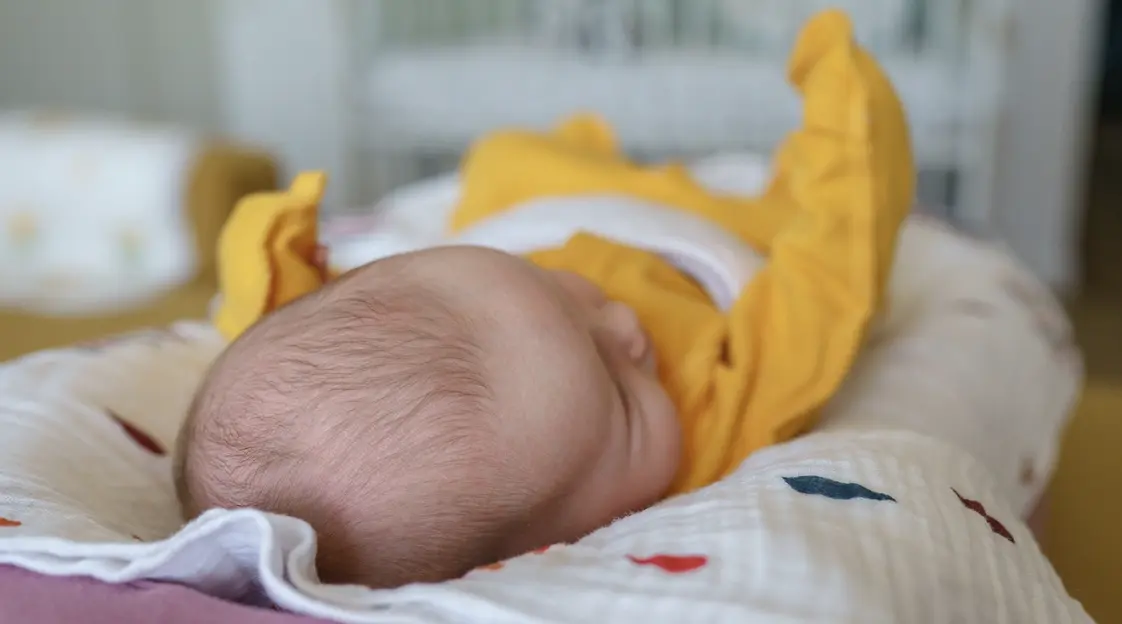
A baby’s soft spot is a natural gap between the skull bones. Doctors call it a fontanelle. The skull has several flexible seams and soft areas at birth because a baby’s brain grows quickly during the first years of life.
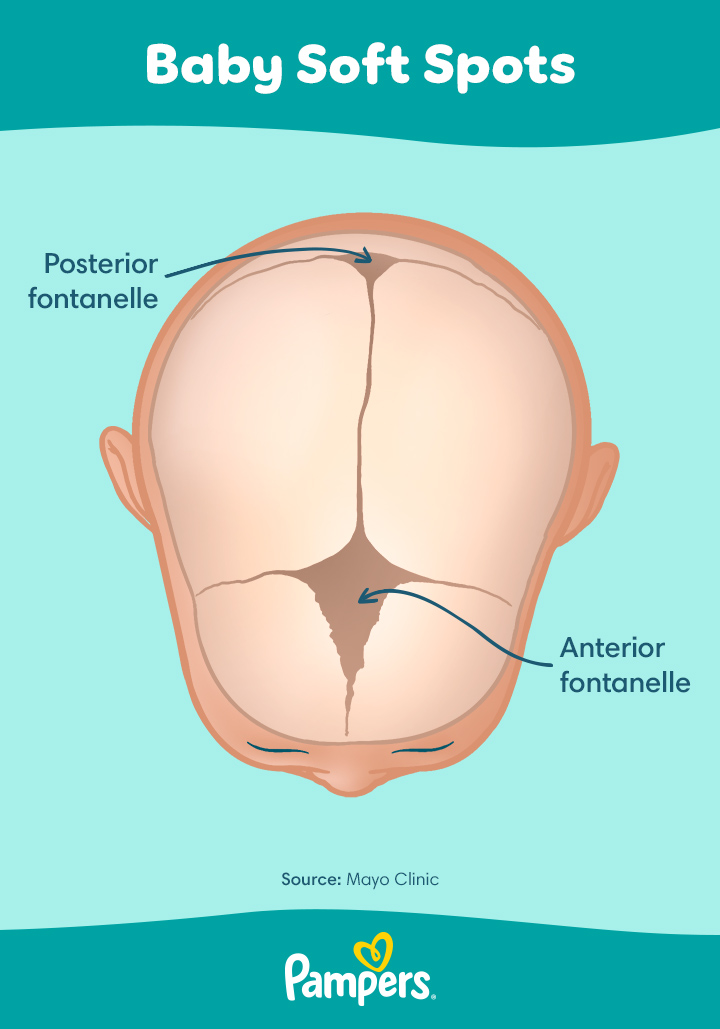
The largest soft spot is the anterior fontanelle. It sits on the top of the head, near the front. This is usually the spot parents mean when they ask, “When does a baby’s soft spot close?”
A smaller soft spot, called the posterior fontanelle, sits near the back of the head. It closes much sooner than the front one.
The soft spots serve two key purposes:
• They allow the skull to shift slightly during birth.
• They give the brain room to grow during infancy.
• They help the skull bones develop in a safe, gradual way.
The fontanelle may feel soft, flat, or slightly sunken. A gentle pulse can also be normal because blood vessels lie beneath it. You can safely wash, touch, and brush around the area with normal care.
When Does a Baby’s Soft Spot Close?
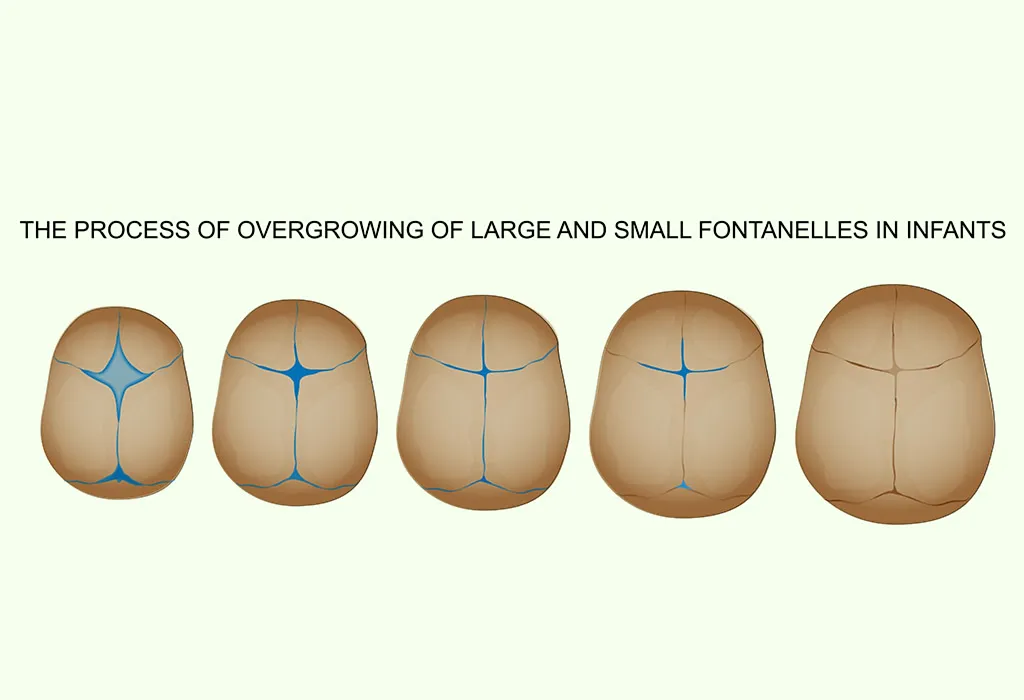
When does a baby's soft spot close? The front soft spot most often closes between 12 and 18 months. Some healthy babies close closer to 9 months, while others may still have a small open fontanelle after 18 months.
The back soft spot usually closes by 2 to 3 months of age. Because it is small and located toward the back of the head, many parents never notice it.
There is no exact date that applies to every child. Genetics, growth rate, nutrition, birth history, and overall health can affect the timing. A pediatrician checks the soft spot during routine visits and watches the baby’s head growth over time.
A soft spot that remains open a little longer is not always a problem. The size of the fontanelle and the baby’s head growth matter more than one specific closing date.
Typical Fontanelle Closure Timeline
When does a baby's soft spot close at each location? The following timeline gives a general guide:
• Posterior fontanelle: Usually closes by 2 to 3 months.
• Anterior fontanelle: Often closes between 12 and 18 months.
• Normal variation: Some anterior fontanelles close as early as 9 months or remain open until about 24 months.
The front fontanelle is often diamond-shaped. Its size can vary greatly at birth. A larger fontanelle does not always mean a health problem, just as an early-closing fontanelle does not always signal trouble.
Your baby’s doctor will measure head growth at regular visits. The doctor may also feel the skull joints and assess development, feeding, movement, and general health.
Why Timing Varies
Several factors can influence when does a baby's soft spot close:
• Family patterns may affect the timing.
• Premature babies may have different skull growth patterns.
• Babies with certain thyroid, bone, or genetic conditions may close later.
• Early fusion of skull bones can cause the soft spot to close too soon.
• Poor growth or nutritional problems can affect bone development.
Timing alone rarely gives the full answer. Doctors look at the whole child rather than judging the fontanelle in isolation.
What Should a Normal Soft Spot Feel Like?
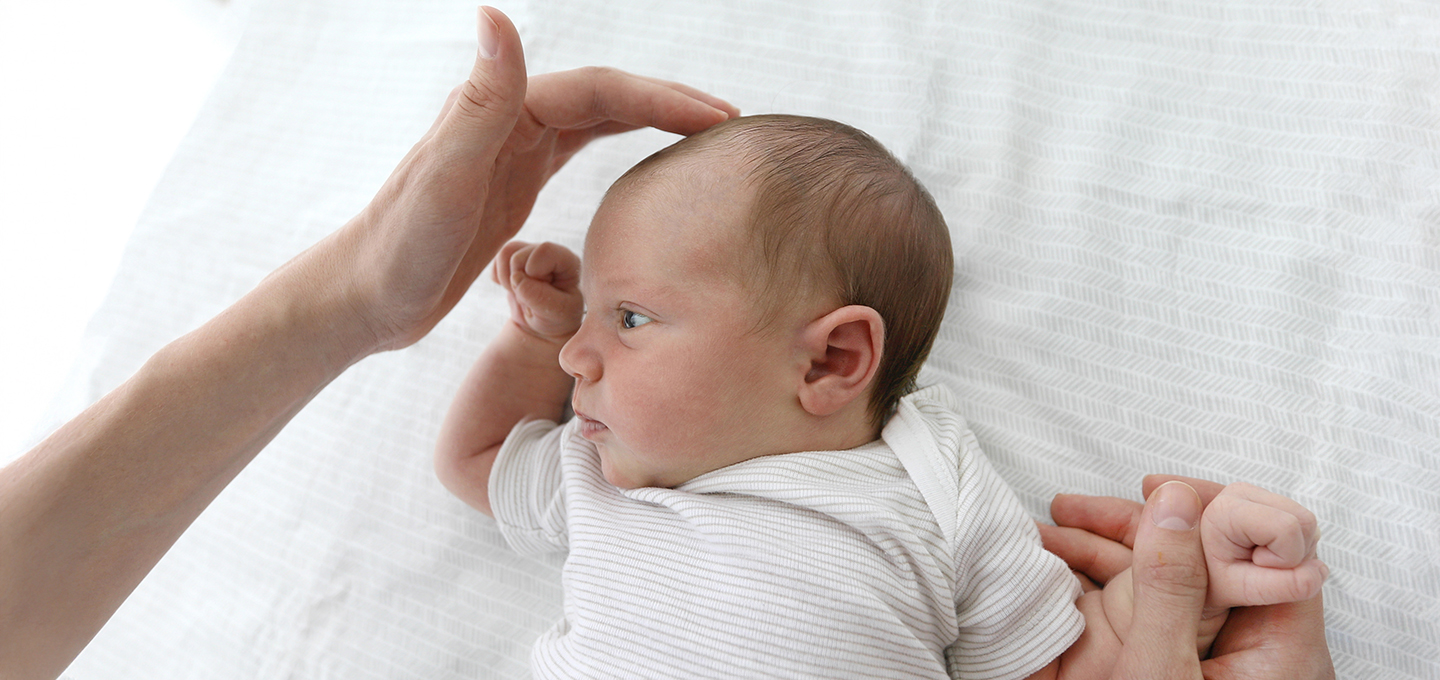
A normal anterior fontanelle usually feels soft and fairly flat when your baby is calm and upright. It may dip slightly when the baby is sitting or lying in a certain position.
You may notice a gentle rhythmic movement. This can match your baby’s heartbeat and is usually harmless. The area may also look a little different when your baby cries, coughs, or strains.
A soft spot can briefly bulge during crying. It should return to its usual shape once your baby settles. A lasting bulge needs prompt medical advice.
A slightly sunken soft spot can happen after long crying or when a baby is dehydrated. Look for other signs, such as fewer wet diapers, a dry mouth, no tears, vomiting, diarrhea, or unusual sleepiness.
:max_bytes(150000):strip_icc()/fetal-positions-for-labor-and-birth-2759020_FetalSkull_FINAL-9e1edaabdf10446d9474dfb585f66130.png)
Can You Touch a Baby’s Soft Spot?
Yes. Normal touch will not harm the soft spot. A strong protective layer covers the fontanelle, even though the area feels soft.
You can gently:
• Wash the scalp.
• Dry the hair with a soft towel.
• Use a soft baby brush.
• Place a hat on the head.
• Hold and cuddle your baby normally.
Avoid pressing hard or poking the area. Do not use force when removing cradle cap. If flakes are thick, ask your pediatrician about safe care.
A common mistake is avoiding all contact with the head. This can make routine bathing and bonding feel stressful. Gentle, normal care is safe.
Signs That Need Medical Attention
When does a baby's soft spot close is important, but how it looks and how your baby acts are just as important. Contact a healthcare professional if the soft spot seems persistently bulging, deeply sunken, unusually large, or closed very early.
Seek urgent medical care if a bulging fontanelle occurs with:
• Fever.
• Repeated vomiting.
• Extreme sleepiness or trouble waking.
• A seizure.
• A stiff neck.
• Poor feeding.
• A sudden change in behavior.
A bulging fontanelle can sometimes occur with serious pressure or infection inside the skull. Crying can cause a short-term change, but the soft spot should settle when your baby is calm and upright.
A very sunken fontanelle may be linked with dehydration. Call your baby’s doctor promptly if your baby has fewer wet diapers, cannot keep fluids down, has diarrhea, or seems weak.
What Early Closure May Mean
When does a baby's soft spot close too soon? Early closure may be harmless in some babies, but it can also be linked to craniosynostosis. This condition occurs when one or more skull joints fuse before the brain finishes growing.
Possible signs include:
• An unusual head shape.
• A raised ridge along a skull joint.
• A narrow, pointed, or triangular forehead.
• One side of the head that looks uneven.
• A head size that does not grow as expected.
An early-closing soft spot does not prove that a baby has craniosynostosis. A pediatrician may check head measurements and shape, then refer the baby to a specialist if needed.
What Late Closure May Mean
A soft spot that stays open beyond the usual range may still be normal. However, delayed closure can sometimes occur with conditions involving thyroid function, bone health, nutrition, or genetic development.
Your doctor may consider other clues, such as slow growth, unusual bone shape, poor muscle tone, or developmental concerns. Do not diagnose a problem based on the soft spot alone.

How Doctors Check the Soft Spot
At well-child visits, the doctor looks at the soft spot and feels it gently. The doctor also measures your baby’s head circumference and compares the measurement with a standard growth chart.
Head growth matters because the brain and skull should grow together. A single measurement is less useful than a pattern across several visits.
The doctor may also review:
• Birth history and gestational age.
• Feeding and weight gain.
• Motor and social development.
• Head shape and skull symmetry.
• Family history.
• Signs of dehydration or illness.
Most babies do not need scans for a normal fontanelle. If the examination raises concern, a doctor may order imaging or refer the child to a pediatric neurologist, neurosurgeon, or craniofacial specialist.
Why Head Measurements Matter
Parents often focus on when does a baby's soft spot close, but head growth provides important context. A fontanelle can close early while the head grows normally. Another can remain open while the child is healthy and developing well.
This is why routine checkups are valuable. They help the doctor spot a trend instead of reacting to one moment.
Does Closing Early Stop Brain Growth?
No. Closing of the soft spot does not mean the brain has stopped growing. The skull has several joints, called sutures, that remain flexible and allow continued growth.
The front fontanelle is only one part of the skull’s development. Doctors assess the sutures, head shape, head circumference, and development together.
If the fontanelle closes early but your baby’s head shape and growth are normal, the doctor may simply continue to monitor progress. If the skull shape changes or growth slows, further evaluation may be needed.

What Parents Can Do at Home
You do not need to measure the soft spot every day. Too much checking can increase worry and does not replace a medical examination.
Helpful steps include:
Keep routine well-child visits.
Track wet diapers, feeding, and energy during illness.
Take note of lasting changes in the soft spot.
Watch for changes in head shape.
Tell the doctor if your baby was born early or has a medical condition.
Seek care quickly for a persistent bulge, deep sinking, fever, seizure, or unusual sleepiness.
If you are unsure whether the fontanelle is truly bulging or sunken, take a short video when your baby is calm. This can help the clinician understand what you observed.
One practical lesson many new parents learn is that lighting, crying, and head position can change how the soft spot looks. Check it when your baby is calm and upright, and avoid repeated pressing.
Common Myths About the Soft Spot
Myth: The soft spot can break easily
The fontanelle has a strong protective membrane. Gentle handling, bathing, and everyday touch are safe.
Myth: Every soft spot must close at 12 months
Twelve months is only one point in a broad normal range. Many healthy babies close later.
Myth: A pulsing soft spot always means danger
A mild pulse can be normal. A persistent bulge, especially with illness or behavior changes, needs medical attention.
Myth: Early closure always means a serious disorder
Early closure can be normal, but head shape and growth should be checked. The timing alone cannot confirm a diagnosis.
Myth: Vitamins can make the soft spot close faster
Do not give supplements to change fontanelle timing unless your child’s clinician recommends them. Too much of some vitamins can be harmful.
When Does a Baby’s Soft Spot Close: Key Takeaways
When does a baby's soft spot close depends on which fontanelle you mean. The back soft spot usually closes by 2 to 3 months, while the front soft spot commonly closes between 12 and 18 months.
Remember these points:
• Normal timing varies from baby to baby.
• A gentle pulse can be normal.
• Brief changes during crying may be harmless.
• Head growth and shape are more important than one closing date.
• A persistent bulge, deep sinking, or unusual head shape deserves medical advice.
• Fever, seizures, repeated vomiting, or extreme sleepiness with a bulging fontanelle requires urgent care.
Frequently Asked Questions About When Does a Baby’s Soft Spot Close
When does a baby’s soft spot close on the top of the head?
The anterior fontanelle on the top of the head usually closes between 12 and 18 months. Some healthy babies close earlier or later, so your child’s doctor will also check head growth and shape.
When does the soft spot on the back of a baby’s head close?
The posterior fontanelle usually closes by 2 to 3 months. It is smaller than the front fontanelle and may be difficult for parents to feel.
Is it normal for a baby’s soft spot to pulse?
Yes, a gentle pulse can be normal because blood vessels lie beneath the fontanelle. Contact a doctor if the area stays raised when your baby is calm or appears with fever, vomiting, or unusual sleepiness.
Can a baby’s soft spot close too early?
It can close early without causing a problem, but early closure may sometimes relate to skull bones fusing too soon. A doctor should assess unusual head shape, a raised ridge, or poor head growth.
What does a sunken soft spot mean?
A mildly sunken fontanelle can occur with normal position changes, but a deeply sunken one may signal dehydration. Fewer wet diapers, vomiting, diarrhea, dry lips, or low energy require prompt medical advice.
Can you hurt a baby by touching the soft spot?
Normal gentle touch, washing, brushing, and cuddling will not hurt it. Avoid hard pressure or forceful rubbing, especially when treating cradle cap.
Should I worry if the soft spot is still open after 18 months?
Not always. Some healthy children have a small open fontanelle after 18 months, but the pediatrician should review head growth, shape, development, and overall health.
Does a soft spot closing mean the baby’s brain has stopped growing?
No. Brain and skull growth continue after the fontanelle closes. Other skull joints remain flexible and support continued growth.
Conclusion
When does a baby's soft spot close? The back fontanelle usually closes by 2 to 3 months, and the front fontanelle most often closes between 12 and 18 months. Healthy variation is common, so timing should always be viewed alongside head growth, head shape, feeding, and development.
Handle the area gently, keep well-child visits, and contact your child’s healthcare professional about a persistent bulge, deep sinking, unusual skull shape, or sudden behavior change. Save this guide for reference, and share your questions with your pediatrician at the next visit.