
Introduction
No. Age 35 is not too old to have a baby in the United States. Many people have healthy pregnancies and healthy children in their late 30s and 40s.
Still, fertility and pregnancy risks change with age. The change is gradual, not a sudden drop on a 35th birthday. Your overall health, egg supply, sperm health, family history, and access to prenatal care also matter.
The best plan is simple: prepare for pregnancy, know the age-related changes, and seek help sooner if conception takes longer than expected.


What does “advanced maternal age” mean?
“Advanced maternal age” is a medical term often used for someone who will be 35 or older on the estimated due date. Some clinicians now use “pregnancy at age 35 or older” because the older term can sound alarming.
Age 35 is a risk marker, not a diagnosis. It does not mean that a pregnancy will be unsafe or that a person will need special treatment.
The American College of Obstetricians and Gynecologists explains that many pregnancy risks rise gradually with age. There is no single point at which pregnancy suddenly becomes dangerous.
Age is only one part of the picture. A healthy 38-year-old may have fewer medical risks than a 29-year-old with high blood pressure, diabetes, or another health problem.
Why does age matter?
The main age-related changes involve:
- Egg number and egg quality
- The time it may take to become pregnant
- The chance of miscarriage
- The chance of chromosome conditions
- The risk of high blood pressure or diabetes during pregnancy
- The chance of cesarean birth or other complications
These risks do not affect everyone in the same way. Your doctor can use your health history and screening tests to give more personal advice.
Can you get pregnant naturally after 35?
Yes. Many people become pregnant without fertility treatment after age 35.
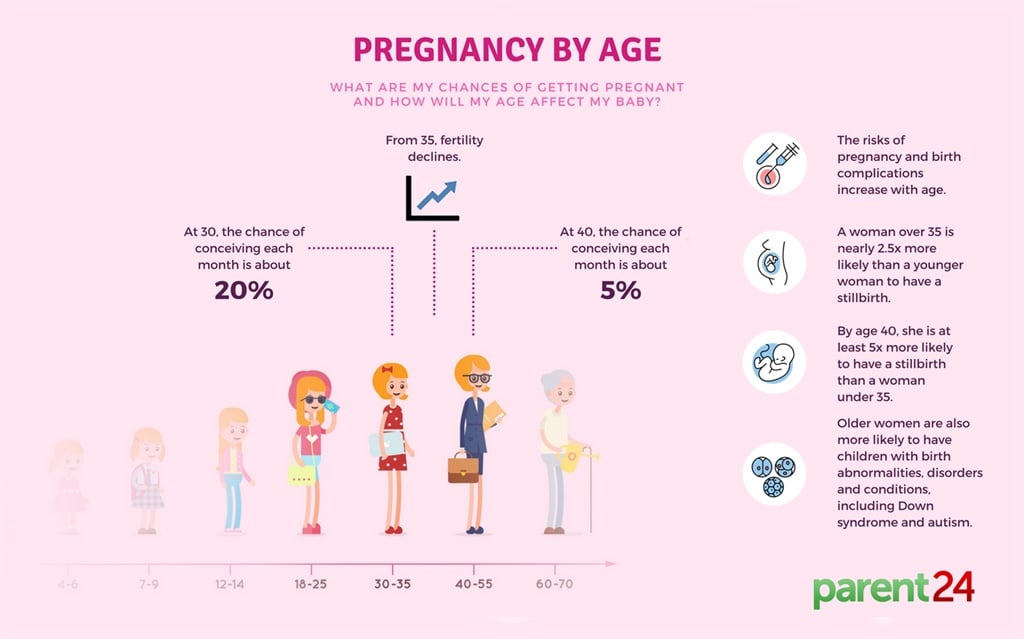
Fertility does tend to decline with age. The decline is linked mainly to the number and quality of eggs. Over time, eggs are more likely to have chromosome changes. This can make it harder to become pregnant and can raise the chance of miscarriage.
The decline is usually gradual in the early and mid-30s. It becomes more noticeable after the mid-30s and tends to speed up in the early 40s.
This does not mean that pregnancy after 35 is rare. It means that time may matter more. If you want a child, waiting several years may have a larger effect on fertility than it would have earlier in life.


What about the chances of pregnancy?
It is not possible to give one reliable percentage for every person. The chance depends on factors such as:
- Age
- Ovulation
- Egg supply
- Fallopian tube health
- Uterine health
- Sperm count and movement
- Sex timing
- Medical conditions
- Medicines and lifestyle factors
A fertility test cannot predict your exact chance of pregnancy. For example, an ovarian reserve test may give useful information, but it cannot tell you whether you will become pregnant naturally in a specific month.
Does your partner’s age matter?
Yes. Sperm quality can also change with age. Older paternal age is linked with a higher chance of some sperm changes and certain pregnancy or child health outcomes. The absolute chance of many of these outcomes remains low.
Doctors usually assess both partners when pregnancy does not happen. Fertility is not only a “female age” issue.

What are the pregnancy risks after age 35?
Most people over 35 do not develop a serious complication. However, some risks become more common and may need closer care.
Chromosome conditions
The chance of a chromosome condition, such as Down syndrome, rises with the age of the egg provider. This is one reason prenatal genetic screening is commonly discussed.
Screening estimates the chance of a condition. It does not diagnose one.
Common screening options include:
- Cell-free DNA screening from a blood sample
- First-trimester screening
- Ultrasound exams
- Second-trimester blood screening
Diagnostic tests can provide a clearer answer. These include:
- Chorionic villus sampling, or CVS
- Amniocentesis
Diagnostic tests carry a small risk of complications. A prenatal care clinician or genetic counselor can explain the benefits and limits of each choice.
The American College of Obstetricians and Gynecologists recommends that prenatal genetic screening and diagnostic testing options be discussed with all pregnant patients, regardless of age.
Miscarriage
Miscarriage becomes more common with age. A major reason is that chromosome problems are more common in eggs as they age.


A miscarriage is not usually caused by something a person did. It is also not proof that future pregnancy is impossible.
Seek medical care for heavy bleeding, severe pain, fainting, shoulder pain, or other urgent symptoms during pregnancy.
High blood pressure and preeclampsia
Pregnancy-related high blood pressure is more common with increasing age. Preeclampsia is a serious form that can affect the parent and baby.
Prenatal visits help clinicians check blood pressure and urine protein. Ask your clinician about your personal risk. Some people may benefit from low-dose aspirin, but do not start aspirin during pregnancy without medical advice.
Gestational diabetes
The risk of gestational diabetes also increases with age. Other risk factors include:
- A past pregnancy with gestational diabetes
- A family history of diabetes
- Higher body weight
- Polycystic ovary syndrome
- Prediabetes
Testing is part of routine prenatal care. Treatment may include food changes, activity, blood sugar checks, and medicine when needed.
Preterm birth and cesarean birth
Older pregnant patients may have a higher chance of preterm birth, placenta problems, or cesarean birth. These outcomes are also affected by health, prior births, fetal position, and pregnancy complications.
Age alone does not mean that a cesarean birth is required.

How should you prepare for pregnancy after 35?
A preconception visit is a useful first step. Make an appointment with an OB-GYN, family doctor, midwife, or other qualified clinician before trying to conceive.
1. Review your health
Discuss:
- High blood pressure
- Diabetes or prediabetes
- Thyroid disease
- Seizures
- Mental health conditions
- Autoimmune disease
- Previous pregnancy problems
- Prior surgery
- Current medicines and supplements
Some medicines are not safe during pregnancy. Do not stop a prescribed medicine without help. Your clinician can suggest a safer plan if needed.
2. Start a prenatal vitamin
Take a prenatal vitamin with at least 400 micrograms of folic acid each day before pregnancy, unless your clinician recommends a different dose.
Some people need more folic acid because of medical history or medicine use. Ask before taking a high dose.
A prenatal vitamin may also contain iron, iodine, vitamin D, or other nutrients. More is not always better. Avoid high doses of vitamin A unless your clinician says they are safe.


3. Check vaccines
Ask whether you need vaccines before pregnancy. Key vaccines may include:
- Rubella
- Varicella
- Influenza
- COVID-19
- Tetanus, diphtheria, and pertussis during pregnancy
The right timing depends on the vaccine and your health history. The CDC pregnancy vaccination guidance provides current U.S. information.
4. Use healthy habits
Helpful steps include:
- Stop smoking and vaping
- Avoid alcohol while trying to conceive and during pregnancy
- Avoid recreational drugs
- Limit excess caffeine
- Eat a varied diet
- Stay active as advised
- Aim for a healthy weight without crash dieting
- Sleep as well as you can
- Treat dental problems
You do not need a perfect lifestyle to have a healthy pregnancy. Small, steady changes can help.
5. Know your fertile window
Pregnancy is most likely when sex occurs in the few days before ovulation and around the day of ovulation.
Ovulation predictor kits, cervical mucus changes, and cycle tracking may help. Apps can estimate fertile days, but they may be less accurate with irregular cycles.
Having sex every one to two days during the fertile window is one common approach. More frequent sex is not required for most couples.

When should you see a fertility specialist after 35?
If you are 35 or older, the American Society for Reproductive Medicine generally advises an infertility evaluation after six months of regular, unprotected sex without pregnancy.
Seek help sooner if you have:
- Irregular or absent periods
- Very painful periods
- Endometriosis
- Polycystic ovary syndrome
- A history of pelvic infection
- Prior chemotherapy or radiation
- Repeated miscarriages
- Known sperm problems
- A history of ectopic pregnancy
- Surgery involving the pelvis or reproductive organs
If you are over 40, talk with a clinician before trying or soon after you begin trying. An evaluation may be reasonable without waiting six months.
What happens during a fertility evaluation?
A fertility evaluation often includes:
- A detailed health and pregnancy history
- Menstrual and ovulation review
- Blood tests when appropriate
- An ultrasound
- Ovarian reserve testing in selected cases
- Semen analysis
- Testing of the fallopian tubes when needed
The evaluation should include both partners when applicable. A semen analysis is often simple and can identify a treatable issue.


What treatments might be offered?
Treatment depends on the cause and your goals. Options may include:
- Timed intercourse
- Ovulation medicine
- Intrauterine insemination, or IUI
- In vitro fertilization, or IVF
- Donor eggs or embryos
- Fertility preservation counseling
No treatment guarantees a baby. IVF success also varies by age, egg source, embryo factors, sperm health, clinic experience, and medical history.
The CDC publishes U.S. assisted reproductive technology data. Use clinic-specific data with care. A clinic’s results may reflect different patient groups and treatment types.
Age 35 and pregnancy: a practical decision guide
Use this table as a starting point, not as a diagnosis.
| Situation | Reasonable next step |
|---|---|
| Under 35 and trying for less than 12 months | Keep trying if cycles are regular and no risk factors exist |
| Age 35 to 39 and trying for less than 6 months | Track ovulation and arrange a preconception visit |
| Age 35 to 39 and no pregnancy after 6 months | Request a fertility evaluation |
| Age 40 or older | Discuss fertility before trying or early in the process |
| Irregular periods or known fertility risks | Seek evaluation sooner |
| Pregnant at age 35 or older | Begin prenatal care and discuss genetic screening |
| Heavy bleeding, severe pain, or fainting in pregnancy | Seek urgent medical care |
The key trade-off is time. Waiting a few months may be reasonable for some people. It may be less helpful if cycles are irregular or there are known risk factors.

Common myths about having a baby after 35
Myth: You are automatically high-risk at 35
Not necessarily. Age may increase certain risks, but risk is not the same as danger. Your full health history matters.
Myth: Everyone over 35 needs IVF
No. Many people conceive naturally after 35. Fertility treatment is based on the evaluation, the duration of trying, and personal goals.
Myth: Prenatal screening is required
In the United States, prenatal screening and diagnostic testing are choices. Your clinician should explain them without pressure.
Myth: A healthy lifestyle can stop age-related fertility decline
Healthy habits support general health and pregnancy. They cannot fully prevent the natural decline in egg number and quality.
Myth: A normal ovarian reserve test proves fertility
It does not. Ovarian reserve tests can help guide treatment, but they do not measure every part of fertility. They do not reliably predict natural pregnancy for an individual.
Myth: You must rush into a decision
You deserve clear information and time to consider your values. At the same time, fertility can change with age. A timely medical visit can help you make a better-informed choice.
Frequently asked questions
Is 35 too old to have a first baby?
No. Many people have a first baby at 35 or later. You may need to plan more carefully and seek fertility advice sooner if pregnancy does not happen.
Is pregnancy at 37 safe?
Pregnancy at 37 can be safe, but some risks are higher than they were at a younger age. Prenatal care can screen for and manage many problems.
Is it harder to get pregnant at 35?
It can be. Fertility often declines gradually with age, and the decline may become more noticeable after the mid-30s. The effect varies widely between individuals.
Should I freeze my eggs at 35?
Egg freezing may be worth discussing if you want to delay pregnancy. Success depends on age at freezing, the number of eggs stored, the laboratory, and later treatment needs. A fertility specialist can explain realistic limits.
How much folic acid should I take when trying to conceive?
Many adults should take 400 micrograms of folic acid daily before pregnancy. Some people need a different dose. Ask a clinician if you have diabetes, take certain medicines, or have had a pregnancy affected by a neural tube defect.
Conclusion
35 is not too old to have a baby. It is an age when fertility may begin to decline more quickly and when some pregnancy risks deserve closer attention.
Make a preconception appointment, take folic acid, review medicines and vaccines, and seek fertility help after six months of trying if you are 35 or older. Seek care sooner for irregular periods, known fertility problems, or if you are over 40.
Age gives useful context. It does not decide your outcome.