
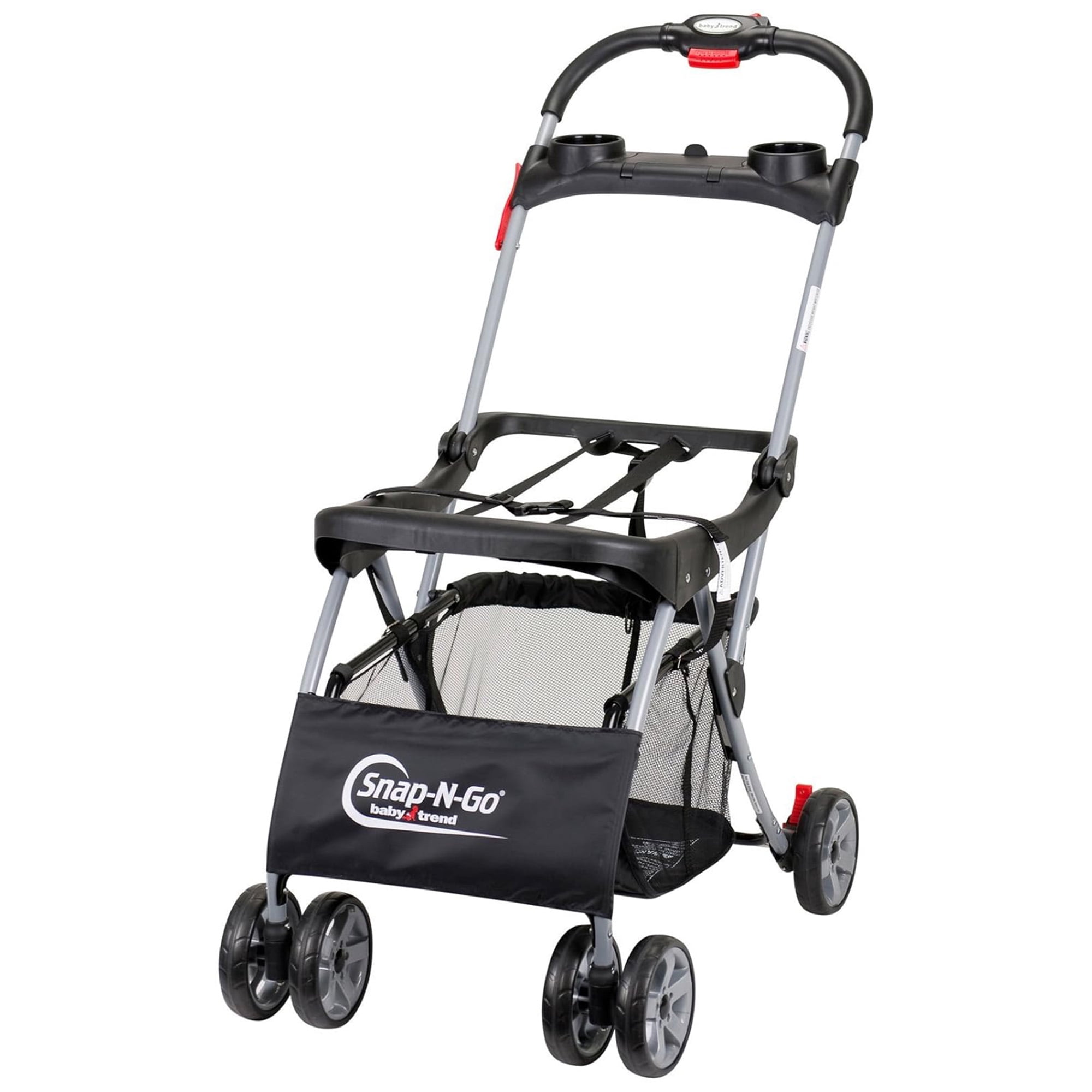
A Snap and Go stroller is a lightweight frame that carries an infant car seat. It is not a full stroller seat. To use one, open the frame, lock it, attach the correct car seat, check that the seat is secure, and use the harness and brakes as directed.
In the United States, the name “Snap and Go” often refers to the Baby Trend Snap-N-Go infant car seat carrier. Other brands may use similar names. The frame, car seat, and adapter must be compatible. Always follow the manual for your exact stroller and car seat because features and weight limits can differ by model.
This guide explains how to open, load, use, fold, and maintain a Snap and Go stroller. It also covers common problems and key safety checks for parents and caregivers.


What You Need Before Using a Snap and Go Stroller
Before your first trip, gather the stroller frame, the matching infant car seat, the car seat manual, and the stroller manual. You should also check that all parts are present and free from damage.
A Snap-N-Go stroller usually includes:
- A folding stroller frame
- Two rear wheels
- Front wheels or wheel assemblies
- A parent handle
- A storage basket
- Safety straps or support straps
- A parking brake
- A car seat support area
- A folding latch or release handle
The stroller frame does not replace the car seat. Your baby rides in the infant car seat, which then attaches to the stroller.
Check compatibility first
Do not assume that every infant car seat will fit. Some Snap-N-Go models accept many infant car seats, while others work only with listed brands or need a separate adapter.
Check these items:
- The stroller model name and model number.
- The infant car seat brand and model.
- The approved compatibility list.
- The car seat weight and height limits.
- The stroller’s maximum load limit.
- Whether an adapter is required.
The safest source is the stroller manual or the manufacturer’s current compatibility information. If the car seat is not listed, do not use it on the frame unless the manufacturer clearly approves the combination.
Inspect the stroller
Before placing your baby in the car seat, look for:
- Cracks in the frame
- Loose screws or fasteners
- Bent support bars
- Damaged straps
- Missing clips
- Wheels that do not turn freely
- A brake that does not hold
- A folding latch that does not lock
- A car seat attachment that feels loose
Do not use a damaged stroller. Contact the manufacturer or replace the part with an approved part.
How to Open a Snap and Go Stroller
Open the stroller on a flat surface before attaching the car seat. Keep your fingers away from hinges and folding joints.


- Place the folded stroller on the ground. Keep it away from stairs, traffic, and the edge of a curb.
- Release the folding latch. The latch may sit on the side of the frame or near the handle.
- Lift the handle upward. Pull the frame open until the side joints unfold.
- Push the frame down and out. Make sure the support bars reach their open position.
- Listen for the locking click. The frame should stay open without you holding it.
- Test the frame by pressing down gently on the handle. It should not fold or collapse.
- Set the parking brake. Press the brake pedal before loading the car seat.
The exact release action varies by model. Do not force the frame. If it does not open, check the manual for the correct latch position.
Signs that the frame is open correctly
The stroller is ready when:
- The frame stays open on its own.
- The folding latch is fully released.
- The side rails are straight.
- The wheels are attached.
- The brake works.
- The car seat support area is clear.
- No strap is caught in a hinge.
If the stroller folds when you press the handle, stop using it until you find and fix the problem.

How to Attach the Infant Car Seat
Attach the infant car seat with the stroller empty and the parking brake set. Never place the car seat on the frame while the stroller is moving.
- Remove the car seat from the vehicle base. Use the car seat’s release handle according to its manual.
- Hold the car seat above the stroller. Keep one hand on each side if the seat is heavy.
- Face the car seat in the approved direction. Most infant car seats attach with the baby facing the stroller handle, but follow the stroller instructions.
- Lower the car seat into the support area. Line up the car seat’s attachment points with the stroller’s support bars or connectors.
- Press down until the seat locks. You may hear a click, but sound alone does not prove that it is secure.
- Attach any stroller safety straps. Route them around the approved part of the car seat, not across your baby’s neck or face.
- Pull up on the car seat. Use firm, gentle pressure to check that it stays attached.
- Check both sides. Look for visible locks, hooks, or indicators on the left and right attachment points.
- Confirm the recline position. Keep the car seat in the position allowed by the stroller and car seat manuals.
Do not use the stroller if the car seat rocks excessively, sits unevenly, or can lift away from the frame. Remove it and attach it again. If it still does not lock, the stroller and car seat may not be compatible.
Do not add an unapproved adapter
A homemade adapter, strap, hook, or bungee cord can change how the car seat handles force. It may also block the stroller’s locks. Use only an adapter listed for that stroller and car seat combination.
A universal label does not mean every car seat fits every frame. Compatibility depends on the design of the attachment points and the support area.

How to Place Your Baby in the Car Seat
Secure your baby in the car seat before or after attaching it to the stroller, based on the car seat maker’s instructions. Many parents buckle the baby into the car seat while it is on a firm surface, then attach the seat to the stroller.
Follow these steps:
- Place your baby’s back flat against the car seat.
- Position the harness straps at the correct height.
- Buckle the harness.
- Tighten the straps until they are snug.
- Place the chest clip at armpit level if the seat uses one.
- Check that no thick coat, blanket, or bulky clothing is under the harness.
- Use only inserts approved for that car seat.
- Keep the baby’s face and airway clear.
- Confirm that the car seat is within its height and weight limits.
The harness should hold your baby securely without pinching. You should not be able to pinch extra harness webbing at the shoulder after tightening.
Do not cover the car seat with a thick blanket while your baby is inside. Loose covers can reduce air flow and may cause overheating. If you use a cover, use one made for the car seat that does not go under the baby or interfere with the harness.
Important sleep guidance
An infant car seat is made for travel. It is not a routine sleep space outside the vehicle. If your baby falls asleep during a walk, move the baby to a firm, flat sleep surface when practical and safe.


Do not place the car seat on a table, bed, counter, couch, or shopping cart. The stroller frame is designed to support the seat only when the seat is attached as directed.

How to Push and Stop a Snap and Go Stroller
Keep one hand on the handle while the stroller is moving. Walk at a steady pace and keep the front wheels pointed in the direction of travel.
Use these habits:
- Set the brake before putting the car seat on or taking it off.
- Keep the stroller on level ground when loading.
- Use both hands when going over a curb or uneven surface.
- Slow down near doors, ramps, and crowded areas.
- Keep the stroller within reach.
- Do not hang heavy bags from the handle.
- Do not let another child stand on the frame.
- Keep the storage basket within its stated limit.
- Never leave the stroller unattended with your baby inside.
A light frame can tip if a heavy bag hangs from the handle. Put items in the approved basket and stay within the listed load limit. The car seat and baby count toward the stroller’s total load.
Going over a curb
Avoid curbs when possible. If you must cross one:
- Stop before the curb.
- Keep both hands on the handle.
- Tip the stroller back only as far as needed.
- Lift the front wheels over the curb.
- Lower the front wheels gently.
- Move the rear wheels over the curb without dropping the frame.
Never pull the stroller down stairs. Do not use an escalator. Use an elevator or an accessible ramp instead.

How to Remove the Car Seat and Fold the Stroller
Set the parking brake before removing the car seat. Keep one hand on the car seat until it is fully free from the frame.
Remove the car seat
- Stop on level ground.
- Engage the parking brake.
- Unclip or loosen the stroller support straps if the model uses them.
- Hold the car seat handle firmly.
- Pull the car seat release handle or release buttons.
- Lift the car seat straight up.
- Confirm that both sides have released before moving the seat.
- Place the car seat on its approved base or a firm, safe surface.
Do not lift the stroller by the attached car seat. The car seat may not be designed to carry the weight of the stroller frame.
Fold the stroller
- Remove the car seat and all items from the frame.
- Release the stroller lock or folding lever.
- Pull the folding strap or press the folding buttons.
- Guide the handle toward the wheels.
- Continue folding until the latch engages.
- Check that the frame stays folded before lifting it.
Keep hands clear of the folding joints. Do not force the frame if the basket, wheels, or straps block the fold.

Common Snap and Go Stroller Problems
Most problems come from an open frame, a blocked latch, incorrect compatibility, or a car seat that is not fully seated.
| Problem | Likely cause | What to do |
|---|---|---|
| Frame will not open | Folding latch is still engaged | Release the latch and open the frame on level ground |
| Frame folds by itself | Lock is not fully engaged | Close the stroller and reopen it until the lock clicks |
| Car seat does not click in | Wrong model or poor alignment | Check compatibility and line up both attachment points |
| Car seat rocks too much | Seat is not fully seated or straps are loose | Remove and reattach it; stop using it if movement remains |
| Brake will not hold | Dirt, wear, or incomplete engagement | Clean around the brake and check the manual; replace damaged parts |
| Wheels wobble | Wheel is loose or not fully installed | Remove and reinstall the wheel; inspect the axle |
| Stroller pulls to one side | Wheel obstruction or uneven wear | Clear debris and inspect the wheels |
| Stroller is hard to fold | Item or strap is caught in the frame | Empty the basket and check every hinge |
| Handle feels too heavy | Bag load is too high | Remove handle bags and use the basket within its limit |
Do not repair a safety part with tape, wire, or a non-approved fastener. If the frame, attachment system, brake, or harness is damaged, contact the manufacturer.
When to stop using the stroller
Stop using the stroller at once if:


- The car seat cannot lock securely.
- The frame collapses while open.
- The brake does not hold.
- A wheel or support bar is cracked.
- A safety strap is torn.
- The stroller was in a crash or severe impact.
- You cannot identify the model or verify compatibility.
A customer service representative or certified child passenger safety technician may help with fit questions. For car seat installation in a vehicle, use a certified child passenger safety technician through the National Highway Traffic Safety Administration’s inspection resources.

Cleaning and Routine Care
Clean the stroller often, especially after spills or trips outside. Use the care instructions for your model.
For basic care:
- Wipe the frame with mild soap and water.
- Dry metal parts to help prevent rust.
- Remove dirt from the wheels.
- Check the brake after cleaning.
- Keep fabric away from harsh bleach unless the manual allows it.
- Do not use oil or lubricant where it can reach the car seat attachment points.
- Store the stroller in a dry place.
- Keep it away from direct heat and open flames.
Inspect the frame before each use. A stroller can look fine while a small latch or fastener is loose. A short check takes less time than dealing with a failed lock on a busy sidewalk.
Check for product recalls through the U.S. Consumer Product Safety Commission and the manufacturer. Search by the exact stroller model, not only by the brand name.

Quick Safety Checklist
Use this checklist before every walk:
- The frame is fully open and locked.
- The wheels are attached and turn freely.
- The brake works.
- The car seat is approved for the stroller.
- The car seat is fully attached on both sides.
- The support straps are fastened as directed.
- The baby is within the car seat’s size limits.
- The harness is snug and correctly placed.
- The baby’s face is clear.
- The basket and handle loads are within the manual’s limits.
- No loose item can reach the wheels or hinges.
- You can keep one hand on the handle while moving.
If any box is unchecked, fix the issue before using the stroller.

Frequently Asked Questions
Can a newborn ride in a Snap and Go stroller?
A newborn may ride in an approved infant car seat if the baby meets the car seat maker’s minimum requirements. The car seat must attach correctly to the stroller frame. A Snap and Go frame does not provide a flat stroller bed, so do not place a newborn directly on the frame.
Can I use a convertible car seat with a Snap and Go stroller?
Usually, no. Snap and Go frames are generally designed for compatible infant car seats that have a carry handle and approved attachment points. Check the stroller’s compatibility list. Do not use a convertible car seat unless the manufacturer specifically approves it.
Can I use a Snap and Go stroller without the car seat?
You can move the empty frame, but most models do not provide a normal stroller seat for a child. Do not place a child directly in the frame, basket, or car seat support area.
Why does my infant car seat feel loose on the stroller?
A small amount of movement may occur on some designs, but the seat should remain supported and attached at every approved connection point. Remove the seat and check the model match, adapters, straps, and alignment. If the seat can lift away or shifts sharply, do not use the stroller.
How long can my baby use a Snap and Go stroller?
Use ends when your baby reaches the infant car seat’s height or weight limit, or when the car seat no longer fits the child correctly. The stroller frame’s stated load limit does not extend the car seat’s limits.


Conclusion
To use a Snap and Go stroller, open and lock the frame, set the brake, attach a compatible infant car seat, secure the car seat and baby, and inspect the connection before moving. Keep loads low, avoid stairs and escalators, and follow both manuals.
The most important check is simple: if the car seat does not lock securely, do not use the stroller. Verify the exact model, check for recalls, and replace damaged parts before your next trip.
