
Yes. Most babies begin to open their eyes in the womb around 25 to 28 weeks of pregnancy. Before that, the eyelids stay closed while the eyes and other parts of the visual system develop.
A baby may open and close their eyes many times during the third trimester. However, opening the eyes does not mean the baby can see clearly. Vision is still very limited before birth because the womb is dark, and the visual system continues to mature after delivery.
For families in the United States, pregnancy weeks are usually counted from the first day of the last menstrual period. That means the timing below uses standard U.S. pregnancy dating, not the age from conception.
Introduction
Eye development starts early in pregnancy. The basic eye structures begin to form during the first trimester, but the eyelids remain joined for several months. This protects the developing eyes while the eyelids, cornea, retina, and visual pathways mature.


By the late second trimester or early third trimester, the eyelids usually separate. The baby can then open and close the eyes, move them, and sometimes respond to changes in light.

When do babies open their eyes in the womb?
Most babies start opening their eyes between 25 and 28 weeks of pregnancy. The exact timing can vary, so opening the eyes a little earlier or later does not always signal a problem.
A simple timeline looks like this:
| Pregnancy stage | What usually happens with the eyes |
|---|---|
| Around 8–10 weeks | The eyelids form and remain fused over the eyes |
| Around 16–20 weeks | The eyes and eyelids continue to mature beneath the closed lids |
| Around 25–28 weeks | The eyelids usually separate, allowing the baby to open the eyes |
| Third trimester | The baby may open, close, and move the eyes |
| After birth | Vision remains blurry and improves over time |
These are general milestones, not strict deadlines. Development can differ from one pregnancy to another.
The American College of Obstetricians and Gynecologists explains fetal development by pregnancy week, while medical references such as StatPearls describe eyelid separation as a later fetal milestone. Together, these sources support the general timing but do not predict the exact day an individual baby will open their eyes.
Why are a baby’s eyes closed at first?
A baby’s eyelids stay closed because the eyes need time to develop safely. The eyelids act like a natural cover while the eye surface and nearby tissues mature.
The eye is more than the visible part that opens and closes. A developing baby also needs time for the following parts to form:
- Cornea: The clear front surface of the eye
- Lens: The part that helps focus light
- Retina: The light-sensitive tissue at the back of the eye
- Optic nerve: The pathway that carries signals from the eye to the brain
- Visual brain pathways: The connections that help the brain process images
The eyelids also help protect the eye surface from constant contact with amniotic fluid and particles. After the eyelids separate, the baby can practice eye movements and blinking before birth.
This does not mean that closed eyes are a sign of a problem. Closed eyelids are the expected finding during the earlier stages of pregnancy.

Can babies see in the womb?
Babies may detect light late in pregnancy, but they cannot see the way a newborn or older child sees. The womb is dark, although some light can pass through the abdominal wall and uterus.
By the third trimester, the eyes and brain may respond to changes in brightness. For example, a strong light placed against the pregnant person’s abdomen may create a change in the light reaching the womb. This does not mean the baby sees a clear image or recognizes a face.


Before birth, a baby’s visual experience is more like sensing dim changes in light than looking at a scene. The retina and brain continue to develop after birth, and a newborn’s vision is still blurry.
Babies usually focus best at close range after delivery, often on faces or objects about 8 to 12 inches away. Sharp vision develops gradually during infancy.
Can babies blink or move their eyes before birth?
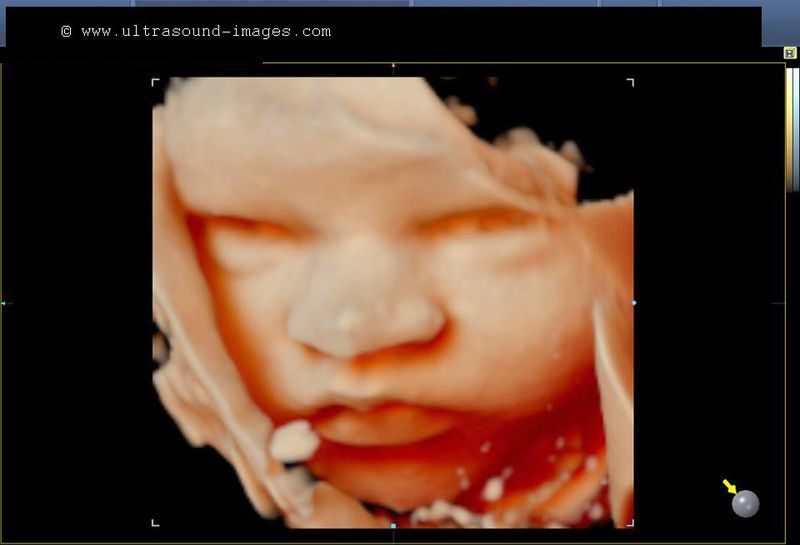
Yes. After the eyelids separate, babies can make eye movements and may blink. Ultrasound may sometimes show the baby opening the eyes, closing them, or moving them.
Eye movement is part of normal fetal activity. It can occur during periods of sleep and wakefulness, although researchers cannot use a single eye movement to determine exactly what a baby is seeing or feeling.
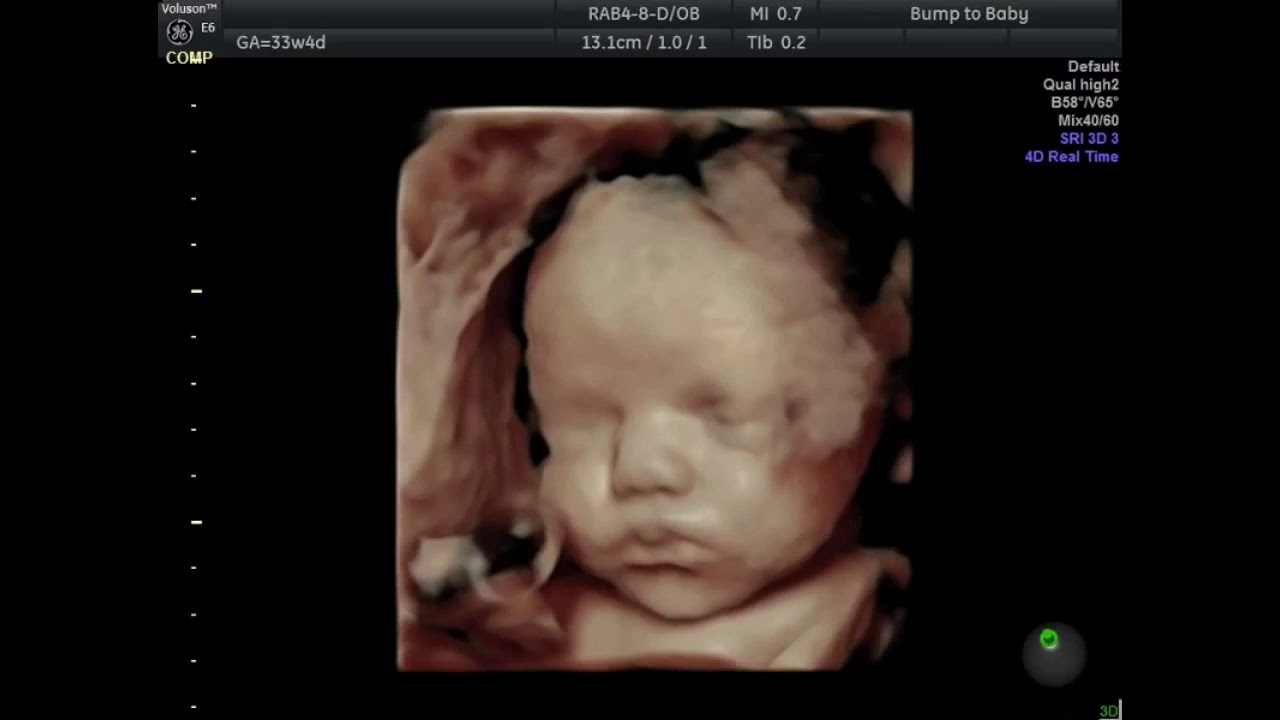
Ultrasound images can also be misleading. A baby’s face may be difficult to view because of position, movement, the placenta, or the amount of amniotic fluid. Not seeing open eyes during an ultrasound does not usually mean the baby cannot open them.

Does a baby’s eye color develop before birth?
Some of the structures linked with eye color begin developing before birth, but a baby’s final eye color may not be clear at delivery.
Eye color depends largely on the amount and distribution of melanin in the iris. Many newborns have gray, blue, or dark-looking eyes at first. The color may change during the first months of life as pigment develops.
The timing and degree of change vary. A newborn’s eye color is not a reliable way to judge whether the eyes developed normally in the womb.
Do babies open their eyes during labor?
A baby may open or close the eyes during labor, but this is not something parents can usually observe directly. Eye opening is not a routine part of fetal monitoring.
During labor, the health care team mainly checks the baby’s heart rate, movement, and other signs of well-being. Eye opening does not provide a standard measure of whether labor is progressing safely.
If an ultrasound or delivery-room image appears to show open eyes, that can be a normal finding. If the eyes remain closed, that can also be normal.
Can you tell if a baby has an eye problem before birth?
Some eye conditions can be detected before birth, but routine prenatal ultrasound cannot identify every vision problem. A standard ultrasound may show the eye sockets and, in some cases, the lenses or other structures. More detailed imaging may be used when a clinician has a specific concern.
Possible reasons for additional evaluation include:
- A family history of a known genetic eye disorder
- An unusual finding on a routine ultrasound
- Concerns about the baby’s brain or facial development
- A genetic condition that can affect the eyes
- Poor visibility during the first scan
A normal ultrasound is reassuring, but it does not guarantee normal vision. Some conditions affect structures or nerve pathways that are too small or complex to assess before birth.


If your clinician recommends a targeted ultrasound, fetal medicine consultation, genetic counseling, or another test, ask what question the test is meant to answer. The test may assess a specific concern rather than provide a complete prediction of future vision.
Does shining a light on the belly make a baby open their eyes?
There is no dependable home test that shows whether a baby can see or opens their eyes. Light may pass through the pregnant person’s abdomen in late pregnancy, but the response can be subtle and unpredictable.
Do not use bright lights, lasers, heat, or other devices against the abdomen to try to make the baby respond. A home response would not diagnose an eye problem, and no response would not prove that the baby cannot see.
The safest way to assess fetal development is through routine prenatal care and any imaging recommended by the pregnancy care team.
When should you ask a doctor about fetal eye development?
Ask your obstetrician, midwife, or maternal-fetal medicine specialist if an ultrasound report mentions an eye, facial, brain, or genetic concern. You should also ask questions if the report is unclear or if you have a family history of an inherited eye condition.
A single ultrasound image showing closed eyes is usually not concerning. Babies open and close their eyes, and their position can make the face hard to see.
Contact your pregnancy care team promptly for symptoms such as vaginal bleeding, leaking fluid, severe abdominal pain, severe headache with vision changes, or a clear decrease in fetal movement after you have been advised how to track movement. These symptoms are not caused by the baby’s eyelids, but they can need urgent assessment.
Do not wait for the baby to open their eyes on an ultrasound before seeking care for other pregnancy warning signs.
Frequently asked questions
Do babies open their eyes at 20 weeks?
Usually, no. At about 20 weeks, the eyelids are commonly still fused or closed. Eye structures continue to develop, but most babies do not begin opening the eyes until about 25 to 28 weeks.
Can a baby open their eyes at 24 weeks?
Some babies may begin eyelid separation around this time, but many still have closed eyes. A difference of a few weeks can be normal. Your clinician can explain the finding in the context of the ultrasound and the baby’s overall development.
Can babies see light through the womb?
Late in pregnancy, babies may detect changes in light, but they do not have clear, detailed vision before birth. The womb is mostly dark, and the visual system continues to mature after delivery.
Do babies dream in the womb?
Researchers cannot confirm what a fetus experiences as dreams. Babies have periods of sleep and activity before birth, but fetal eye movements do not prove that a baby is dreaming.
Can an ultrasound show a baby’s open eyes?
Sometimes. An ultrasound may capture the eyelids open or closed, but the view depends on the baby’s position, movement, gestational age, and image quality. A single image cannot fully assess vision.
Conclusion
Babies usually begin to open their eyes in the womb around 25 to 28 weeks of pregnancy. Before then, the eyelids remain closed while the eyes and visual system develop. After the eyelids separate, a baby may blink, move the eyes, and respond to dim changes in light.
Seeing closed eyes on an ultrasound is usually normal, and seeing open eyes does not mean the baby has clear vision. If an ultrasound report raises a specific concern, discuss it with your U.S. pregnancy care provider rather than trying to judge eye health from a home light test or one ultrasound picture.


