
Most experts advise waiting until your baby is at least six months old before jogging with a stroller.
Can you jog with a newborn? Usually, no. Newborns need strong head and neck support, and most jogging strollers are not safe for babies who cannot sit upright. This guide explains the safest age, stroller features, medical advice, and safer ways to stay active after birth.
Can You Jog With a Newborn?
In most cases, you should not jog with a newborn. A newborn cannot control their head, neck, or upper body well enough to handle the bumps and movement caused by running.
Most pediatricians and stroller makers advise waiting until a baby is about six months old. At that age, many babies can sit upright with good control. Some babies may need more time, so age alone is not the only factor.


A jogging stroller is not the same as a regular stroller. It has large wheels and better suspension, but that does not always mean it is safe for a newborn. You must check the stroller manual for its minimum age and weight rules.
A baby car seat should not be used for jogging. Even when it clicks into a stroller frame, it may not provide the support needed for fast movement over uneven ground.

Why Jogging With a Newborn Can Be Unsafe
Newborns are still developing. Their bodies are not ready for the force, speed, and shaking that can happen during a run.
The main safety concerns include:
Poor head and neck control
Newborns have heavy heads compared with their small bodies. Their neck muscles are not yet strong enough to keep the head steady during sudden bumps or turns.
A baby’s head can move forward or sideways when a stroller hits a crack, curb, or stone. This movement may strain the neck and affect breathing.
Risk of breathing problems
A newborn’s airway is small and easy to block. If the baby’s chin falls toward the chest, the neck can bend in a way that makes breathing harder.
This risk is one reason infants should not spend long periods in sitting devices without close supervision. Running adds more motion and makes it harder to respond quickly.
Impact from rough surfaces
Sidewalks, gravel paths, and roads are not perfectly smooth. Even a stroller with good suspension can transfer force to a small baby.
A slow walk is much gentler than a jog. Running also increases the chance of hitting a curb, losing control, or tipping the stroller.
Heat and sun exposure
Newborns do not control body temperature as well as older babies. They can become too hot or too cold faster than adults.
A stroller cover can block airflow if used incorrectly. Never cover the stroller with a blanket, towel, or sheet, even on a warm day. This can trap heat and reduce ventilation.


When Can You Start Jogging With a Baby?
Many jogging strollers recommend waiting until the baby is six months old. This is a common guideline because many babies have better head, neck, and trunk control by then.
However, the right time depends on your baby’s development and your stroller. Before you jog, your baby should usually be able to:
• Sit upright with steady head control
• Keep the head from falling forward during movement
• Fit safely within the stroller harness
• Meet the stroller’s age and weight requirements
• Tolerate short rides without signs of distress
Some stroller brands allow earlier use with a special bassinet or approved infant insert. That does not mean every bassinet is safe for running. Some are approved only for walking.
Always read the product manual. If the manual says the stroller is for walking only with an infant attachment, do not jog with it.
Your pediatrician can also help if your baby was born early, has low muscle tone, reflux, breathing problems, hip concerns, or another medical condition.
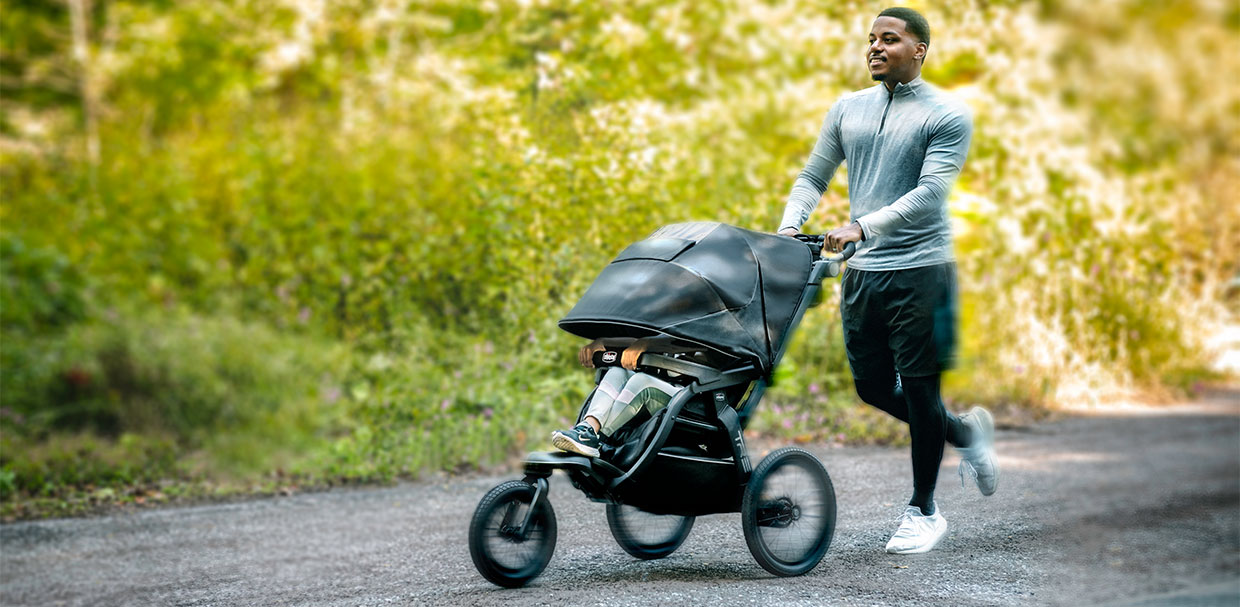
What Kind of Stroller Is Safe for Jogging?
A safe jogging stroller should be designed for running, not just casual use. It should also match your baby’s age and development.
Look for these features:
• A fixed or lockable front wheel to improve stability
• A five-point harness that holds the baby at the shoulders, hips, and between the legs
• Strong suspension to reduce bumps
• Large, air-filled or durable rubber wheels


• A wide base that lowers the risk of tipping
• A hand brake for hills and sudden stops
• A wrist strap to keep the stroller connected to your hand
• A sun canopy with good airflow
• A storage area that does not affect balance
A swivel front wheel can make a stroller easy to turn while walking. For jogging, however, a locked front wheel often gives better control. Follow the manufacturer’s instructions for when and how to lock it.
Do not overload the handle with heavy bags. Extra weight can change the stroller’s balance and make it harder to stop.
A stroller made for newborns is not automatically made for jogging. Check whether the infant mode is approved for running or only for walking.

How to Prepare for Jogging After Birth
The baby is not the only person who needs time before running. Your body also needs to recover from pregnancy and birth.
Pregnancy and delivery can affect your pelvic floor, abdominal muscles, joints, balance, and energy. Hormones can also make joints feel less stable for a while.
Many parents begin with gentle walking. Then they slowly add low-impact exercise, such as:
Easy walks on flat paths
Gentle pelvic floor exercises
Basic core and breathing work
Light strength exercises
Short walk-and-jog intervals
Longer runs only when the body feels ready
Ask your doctor or a pelvic floor physical therapist for advice if you had a cesarean birth, a difficult delivery, severe tearing, heavy bleeding, or ongoing pain.
Stop and seek medical advice if you notice:
• Pelvic pressure or heaviness
• Urine or stool leakage during exercise
• Increasing bleeding
• Sharp pain


• Wound pain
• Dizziness or unusual shortness of breath
• A feeling that your body is not stable
A common mistake is trying to return to the old running pace too soon. The goal is not to prove fitness in the first few weeks. The goal is to rebuild strength without creating a problem that lasts for months.

How to Jog Safely With an Older Baby
Once your baby meets the stroller and development requirements, start slowly. Treat the first outing like a safety test, not a workout.
Use these steps:
Check the weather and choose a cool time of day.
Inspect the stroller, tires, brakes, harness, and front wheel.
Secure your baby with the five-point harness.
Choose a smooth, flat path away from traffic.
Start with a short walk.
Add a brief, slow jog if your baby remains comfortable.
Keep one hand near the handle and use the wrist strap.
Watch your baby often.
Stop if the baby looks uncomfortable or the path becomes rough.
Avoid steep hills, crowded trails, wet leaves, loose gravel, and busy roads at first. These conditions can make steering and stopping harder.
Do not use headphones that block outside sound. You need to hear traffic, bikes, alarms, and your baby.
Keep the first few runs short. Ten to fifteen minutes can be enough. Build time and speed only after several calm, comfortable outings.

Signs You Should Stop the Run
Babies cannot explain what feels wrong. You need to watch their body, face, breathing, and behavior.
Stop right away if your baby:
• Slumps forward in the harness
• Has trouble keeping the head upright
• Looks pale, flushed, or sweaty
• Breathes in an unusual way
• Cries in a sharp or lasting manner
• Feels very hot or cold
• Vomits
• Seems unusually sleepy or difficult to wake


A baby may become quiet when overwhelmed. Quiet does not always mean comfortable.
Check the baby’s neck, back, and chest for heat. Hands and feet can feel cool even when the baby is warm, so use the baby’s chest or back as a better guide.
If your baby has breathing trouble, turns blue or gray, becomes limp, or is difficult to wake, call emergency services immediately.
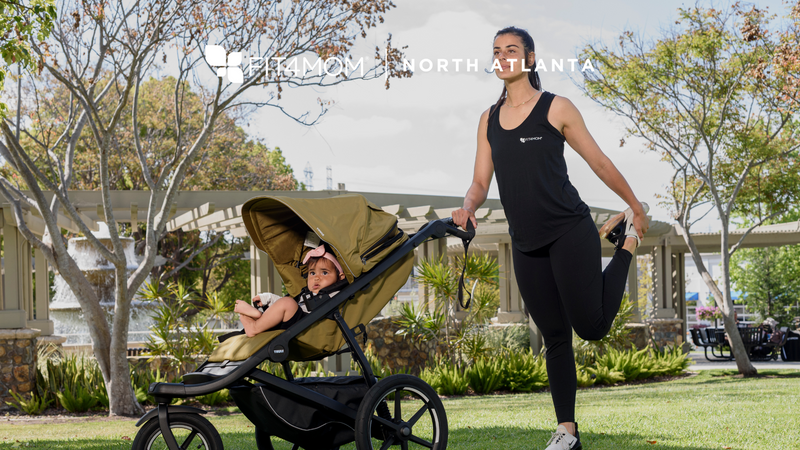
Safer Ways to Exercise With a Newborn
You can stay active without jogging with a newborn. Walking is often the simplest choice during the early months.
A regular stroller walk lets you control the pace and avoid the sharp bumps caused by running. Choose smooth paths, keep the baby properly strapped in, and take breaks as needed.
Other options include:
• Gentle indoor walking
• Postpartum stretching approved by your health professional
• Light strength work at home
• Pelvic floor exercises
• Baby-free cycling or swimming when cleared
• Short home workouts while another adult holds the baby
A baby carrier may work for walking if it fits correctly and keeps the baby’s face visible. It is not usually a good choice for jogging because running creates bouncing and heat.
Do not exercise while holding a newborn in your arms. Do not place a baby in a standard stroller and jog unless the manufacturer clearly approves that use.
The early postpartum period can feel slow. That does not mean you are falling behind. A short walk still supports movement, fresh air, and mood without placing your baby in an unsafe situation.
Common Mistakes to Avoid
Parents often want to return to normal life quickly. That feeling is understandable, but rushing can create avoidable risks.
Avoid these mistakes:
• Jogging before the stroller’s approved age
• Assuming a car seat attachment is safe for running
• Using a soft insert that the manufacturer does not approve
• Covering the stroller with a blanket
• Running in extreme heat or cold
• Choosing rough trails too soon
• Hanging heavy bags from the handle
• Ignoring the baby’s slumped position
• Running near traffic without a clear safety plan
• Returning to exercise despite pain or heavy bleeding
Another common mistake is copying what works for another parent. Babies develop at different speeds, and postpartum recovery can vary greatly. Your friend’s six-month-old may be ready for a short jog, while your baby may need more time.
When in doubt, choose the safer option. Walking today is better than dealing with an injury or a stroller accident later.

What Experts and Safety Guidance Suggest
The American Academy of Pediatrics emphasizes safe stroller use, proper restraints, supervision, and protection from falls and other hazards. Product safety groups also advise following the stroller maker’s age, weight, and activity limits.
The exact advice can differ by stroller model. Some products are tested with newborn accessories for walking, while the jogging function may still require an older baby with good head control.
This is why a general online answer cannot replace the product manual or medical advice. Look for clear instructions on:
• Minimum age for jogging
• Use of bassinets or infant inserts
• Weight and height limits
• Front-wheel settings
• Harness instructions
• Terrain limits
• Brake use
If the manual is missing, contact the manufacturer before using the stroller for exercise. Do not rely only on a product photo or a retailer’s short description.
Frequently Asked Questions About Can You Jog With a Newborn
Can you jog with a newborn in a jogging stroller?
Usually, no. Most babies need to be about six months old and able to control their head and neck before riding in a jogging stroller.
Can you walk with a newborn in a jogging stroller?
Sometimes, but only if the stroller has an approved newborn mode, bassinet, or infant system. Check the manual because some jogging strollers are suitable for walking with a newborn but not for running.
Can you use a car seat in a jogging stroller?
A car seat attachment may be approved for strolling, but it is not usually approved for jogging. Never run with a car seat unless the stroller manufacturer clearly states that the complete setup is safe for running.
What age is safe to jog with a baby?
Many manufacturers recommend waiting until around six months. Your baby should also have strong head control, fit the harness correctly, and meet the stroller’s listed requirements.
Can you jog after having a baby?
You may be able to jog after postpartum recovery and medical clearance, but the timing varies. Start with walking and gentle exercise, then increase effort slowly while watching for pain, bleeding, pelvic pressure, or leakage.
Is it safe to jog with a baby on uneven ground?
Uneven ground increases the risk of shaking, tipping, and loss of control. Choose smooth, flat paths, especially when your baby is first ready to ride during a jog.
Conclusion
Can you jog with a newborn? In most cases, you should wait. Newborns need full head and neck support, and most jogging strollers are designed for older babies who can sit upright and handle movement better.
For now, choose gentle walks, follow your stroller manual, and protect your own postpartum recovery. When your baby is ready, begin with short, slow runs on smooth paths and stop at the first sign of discomfort.
Your safest run is the one that keeps both of you comfortable and well. Check with your pediatrician, review your stroller’s instructions, and share your questions or experiences with other new parents.
