
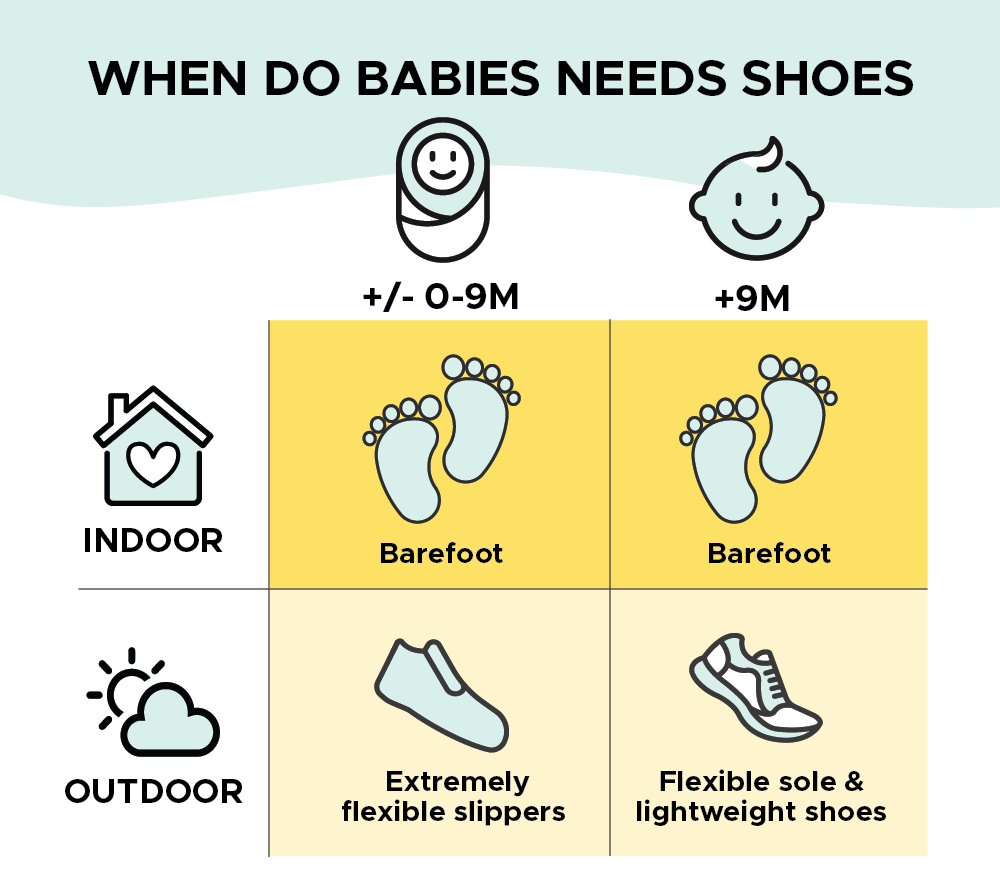
For most babies in the United States, shoes are not needed until they begin walking outside. Before then, socks, booties, or bare feet are usually enough indoors. Many babies take their first steps between 9 and 18 months, but there is no required age to buy a first pair.
The best first shoes protect a new walker’s feet from heat, cold, rough ground, and sharp objects. They should not force the foot into a stiff shape or make walking harder. The American Academy of Pediatrics (AAP) and the American Podiatric Medical Association (APMA) both support flexible, well-fitting footwear for early walkers.
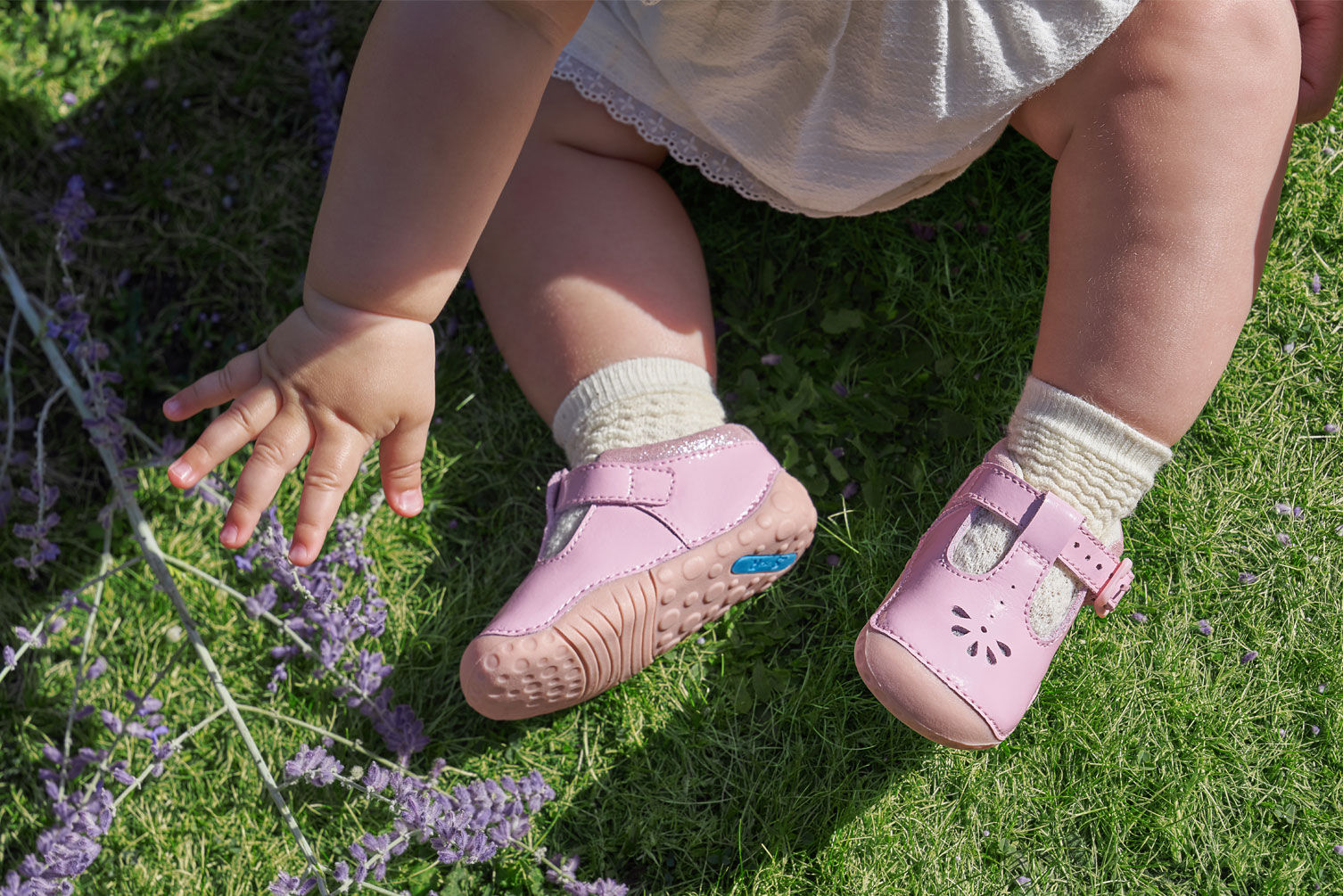
When should a baby start wearing shoes?
A baby should start wearing shoes when they are walking outdoors or in places where their feet need protection. A baby who is only crawling, cruising along furniture, or taking a few steps indoors usually does not need structured shoes.
Bare feet help babies feel the floor and practice balance. When shoes become necessary, choose a pair that protects the foot while still allowing it to move naturally.


A simple guide is:
| Baby’s stage | What usually works |
|---|---|
| Crawling or sitting | Bare feet or socks |
| Pulling up and cruising | Bare feet indoors; soft booties for warmth |
| Taking a few indoor steps | Bare feet on safe floors; flexible shoes outdoors |
| Walking independently outdoors | Flexible first-walker shoes |
| Walking often and confidently | Well-fitting shoes for the activity and surface |
The exact age matters less than the child’s activity. A baby may need outdoor shoes at 10 months, while another may not need them until 15 or 16 months.
Do babies need shoes before they can walk?
Most babies do not need shoes before they can walk. Shoes do not help a baby learn to walk, and stiff shoes may limit foot movement.
For warmth, use socks or soft booties that do not squeeze the toes. In cold weather, choose booties with enough room for the toes to move. Check often because elastic bands, seams, and tight cuffs can leave marks on a baby’s skin.
Pre-walking shoes may look like real shoes, but their main purpose is warmth and light protection. They should be soft and flexible. They are not a medical requirement.
Bare feet are suitable indoors when the floor is clean, warm, and free from hazards. Use protection outdoors, on rough surfaces, or anywhere the baby could step on something sharp.
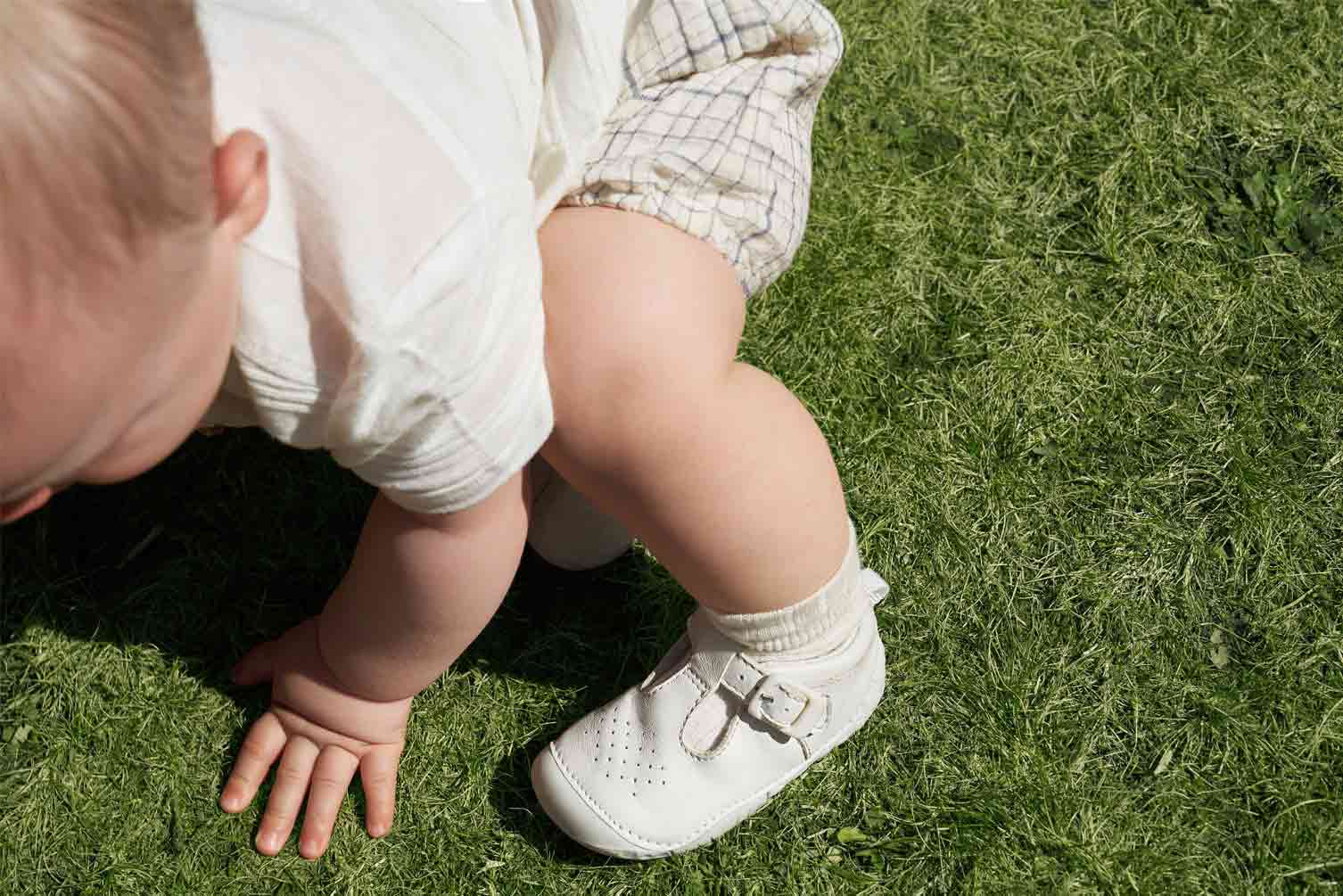
What should a baby’s first shoes be like?
A baby’s first walking shoes should be lightweight, flexible, secure, and roomy at the toes. The shoe should bend near the front of the foot rather than staying stiff from heel to toe.
Look for these features:
- A wide toe box that lets the toes spread
- A flat, flexible sole
- A secure closure, such as laces, hook-and-loop straps, or an adjustable buckle
- A smooth inside with no rough seams
- A lightweight design
- Breathable material
- A heel that stays in place without rubbing
- Enough room for normal toe movement
Avoid shoes that are hard, heavy, narrow, or raised at the heel. Very thick soles can make it harder for a new walker to feel the ground. Slip-on shoes may also fall off or cause the child to grip with the toes.
The AAP notes that early walking shoes should be comfortable and flexible. The goal is protection, not correction. A healthy child does not need a special “learning-to-walk” shoe.

How do you measure a baby’s first shoe size?
Measure both feet while the baby is standing, if possible. Feet can differ slightly in length, so fit the larger foot.
A practical fitting process is:
- Put on the socks the baby will normally wear.
- Have the baby stand with weight on both feet.
- Check the length from the heel to the longest toe.
- Check the width at the widest part of the foot.
- Make sure the heel does not slip when the baby walks.
- Check for redness, pressure marks, or curled toes after wearing the shoes.


Do not rely on age-based shoe charts alone. Shoe sizes vary by brand, and a size labeled for a certain age may not fit every baby.
Many pediatric foot specialists suggest about ⅜ to ½ inch of space in front of the longest toe. This gives room for movement and growth without making the shoe loose. Too much extra space can cause tripping.
You should be able to feel the baby’s longest toe without pressing it against the front of the shoe. The toes should not overlap, curl, or press into one another.

How should you check the fit?
A good fit feels secure but not tight. The shoe should stay on during walking, yet the foot should not look squeezed.
Check the fit in four places:
- Length: The longest toe should not touch the front.
- Width: The sides should not bulge over the sole.
- Heel: The heel should not lift excessively or rub.
- Top of the foot: The closure should hold the shoe without leaving deep marks.
Remove the shoes after a short period and inspect the feet. Red spots that fade quickly may come from normal contact. Persistent redness, blisters, swelling, broken skin, or a change in walking is a reason to stop using the shoes.
Babies’ feet grow quickly. Check the fit about once a month during the first years, and check sooner if the child suddenly resists the shoes or seems uncomfortable.
A shoe that fit last month may already be too short. Children do not always say that a shoe hurts, so parents need to watch for signs.
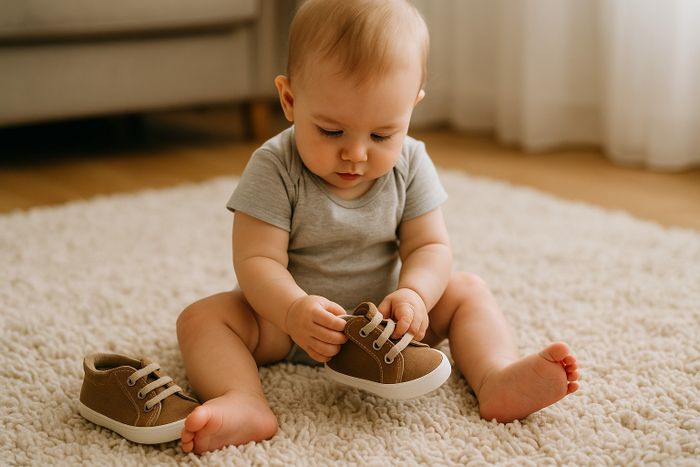
Should babies wear shoes indoors?
Babies usually do not need shoes indoors if the floor is safe and the temperature is comfortable. Bare feet can help a baby feel the surface and adjust balance while learning to walk.
Use socks with grips when the floor is cold or slippery. However, some grippy socks can still slide on smooth floors. Remove them if they bunch under the toes or make the baby stumble.
Indoor shoes may be useful when:
- The floor is rough or splintered
- The room is cold
- The child attends a center with a shoe policy
- The child has a foot condition and a clinician recommends footwear
- The baby is walking on a surface that could injure the feet
At home, clear small objects, cords, hot surfaces, and sharp items from the walking area. Safe floors matter more than shoes during the early walking stage.

What kind of shoes are best for a new walker outdoors?
For outdoor walking, choose shoes based on the surface and weather. A flexible sneaker may work well for sidewalks and indoor spaces. A water-resistant shoe may help in wet conditions, but it should still bend easily and allow the foot to move.
Consider the following:
| Situation | Useful shoe features |
|---|---|
| Sidewalk walking | Flexible sole, secure closure, light traction |
| Cold weather | Warm lining, room for socks, flexible sole |
| Wet conditions | Water-resistant upper, secure fit, breathable design when possible |
| Grass or uneven ground | Protective upper, flexible but stable sole |
| Day care | Easy fastening, secure fit, washable material |
Traction can help on slippery surfaces, but a heavy, rigid sole is not automatically safer. The shoe still needs to bend and allow normal movement.
Do not use worn-out hand-me-down shoes if they have lost their shape, show uneven wear, or no longer fit. Shoes may be shared only when they are clean, intact, and the new child’s feet fit them well. Footwear can change shape with use.


Common mistakes when buying baby shoes
Parents often buy shoes too early or choose them based on appearance rather than fit. These mistakes can make walking less comfortable.
Buying shoes before they are needed
A baby may own several pairs of tiny shoes without needing any for walking. Wait until the child needs protection outdoors. This saves money and reduces the chance of using a stiff or poorly fitting pair.
Choosing a firm sole
A firm sole can limit the foot’s natural movement. Test the shoe by gently bending the front. It should have some flexibility, although the exact amount varies by design.
Buying a size to “grow into”
A little room is useful. A very large shoe can slip, twist, or cause trips. Fit the shoe to the larger foot and leave only modest growing room.
Using shoes that are hard to fasten
Loose shoes can fall off. Very tight shoes can restrict the foot. Adjustable fasteners help you create a secure fit as the foot changes.
Keeping shoes on despite warning signs
Take the shoes off if the baby limps, trips more than usual, cries when putting them on, develops blisters, or has lasting red marks. Recheck the size and shape before trying them again.

When should you ask a pediatrician or podiatrist?
Most babies can begin walking in ordinary flexible shoes without a medical assessment. Ask the child’s pediatrician if walking concerns persist or if the feet seem painful.
Contact a pediatrician if your child:
- Has pain, swelling, or repeated blisters
- Frequently falls after a shoe change
- Walks only on the toes for a persistent period
- Uses one side of the body much more than the other
- Has a foot that appears very stiff or unusually turned
- Stops using a skill they previously had
- Is not walking independently by about 18 months
The Centers for Disease Control and Prevention lists walking without holding on as a milestone expected by 18 months for many children. Milestones are not exact deadlines, and some healthy children develop skills earlier or later. A pediatrician can assess the whole child rather than judging development from shoe use alone.
Children with cerebral palsy, low muscle tone, clubfoot, significant in-toeing, or another diagnosed condition may need specific footwear or orthotic care. Do not use corrective shoes or inserts without guidance from a qualified clinician.

Key takeaways: Most babies do not need shoes until they walk outdoors. Start with flexible shoes that have a wide toe area, a flat sole, and a secure fit. Check the fit often, and use bare feet indoors when the setting is safe.
Frequently asked questions
Can babies wear shoes when they are crawling?
They can wear soft booties or flexible shoes for warmth and light protection, but they usually do not need structured shoes. Avoid stiff soles that make crawling or floor play harder.
Are soft-soled shoes better for new walkers?
Soft-soled shoes can work well for early walkers because they allow more foot movement. The key factors are flexibility, fit, comfort, and protection. A shoe does not need to be completely flat or paper-thin to be suitable.
Should a baby wear socks with shoes?
Socks can reduce rubbing and help keep feet warm. Use socks that fit smoothly and do not bunch at the toes. When checking shoe size, measure with the type of socks the baby will wear.


How often should baby shoes be replaced?
Replace shoes when the toes touch the front, the sides feel tight, the heel rubs, the sole is worn, or the shoe has lost its shape. Check fit at least monthly because young feet can grow quickly.
Do babies need arch support?
Most healthy babies do not need special arch support. Infant foot arches may not look like adult arches, and padded inserts are not usually needed without a medical reason. Ask a pediatrician or podiatrist before adding orthotics.
Is it safe for babies to walk barefoot?
Yes, barefoot walking is generally safe indoors when the floor is clean, warm, and free of hazards. Use shoes outdoors or wherever the feet could encounter sharp, hot, rough, or contaminated surfaces.
The bottom line
Babies typically start wearing real shoes when they begin walking outside, not at a specific age. Until then, bare feet, socks, or soft booties are usually enough.
Choose a first pair that is flexible, light, roomy at the toes, and secure at the heel. Watch how the baby walks, inspect the feet after use, and replace the shoes when they become tight or worn. If walking looks painful or unusual, ask the child’s pediatrician for advice.
