
No U.S. state has a simple rule that requires every newborn to receive a drug test at birth. Instead, testing depends on state law, hospital policy, medical concerns, and the circumstances of the pregnancy or delivery.
A hospital may test a newborn’s urine, meconium, umbilical cord tissue, or blood when there are signs of possible prenatal drug exposure. A positive result may lead to medical care, a social-work review, a report to child protective services, or a federal Plan of Safe Care. However, drug testing and child-abuse reporting are separate issues.
State laws also change. A law that requires health care professionals to report suspected prenatal drug exposure may not require the hospital to test the baby. This difference is the source of much confusion.
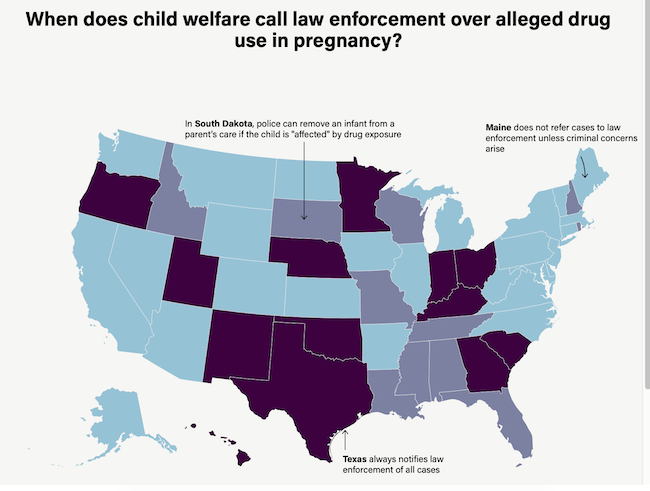
Is newborn drug testing required in every state?
No. The United States does not have one nationwide rule requiring hospitals to drug test all babies.


Federal law requires states to address infants affected by substance use or withdrawal. The federal Child Abuse Prevention and Treatment Act, or CAPTA, supports state systems for these infants, including Plans of Safe Care. CAPTA does not require hospitals to test every newborn for drugs.
The law also does not create one national testing method. Hospitals and clinicians decide when testing is medically useful, subject to state law, hospital policy, and professional standards.
The four rules people often confuse
| Rule or practice | What it means | Does it always require a drug test? |
|---|---|---|
| Newborn screening | Tests for certain inherited, metabolic, hearing, and heart conditions | No |
| Toxicology testing | Tests a newborn or parent for drugs or drug metabolites | No |
| Mandatory reporting | Requires a professional to report suspected abuse, neglect, or prenatal exposure | Not always |
| Plan of Safe Care | Coordinates services for an infant affected by substance use or withdrawal | No |
Every state has newborn screening programs for serious health conditions. Those routine screenings are not the same as toxicology tests.
A state may require a report when a baby shows withdrawal symptoms or when a clinician has reasonable cause to suspect prenatal exposure. That rule does not necessarily tell the hospital which test to use—or require testing at all.
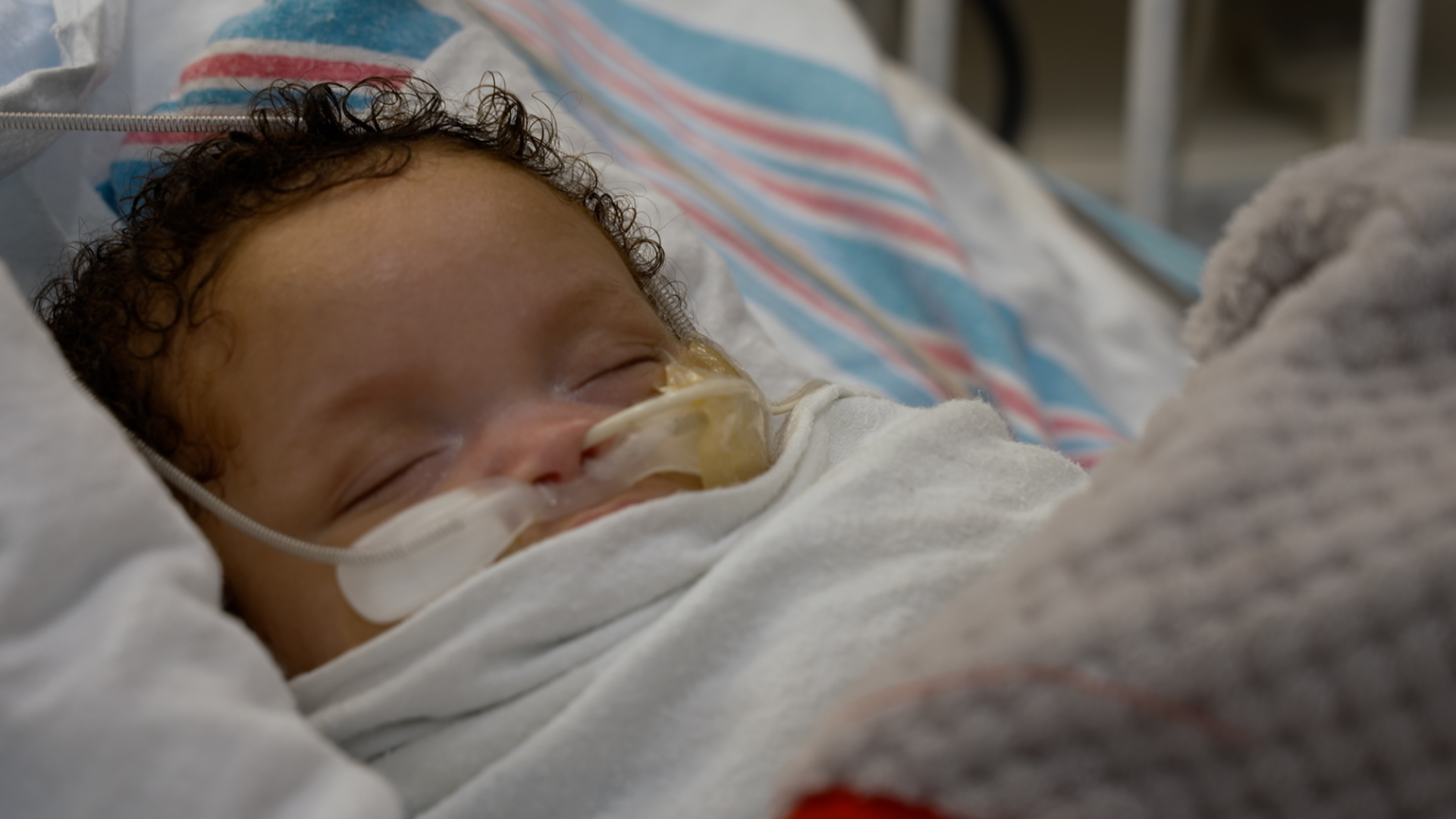
Which states drug test newborns?
The most accurate answer is that all states may allow newborn drug testing in certain circumstances, but states do not use one uniform testing rule.
Some states focus on:
- A newborn’s withdrawal symptoms
- A positive test from the pregnant patient
- A history of substance use
- Little or no prenatal care
- Signs of intoxication or withdrawal in the parent
- Placental, meconium, or umbilical-cord findings
- Medical symptoms that have no clear cause
- A prior child-welfare history
- Hospital rules for selecting newborns for testing
Other states focus more on mandatory reporting than on the test itself.
Why there is no reliable “state list”
A list that says “these states test babies” may mix together several different legal duties:
- States that require a health professional to report suspected harm
- States that require a Plan of Safe Care
- States that define prenatal drug exposure as evidence of possible neglect
- Hospitals that use risk-based testing
- Hospitals that use universal testing within their own system
Those categories are not the same.
For example, a state statute may say that a professional must report an infant who is affected by substance exposure. The statute may not say that every baby must receive a urine or meconium test. A hospital may still test when its medical team believes the result will guide care or meet a reporting duty.


What the federal law does
CAPTA requires states to have procedures for infants who are:
- Prenatally exposed to illegal drugs
- Affected by substance use
- Experiencing withdrawal after birth
States generally address these cases through a Plan of Safe Care. The plan can connect the infant and family with medical care, substance-use treatment, home-visiting programs, mental-health services, or other support.
A Plan of Safe Care is not automatically the same as a finding of child abuse. It is also not proof that a newborn was drug tested.

How hospitals decide whether to test a baby
Hospitals commonly use a risk-based approach. The exact policy varies, but staff may consider both medical signs and information from the pregnancy.
Possible reasons for testing include:
- The baby has tremors, unusual irritability, poor feeding, vomiting, or breathing problems
- The baby needs treatment for suspected withdrawal
- The pregnant patient had a documented positive toxicology result
- The medical team sees signs of current or recent substance use
- The patient reports drug use that could affect the baby
- Prenatal care was limited or absent
- The baby is unusually small or has other findings that concern the care team
- There is a prior history of an affected newborn
- Hospital policy calls for testing in a particular risk group
These signs do not prove drug exposure. Newborn symptoms can have many causes, including infection, low blood sugar, medication exposure, birth stress, or normal variation.
Common newborn drug tests
Urine testing
Urine testing is quick and may be available soon after birth. It mainly detects recent exposure. A negative result does not rule out earlier exposure because some substances leave urine quickly.
Collection can also be difficult. A sample may be diluted, contaminated, or collected after the substance has left the baby’s system.
Meconium testing
Meconium is a baby’s first stool. It can show exposure over a longer period than urine, often during the later part of pregnancy. It may not show very recent use, and the timing window differs by substance and test.
Umbilical cord tissue testing
Umbilical cord tissue can be collected at birth and sent to a laboratory. It may offer a practical alternative to meconium collection. Its detection window and accuracy depend on the substance, laboratory method, and timing of exposure.
Blood testing
Blood testing usually provides a shorter detection window. It may be used when clinicians need information about possible current exposure or when the baby needs urgent medical evaluation.
No test detects every substance equally well. A test panel may not include a medication or drug that a family believes it should detect.

Does a positive test automatically mean CPS will take the baby?
No. A positive newborn drug test does not automatically produce one outcome in every state or hospital.


The result may lead to:
- Extra medical observation
- Treatment for withdrawal
- A social-work assessment
- A Plan of Safe Care
- A report to a child-welfare agency
- A review of the home and available caregivers
- Services for the parent and infant
- No child-welfare removal, if the baby is safe and the family has an adequate care plan
The response depends on state law, the substance involved, the baby’s condition, the parent’s ability to provide safe care, and other facts.
A positive result can be evidence considered by child-welfare professionals, but it is not the same as a court finding. Child-welfare agencies generally assess the full situation, including safety risks and protective factors.
Prescription medicines can affect results
Some prescribed medicines can produce a positive result or appear on a toxicology panel. Examples may include medicines used for pain, anxiety, attention disorders, or opioid-use disorder.
The medical team should review:
- The exact substance reported
- The test method
- The reported concentration, when available
- Prescribed medicines
- Hospital medicines given during labor or after birth
- Whether the result was a screening test or a confirmatory test
An initial screening result may need confirmation with a more specific laboratory method. A screening test is not always a final answer.
Cannabis results can be treated differently
State laws and hospital policies differ on cannabis exposure. A positive cannabis result may trigger a report or Plan of Safe Care in some settings, while other settings use different thresholds or responses.
Do not assume that legal adult cannabis use has the same child-welfare consequences in every state. Cannabis laws, medical-use rules, employment rules, and child-welfare standards are separate legal systems.
What should parents ask the hospital?
Parents can ask clear questions before or after delivery. Asking does not prevent a hospital from following its legal duties, but it can help the family understand what is happening.
Useful questions include:
- Was my baby tested for drugs or medications?
- What type of sample was tested?
- Was the test a screening test or a confirmatory test?
- Which substances were included in the panel?
- Could any medicine given during labor or after birth affect the result?
- What symptoms led to the test?
- Will the hospital make a report or create a Plan of Safe Care?
- What services or treatment does the hospital recommend?
- Can I receive the result and the laboratory report?
- Who can explain the state-specific process to me?
Parents should give the medical team a complete list of prescribed medicines, over-the-counter products, and supplements. They should also ask whether a result was confirmed before making assumptions about what it means.
If child protective services becomes involved, the parent should ask for the agency’s name, the caseworker’s contact information, the reason for the contact, and any deadlines. A local family-law or child-welfare attorney can explain rights that depend on the state and the facts.

What happens after a newborn is identified as substance-exposed?
The next step usually depends on the baby’s health and the state’s child-welfare process.
Medical staff may monitor the baby for withdrawal or other complications. Treatment can include feeding support, quiet surroundings, skin-to-skin care, medication, or observation. The care team should explain the signs they are watching for and the reason for each treatment.
The hospital may also create a Plan of Safe Care. This plan can include:


- A pediatric follow-up visit
- Safe sleep education
- Feeding support
- Substance-use treatment
- Medication-assisted treatment when appropriate
- Mental-health care
- Home-visiting services
- Help with transportation, housing, or food
- A safe caregiver plan
A report does not always mean the infant will leave the hospital with someone else. Child-welfare staff may assess whether the parent can safely care for the baby and whether relatives or other supports are available.
Parents should cooperate with medical care and ask for legal help if they do not understand a request, disagree with a safety plan, or face a court hearing. They should not delay urgent medical treatment while trying to resolve a legal question.

Common mistakes about newborn drug testing
Mistake 1: Assuming every baby in a state receives a drug test
Most states do not have a simple rule requiring toxicology testing for every newborn. Hospital policy and clinical concerns often determine who is tested.
Mistake 2: Treating routine newborn screening as a drug test
The heel-stick screen, hearing test, and pulse-oximetry screen are routine newborn screenings. They do not usually test for illegal drugs.
Mistake 3: Assuming a report proves drug use
A report may be based on symptoms, history, a parent’s test, or professional concern. A report is an allegation or safety referral, not a final finding.
Mistake 4: Believing a negative test rules out exposure
Each test has a detection window. A negative urine, blood, meconium, or cord-tissue result may not rule out exposure outside that window.
Mistake 5: Ignoring legal medicines
Prescription drugs and medicines given during labor can affect a toxicology result. The care team should review the medication record before interpreting the result.
Mistake 6: Assuming a positive result guarantees removal
Child-welfare decisions usually consider the baby’s safety, the parent’s condition, the home environment, and the available support—not only one laboratory result.

How to check the rule in your state
Because the answer depends on both state law and hospital policy, use this process:
- Ask the hospital for its written newborn toxicology policy.
- Ask whether the policy is universal, risk-based, or symptom-based.
- Request the exact test name and laboratory report.
- Ask whether the hospital has a reporting or Plan of Safe Care duty.
- Check your state child-welfare agency’s guidance.
- Review the current state statute or administrative rule.
- Speak with a local attorney if a report, investigation, or court case is involved.
The hospital’s social worker, patient advocate, risk-management office, or medical-records department may help explain the process. They cannot replace legal advice, but they can often identify the policy used in that facility.
Key sources
- Child Abuse Prevention and Treatment Act, 42 U.S.C. § 5106a
- Child Welfare Information Gateway: Plans of Safe Care
- American Academy of Pediatrics: Prenatal Substance Exposure and Newborn Care
- ARUP Laboratories Consult: Newborn Drug Testing
These sources explain the federal framework and testing issues. They do not replace the current law or policy in a particular state or hospital.


FAQs about states that drug test babies at birth
Do hospitals drug test every baby born in the United States?
No. Hospitals do not follow one nationwide rule that requires toxicology testing for every newborn. Testing may be based on symptoms, medical history, a parent’s test, or hospital policy.
Can a hospital test a newborn without the parent’s consent?
Consent rules vary by state, hospital, and the reason for testing. Medical testing, child-welfare reporting, and forensic testing may follow different rules. Ask the hospital which policy and law apply.
What sample gives the longest look at drug exposure?
Meconium and umbilical cord tissue can detect a broader period of late-pregnancy exposure than urine or blood. The exact window depends on the drug, the test method, and when exposure occurred.
Can a newborn test positive because of a parent’s prescription?
Yes. Some prescription medicines can appear on toxicology testing. The medical team should compare the result with the parent’s medication list and confirm unexpected screening results.
Should a parent hire a lawyer after a positive newborn drug test?
Legal help is wise if child protective services opens a case, asks the parent to sign a safety plan, seeks a court order, or threatens removal. A local attorney can explain rights and deadlines under the state’s law.
Bottom line
There is no simple national list of states that drug test every baby at birth. In the United States, newborn toxicology testing usually depends on state requirements, hospital policy, medical findings, and the circumstances of the pregnancy.
A drug test, a mandatory report, and a Plan of Safe Care are different things. If a test occurs, ask what sample was used, what substances were included, whether the result was confirmed, and what the hospital plans to do next. For a state-specific legal issue, contact the hospital’s patient advocate and a qualified local attorney.
