
For babies in the United States, a bassinet should contain very little: a firm, flat mattress with a tight-fitting sheet, and your baby placed on their back. Do not add pillows, blankets, stuffed toys, bumpers, positioners, or extra padding.
This simple setup follows safe-sleep guidance from the American Academy of Pediatrics (AAP) and the U.S. Consumer Product Safety Commission (CPSC). A bare bassinet may look plain, but an empty sleep space helps lower the risk of suffocation and sleep-related infant death.

What Should Be in a Bassinet?
A safe bassinet usually needs only these items:
- A firm, flat mattress or sleep surface
- One fitted sheet made for that specific bassinet
- Your baby, placed on their back
- A pacifier, if your baby uses one


That is the full basic setup. The mattress should fit tightly in the bassinet, with no gaps around the edges. The sheet should stay smooth and secure when your baby moves.
Do not place loose items in the bassinet. This includes blankets, pillows, quilts, comforters, stuffed animals, toys, crib bumpers, sleep positioners, and nursing pillows.
A quick bassinet checklist
| Item | Is it safe to use? | Important condition |
|---|---|---|
| Firm bassinet mattress | Yes | It must fit the bassinet and stay flat |
| Bassinet-specific fitted sheet | Yes | Use only the correct size |
| Baby | Yes | Place the baby on their back |
| Pacifier | Usually | Do not attach it with a cord or clip during sleep |
| Wearable blanket | Usually | Use the right size and avoid overheating |
| Loose blanket | No | It can cover the baby’s face |
| Pillow or cushion | No | It creates a soft, unsafe surface |
| Stuffed toy | No | Keep toys out of the sleep space |
| Bumper or liner | No | It can add suffocation and entrapment risks |
| Sleep positioner | No | It can restrict movement or block breathing |
| Extra mattress pad | Usually no | It may make the surface too soft or loose |
A bassinet is not meant to be filled like a crib or a baby basket. Less is safer.

What Kind of Mattress and Sheet Does a Bassinet Need?
Use the mattress supplied or approved by the bassinet manufacturer. It should be firm, flat, and designed to fit that model. Do not replace it with a folded blanket, memory-foam pad, couch cushion, pillow, or homemade insert.
The fitted sheet should be made for the bassinet mattress. A standard crib sheet may be too large. A loose sheet can bunch under the baby or pull away from the mattress.
Check the mattress and sheet before each use:
- Press the mattress lightly. It should not feel soft or sink deeply.
- Check that the mattress lies flat.
- Look for gaps between the mattress and the bassinet sides.
- Pull on each corner of the sheet.
- Replace a sheet that is loose, torn, stretched, or not designed for that bassinet.
Do not add a waterproof pad unless the bassinet maker specifically allows that exact product. If one is allowed, it must fit tightly and stay flat. An extra layer can change the firmness or create gaps.
Can you use a secondhand bassinet mattress?
Use caution. A used mattress may be worn, misshapen, contaminated, or made for a different model. The safest choice is the original mattress in good condition or a replacement approved by the manufacturer.
Also check the bassinet for:
- A missing or damaged mattress
- Broken locks or folding parts
- Loose fabric
- Bent supports
- Sharp edges
- Missing instructions
- A product recall
Search the model at the CPSC recalls page and follow the manufacturer’s instructions.


What Should a Baby Wear in a Bassinet?
Dress your baby in a simple layer that keeps them warm without overheating. Good options may include:
- A diaper and a fitted sleeper
- A lightweight bodysuit and sleeper
- A properly sized wearable blanket
- A swaddle used according to safe-swaddling guidance
A wearable blanket is safer than a loose blanket because it stays on the baby without covering the face. Choose the right size. A neck opening that is too large can allow the garment to slide over the baby’s face.
Avoid overdressing. A baby usually needs about one more light layer than an adult would wear in the same room, but room temperature, clothing type, and the baby’s health all matter. Check the baby’s chest or back. Sweating, damp hair, flushed skin, or a hot chest may signal overheating.
Do not use hats indoors during sleep unless a medical professional has given specific instructions. Hats can contribute to overheating and may slip over the baby’s face.
Can you swaddle a baby in a bassinet?
You may swaddle a young baby if you do it correctly and the baby is placed on their back. The swaddle should be snug around the chest but loose around the hips and legs. The baby’s head and face must remain uncovered.
Stop swaddling as soon as the baby shows signs of trying to roll. This often happens around 2 months, but babies develop at different rates. Once rolling begins, switch to a wearable blanket that leaves the arms free.
Never use a weighted swaddle, weighted blanket, or weighted sleep sack for an infant unless a qualified clinician gives clear, product-specific advice. The AAP recommends avoiding weighted sleep products for babies.

What Should Never Go in a Bassinet?
The following items should stay outside the bassinet:
Loose bedding
Do not use loose blankets, quilts, comforters, or sheets that are not fitted. A blanket can move over a baby’s nose and mouth. If your baby needs warmth, use clothing or a properly fitted wearable blanket instead.
Pillows and positioners
Infant pillows, sleep positioners, wedges, and anti-roll devices do not make sleep safer. They can restrict movement or create soft areas around the baby’s face.
Toys and stuffed animals
Keep toys, loveys, and stuffed animals out of the bassinet during sleep. You can use them during supervised play, but they should not remain in the sleep space.
Bumpers and padded liners
Bassinet bumpers and padded liners can create gaps, trap a baby, or block airflow. Decorative padding is not needed for safe sleep.
Breastfeeding pillows and loungers
A nursing pillow, baby lounger, or cushioned nest is not a bassinet. These products are not intended for routine infant sleep unless they meet the applicable safety standard for a designated sleep product. Move a sleeping baby to a firm, flat bassinet, crib, or play yard.


Monitors and cords
Keep cords, charging cables, and monitor parts away from the bassinet. A monitor does not make an unsafe sleep space safe. Home cardiorespiratory monitors also should not replace safe-sleep practices.

Where Should You Put the Bassinet?
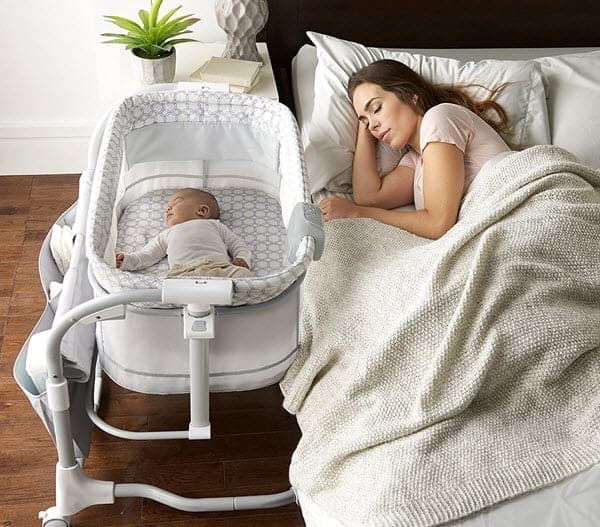
Place the bassinet in the parents’ or caregiver’s room, close to the adult bed but on its own separate sleep surface. The AAP recommends room-sharing without bed-sharing, ideally for at least the first six months.
Keep the bassinet:
- On a stable, level floor
- Away from windows, blinds, curtain cords, heaters, and fans
- Away from furniture that could fall or be pulled into the bassinet
- Away from pets and other children during unsupervised sleep
- In a smoke-free environment
Do not place the bassinet on a bed, sofa, countertop, table, dresser, or other raised surface unless the product is specifically designed and approved for that use. Never leave a bassinet on an unstable surface.
What about a bedside sleeper?
A bedside sleeper is a separate product category. Some attach to or sit beside an adult bed, while others have a side that lowers according to the manufacturer’s design. Use it only as directed.
Do not remove a side, alter the frame, add straps, or use a bedside sleeper in a way the manual does not describe. If the product is designed for independent sleep, keep its sleep surface clear even when it is next to the adult bed.
Can the baby sleep in the bassinet all night?
A bassinet can be used for naps and nighttime sleep if it is approved for infant sleep and used within its limits. Stop using it when the baby reaches the manufacturer’s weight, height, or developmental limit.
Move the baby to a crib, portable crib, or play yard when:
- The baby reaches the stated weight limit
- The baby is too long for the sleep surface
- The baby can push up on their hands and knees
- The baby can roll, sit, or pull up, if the manual says to stop at that stage
- The bassinet becomes damaged or unstable
Always follow the product manual. Bassinet limits vary by model.

What If the Baby Falls Asleep Somewhere Else?
Move the baby to the bassinet as soon as practical if they fall asleep in a swing, stroller, car seat, lounger, or other sitting device. These products are not designed for routine sleep.
If the baby falls asleep while feeding in bed, place them in their own bassinet when you wake up. Before feeding, remove pillows, blankets, and other soft items from the area if there is a chance you might doze off. A couch or armchair is especially dangerous for infant sleep.
A tired caregiver may not plan to sleep, but exhaustion can change what happens. Preparing a clear bassinet before feeding makes the safer choice easier.
What if the baby spits up?
Healthy babies do not need to sleep on their side or stomach because of normal spit-up. Place the baby flat on their back unless a qualified health professional gives different instructions for a diagnosed medical condition.
Do not raise the bassinet mattress with towels, wedges, books, or homemade supports. An inclined surface can cause the baby’s head to fall forward and make breathing harder.


If your baby has frequent vomiting, trouble breathing, poor weight gain, or unusual choking episodes, contact the child’s health care professional.
What if the baby is cold?
Add a clothing layer or use a properly sized wearable blanket rather than placing a loose blanket in the bassinet. Check the baby’s chest or upper back instead of relying only on hands and feet, which may feel cool even when the baby is comfortable.
Ask a pediatrician for advice if your baby was born early, has a health condition, or has special temperature needs.
Bassinet Safety Setup: A Simple Step-by-Step Method
Use this routine each time you prepare the bassinet:
- Check the product. Confirm that the bassinet is fully assembled, stable, and within its use limits.
- Clear the sleep space. Remove blankets, toys, pillows, pads, and other objects.
- Check the mattress. Make sure it is firm, flat, and made for that bassinet.
- Fit the sheet. Use one tight, bassinet-specific fitted sheet.
- Dress the baby. Use light sleep clothing or a safe wearable blanket.
- Place the baby on their back. Put the baby’s head near the top of the sleep surface, following the product instructions.
- Keep the face clear. Make sure no fabric, hat, or clothing covers the nose or mouth.
- Check the room. Keep cords, heat sources, smoke, and hazards away.
- Recheck the setup. If the baby becomes mobile or the product changes, review the manual again.
The setup is correct when the baby lies alone, on their back, on a firm and flat surface, with only a fitted sheet beneath them.

Common Bassinet Mistakes to Avoid
The most common mistake is trying to make the bassinet look cozy by adding soft items. Babies do not need a pillow or blanket for comfort. A safe sleep space should be firm, flat, and free of loose objects.
Other mistakes include:
- Using a sheet that is too large
- Adding a mattress topper
- Placing the bassinet on an adult bed
- Leaving a pacifier attached to a cord or clip
- Using a swaddle after the baby starts trying to roll
- Keeping a sleeping baby in a car seat or swing
- Ignoring the manufacturer’s weight or movement limits
- Assuming an inclined product is safer for reflux
- Using a damaged or recalled bassinet
- Relying on a monitor instead of safe sleep practices
A pacifier can be offered at sleep time if your baby accepts it. Do not force it, and do not attach it to clothing, a necklace, a cord, or a stuffed toy during sleep. If you are breastfeeding, the AAP suggests waiting until breastfeeding is well established before introducing a pacifier, unless your health care professional advises otherwise.

Frequently Asked Questions
Do you need a bassinet mattress pad?
Usually, no. Use the mattress and fitted sheet approved for the bassinet. A pad can make the sleep surface softer or create a gap. Use one only if the bassinet manufacturer specifically approves that exact type and size.
Can a baby sleep with a pacifier in a bassinet?
Yes, a pacifier may be offered at naps and bedtime. It should be free from cords, clips, necklaces, and stuffed attachments. If it falls out after the baby falls asleep, you do not need to put it back.
Can you put a blanket over a baby in a bassinet?
No. Keep loose blankets out of the bassinet. Use suitable clothing or a wearable blanket for warmth.
Can a newborn sleep in a bassinet?
Yes, if the bassinet is designed for newborn sleep and the baby is within the product’s limits. Use a firm, flat surface with a tight fitted sheet and place the newborn on their back.
Is a bassinet safer than a crib?
A bassinet is not automatically safer than a crib. Both can be appropriate when they meet current U.S. safety requirements and are used correctly. The deciding factors are a clear, firm, flat sleep surface, proper setup, and following the product’s limits.


When should you stop using a bassinet?
Stop when the manufacturer’s weight, height, or developmental limit is reached. Also stop if the baby begins a movement listed in the manual as a reason to transition, such as rolling, sitting, or pushing up.

The Bottom Line
Put a firm, flat bassinet mattress, one tight fitted sheet, and your baby in the bassinet. Place the baby on their back, keep the space free of loose items, and use a wearable blanket instead of a loose blanket when extra warmth is needed.
Before the first sleep, read the bassinet manual and check the model for recalls on the CPSC website. If your baby has a medical condition, was born premature, or has unusual breathing or feeding problems, ask the baby’s health care professional for tailored guidance.
