
No. You do not have to use a bassinet for a newborn in the United States. A newborn can sleep safely in a full-size crib, portable crib, or play yard if it meets current federal safety standards and has a firm, flat, non-inclined sleep surface.
The key issue is not the word bassinet. The key issue is where and how your baby sleeps. The American Academy of Pediatrics (AAP) recommends placing a baby on their back, alone, on a firm and flat surface designed for infant sleep. Room sharing without bed sharing is also recommended, ideally for at least the first six months.
A bassinet may be convenient, especially beside the parents’ bed. But it is an option, not a requirement.


What a Newborn Needs for Safe Sleep
A newborn needs a separate sleep space with four basic features:
- A firm, flat, level surface
- A fitted sheet made for that sleep product
- No pillows, loose blankets, bumper pads, toys, or stuffed animals
- A design intended for infant sleep
Place your baby on their back for every sleep, including naps. Keep the baby’s sleep space in the same room where you sleep, but not in the same bed.
The AAP safe sleep recommendations apply whether you use a bassinet, crib, portable crib, or play yard. The AAP does not require parents to use one particular type of approved sleep product.
Safe sleep products may include
- A full-size crib
- A portable crib
- A play yard that is approved for infant sleep
- A bassinet
- A cradle
- A bedside sleeper that meets applicable federal standards
A product can look comfortable and still be unsafe for routine sleep. Infant loungers, nursing pillows, swings, bouncers, and inclined sleepers are not substitutes for a safe crib or bassinet.
The U.S. Consumer Product Safety Commission (CPSC) advises parents to use a firm, flat sleep surface and to stop using products when the child reaches the product’s stated limit or can push up on their hands and knees, depending on the product instructions.
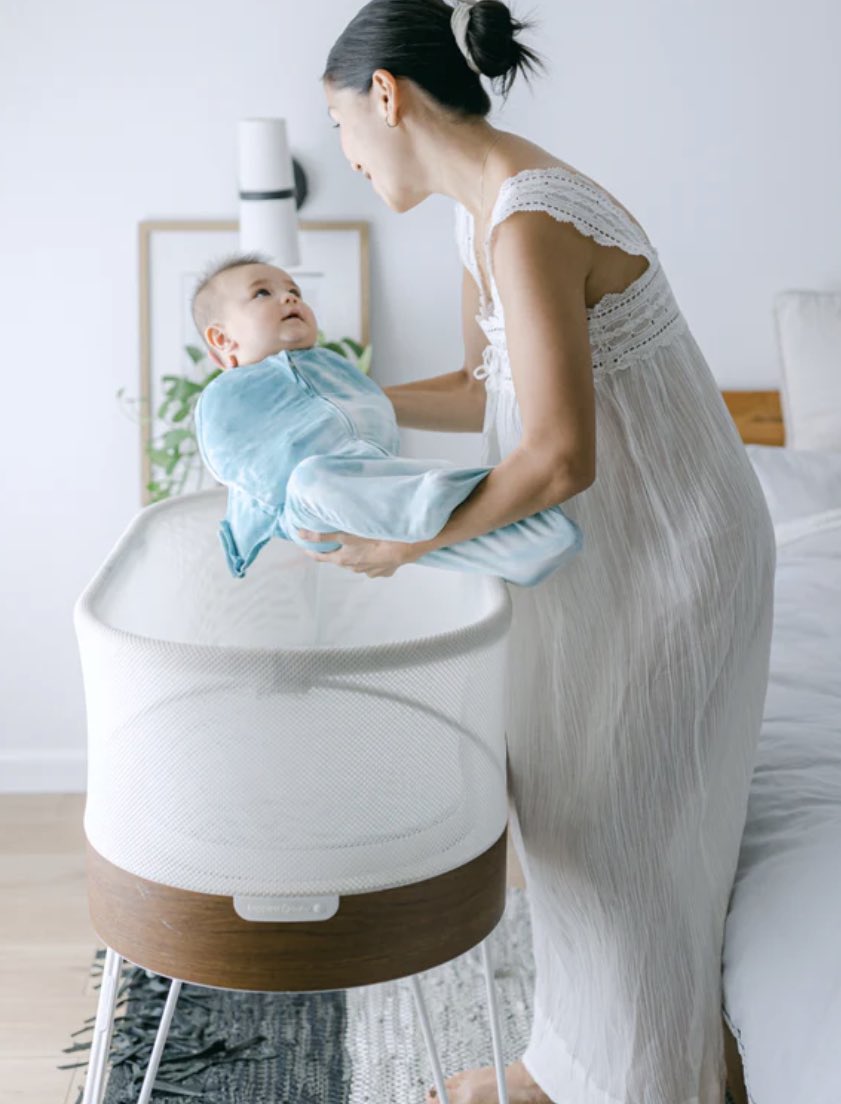
Bassinet vs. Crib: Which One Is Better?
Neither is automatically safer when both are used correctly. The better choice is the product that meets safety standards, fits your space, and allows you to follow safe sleep rules every time.
| Feature | Bassinet | Full-size crib |
|---|---|---|
| Intended use | Young infants | Infants from birth through a longer period |
| Size | Small and easy to keep near the bed | Larger and less portable |
| Use period | Often limited by weight, height, or movement | Usually lasts much longer |
| Main benefit | Convenient room sharing and nighttime access | More room and less need to transition soon |
| Main limitation | The baby may outgrow it quickly | Takes more space |
A bassinet can make nighttime care easier because it is small and often fits beside the parents’ bed. A crib may be more practical if you already own one, have limited funds, or want to avoid moving your baby to a new sleep space after a few weeks or months.
The safest product is not necessarily the newest or most expensive one. A basic crib with a firm mattress and fitted sheet can meet the need just as well as a more costly bassinet, as long as it is in good condition and complies with current safety requirements.

Can a Newborn Sleep in a Crib From Birth?
Yes. A newborn can sleep in a crib from the first night home.


The crib should have:
- A firm mattress that fits snugly
- A fitted sheet designed for that mattress
- No gaps between the mattress and crib sides
- No soft items or loose bedding
- A location in the parents’ room, if possible
Do not add a mattress topper, sleep positioner, wedge, pillow, or extra padding. A firm surface may feel hard to an adult, but it helps reduce the chance that a baby’s face will sink into the sleep surface.
A crib does not need to be used only after a baby outgrows a bassinet. Starting with a crib can be a simple and safe choice. It may also reduce the need for a later transition.
What about a portable crib or play yard?
A portable crib or play yard may be suitable for newborn sleep when the manufacturer identifies it as a sleep product and the setup follows the instructions. Use only the mattress or pad supplied or approved by the manufacturer.
Do not replace the original pad with a thicker or softer mattress. Do not place a second mattress on top. Extra padding can create gaps or allow the baby to sink into the surface.
The CPSC provides information about cribs, bassinets, bedside sleepers, and play yards. Check the product label and manual for the exact age, weight, height, and movement limits.

When Is a Bassinet Useful?
A bassinet is useful when it helps you create a safe sleep routine. Its small size can make it easier to keep the baby near your bed, which supports room sharing and makes nighttime feeding and checking easier.
A bassinet may fit your needs if:
- You want a smaller sleep space beside your bed
- Your bedroom cannot fit a full-size crib
- You plan to move the baby to a crib later
- You want a lightweight sleep product for approved travel or room changes
- You can follow its limits and instructions
A bassinet is not necessary just because a baby is small. A full-size crib can serve the same basic purpose from birth.
When should you stop using a bassinet?
Stop using the bassinet when any applicable limit is reached. This may include:
- The baby reaches the listed weight limit
- The baby reaches the height limit
- The baby can roll, push up, sit, or move into a position the manual warns about
- The baby can pull up or climb out
- The manufacturer says the product is no longer appropriate
Do not wait for a newborn to look cramped. Read the manual before use and keep it available. If you cannot find the manual, look for the exact model online through the manufacturer or contact the company.
A bassinet is not safer if a baby has already outgrown it. Once the product no longer fits the baby’s stage, move the baby to an appropriate crib, portable crib, or play yard.
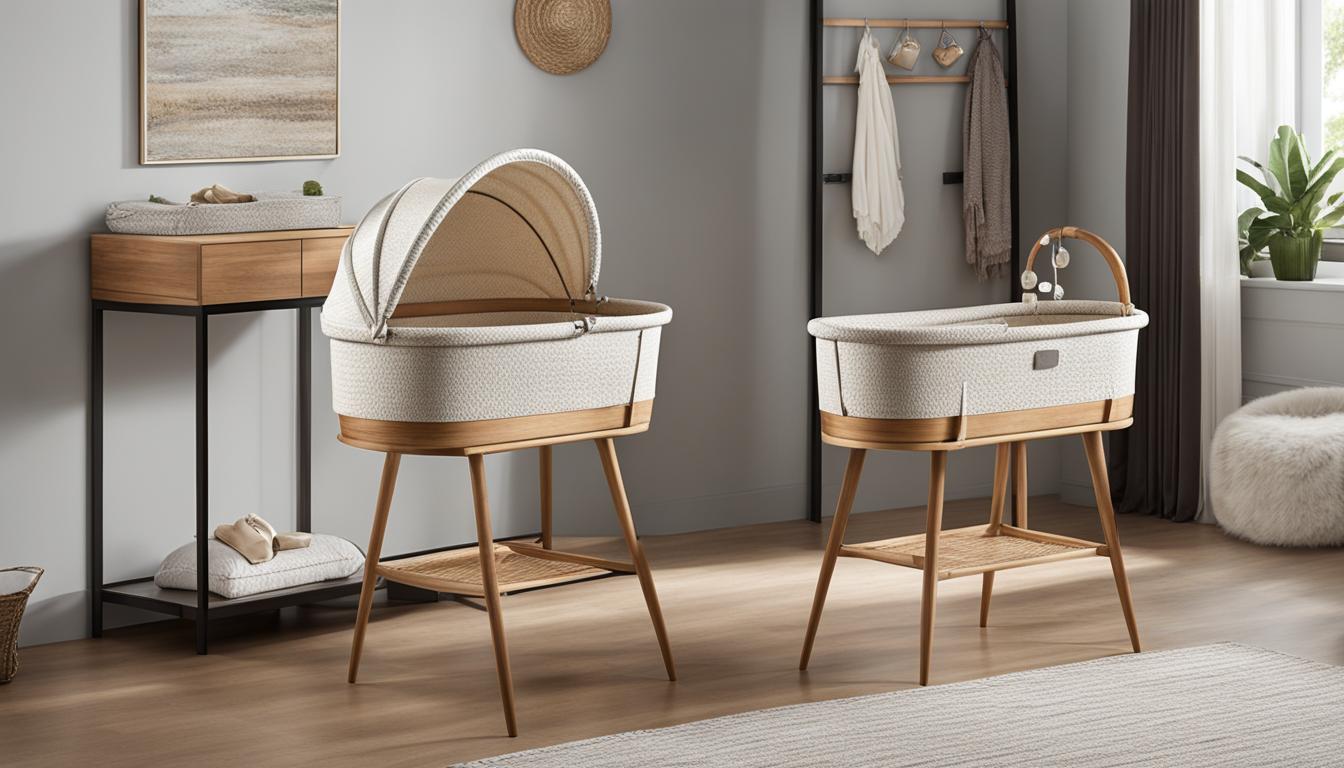
How to Choose a Safe Newborn Sleep Space
Use this checklist before placing your baby in any sleep product.
1. Confirm that it is made for sleep
Look for the manufacturer’s instructions. A product marketed for lounging, sitting, soothing, or supervised play is not automatically approved for unsupervised sleep.


Be careful with products that use terms such as:
- Napper
- Lounger
- Nest
- Pod
- Rest
- Sleeper
- Soothing seat
The name alone does not prove that the product is safe for routine sleep. Check the manual and safety information.
2. Check for recalls
Search the product name, model number, and manufacturer on the CPSC recalls website. Used products deserve extra care because they may be missing parts, have a worn mattress, or be subject to an older recall.
Do not use a sleep product with:
- Broken or missing parts
- Loose hardware
- Torn mesh
- A sagging or damaged mattress
- A gap around the mattress
- Unapproved modifications
3. Use only the original parts
Do not add:
- Aftermarket mattresses
- Mattress pads
- Positioners
- Head supports
- Wedges
- Bumpers
- Canopies
- Hanging toys inside the sleep space
Even an item sold for babies may change the way the product works. If the manufacturer did not approve it for that model, leave it out.
4. Check the sleep position
Place the baby flat on their back. The sleep surface should not be inclined.
If a baby falls asleep in a car seat, stroller, swing, bouncer, or carrier, move the baby to a firm, flat sleep surface as soon as practical. The National Institutes of Health Safe to Sleep program explains why sitting and inclined products are not substitutes for a safe sleep space.
5. Keep the area clear
The sleep space should contain only the baby and a fitted sheet. Dress the baby in a wearable blanket or another suitable layer instead of using a loose blanket.
Avoid overheating. The baby generally needs no more than one extra layer compared with a comfortable adult in the same room. Watch for sweating, hot skin, or a flushed appearance.

Common Newborn Sleep Mistakes
The most common mistake is focusing on the product name instead of the sleep surface and setup.
Mistake 1: Assuming a soft product is safer
A padded nest or plush lounger may feel cozy, but softness can allow a baby’s nose or mouth to become covered. Use a firm, flat surface made for sleep instead.
Mistake 2: Using a car seat for routine sleep
Car seats are designed to protect a baby during travel. They are not intended to serve as a regular sleep space outside the vehicle.


If you arrive home and your baby is asleep in the car seat, move the baby to a crib, bassinet, portable crib, or play yard. Keep the car seat on the vehicle seat or its approved base during travel, not on a bed, sofa, table, or counter.
Mistake 3: Adding a blanket to a swaddled baby
Loose bedding can cover a baby’s face. If you swaddle, place the baby on their back and stop swaddling when the baby shows signs of trying to roll. Never use a weighted swaddle or weighted blanket for an infant.
Once a baby begins to roll, the arms should be free. A wearable blanket can provide warmth without loose fabric in the crib.
Mistake 4: Moving the baby to an adult bed for convenience
Room sharing is different from bed sharing. A baby can sleep in a bassinet or crib next to the adult bed, but an adult mattress, couch, or recliner is not a safe replacement.
If you bring your baby into bed for feeding or comfort, move the baby back to their own sleep space before you go to sleep.
Mistake 5: Buying a used crib without checking its history
A secondhand product may be safe, but inspect it carefully. Confirm that it has all parts, has not been recalled, and follows current safety rules. Avoid products with unknown damage or missing instructions.

Do Bedside Sleepers Count as Bassinets?
Some bedside sleepers are bassinets, while others are a separate product category. The important question is whether the specific model is designed and approved for infant sleep.
A bedside sleeper may attach to or sit beside the adult bed. Follow the instructions for:
- Attachment
- Mattress height
- Side position
- Weight and age limits
- Whether the side may be lowered
- Whether the product must be used with a specific bed frame
Never improvise an attachment system. Do not use a bedside sleeper if it leaves a gap between the product and the adult bed.
The CPSC has separate federal safety rules for several infant sleep products. Product classification can depend on the design, so rely on the manufacturer’s instructions and applicable CPSC guidance rather than assuming that all bedside products work the same way.

What If You Cannot Afford a Bassinet?
You do not need to buy a bassinet to provide a safe sleep space. If money or space is limited, a compliant crib, portable crib, or play yard may meet the need.
Focus your budget on the essentials:
- A safe sleep product
- A firm, correctly fitting mattress or pad
- One or two fitted sheets
- Suitable clothing or a wearable blanket
- A smoke-free sleep environment
Avoid making a homemade sleep surface from cardboard boxes, laundry baskets, pillows, couch cushions, or adult mattresses. These items may tip, collapse, trap the baby, or allow the baby’s face to become covered.


Some hospitals, local health departments, and community programs offer safe-sleep education or help with infant supplies. Ask your baby’s doctor, hospital discharge team, or local public health department about programs in your area.

Quick Decision Guide
Use this guide if you are deciding whether to buy a bassinet.
| Your situation | Practical choice |
|---|---|
| You already own a safe crib | Use the crib from birth |
| Your bedroom is small | A bassinet or compact approved sleep product may help |
| You want one product to last longer | A full-size crib may be more practical |
| You want the baby beside your bed | Use an approved bassinet or bedside sleeper |
| You plan to travel | Use an approved portable crib or play yard |
| You are considering a lounger or nest | Do not use it as the baby’s routine sleep space |
| You are buying used | Check the model, parts, condition, and recalls first |
The simplest answer is often the best one: choose one approved sleep space that is flat, firm, clear, and close to you.
Frequently Asked Questions
Can a newborn sleep in a regular crib?
Yes. A newborn can sleep in a full-size crib from birth. Use a firm mattress, a fitted sheet, and no loose items. Place the crib in your room if possible, while keeping the baby in a separate sleep space.
Is a bassinet safer than a crib?
Not by itself. Both can be safe when they meet applicable standards and are used correctly. A bassinet may be more convenient for room sharing, while a crib usually provides a longer useful period.
How long can a baby use a bassinet?
It depends on the product. Follow the manufacturer’s weight, height, age, and movement limits. Stop sooner if the baby can push up, sit, roll in a way the instructions address, or reach another stated limit.
Can a newborn sleep in a pack ’n play?
A play yard may be appropriate when the model is intended for infant sleep and is used with its original approved pad and fitted sheet. Do not add a separate mattress or extra padding.
Can a newborn sleep in a bedside sleeper all night?
A bedside sleeper may be used for routine sleep if it is intended for that purpose, properly assembled, and used within its limits. Keep the baby on the product’s sleep surface, not partly in the adult bed.
What should a newborn wear to sleep?
Use clothing that keeps the baby comfortably warm without overheating. A wearable blanket may replace a loose blanket. If you swaddle, place the baby on their back and stop when they show signs of rolling. Ask the baby’s clinician if you are unsure about temperature, clothing, or swaddling.
Key Takeaways
- A bassinet is optional for a newborn.
- A crib, portable crib, or approved play yard can be used from birth.
- The sleep surface must be firm, flat, level, and free of loose items.
- Place the baby on their back for every sleep.
- Room share without bed sharing, ideally for at least the first six months.
- Follow the product manual and stop using a bassinet when the baby reaches its limits.
- Check used products for recalls, damage, missing parts, and unapproved changes.
Conclusion
You do not have to use a bassinet for a newborn. The safest choice is the approved sleep space you can set up correctly and use consistently. For many families, that will be a bassinet beside the bed. For others, it will be a full-size crib, portable crib, or play yard.
Before your baby arrives, check the product’s instructions, confirm that it has not been recalled, and prepare a clear, firm, flat sleep surface. If your baby was born prematurely, has a medical condition, or you have questions about feeding, swaddling, breathing, or sleep position, ask your pediatrician for advice tailored to your baby.
