
Yes. American Airlines lets you check one stroller per child for free. You may check the stroller at the ticket counter or, if it meets the airline’s size and weight rules, take it to the gate and check it there.
A stroller does not count as your normal checked-bag allowance. However, strollers weighing more than 20 pounds (9 kilograms) must be checked at the ticket counter. Smaller strollers may usually be gate-checked, but airport staff can apply local rules.
This guide explains how to travel with a stroller on American Airlines in the United States, what happens at airport security, when you can use the stroller in the airport, and how to protect it during the trip.
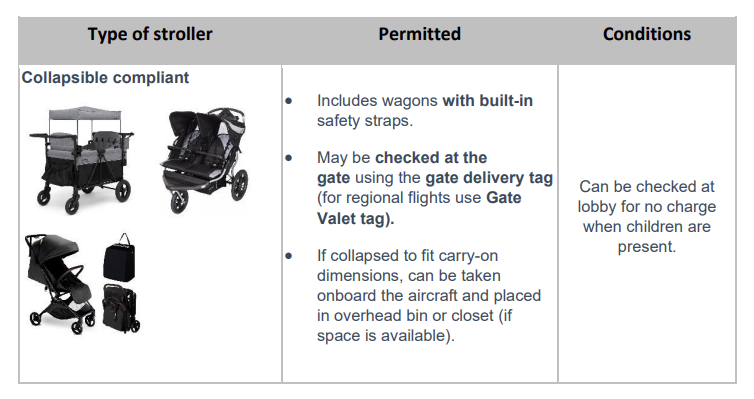
American Airlines stroller policy at a glance
American Airlines generally allows one stroller and one car seat or booster seat per child to be checked free of charge.


| Stroller situation | What to do |
|---|---|
| Stroller weighs more than 20 lb (9 kg) | Check it at the ticket counter |
| Stroller weighs 20 lb or less | Usually check it at the gate or ticket counter |
| Small, foldable stroller | May be accepted at the gate, subject to airport and aircraft limits |
| Large or non-collapsible stroller | Check it at the ticket counter |
| Stroller used through the airport | Ask for a gate-check tag before boarding |
| Stroller needed during a connection | Ask whether it will be returned at the aircraft door or sent to baggage claim |
The free stroller allowance applies to children traveling on the reservation. American Airlines may ask you to identify the child connected with the stroller.
Rules can vary by airport, aircraft, and destination. Check the current American Airlines page before leaving for the airport, especially if you use a double stroller, jogging stroller, wagon, or travel system.

Can I take a stroller to the gate?
Usually, yes, if the stroller is within American Airlines’ gate-check limits. You can use it through the terminal and hand it to an agent near the aircraft door.
The agent will place a gate-check tag on the stroller. In many cases, airport staff return gate-checked strollers near the aircraft door after landing. That service is not guaranteed at every airport, though. Some airports return all gate-checked items at baggage claim.
Ask the gate agent these two questions:
- Will I get the stroller at the aircraft door?
- If not, where should I collect it after landing?
Do not assume that a gate-checked stroller will be waiting outside the plane. The return point can depend on the airport, local handling process, and available space.
When a gate check may not work
A stroller may need to go to the ticket counter if it is:
- Heavier than 20 pounds (9 kilograms)
- Too large to move safely through the jet bridge
- Not collapsible
- A large double stroller
- A stroller wagon
- A jogging stroller with oversized wheels
- Part of a bulky travel system
The final decision belongs to American Airlines staff at the airport. Measure and weigh the stroller before travel if you are unsure.


How to check a stroller on American Airlines
Use this process to reduce delays and avoid confusion at the airport.
1. Confirm the stroller’s weight and design
Check the stroller’s label or owner’s manual. If it weighs more than 20 pounds, plan to check it at the ticket counter.
If it is a double stroller, wagon, or large jogging stroller, plan for ticket-counter check-in even if its weight is below the limit. These designs may be too large for gate handling.
2. Arrive with extra time
Traveling with a stroller can add steps at check-in, security, and boarding. Arrive early enough to:
- Check bags and the stroller
- Receive a gate-check tag
- Fold and secure the stroller
- Pass through TSA screening
- Reach the gate before family boarding begins
American Airlines publishes recommended arrival times by airport and itinerary. Follow the airline’s current guidance rather than relying on a general rule.
3. Check larger strollers at the ticket counter
Tell the American Airlines agent that you are traveling with a stroller. The agent can attach a baggage tag and direct you to the correct drop-off point.
Remove loose items first. Cup holders, toys, blankets, snack trays, and phone holders can fall off or become lost during handling.
4. Take a smaller stroller to the gate, if allowed
If the stroller qualifies for gate checking, ask the ticket-counter or gate agent for instructions. Some airports require a tag before you reach the gate.
Fold the stroller before boarding when instructed. Keep the gate-check receipt until the stroller is returned.
5. Collect it after landing
Follow the instructions given at departure. Look for the stroller:
- At the aircraft door
- Near the jet bridge
- At a designated oversized-baggage area
- At the regular baggage carousel
If it does not appear, report it to an American Airlines baggage agent before leaving the airport.

Can I bring a stroller into the airplane cabin?
A stroller is generally not treated like a normal carry-on bag. Do not plan to store a full-size stroller in the overhead bin or under the seat.
A very small, foldable stroller may sometimes be accepted for cabin storage, but that depends on:


- The stroller’s folded size
- Available cabin storage
- The aircraft type
- The number of passengers boarding
- The flight crew’s safety decision
Even if a stroller fits the airline’s published carry-on dimensions, the crew may require you to check it at the gate if there is not enough room.
For the most reliable plan, assume that the stroller will be gate-checked unless American Airlines confirms that your specific compact model can travel in the cabin.
What about an infant car seat?
A car seat is different from a stroller. You may check a car seat for free when traveling with a child. You may also use an approved child restraint on the aircraft if:
- The child has their own purchased seat
- The car seat has the required approval label
- The car seat fits in the aircraft seat
- The crew accepts it for use
The Federal Aviation Administration recommends using an approved child restraint for young children during flight. Check the label for wording showing that the restraint is certified for use in motor vehicles and aircraft.
Do not confuse a stroller travel system with permission to use the stroller onboard. The stroller normally must be folded and checked, while the car seat may be used in the cabin if it meets the rules.

How TSA handles strollers at U.S. airports
TSA screening rules are separate from American Airlines baggage rules.
You can normally take a stroller to the security checkpoint. TSA officers may ask you to:
- Remove the child from the stroller
- Fold the stroller
- Place small parts or items on the screening belt
- Send the stroller through an X-ray machine
- Walk through screening while carrying the child
- Complete additional screening if the stroller cannot fit through the equipment
Large strollers may need a manual inspection. Follow the TSA officer’s directions rather than trying to force the stroller through the screening equipment.
A stroller does not allow an adult to skip normal screening. Adults and children may still need to pass through the checkpoint screening process.
Before your trip, review the TSA guidance for traveling with children at TSA.gov.
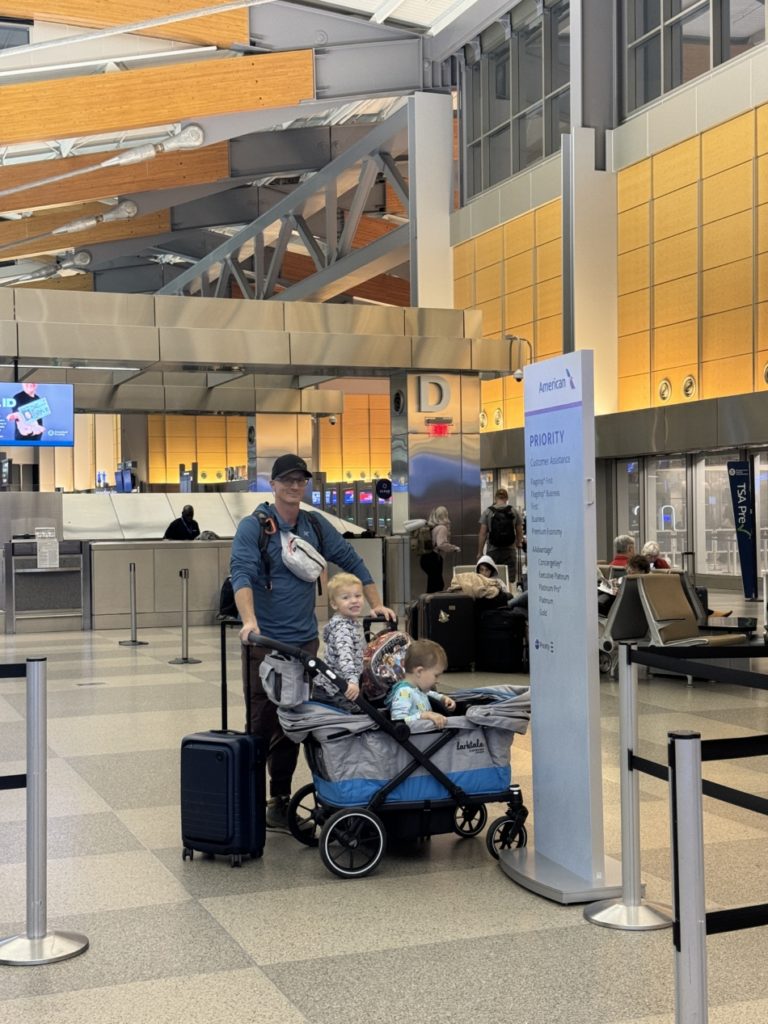
What types of strollers are easiest to travel with?
A compact, lightweight, foldable stroller is usually the simplest option for air travel. It takes less time to fold, is easier to move through security, and is less likely to require special handling.
Single umbrella stroller
A basic umbrella stroller is often easy to carry through the terminal and gate-check. It may be a good fit for short trips or older toddlers who do not need a full travel system.


Compact travel stroller
A compact travel stroller folds into a smaller shape. Some models are designed for air travel, but “airplane-friendly” does not guarantee cabin approval. The crew still controls whether the stroller enters the cabin.
Double stroller
A double stroller can be checked, but its size and weight make ticket-counter check-in more likely. Measure it when folded and ask American Airlines about the handling process before travel.
Jogging stroller
Jogging strollers tend to have large wheels and a wide frame. They may need to be checked at the ticket counter, even when they are used for only one child.
Stroller wagon
A stroller wagon may be treated like a large stroller or bulky item. Its acceptance and return location can vary by airport. Contact American Airlines before the trip if you plan to use one.
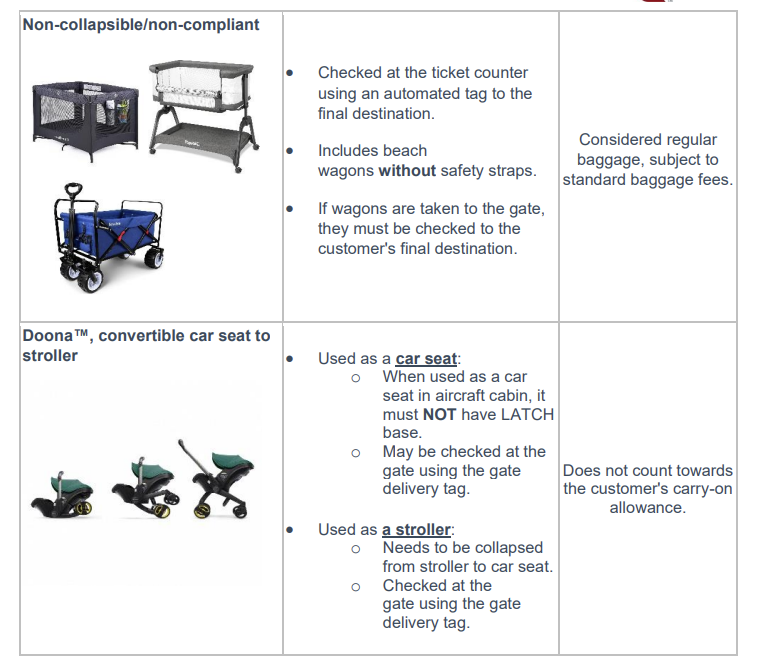
How to protect a stroller during air travel
American Airlines does not promise that a checked stroller will be returned without damage. You can lower the risk with a few simple steps.
- Remove toys, cup holders, organizers, and other loose parts.
- Fold and lock the stroller before handing it to an agent.
- Use a padded stroller travel bag if the stroller will be checked at the ticket counter.
- Add your name and phone number inside and outside the bag.
- Take photos of the stroller before check-in.
- Keep the gate-check receipt.
- Do not place passports, medication, keys, or valuables in the stroller.
- Check the stroller for damage before leaving the airport.
A gate-check bag can help protect a stroller from dirt and light scuffs. It does not make the stroller immune to damage, and it may not replace the airline’s required baggage tag.
If the stroller is damaged, report the problem to American Airlines baggage staff as soon as possible. Keep photos, the baggage tag, and any written report.
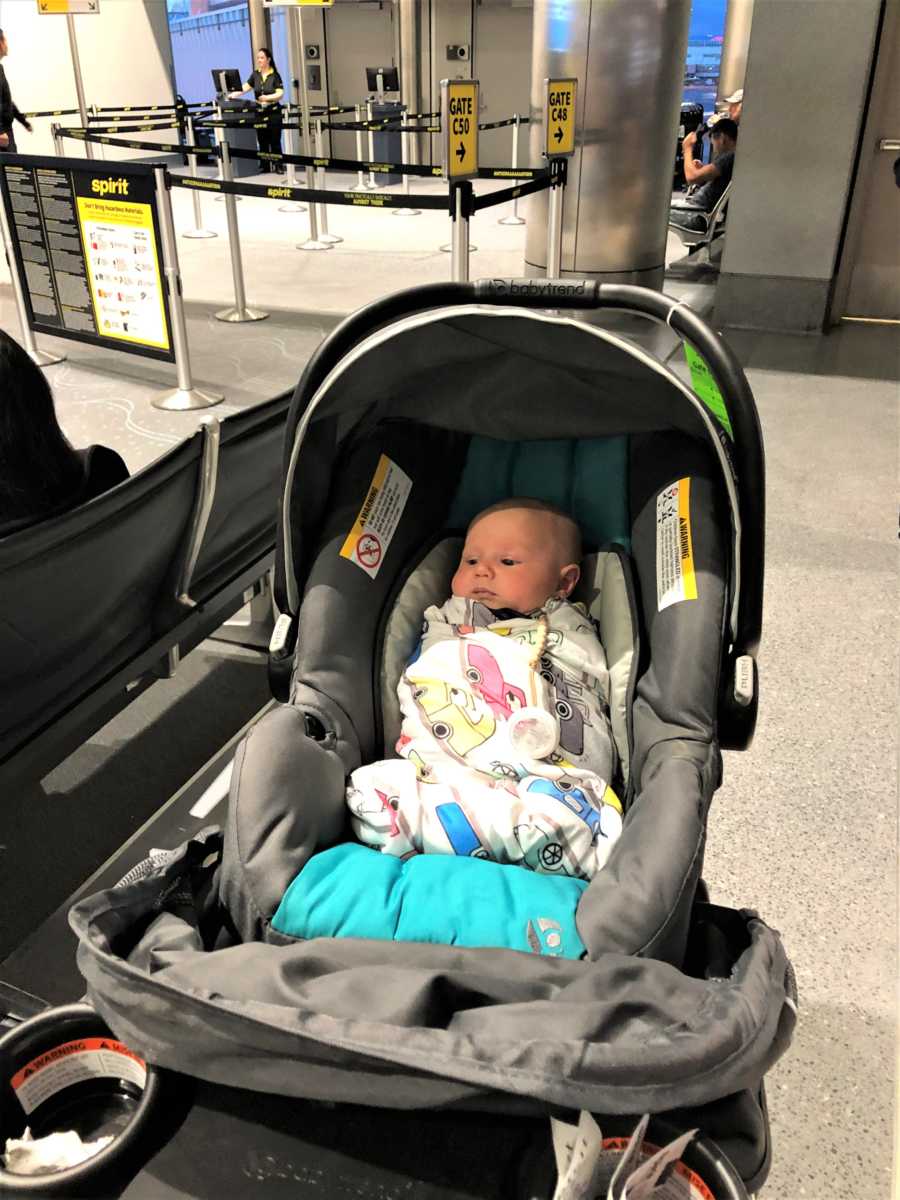
What should I do with a stroller during boarding?
Ask the gate agent where and when to leave the stroller. Some airports collect it at the end of the jet bridge. Others use a marked area near the aircraft door.
Boarding with a stroller can take longer than expected because you may need to:
- Remove your child.
- Empty the stroller.
- Fold it.
- Attach or confirm the gate tag.
- Leave it in the assigned location.
- Carry your child and personal items onto the plane.
If you need the stroller for a long airport connection, tell the gate agent before departure. The agent may be able to confirm whether it will be returned during the connection or sent through to the final destination.
Do not leave a child unattended while folding or checking the stroller. If you are traveling alone, ask an American Airlines employee for help before you begin.

Common mistakes to avoid
The most common problems come from assuming that every stroller can be gate-checked and returned at the aircraft door.
Avoid these mistakes:
- Bringing a stroller over 20 pounds to the gate instead of the ticket counter
- Assuming a double stroller will be handled like a small umbrella stroller
- Forgetting to request a gate-check tag
- Leaving personal items in the stroller
- Assuming the stroller will fit in the overhead bin
- Failing to ask where the stroller will be returned
- Packing the stroller in a bag without an identifying label
- Waiting until after leaving the airport to report damage
- Treating TSA rules and American Airlines rules as the same thing
- Relying on an old policy or advice from a different airline


The safest plan is simple: weigh the stroller, ask American Airlines where it must be checked, and confirm the return point before boarding.

Quick decision guide
Use this guide when planning your trip:
| Your stroller | Best plan |
|---|---|
| Compact and under 20 lb | Ask to gate-check it |
| Over 20 lb | Check it at the ticket counter |
| Double or extra-wide | Check it at the ticket counter unless staff says otherwise |
| Jogging stroller | Plan for ticket-counter check-in |
| Stroller wagon | Confirm acceptance with American Airlines before departure |
| Needed during a connection | Ask whether it will be returned at the aircraft door |
| Needed onboard for a child | Bring an approved car seat, not the stroller |
The key trade-off is convenience versus protection. Gate checking lets you use the stroller longer, but ticket-counter checking may be easier for a large stroller and may allow you to use a protective travel bag.

Frequently asked questions
Is a stroller free on American Airlines?
Yes. American Airlines generally allows one stroller per child to be checked free of charge. A qualifying car seat or booster seat may also be checked free of charge. The stroller does not normally count as a standard checked bag.
Can I gate-check a stroller on American Airlines?
Usually, if the stroller weighs 20 pounds or less and can be handled safely. Larger, heavier, or non-collapsible strollers usually must be checked at the ticket counter.
Can I use my stroller inside the airport?
Yes. You can usually use it through the terminal and up to the gate or aircraft door, subject to airport and airline instructions. You must remove your child before the stroller is screened or checked.
Will American Airlines return my stroller at the plane door?
Often, gate-checked strollers are returned near the aircraft door, but this is not guaranteed. Ask the gate agent where to collect it after landing.
Can I bring a stroller and car seat for free?
American Airlines generally permits one stroller and one car seat or booster seat per child to be checked free of charge. A car seat may also be used onboard when the child has a paid seat and the restraint meets aircraft-use requirements.
Can I put a stroller in the overhead bin?
Do not count on it. A very small foldable stroller may be accepted in the cabin if space and safety rules allow, but the crew can require gate checking.
Should I use a stroller travel bag?
A travel bag is optional, but it can help protect the stroller from dirt and minor handling damage. Label the bag and keep all loose stroller parts with you whenever possible.
Final answer
Yes, you can take a stroller on American Airlines. Check a stroller over 20 pounds at the ticket counter. A stroller weighing 20 pounds or less may usually be taken to the gate and gate-checked. American Airlines generally checks one stroller per child free of charge.
Before your trip, weigh the stroller, remove loose items, bring a protective bag if needed, and ask the gate agent exactly where the stroller will be returned after landing. Confirm the current policy on the American Airlines traveling with children page, because airport procedures and aircraft limits can change.
