
Introduction
Cradle cap is a common, usually harmless skin condition in babies in the United States. It causes greasy, yellow, white, or brown scales on the scalp. The medical name is infantile seborrheic dermatitis.
The exact cause is not fully known. Experts believe cradle cap develops when a baby’s oil glands make extra sebum, or skin oil. Natural yeast called Malassezia may also play a role. Newborn hormones passed from the mother during pregnancy can stimulate these oil glands for a time.
Cradle cap is not caused by poor hygiene, an infection from dirt, or anything a parent did wrong. It is not usually painful or contagious, and it often improves on its own.

What Causes Cradle Cap in Babies?
Cradle cap most likely results from a mix of extra skin oil, natural yeast, and temporary hormone effects.


Here is how these factors may connect:
- Extra sebum: Sebum is an oily substance made by glands in the skin. Extra oil can make dead skin cells stick to the scalp.
- Natural yeast: Malassezia lives on healthy skin. In some babies, it may grow in oily areas and add to skin irritation.
- Maternal hormones: Hormones that remain in a baby’s body after birth may briefly increase oil production.
- Immature skin regulation: A baby’s skin is still learning how to balance oil, moisture, and shedding.
The result is a layer of flakes or scales that can cling to the scalp. Cradle cap may also appear in oily areas such as the eyebrows, behind the ears, around the nose, or in the neck folds.
Is cradle cap caused by a food allergy?
Usually, no. Cradle cap is not generally a sign of a food allergy. Food allergies more often cause symptoms such as hives, swelling, vomiting, wheezing, or diarrhea.
A rash that is very itchy, dry, red, or spread across the cheeks and body may have another cause, such as eczema. A pediatrician can help tell these conditions apart.
Is cradle cap caused by not washing a baby’s hair?
No. Infrequent washing does not cause cradle cap. Washing too often or scrubbing too hard can irritate a baby’s scalp and make the skin worse.
Gentle washing can remove loose scales and excess oil, but it does not always stop cradle cap from returning. The condition often follows its own course.

What Does Cradle Cap Look Like?
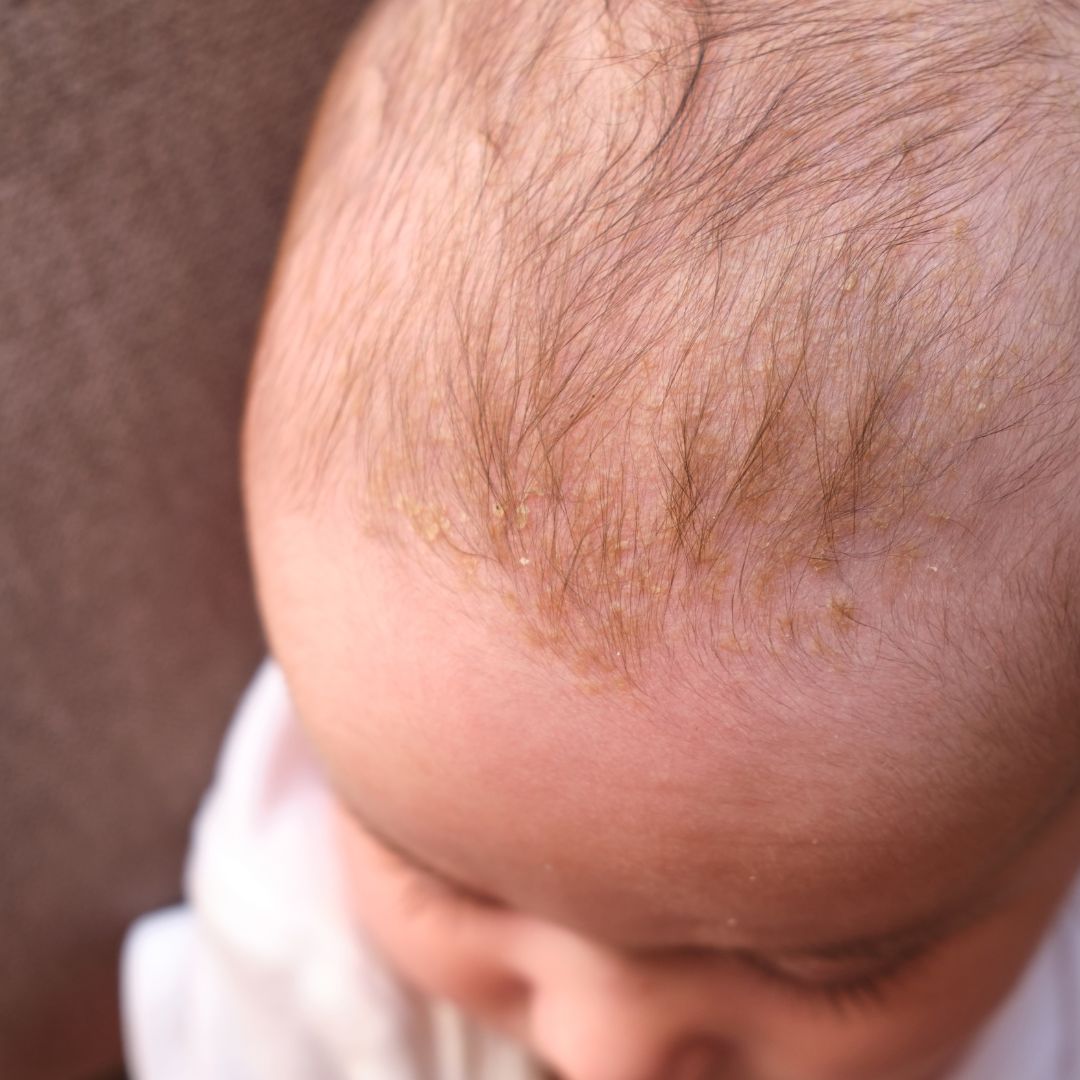
Cradle cap usually appears as flat or slightly raised patches of scale on the scalp. The scales may look yellow, white, gray, or brown, depending on the baby’s skin tone and the amount of oil.
Common signs include:
- Greasy or dry flakes
- Thick, stuck-on scales
- Mild redness under the flakes
- Patches on the crown or top of the head
- Flaking around the eyebrows or ears
- Little or no itching
- No fever or signs of illness
Cradle cap may look different on different skin tones. Redness can be harder to see on brown or Black skin. The area may look darker, lighter, purple, or gray instead.
Cradle cap should not cause open sores, pus, marked swelling, or significant pain. Those signs suggest that another problem may be present.


Cradle cap versus eczema
these conditions can look similar, but they often behave differently.
| Feature | Cradle cap | Eczema |
|---|---|---|
| Common look | Greasy or stuck-on scales | Dry, rough, red, or inflamed patches |
| Usual feeling | Often not itchy | Often itchy |
| Common areas | Scalp, eyebrows, ears | Cheeks, arms, legs, and body |
| Skin type | Oily or flaky | Dry and irritated |
| Typical age | Often begins in the first weeks or months | May begin in infancy and continue longer |
A baby can have both cradle cap and eczema. If the rash is very itchy or spreads beyond the usual oily areas, ask the child’s doctor for advice.
Who Is More Likely to Get Cradle Cap?
Any baby can develop cradle cap. It is especially common during the first months of life.
A baby may be more likely to have it if:
- The baby is in the early months of infancy.
- The scalp produces more oil than usual.
- The baby has other areas of seborrheic dermatitis.
- A parent or sibling has a history of seborrheic skin conditions.
This does not mean a baby is unhealthy. Cradle cap is not linked to parenting quality, cleanliness, or a serious immune problem in most cases.
Cradle cap may return from time to time. A patch can improve, then come back when oil builds up again. That pattern is common and does not necessarily mean treatment failed.

How to Treat Cradle Cap Safely at Home
Mild cradle cap often needs only gentle care. The goal is to soften the scales and wash away what comes loose. Do not try to remove every flake in one session.
Step 1: Soften the scales
Before a bath, apply a small amount of plain mineral oil or petroleum jelly to the affected area. Let it sit for a short time to soften the scale.
Keep oils away from the baby’s eyes, nose, and mouth. Do not leave a large amount of oil on the scalp, because buildup can worsen the condition.
Some parents use plant oils, but olive oil may irritate some skin. Plain, fragrance-free products are a safer choice for sensitive skin.
Step 2: Wash with a mild baby shampoo
Use lukewarm water and a gentle, fragrance-free baby shampoo. Massage the scalp lightly with your fingertips.
A soft baby brush can help loosen flakes during or after washing. Use very light pressure. A baby’s soft spot, or fontanelle, is covered by a strong membrane, but rough scrubbing can still hurt the skin.
Step 3: Brush only loose scales
Brush the scalp gently after washing. Remove only the scales that come away easily.
Do not pick, scratch, or peel stuck-on flakes. Pulling at them can cause small cuts, bleeding, infection, and temporary hair loss.


Step 4: Rinse and dry
Rinse away the shampoo and oil. Pat the scalp dry with a clean towel.
Repeat this routine as needed. Many babies do well with gentle shampooing several times a week. The right schedule depends on the baby’s skin and the advice of the child’s doctor.
What if home care does not help?
If the scales remain thick, spread, or keep returning, a pediatrician may recommend a medicated treatment. Depending on the baby’s age and symptoms, a clinician might suggest a specific antifungal or low-strength steroid product.
Do not use adult dandruff shampoo, prescription medicine, or steroid cream on a baby unless a health professional tells you how and where to use it.

What Should You Avoid With Cradle Cap?
Avoid anything that can damage or dry a baby’s skin.
Do not:
- Pick or scrape the scales.
- Use a fingernail, comb, or hard brush.
- Scrub the scalp until it looks clear.
- Apply essential oils, fragrances, or harsh products.
- Use adult dandruff shampoo without medical advice.
- Cover the scalp with a hat for long periods after applying oil.
- Use a medicated cream without checking the label and asking a clinician.
- Assume every flaky scalp is cradle cap.
A common mistake is trying to remove all the scales at once. Cradle cap is attached to the skin and hair. Slow, gentle care works better than force.
Another mistake is over-washing. More shampoo does not always mean faster improvement. Too much washing may dry and irritate the scalp.

When Should You Call the Baby’s Doctor?
Contact your pediatrician if you are not sure that the rash is cradle cap or if home care does not help.
Call the doctor promptly if the scalp:
- Bleeds, oozes, or develops pus
- Has blisters, open sores, or yellow crust
- Becomes very swollen or painful
- Smells bad
- Feels warm around the rash
- Spreads quickly
- Causes intense itching
- Is linked with fever or poor feeding
You should also ask for medical advice if the rash affects much of the body, does not improve after several weeks of gentle care, or returns often with severe inflammation.
Seek urgent medical care for breathing trouble, facial swelling, widespread hives, unusual sleepiness, or other signs of a serious allergic reaction. Those symptoms are not typical of cradle cap.
A doctor may examine the scalp and other skin areas. Most cases do not need tests. The clinician may check for eczema, psoriasis, a fungal infection, or a bacterial infection when the appearance is unusual.

Key Takeaways
- Cradle cap is infantile seborrheic dermatitis.
- Extra skin oil, natural yeast, and temporary hormone effects may contribute to it.
- It is usually not caused by poor hygiene or a food allergy.
- Gentle washing and soft brushing can help.
- Never pick, scrape, or aggressively scrub the scales.
- Ask a pediatrician about persistent, painful, spreading, or infected-looking rashes.


Frequently Asked Questions
Does cradle cap hurt babies?
Cradle cap usually does not hurt. Some babies may have mild irritation, but severe pain, intense itching, or tenderness suggests another skin problem or an infection.
Can cradle cap cause hair loss?
Rubbing, scratching, or pulling off scales can remove a few hairs. This hair loss is usually temporary. Hair normally grows back after the scalp heals. Do not pull at attached flakes.
Is cradle cap contagious?
No. Cradle cap does not spread from one baby to another. It is related to oil production and skin changes, not a contagious germ.
Should I shave my baby’s head?
No. Shaving does not treat the cause of cradle cap. It may also irritate the scalp or cause small cuts. Gentle washing is safer.
Can cradle cap be prevented?
There is no guaranteed way to prevent it. Gentle, regular washing may limit oil and scale buildup, but some babies develop cradle cap even with careful skin care.
How long does cradle cap last?
Many cases improve during infancy. Some clear within weeks, while others last longer or return now and then. The exact time varies by baby.
Conclusion
Cradle cap in babies usually comes from temporary changes in the scalp, including extra oil, natural yeast, and early hormone effects. It is common, usually harmless, and not a sign of poor care.
Use gentle shampoo, soften thick scales, and brush only what comes loose. If the rash is painful, wet, swollen, widespread, or slow to improve, contact your child’s pediatrician for a proper diagnosis and safe treatment plan.
