
A bassinet mattress protector can be safe in the United States only when it is made for that exact bassinet, fits tightly, stays flat, and does not change the sleep surface. The safest setup is still a firm, flat bassinet mattress with only a tight-fitting sheet.
A protector should never add padding, lift the baby’s head, create loose fabric, or cover an unsafe mattress. If the bassinet maker does not approve the protector, skip it and use the original mattress and fitted sheet as directed.
This guide explains how to check a bassinet mattress protector before using it with a baby.

What is a bassinet mattress protector?
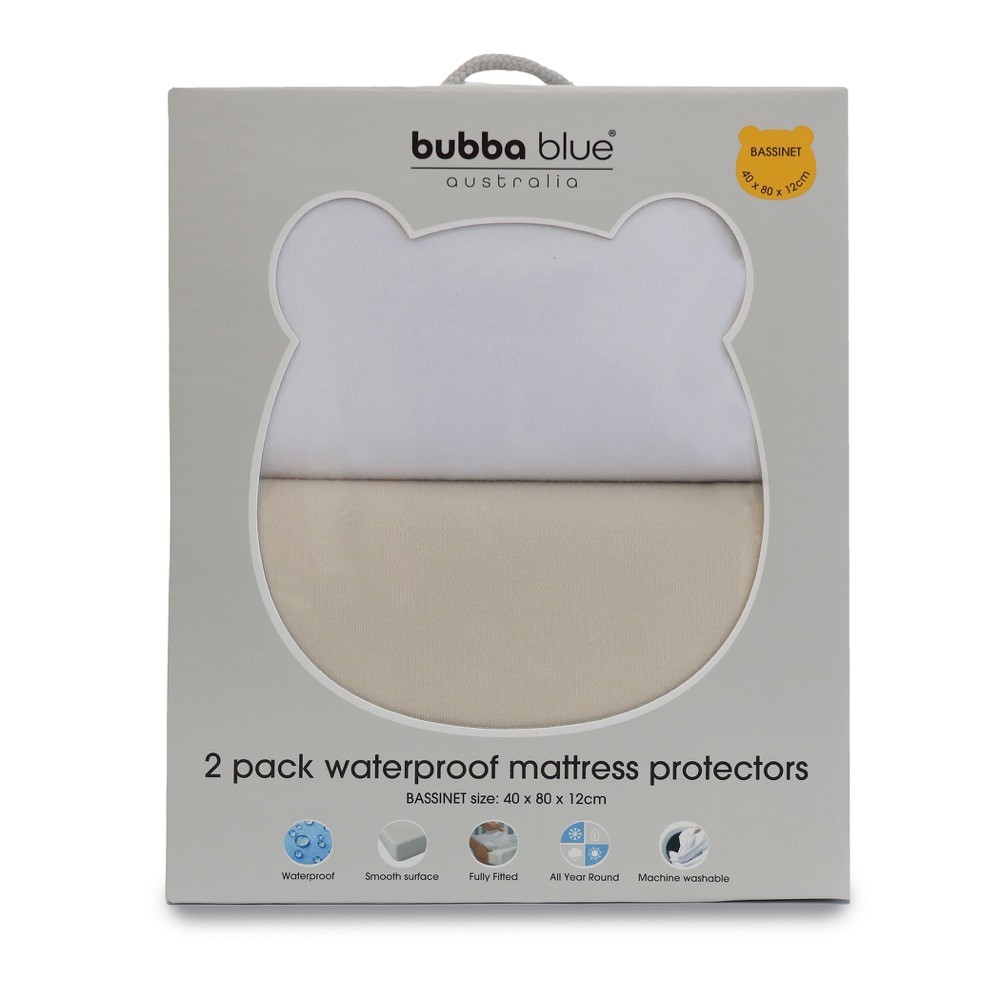
A bassinet mattress protector is a thin layer placed over or under the bassinet mattress. Most are made to help block moisture, spit-up, and diaper leaks.


The term can describe several different products:
- A thin waterproof cover made for one bassinet model
- A pad that goes under the fitted sheet
- A quilted or padded liner
- A general “universal” protector sold for many bassinets
- A thick insert that claims to add comfort or support
These products are not equal. A thin, tight, model-approved protector is very different from a loose, padded insert.
For safe sleep, the key question is not whether the product is called a “protector.” The key question is whether it keeps the sleep surface firm, flat, level, and clear.
The American Academy of Pediatrics recommends placing babies on a firm, flat, non-inclined sleep surface with only a fitted sheet. The U.S. Consumer Product Safety Commission also warns against products that add soft materials or create unsafe gaps in infant sleep spaces.
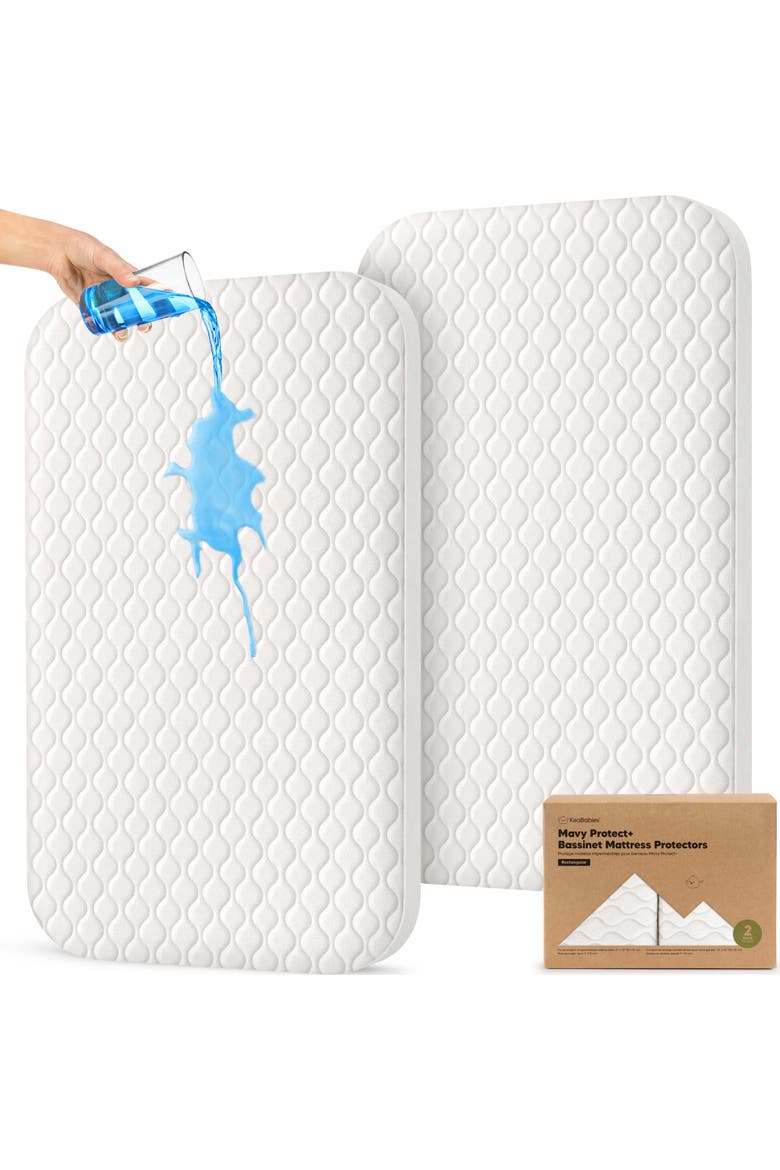
Are bassinet mattress protectors safe for newborns?
They may be safe, but only under strict conditions. A bassinet mattress protector should meet all of these tests:
- The bassinet manufacturer allows it.
- The protector fits the exact mattress or bassinet model.
- It stays tight and flat during use.
- It does not make the mattress softer or thicker.
- It does not create gaps at the sides.
- It does not raise, tilt, or change the angle of the mattress.
- The fitted sheet still fits tightly over the complete setup.
- The protector has no loose straps, ties, cords, buttons, or extra fabric.
If even one of these points fails, do not use it.
A protector does not make a soft, sagging, damaged, or inclined mattress safe. It also does not replace a fitted sheet. In most cases, the baby should lie on the mattress with the protector covered by a tight fitted sheet, not directly on the protector.
Why fit matters
A loose protector can bunch under a baby. This may create a pocket, a raised area, or a gap between the mattress and the bassinet wall. Those changes can increase the risk of the baby’s face becoming covered or the body slipping into a gap.
A thick protector can also reduce the usable space inside the bassinet. A fitted sheet that once fit correctly may become loose after the added layer is installed.


The safety test is simple: after making the bassinet, press across the surface and check the edges. The protector and sheet should remain smooth and tight. Nothing should shift, fold, or lift.
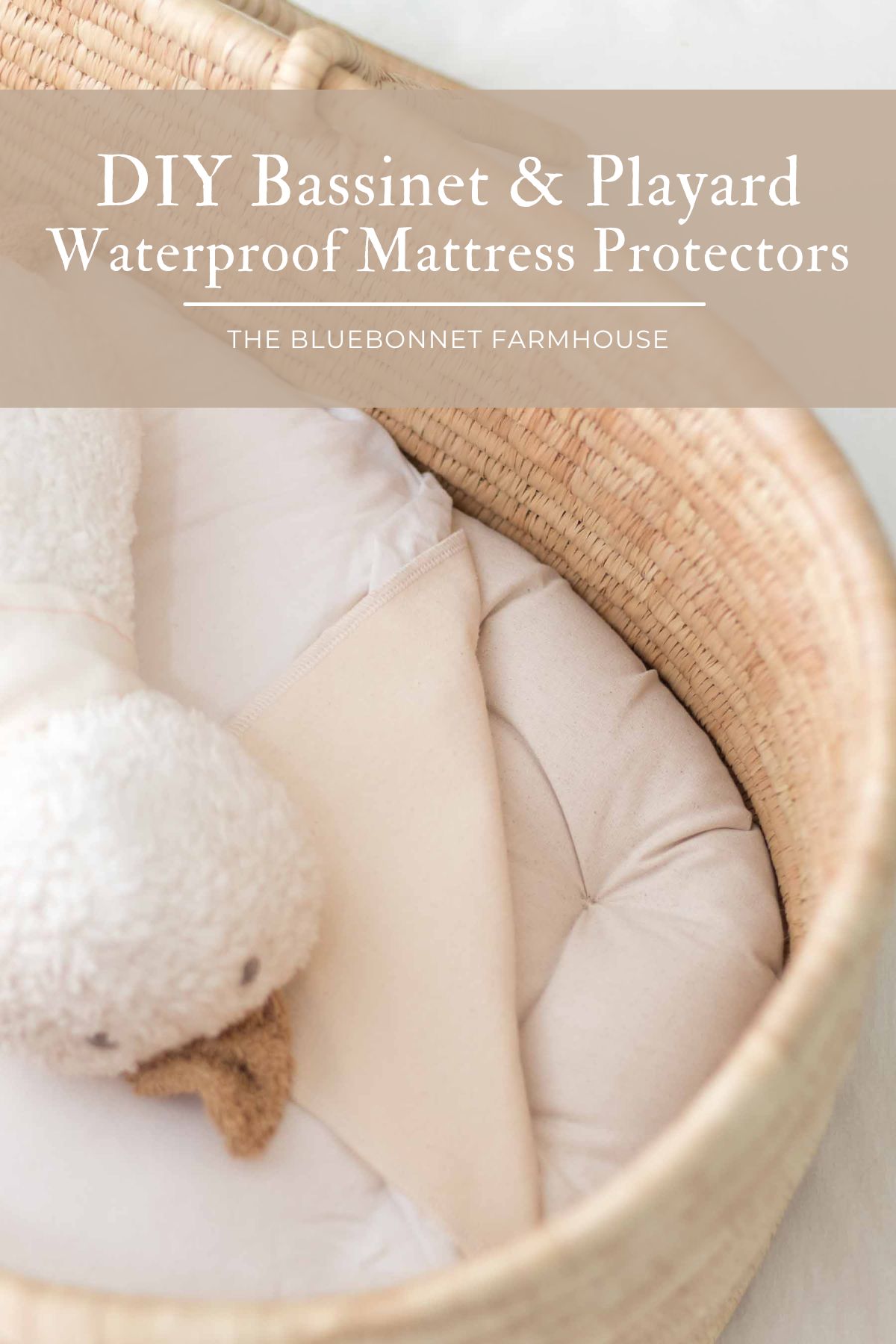
What does the AAP recommend for bassinet bedding?
The AAP recommends a bare sleep space. In practical terms, this means:
- A firm, flat mattress
- A fitted sheet made for that mattress
- No pillows
- No blankets
- No quilts
- No bumper pads
- No stuffed toys
- No sleep positioners
- No padded or loose liners
A mattress protector is not specifically a sleep aid. It is a maintenance accessory. Its use must not change the basic safe-sleep setup.
The AAP does not recommend adding soft products to make an infant sleep surface more comfortable. Babies do not need a cushioned bassinet surface. A firm surface helps reduce the chance that the baby’s face and nose will be pressed into soft material.
The safest position remains on the baby’s back for every sleep, including naps. Keep the bassinet in the parents’ or caregiver’s room, but use a separate approved sleep surface rather than an adult bed, couch, or recliner.
Read the full guidance from the American Academy of Pediatrics and the National Institutes of Health Safe to Sleep program.
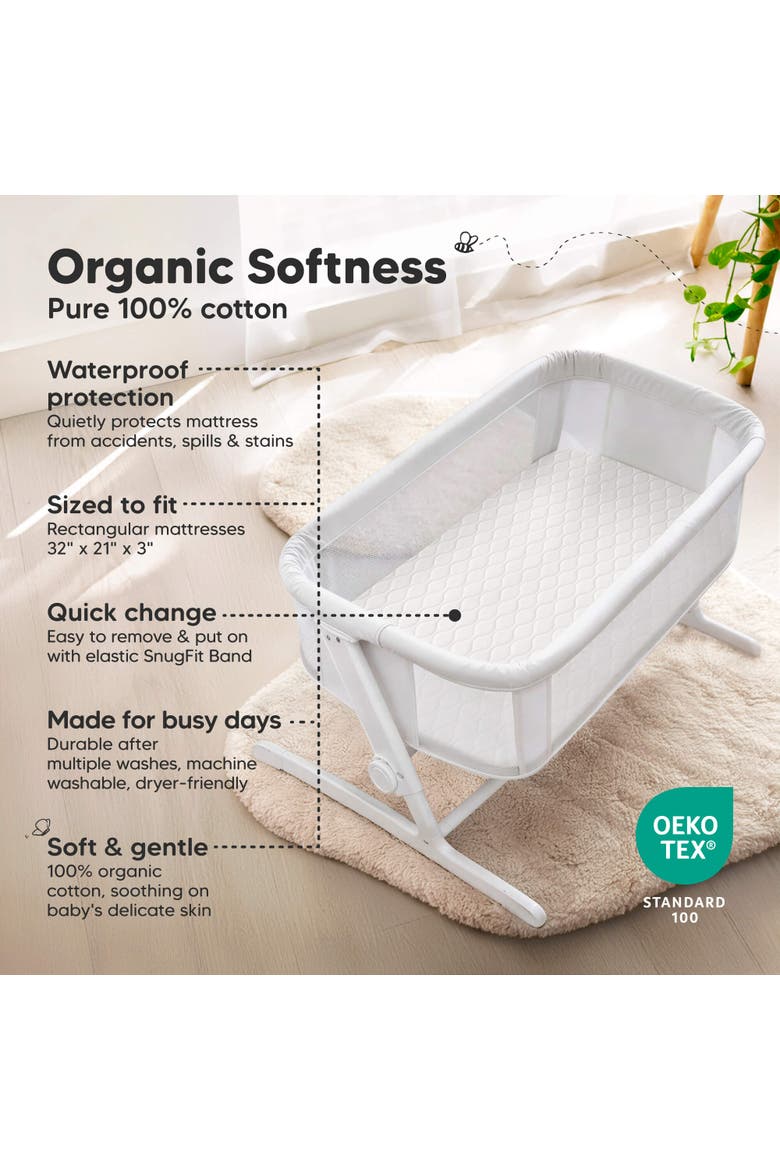
How to choose a safe bassinet mattress protector
Choose the protector by compatibility first, not by softness, absorbency, or marketing claims.
1. Check the bassinet manual
Look for instructions about:
- Mattress dimensions
- Approved sheets
- Approved mattress covers
- Maximum thickness
- Replacement parts
- Warnings against aftermarket accessories
Some bassinet makers allow a specific waterproof cover. Others say to use only the supplied mattress and sheet. Follow the instructions for your exact model.
If the manual is missing, find the model number on the bassinet frame or label. Then check the manufacturer’s U.S. support page. Do not assume that a protector made for one bassinet will fit another.
2. Measure the mattress only when the manufacturer permits it
A protector should match the mattress closely. Do not use a large rectangular pad in a small oval or contoured bassinet unless the manufacturer lists it as compatible.
The protector should not extend beyond the mattress edges. Extra material may fold or gather beneath the sheet.
A useful fit check is:
- Lay the protector flat.
- Add the fitted sheet.
- Push gently near each corner.
- Check that neither layer moves toward the center.
- Check that there is no visible gap along the bassinet sides.


3. Choose a thin, non-padded design
A basic waterproof layer is usually less likely to alter the surface than a plush or quilted pad.
Avoid products described as:
- Pillow-like
- Cushioned
- Extra plush
- Cloud-soft
- Inclined
- Wedge-shaped
- Positioning
- Anti-roll
- Head-shaping
- Comfort-enhancing
These features may change the sleep surface or encourage use for a purpose that safe-sleep guidance does not support.
4. Check the construction
Prefer a protector with:
- A smooth, low-profile surface
- Secure edges
- No loose ties
- No long elastic loops
- No detachable parts
- No exposed cords
- No strong odor that remains after washing
A waterproof layer can use different materials. Material alone does not prove that a product is safe. Fit, thickness, and use with the bassinet matter more than labels such as “organic,” “breathable,” or “premium.”
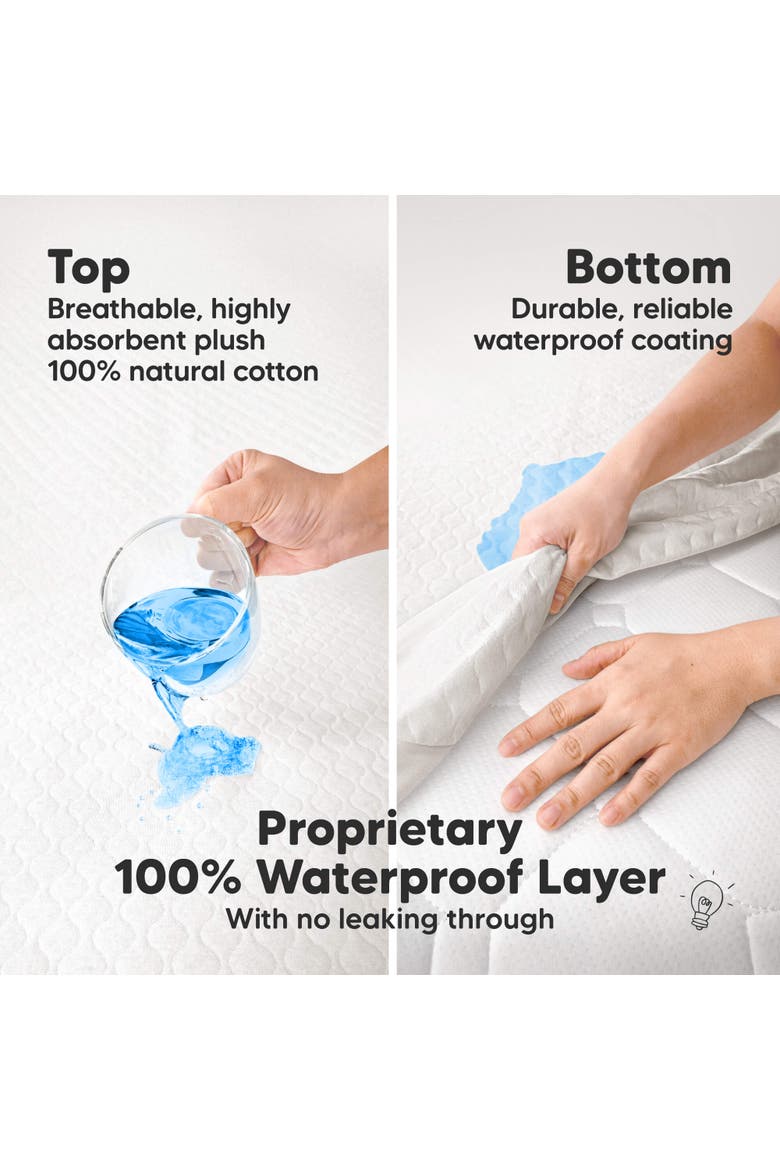
When should you not use a bassinet mattress protector?
Do not use the protector if it causes any change that could affect the baby’s airway or position.
Remove it when:
- It wrinkles or bunches
- It slides under the fitted sheet
- The sheet no longer fits tightly
- The mattress becomes visibly softer
- The mattress sits higher than the bassinet instructions allow
- The protector creates a gap at the edge
- The protector makes the mattress tilt
- The bassinet wall no longer rises high enough around the mattress
- The product is damaged, torn, stretched, or wet underneath
- The manufacturer says not to use one
Also avoid a protector that sits on top of the fitted sheet. That creates a loose layer near the baby. If a product is designed to go beneath the fitted sheet, install it in that position only.
Do not stack two protectors. If you need more leak protection, use one approved protector and wash the sheet and protector as needed. Stacking layers can change the fit and firmness.
What about waterproof mattress covers?
A waterproof cover can help protect the mattress from fluids. That benefit is practical, but it does not override safe-sleep rules.
The cover must remain thin and tight. A cover that traps heat, changes the mattress shape, or makes the sheet loose is not a good choice for that bassinet.
Some bassinet mattresses already have a waterproof outer surface. In that case, an extra protector may offer little benefit and may create a fit problem.
Bassinet mattress protector safety checklist
Use this quick check before the baby sleeps in the bassinet.
| Check | Safe result |
|---|---|
| Manufacturer approval | The manual allows the protector or does not prohibit it |
| Size | The protector matches the exact mattress |
| Surface | Firm, flat, smooth, and level |
| Thickness | Thin and non-padded |
| Sheet fit | The fitted sheet stays tight |
| Edges | No gaps, folds, or loose fabric |
| Movement | The protector does not slide or bunch |
| Condition | No tears, stretched elastic, or loose parts |
| Sleep setup | No extra pillows, blankets, toys, or positioners |
| Cleaning | Fully dry before use |
If the answer to any item is no, remove the protector and use the bassinet according to its manual.


A simple setup example
Suppose a bassinet has a firm mattress and a fitted sheet supplied by the manufacturer. The maker also lists a thin waterproof cover as an approved accessory.
The correct order is:
- Place the approved protector on the mattress.
- Smooth it so it lies completely flat.
- Put the correct fitted sheet over it.
- Check every corner and edge.
- Place the baby on the back, with the bassinet otherwise empty.
This is different from placing a thick universal pad under a sheet that already fits tightly. The second setup may create excess material or change the surface.

Are universal bassinet mattress protectors safe?
“Universal” does not mean safe for every bassinet. It only means the seller intends the product to fit several sizes or designs.
A universal protector may be unsuitable because:
- Bassinet mattresses vary in length, width, and shape.
- Some mattresses have rounded corners.
- Some sleep surfaces are slightly contoured.
- Some bassinets use a mattress designed to fit into a fixed frame.
- A small size difference can create a dangerous gap.
Never rely on a product photo alone. Check the listed dimensions and compare them with the bassinet manual. Even an accurate measurement does not replace manufacturer approval.
If the protector fits several products but the maker gives no bassinet-specific instructions, the safer choice is to use the original approved bedding only.

How to clean and replace a bassinet mattress protector
Clean the protector according to its care label. Use a fully dry protector before putting it back in the bassinet.
Replace it when:
- The waterproof layer cracks or peels
- Seams open
- Elastic loses its hold
- The protector shrinks and no longer fits
- It develops permanent folds
- It stays damp after washing
- It has a strong odor that does not go away
- It no longer lies flat
Inspect the mattress, too. A protector can hide a damaged mattress. Stop using the bassinet if the mattress is bent, torn, sagging, wet inside, or no longer fits the frame.
A clean protector is not enough. The complete sleep surface must remain firm and correctly fitted.

Common mistakes to avoid
Using a changing-pad cover as a bassinet protector
Changing pads and bassinet mattresses serve different purposes. A changing-pad cover may be too loose, too thick, or the wrong shape.
Adding a towel under the sheet
A towel may seem like a quick way to manage leaks, but it can bunch and change the surface. Use only an approved protector.
Using a crib mattress protector
A crib protector may not fit a bassinet. Different sleep products have different dimensions and safety instructions.


Putting the protector over the sheet
This leaves a loose layer in the baby’s sleep area. Place the protector under the fitted sheet only when the product and bassinet instructions allow it.
Assuming “breathable” means safe
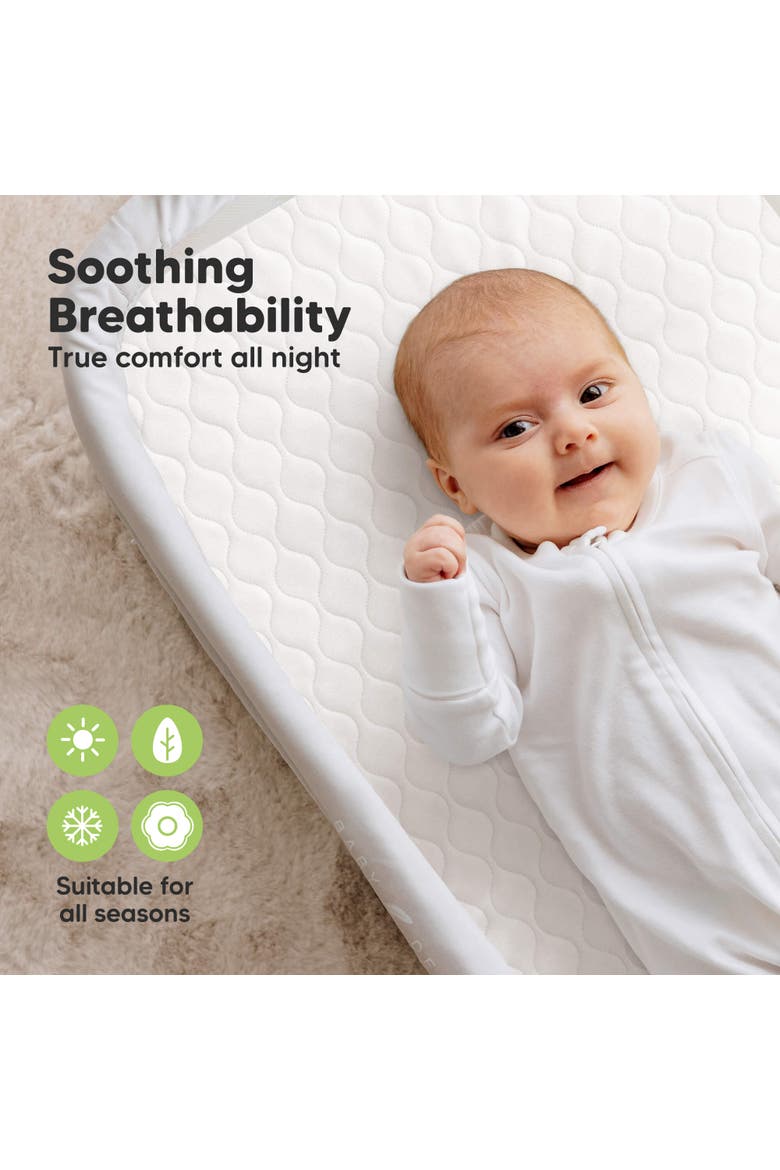
Breathability claims do not prove correct fit or safe use. A breathable product can still be loose, padded, or incompatible.
Keeping a recalled product
Check the product name and model against the CPSC recalls database. Stop using a product that has been recalled, even if it appears to be in good condition.

What should you do if the protector does not fit?
Remove it before sleep. Do not trim it, fold it, pin it, tape it, or secure it with homemade ties.
Use the original mattress and fitted sheet if they are clean, intact, and correctly fitted. If the mattress or sheet is damaged, contact the bassinet manufacturer for an approved replacement.
Ask the manufacturer these specific questions:
- Is this protector approved for my model?
- Where should it sit?
- Is there a maximum thickness?
- Does it affect the warranty?
- Is the original mattress waterproof?
- Which replacement sheet should I use?
For an immediate safety concern, such as a baby becoming trapped, a damaged product, or a possible recall, stop using the product. Contact the manufacturer and check the CPSC for current recall information.
Key takeaways
- A bassinet mattress protector is not automatically safe.
- Use one only if it fits the exact bassinet and follows the manufacturer’s instructions.
- Choose a thin, flat, non-padded protector.
- Keep it under a tight fitted sheet.
- Never use a protector that creates gaps, wrinkles, tilt, or extra softness.
- The safest bassinet remains firm, flat, level, and empty except for the baby and fitted sheet.
- If you are unsure, leave the protector out and ask the bassinet maker about an approved option.
FAQs
Can a baby sleep directly on a bassinet mattress protector?
Usually, no. A protector is generally designed to sit beneath a fitted sheet. Follow the product and bassinet instructions, but do not leave a loose protector directly under the baby.
Do waterproof bassinet mattress protectors make babies hot?
They can affect airflow and heat management, depending on their material and design. Do not treat “breathable” marketing as proof. Use a thin, approved cover and dress the baby appropriately for the room.
Can I use a bassinet protector with a bedside sleeper?
Only if the bedside sleeper manufacturer allows it for that model. A protector must not change the mattress height, create a gap, or interfere with the sleeper’s attachment to the adult bed.
Is a quilted bassinet mattress protector safe?
Not necessarily. Quilting may add thickness or softness. Use it only when the bassinet maker approves that exact product and the finished setup remains firm, flat, and tight.
How often should I wash a bassinet mattress protector?
Wash it when soiled and follow the care label. Always dry it fully before use. Replace it when it no longer fits smoothly or the waterproof layer is damaged.
Conclusion
A bassinet mattress protector can be a useful way to protect the mattress from leaks, but safety depends on the complete setup. The protector must be approved or compatible with the bassinet, fit tightly, stay flat, and add no meaningful softness or height.
When in doubt, use the bassinet’s original firm mattress and fitted sheet without an added protector. For model-specific advice, contact the manufacturer and check current U.S. safe-sleep guidance from the AAP, NIH Safe to Sleep, and CPSC.
