
Introduction
A stuffy nose can make a baby sound worse than they feel. Babies breathe mostly through their noses, so mucus can make feeding and sleep hard. In most cases, you can ease mild congestion at home with plain saline drops, gentle suction, moisture in the air, and frequent feeds.
This guide is for parents and caregivers in the United States. It is general information, not a diagnosis. Call 911 now if your baby is struggling to breathe, has blue or gray lips, becomes hard to wake, or stops breathing.

What causes a baby’s congestion?
A baby may have a blocked nose from a cold, dry air, allergies, smoke, or mild irritation. A cold is often the cause when congestion comes with a runny nose, cough, sneezing, or a low fever.
Newborns may also sound congested because their nasal passages are very small. A small amount of mucus can create loud snoring or rattling sounds. Noisy breathing does not always mean a serious illness, but the way your baby breathes matters more than the sound alone.


Congestion may affect a baby’s:
- Feeding
- Sleep
- Ability to breathe through the nose
- Comfort when lying down
A blocked nose is different from chest congestion. Nose congestion causes a stuffy or runny nose. Chest congestion may cause fast breathing, wheezing, grunting, or the skin between the ribs pulling inward. Chest symptoms need closer medical attention.
When to call your baby’s doctor
Contact your child’s pediatrician promptly if:
- Your baby is under 3 months old and has a temperature of 100.4°F (38°C) or higher.
- Your baby is breathing faster than usual or working hard to breathe.
- Your baby feeds poorly or has fewer wet diapers.
- Your baby has a cough that is getting worse.
- Symptoms last more than about 10 days without improvement.
- Your baby seems very sleepy, weak, or difficult to comfort.
- You are worried, even if you cannot name the reason.
The American Academy of Pediatrics advises parents to take fever in young infants seriously. A fever in a baby younger than 3 months needs medical guidance.
How to decongest a baby step by step
The safest home method is to soften mucus with plain saline and remove only what you can easily reach. Do not force suction. Too much suction can irritate the nose and make swelling worse.
1. Wash your hands
Wash your hands with soap and water before touching your baby’s nose. Clean hands help lower the spread of viruses and bacteria.
If soap and water are not available, use hand sanitizer with at least 60% alcohol. Let your hands dry before handling your baby.
2. Use plain saline drops or spray
Choose plain saline made for infants. It should contain salt and water only. Do not use medicated nasal drops unless your baby’s doctor tells you to.
Place your baby on their back with the head in a neutral position. Follow the product label. Many infant saline products use one or two drops in each nostril.


Saline helps loosen thick mucus. It does not treat the virus itself, but it can make breathing and feeding easier.
Use saline:
- Before a feed if a blocked nose makes sucking hard
- Before sleep if congestion is keeping your baby awake
- Before gentle suction
- When mucus looks thick or dried
3. Wait briefly
Give the saline a short time to soften the mucus. You do not need to keep your baby’s head far back. A comfortable, flat position is enough.
Your baby may sneeze. That can help move mucus forward.
4. Suction gently if needed
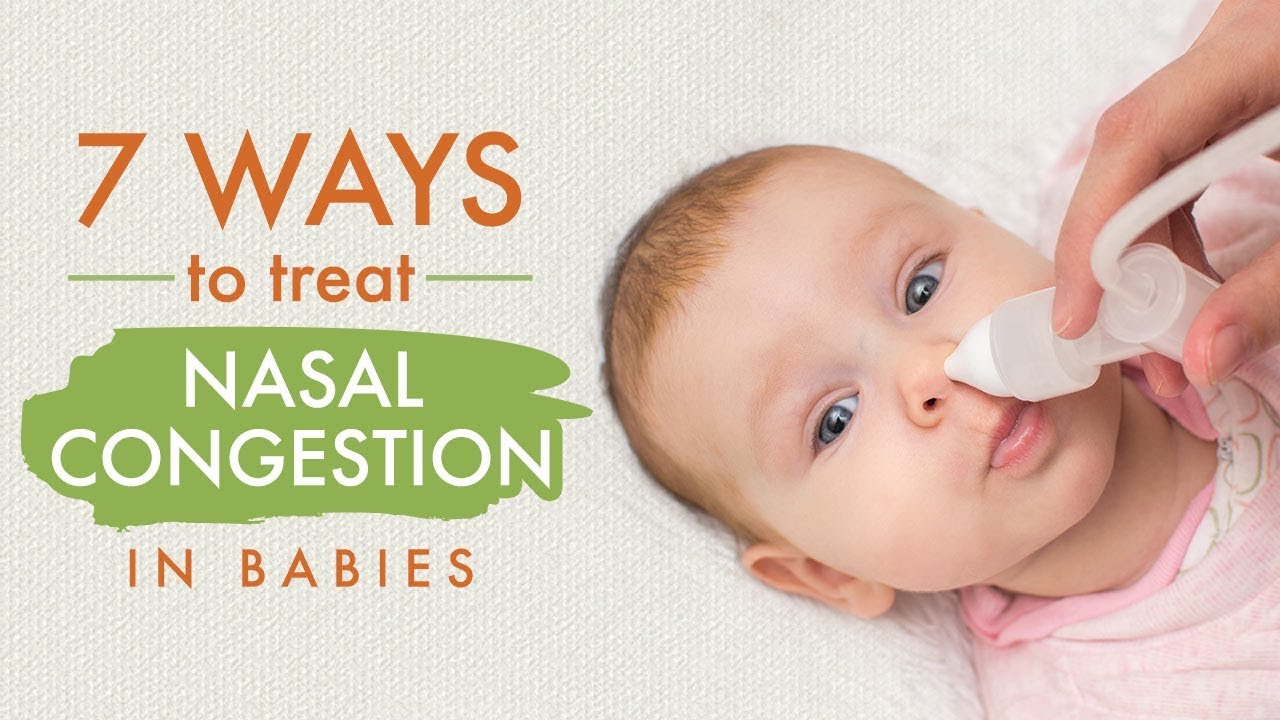
Use a bulb syringe or an infant nasal aspirator. Squeeze the bulb before placing the tip at the opening of the nostril. Release it slowly to draw out mucus.
Keep the tip at the entrance of the nostril. Never push it deep into the nose.
If you use a mouth-powered aspirator, follow its instructions and use a clean filter if the device requires one. Stop if your baby cries hard, bleeds, or seems more upset.
Suction is most useful when mucus blocks feeding or sleep. You do not need to suction every time you hear a sniffle.
5. Clean the device
Wash the bulb syringe or aspirator after each use. Use warm, soapy water, rinse it well, and let it dry fully.
A dirty device can hold germs. Check the manufacturer’s cleaning instructions, since some devices have removable parts that need separate cleaning.
6. Offer normal feeds
Continue breast milk or formula. A congested baby may take smaller feeds more often.
Pause during feeds to let your baby breathe. Clear the nose before feeding if needed. Watch for signs of dehydration, such as much fewer wet diapers, a dry mouth, no tears when crying, or unusual sleepiness.
Do not dilute infant formula. Do not give water to a young baby unless a health professional tells you to.
Other safe ways to ease congestion
Saline and gentle suction are the main tools. The following steps may also help.
Use a cool-mist humidifier
A cool-mist humidifier can add moisture to dry air. Place it near the crib but out of your baby’s reach. Keep it far enough away that mist does not wet the crib, bedding, or floor.


Clean and dry the humidifier as directed. A dirty humidifier can spread mold or germs into the air.
The U.S. Environmental Protection Agency recommends regular cleaning and careful use of home humidifiers. A cool-mist model is safer than a warm-mist model because it does not contain hot water that can burn a child.
Sit with your baby in a steamy bathroom
You may sit with your baby in a bathroom while a hot shower runs. Keep your baby away from the hot water and steam source.
Steam may briefly loosen mucus, but it does not cure a cold. Never place your baby over a bowl of hot water. Burns from hot water and steam can be severe.
Keep smoke and strong scents away
Avoid cigarette smoke, vaping, incense, candles, air fresheners, and strong cleaning fumes. These can irritate the nose and airways.
Ask visitors to wash their hands and avoid holding your baby when they are sick. Do not smoke in the home or car. Opening a window does not remove all smoke exposure.
Hold your baby upright while awake
Holding your baby upright against your chest may make breathing feel easier while they are awake. Stay close and watch your baby at all times.
For sleep, place your baby flat on their back on a firm, level sleep surface. Do not use pillows, wedges, sleep positioners, or an inclined sleeper to treat congestion.
The American Academy of Pediatrics safe sleep guidance advises against inclined sleep products and loose items in the sleep space.

What not to use for baby congestion
Some common cold remedies are not safe for infants. A natural label does not always mean a product is safe for a baby.
Avoid these unless your child’s doctor gives specific instructions:
- Over-the-counter cough and cold medicine
- Decongestant medicine
- Medicated nasal sprays
- Adult cold medicine
- Essential oils on or near the baby
- Menthol or camphor rubs on babies younger than 2 years
- Honey for babies younger than 1 year
- Antibiotics left over from another illness
- Homemade herbal remedies
- Pillows or sleep wedges to raise the baby’s head
The U.S. Food and Drug Administration warns against giving over-the-counter cough and cold products to children younger than 2 unless directed by a health professional. These products can cause serious side effects and do not make a cold end faster.
Honey can cause infant botulism in babies under 12 months. Never add honey to a bottle or use it for a baby’s cough.
Do not give acetaminophen or ibuprofen just because your baby is congested. Ask a doctor about the right medicine and dose. Ibuprofen should not be used in babies under 6 months unless a clinician directs you to do so.


A simple congestion plan by age
Age changes the safest next step. Use this table as a quick guide, but follow your pediatrician’s advice when it differs.
| Baby’s age | What you can do | Key safety point |
|---|---|---|
| Under 3 months | Use plain saline, gentle suction, and frequent feeds | A fever of 100.4°F or higher needs prompt medical care |
| 3 to 12 months | Use saline, gentle suction, a clean cool-mist humidifier, and normal feeds | Avoid OTC cough and cold medicine |
| Under 1 year | Continue breast milk or formula | Do not give honey |
| Under 2 years | Use non-drug comfort measures | Avoid menthol or camphor rubs unless a doctor gives different advice |
Do not use age alone to judge how sick a baby is. A baby who is breathing hard, feeding poorly, or becoming unusually sleepy needs medical advice at any age.
How often should you suction a baby’s nose?
Suction only when congestion interferes with feeding, sleep, or comfortable breathing. There is no need to clear every bit of mucus.
A practical routine is:
- Add plain saline.
- Wait briefly.
- Suction gently once.
- Stop if little mucus comes out or your baby becomes very upset.
Repeated suction can cause swelling, soreness, and nosebleeds. If your baby needs frequent suction for many hours, contact the pediatrician for advice.
A small amount of blood may appear after irritation. Stop suctioning and call your child’s doctor if bleeding continues, is heavy, or keeps returning.

How to tell whether your baby is improving
Congestion is likely easing when your baby:
- Feeds more normally
- Has regular wet diapers
- Sleeps for usual periods
- Breathes comfortably when calm
- Has less mucus or thinner mucus
- Acts more like themselves
A runny nose can last several days during a cold. The mucus may change color as the illness continues. Green or yellow mucus alone does not prove that your baby needs antibiotics.
Watch the whole picture. Breathing effort, feeding, alertness, and hydration are more useful than mucus color by itself.
When baby congestion is an emergency
Call 911 in the United States if your baby:
- Has blue, gray, or pale lips or face
- Stops breathing or has long pauses
- Is choking or cannot cry, feed, or make normal sounds
- Has severe trouble breathing
- Becomes limp, unresponsive, or very hard to wake
Seek urgent medical care if you see:
- Skin pulling in between or under the ribs
- Grunting with each breath
- Nostrils widening with each breath
- Breathing that stays very fast
- Wheezing or a harsh sound when breathing
- A baby who cannot take enough milk
- Signs of dehydration
- A fever in a baby under 3 months
Do not wait for home care to work when breathing is difficult. A blocked nose can be uncomfortable, but hard breathing is a different problem.


Common mistakes to avoid
Putting a cotton swab deep into the nose
A cotton swab can push mucus farther in or injure the nasal lining. Wipe only the outside of the nose with a soft, damp cloth.
Suctioning too hard or too often
Strong or repeated suction can cause swelling. Use saline first and suction only when it helps.
Raising the mattress
A tilted mattress, pillow, or positioner can let a baby slide into an unsafe position. Keep the sleep surface flat and firm.
Using adult products
Adult nasal sprays, rubs, and cold medicine may contain ingredients that are unsafe for babies. Use only products made for the child’s age, and ask a clinician when unsure.
Assuming congestion is always a cold
Congestion with poor feeding, fast breathing, a fever, or unusual sleepiness may signal a more serious illness. Do not rely on home treatment alone in those cases.
Frequently asked questions
Can I use saline drops in a newborn?
Plain saline drops are commonly used to loosen mucus in newborns. Use a product made for infants and follow its label. If your newborn has a fever, poor feeding, breathing trouble, or unusual sleepiness, contact a doctor promptly.
Can babies sleep with a stuffy nose?
Babies can sleep with mild congestion if they are breathing comfortably. Place the baby on their back on a firm, flat, empty sleep surface. Never use a pillow, wedge, inclined sleeper, or loose blanket to make breathing easier.
Is a humidifier good for a congested baby?
A clean cool-mist humidifier may help when dry air makes nasal mucus thick. It does not cure an infection. Clean it often and stop using it if you see mold, a bad smell, or excess moisture.
Should I wake a congested baby to feed?
Ask your pediatrician if your baby is sleeping longer than usual or missing feeds. Congestion can make feeding tiring. Offer normal feeds more often if needed, and watch wet diapers and alertness.
How long does baby congestion last?
A cold may cause congestion for several days. Contact your child’s doctor if symptoms worsen, fail to improve, last longer than expected, or affect feeding and breathing.
Key takeaways
- Use plain saline and gentle suction when mucus blocks feeding or sleep.
- Suction only at the nostril opening and do not overdo it.
- Use a clean cool-mist humidifier if the air is dry.
- Keep your baby flat on their back for sleep.
- Do not use OTC cough and cold medicine, honey, essential oils, or adult products.
- Call a doctor for fever in a baby under 3 months or any concern about breathing, feeding, or hydration.
- Call 911 for blue lips, severe breathing trouble, pauses in breathing, or an unresponsive baby.
Conclusion
The safest way to decongest a baby is simple: soften mucus with plain saline, remove it gently when needed, protect the air from smoke and dry conditions, and keep feeds going. Avoid medicines and sleep products that can create new risks.
If your baby works hard to breathe, cannot feed, becomes unusually sleepy, or has a fever while under 3 months old, seek medical care rather than relying on home treatment.
