
Most babies start to show a clear ticklish response between 4 and 6 months of age. Some laugh when a parent tickles their toes or belly earlier. Others do not react much until closer to their first birthday.
There is no exact age when every baby “becomes ticklish.” Babies develop at different rates, and laughter depends on more than touch. Their mood, trust, alertness, and ability to understand playful social cues all matter.
In the United States, parents can use the CDC’s developmental milestones as a general guide. The CDC lists chuckling by around 4 months and laughing by around 6 months as common social milestones. These milestones are not strict deadlines or tests of whether a baby is healthy.

The short answer: Most babies become ticklish around 4 to 6 months
A baby may react to touch from birth, but that early response is not always the same as being “ticklish.” Newborns may pull away, startle, wiggle, or calm when touched. These are often automatic responses from the nervous system.


A more familiar ticklish response usually appears when a baby can:
- Notice where the touch is coming from
- Recognize a parent’s voice and face
- Expect a playful event
- Control facial expressions and sounds
- Connect touch with social interaction
By about 4 months, many babies begin to chuckle. By about 6 months, many laugh more clearly during games, funny sounds, and gentle touch. These age ranges come from broad developmental patterns, not a firm medical rule.
A baby may smile during a game without laughing. That still shows social engagement. Some babies show ticklishness through squeals, wide grins, kicking, or wiggling instead of a loud laugh.
Why newborns may not seem ticklish
Newborns can sense touch, but their brains are still learning how to process it. A newborn may have a strong reaction when someone touches the sole of the foot or brushes the skin. That reaction may be a reflex rather than playful laughter.
A reflex happens without much conscious control. For example, a newborn may:
- Pull back a foot
- Spread the toes
- Jerk an arm
- Blink
- Startle
- Become quiet
- Cry after sudden touch
These actions do not prove that the baby feels ticklish in the same way an older baby does.
Playful tickling also relies on social timing. An older baby may see a parent smile, hear a familiar voice, and then expect a gentle touch. That pattern can make the experience funny. A newborn usually has less ability to predict the next moment.
The difference is useful: feeling touch is present early, but playful ticklish laughter usually develops later.


How ticklishness develops during the first year
Ticklishness tends to grow along with social and motor development. The ages below are general guides for full-term babies in the United States. A child born prematurely may reach some milestones based on adjusted age, especially during the first two years.
| Approximate age | What you may notice | What it may mean |
|---|---|---|
| Birth to 2 months | Startling, pulling away, wiggling, or calming after touch | A normal response to sensory input |
| Around 2 months | Smiling at people and responding to faces or voices | Growing social awareness |
| Around 3 to 4 months | Chuckling, squealing, or smiling during play | Early humor and social laughter |
| Around 4 to 6 months | More laughter during gentle touch or silly games | A clearer playful tickle response |
| Around 6 to 9 months | Anticipating a game and laughing before the touch | Memory and expectation are joining the response |
| Around 9 to 12 months | Enjoying repeated social games, such as “This Little Piggy” | More active participation and shared play |
The CDC’s milestone pages describe social behaviors such as smiling, chuckling, and laughing at different stages. The pages can help parents track development, but they cannot predict the exact day a baby will laugh at a tickle.
Light touch and firm touch are not the same
A very light brush may cause a reflexive wiggle. A gentle, brief squeeze or rhythmic touch may cause laughter in an older baby. These responses involve different kinds of sensory input.
Scientists often use two terms when discussing tickle-like touch:
- Knismesis: A light, often irritating or itchy sensation, such as a feather brushing the skin.
- Gargalesis: A stronger touch that can produce laughter in some people.
Parents do not need to use these terms at home. The key point is that a baby’s foot twitch does not always mean the baby is ready for playful tickling.
Anticipation can make tickling funny
Older babies may laugh before the touch happens. They may watch a parent’s hand, hear a familiar phrase, or pause during a game. This anticipation is part of the fun.
That is why a simple routine can work well:
- Smile and make eye contact.
- Say a playful phrase.
- Pause for a moment.
- Touch gently for one or two seconds.
- Stop and watch the baby’s response.
The pause gives the baby a chance to predict what comes next. It also gives the parent a chance to notice whether the baby wants more.

How to tickle a baby safely
Gentle, brief touch is usually the safest approach. Tickling should be a shared game, not a way to make a baby laugh at any cost.
Try these steps:
- Choose a calm time. Pick a moment when the baby is awake, fed, and not overstimulated.
- Start with a familiar touch. Hold the baby’s hand or rub the feet gently.
- Use a soft voice. A song or repeated phrase can help the baby understand the game.
- Touch easy-to-reach areas. Try the soles of the feet, palms, or belly over clothing.
- Keep it short. A few seconds may be enough.
- Pause often. Let the baby show whether they want the game to continue.
- Stop at the first clear sign of distress.
A baby may enjoy one body area but dislike another. The ribs, neck, armpits, or face may feel too intense for some babies. Never poke the eyes, mouth, nose, throat, or soft spots on the head.
Do not shake, jerk, bounce roughly, or squeeze a baby during play. Never cover a baby’s nose or mouth. Avoid tickling while the baby is feeding, has just eaten, is falling asleep, or is being held in a position that could make breathing difficult.
Signs your baby is enjoying the game
Positive signs may include:


- A relaxed face
- Eye contact
- Smiling
- Chuckling or laughing
- Kicking with excitement
- Reaching toward your hand
- Turning back toward you after a pause
- Making happy sounds
Laughter alone is not always proof that a baby is comfortable. Some babies laugh when overstimulated, and a nervous laugh can change quickly into crying.
Signs to stop
Stop the game if your baby:
- Turns the head away
- Stiffens the body
- Closes the eyes tightly
- Frowns or looks worried
- Pushes your hand away
- Fussing or cries
- Tries to escape the position
- Changes breathing pattern
- Becomes unusually quiet or tired
A pause is a simple form of consent checking. If the baby does not re-engage, move on to another activity.
The American Academy of Pediatrics recommends responsive play that follows a child’s cues. Its guidance on play also supports talking, singing, reading, and simple back-and-forth games as ways to build connection. Tickling is optional; it is not needed for healthy development.

What if your baby is not ticklish?
A baby who does not laugh when tickled may still be developing normally. Babies differ in temperament, sensory preferences, and timing. Some are highly reactive to touch. Others prefer songs, movement, faces, or peekaboo.
Before worrying, consider the situation:
- Is the baby tired or hungry?
- Is the room noisy or busy?
- Is the touch too light or too strong?
- Does the baby prefer touch over clothing?
- Does the baby smile or engage during other games?
- Was the baby born early?
- Is the baby currently ill or uncomfortable?
Try again on another day without increasing the pressure. Do not tickle harder to force a response. Use other social games, such as singing, copying sounds, smiling, or gentle peekaboo.
When to discuss development with a pediatrician
A lack of laughter by itself usually does not identify a problem. However, talk with your child’s pediatrician if you have broader concerns about social or sensory development.
Contact the pediatrician if your baby:
- Does not smile at people by about 3 months
- Does not show pleasure or engagement during interaction
- Does not respond to sounds or familiar voices
- Loses a skill they previously had
- Seems unusually difficult to wake or engage
- Has a movement, hearing, vision, or feeding concern
The CDC advises parents to act early when a child misses milestones, loses skills, or causes a caregiver concern. In the United States, parents can also use the CDC’s Milestone Tracker and ask about developmental screening during well-child visits.


A pediatrician may check hearing, vision, muscle tone, movement, communication, and social responses. A single reaction to tickling cannot diagnose a developmental condition.
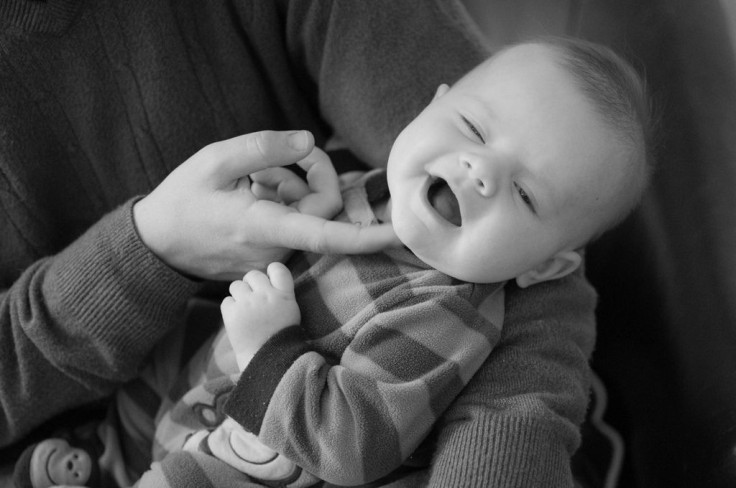
Common questions about baby ticklishness
Can newborns laugh when they are tickled?
Newborns may make brief sounds or facial movements that look like laughter, but these may be reflexes, gas, or random vocal sounds. Social laughter usually becomes clearer during the first several months.
Do not use a newborn’s reaction to tickling as a test of development. Gentle holding, talking, singing, and skin-to-skin contact are better early ways to interact.
Is it safe to tickle a baby’s feet?
Gentle foot play is generally fine when the baby is calm and breathing normally. Use light pressure and stop if the baby pulls away, cries, or becomes upset.
A foot jerk by itself does not mean the baby is enjoying the touch. Watch the full set of cues, including the face, body, and behavior after you pause.
Can tickling hurt a baby?
Gentle, brief tickling should not hurt. Rough, prolonged, or forceful tickling can overwhelm a baby and may cause distress. Avoid pressure on the chest, neck, face, and abdomen.
Never restrain a baby so you can continue tickling. The game should end as soon as the baby shows discomfort.
Why does my baby laugh when I stop tickling?
The pause may be part of the game. Babies often enjoy the pattern of touch, stop, anticipation, and touch again. Your face and voice may also be funny or exciting.
Waiting a few seconds before repeating the game can help you see whether the baby expects and welcomes it.
Do babies become more ticklish as they get older?
Many babies become more responsive to playful tickling during the second half of the first year. They may understand routines better and show clearer anticipation.
That does not mean every baby will enjoy tickling. Some children remain more interested in songs, movement, books, or peekaboo.
Key takeaways
- Most babies show playful ticklish laughter between 4 and 6 months.
- Newborns can respond to touch, but a foot jerk or startle is not always ticklish laughter.
- Laughter, smiling, and social engagement develop at different rates.
- Use gentle touch, keep it brief, and pause often.
- Stop when the baby turns away, stiffens, fusses, or cries.
- A baby who does not laugh during tickling may still be developing normally.
- Ask a pediatrician about broader concerns, lost skills, or missed milestones.
Conclusion
Babies usually become clearly ticklish during the middle of the first year, often between 4 and 6 months. The response develops as touch, social awareness, laughter, and anticipation come together.
The best approach is simple: start gently, watch your baby’s cues, and treat tickling as optional play. If your baby prefers songs, cuddles, or peekaboo, those activities can build the same warm connection.


