
For most healthy babies in the United States, Gerber baby food can be safe when it is used as directed, stored correctly, and served as part of a varied diet. Gerber products sold in the U.S. must meet federal food safety rules. Still, no packaged baby food is risk-free. Parents should check recalls, read labels, avoid damaged packages, and limit repeated exposure to foods that may contain arsenic, lead, or other contaminants.
The biggest concern is not that every Gerber product is unsafe. It is that tiny amounts of heavy metals can occur in some foods because they are present in soil and water. Babies are also more sensitive to these substances than adults.
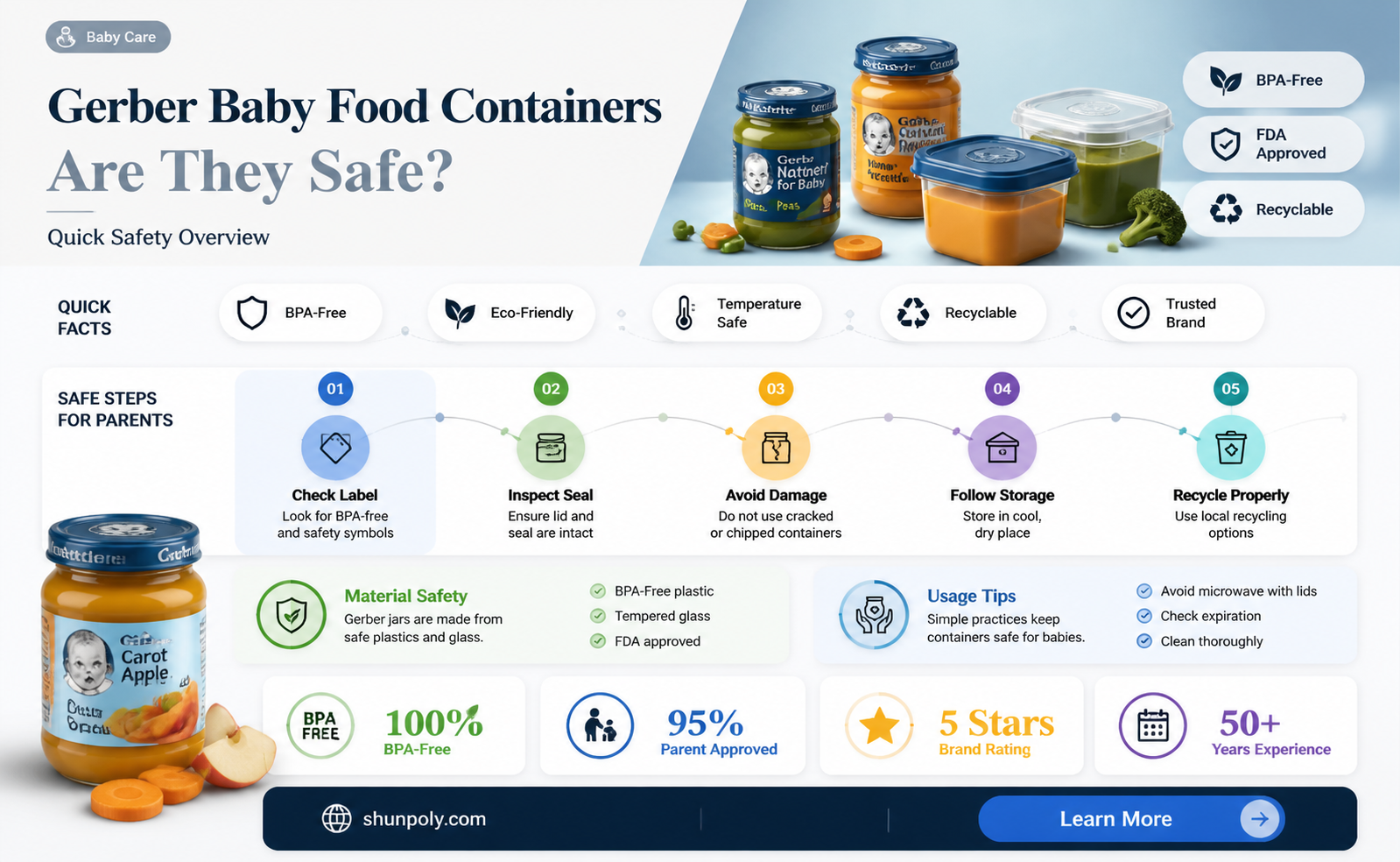
How safe is Gerber baby food in the United States?
Gerber baby food is subject to U.S. Food and Drug Administration (FDA) rules for food safety, labeling, manufacturing, and contaminants. The FDA does not approve every jar or pouch before it reaches stores.
Instead, food companies must make safe products, follow federal rules, and keep required records.

Gerber also says it tests ingredients and finished products. That information describes the company’s own safety program. It is not the same as an independent test of every product.
A practical answer looks like this:
| Question | Practical answer |
|---|---|
| Can a baby eat Gerber food? | Usually, if the baby is ready for solid food and the product fits the child’s age and needs. |
| Is every product free from heavy metals? | No food can promise that. Trace amounts may occur in some crops. |
| Is Gerber under a current blanket ban? | No. Parents should check specific product recalls instead. |
| Should parents avoid all packaged baby food? | Not usually. Variety and safe handling matter more than one brand alone. |
| What should parents do after a recall? | Stop using the named product, follow the recall notice, and contact the child’s clinician if the baby became ill. |
The FDA has set limits or guidance for some contaminants in foods for babies and young children. For example, the FDA set an action level of 100 parts per billion for inorganic arsenic in infant rice cereal. An action level is a point at which the FDA may take action. It is not a claim that food below that level has zero risk.
The FDA also issued guidance for reducing lead in foods intended for babies and young children. Rules and guidance can change, so parents should use current FDA information when a safety issue arises.
What did the 2021 heavy-metal report mean?
In 2021, a U.S. House of Representatives subcommittee reported that some major baby food makers had internal test results showing heavy metals in certain products. The report raised valid concerns about testing methods and company limits.
However, the report did not prove that every product from every named brand was dangerous. It also did not measure every product sold in stores at that time. Its findings should be understood as a reason for stronger oversight and better testing—not as proof that all Gerber food is unsafe.
The FDA continues to study heavy metals in the food supply. Parents can reduce exposure by offering different grains, fruits, vegetables, proteins, and commercial foods rather than serving the same food every day.
What are the main safety concerns with Gerber baby food?
The main concerns are heavy metals, food allergens, choking hazards, spoilage, and product recalls. These risks apply to many baby foods, not only Gerber.
Heavy metals
Heavy metals include substances such as lead, arsenic, cadmium, and mercury. They can enter food through soil, water, air, and farm inputs. They are not added as normal ingredients.


Some foods are more likely to carry certain contaminants:
- Rice and rice cereal: Rice can absorb more inorganic arsenic from soil and water than many other grains.
- Root vegetables: Crops such as sweet potatoes and carrots grow in soil and may take up some contaminants.
- Fruit juices: Juice can contribute sugar and may be covered by separate FDA contaminant limits.
- Certain fish: Large fish can contain more mercury than smaller fish.
This does not mean a baby must never eat rice cereal, carrots, or sweet potatoes. It means these foods should not crowd out all other choices.
A simple approach is to rotate foods. For example, offer oatmeal or another grain on some days instead of rice cereal. Serve a mix of fruits and vegetables. If your baby eats fish, choose lower-mercury options listed by the FDA.
Allergens
Gerber foods may contain or come into contact with common allergens such as milk, wheat, soy, egg, peanuts, tree nuts, fish, or sesame. Read the full label each time. Recipes can change.
The current U.S. dietary guidance supports introducing common allergens when a baby is ready for solid foods, unless a health professional gives different advice. Delaying all allergen foods does not prevent food allergy for most children.
Ask your child’s doctor before introducing peanut or egg if your baby has severe eczema, an existing food allergy, or another condition that raises concern. Seek emergency help for trouble breathing, swelling of the lips or tongue, repeated vomiting, extreme sleepiness, or widespread hives after eating.
Choking
Age labels do not replace close supervision. A food may be labeled for an infant but still pose a risk if it has a thick lump, a firm piece, or an unsafe shape.
Feed your baby while the child is seated upright. Stay close. Do not let the baby eat while lying down, crawling, walking, or riding in a car.
Do not put cereal in a bottle unless your child’s doctor specifically tells you to do so. It can raise choking risk and does not reliably help a baby sleep longer.
Spoilage and damaged packaging
Do not use a product if the jar seal is broken, the lid is bulging, the pouch leaks, or the package looks swollen or damaged. When you open a jar, listen for the safety seal and check the food for an unusual smell, color, or texture.
A food can look normal and still be unsafe if it was stored poorly. Use the label’s storage directions. Refrigerate opened food when the label says to do so, and discard leftovers within the stated time.

How should you serve Gerber baby food safely?
Safe serving starts with the child, the package, and the storage method.
1. Confirm that your baby is ready for solids
Most babies begin solid foods at about 6 months. The CDC and the American Academy of Pediatrics advise against starting before 4 months.
Signs of readiness include:
- Sitting with support and controlling the head and neck
- Opening the mouth when food is offered
- Bringing objects to the mouth
- Swallowing food instead of pushing it out with the tongue
- Showing interest in food


Age alone is not enough. Ask your child’s pediatrician if your baby was born early or has feeding, growth, swallowing, or developmental concerns.
2. Check the package before opening
Look for:
- A clear expiration or “best by” date
- An intact jar seal or pouch
- No leaks, swelling, rust, or deep dents
- A label that matches your baby’s dietary needs
- A product that is not listed in a current recall
You can search the FDA recall database and Gerber’s official product notices. A store shelf is not proof that a product is safe. Recalls can be announced after products reach stores.
3. Use a clean spoon
Wash your hands before preparing food. Use a clean spoon and a clean bowl.
If your baby eats directly from a jar or pouch, saliva can enter the container. Do not save the unused portion unless the package specifically permits it and the food was not touched by the spoon or mouth. A safer method is to place a small amount in a bowl and keep the rest sealed as directed.
4. Store and discard food as directed
Follow the product label for refrigeration and use-by times. Do not leave opened baby food at room temperature for long periods.
When in doubt, throw it out. The cost of a pouch or jar is small compared with the risk of feeding spoiled food.
5. Offer variety
Variety helps limit repeated exposure to any one contaminant and supports a broader diet. Across the week, include different foods and textures that match your baby’s skills.
You can offer:
- Oat or multigrain cereal instead of only rice cereal
- Pureed or mashed vegetables
- Fruits
- Beans, lentils, meat, poultry, fish, tofu, or eggs
- Plain yogurt or other suitable foods, based on your child’s needs
Do not add honey before 12 months because of the risk of infant botulism. Avoid cow’s milk as the main drink before 12 months, although yogurt and milk used in foods may be appropriate for many babies.

Does Gerber baby food contain heavy metals?
Some baby foods may contain small amounts of heavy metals, including Gerber products. The available evidence does not support a simple claim that all Gerber food is unsafe or that one brand is always safer than every other brand.
Heavy metals are an industry-wide and environmental issue. The amount can vary by crop, growing region, water source, ingredient, batch, and test method.
Parents should also know that labels usually do not show the exact heavy-metal level in each jar. A company may test ingredients or finished products, but consumers may not see the complete laboratory data.
The most useful response is exposure reduction:


- Do not serve rice cereal as the only grain.
- Rotate fruits and vegetables.
- Serve a range of protein foods.
- Follow FDA advice on lower-mercury fish.
- Avoid juice for infants unless a clinician recommends it.
- Keep household sources of lead away from the baby, such as peeling paint, contaminated dust, and unsafe imported products.
This matters because food is only one possible source of heavy-metal exposure. Drinking water, soil, dust, cookware, spices, cosmetics, and imported remedies can also matter.
If you are worried about lead exposure, ask your child’s clinician about blood lead testing. A test is more useful than guessing from a food label.

Are Gerber pouches safer than jars?
Neither package type is automatically safer. The main differences involve storage, feeding habits, and texture.
Pouches are convenient, but prolonged sucking directly from a pouch may reduce a baby’s chance to practice eating from a spoon and may expose teeth to frequent food contact. Pouring pouch food into a spoon or bowl can help with feeding skills.
Jars make it easier to see the food and portion it with a spoon. They can still become contaminated if a used spoon goes back into the jar.
For either type:
- Check the seal.
- Follow storage instructions.
- Do not use swollen or leaking packaging.
- Do not save food that your baby has eaten directly from.
- Watch texture and thickness as your baby develops.
Packaging choice is less important than safe handling and a varied diet.

When should you avoid or stop using a Gerber product?
Stop using the product if it is part of a recall, has damaged packaging, smells spoiled, or causes a reaction.
Contact a health professional if your baby has ongoing vomiting, diarrhea, fever, poor feeding, unusual sleepiness, or signs of dehydration after eating. Call emergency services for breathing trouble, facial swelling, blue lips, collapse, or a severe allergic reaction.
Do not diagnose food poisoning or allergy from one mild symptom alone. A rash around the mouth can come from skin irritation, while hives may signal an allergy. A clinician can help tell the difference.
Keep the package if your baby becomes ill. Record the product name, lot code, expiration date, and when the food was eaten. This information can help your doctor and public health officials.

What should parents check before buying Gerber baby food?
Use this short checklist:
- Product: Is it suitable for your baby’s age and eating skills?
- Ingredients: Does it contain a known allergen or an ingredient your clinician told you to avoid?
- Package: Is the seal intact and the container free from swelling or leaks?
- Recall status: Is the product listed in an FDA or Gerber recall notice?
- Variety: Will it add a different grain, vegetable, fruit, or protein to the diet?
- Storage: Can you refrigerate and use it within the label’s time limit?
- Feeding method: Will you serve it with a spoon rather than let your baby suck from the pouch for long periods?
A food labeled “organic” is not automatically free of heavy metals. Organic farming rules address production methods, not every contaminant that may be present in soil or water.


Frequently asked questions
Is Gerber baby food FDA approved?
The FDA regulates baby food sold in the United States, but it does not pre-approve every jar or pouch before sale. Manufacturers are responsible for producing safe food that meets federal requirements. The FDA can inspect facilities, review records, test products, and issue recalls or enforcement actions.
Is Gerber rice cereal safe?
Gerber rice cereal can fit into an infant diet, but it should not be the only grain. Rice can absorb more inorganic arsenic than many other grains. Offering oatmeal or multigrain cereal at times can reduce repeated exposure to rice-based foods.
Can Gerber baby food cause constipation?
Some babies have firmer stools after certain foods, especially when their diet changes. Rice cereal may be more constipating for some infants than other foods. Ask a pediatrician before changing an infant’s diet for ongoing constipation, blood in the stool, severe pain, or poor feeding.
Can babies eat Gerber food every day?
A baby may eat commercial baby food often, but the diet should include variety. Rotate ingredients, grains, textures, and protein sources. Avoid serving the same rice-based product or the same food at nearly every meal.
How can I check whether my Gerber food was recalled?
Search the FDA’s official recalls and safety alerts database and Gerber’s U.S. product information. Match the exact product name, package size, lot code, and date. If the details do not match, the recall may not apply—but do not use a damaged or questionable package.
Bottom line
Gerber baby food is generally a reasonable option for U.S. families when the package is intact, the product is not recalled, and parents follow safe feeding and storage practices. The main concern is not one brand alone. It is the broader presence of heavy metals and other hazards in the food supply.
Use variety, limit rice-based foods as the only grain, read labels, watch for allergens and choking risks, and check current recalls. If your baby has a medical condition, feeding problem, or possible reaction, ask the child’s pediatrician for personal advice.
Sources for current U.S. guidance
- U.S. Food and Drug Administration: Action Levels for Lead in Food Intended for Babies and Young Children
- U.S. Food and Drug Administration: Inorganic Arsenic in Rice Cereals for Infants
- CDC: When, What, and How to Introduce Solid Foods
- FDA Recalls, Market Withdrawals, and Safety Alerts
- FDA Advice About Eating Fish
