
Most families do not need both strollers, but active parents may benefit from adding a jogging stroller.
Deciding “do I need a jogging stroller and regular stroller” depends on your daily routine, fitness plans, child’s age, and storage space. A regular stroller is usually the better everyday choice, while a jogging stroller is built for running, uneven paths, and active outdoor use. This guide explains the safety differences, costs, benefits, and real-life situations that can help you choose with confidence.
What Is the Difference Between a Jogging Stroller and a Regular Stroller?
A regular stroller is made for everyday travel. It works well for shopping, errands, neighborhood walks, restaurants, and short trips. Most models are lighter, easier to fold, and more convenient in tight spaces.
A jogging stroller is designed for faster movement and rougher ground. It usually has three large wheels, a fixed or lockable front wheel, stronger suspension, and a hand brake. These features improve stability when you run, but they also make the stroller heavier and less compact.
When asking, “do I need a jogging stroller and regular stroller,” it helps to think of them as two different tools. A regular stroller is like a small daily car. A jogging stroller is more like a sport utility vehicle for active use.
| Feature | Regular stroller | Jogging stroller |
|---|---|---|
| Main use | Errands, travel, daily walks | Running and outdoor exercise |
| Wheel design | Two small front wheels are common | Three large wheels are common |
| Weight | Often lighter | Usually heavier |
| Folding | Often quick and compact | May be larger when folded |
| Suspension | Basic to moderate | Stronger suspension |
| Front wheel | Swivels for easy turns | Often locks for stability |
| Running safety | Not designed for running | Designed for controlled running |
| Cost | Wide range | Often more expensive |
A jogging stroller should not be used as a running stroller simply because it has three wheels. Some three-wheel strollers are made for walking only. Always check the manufacturer’s instructions.

Do You Need a Jogging Stroller and Regular Stroller?
You may need both if you run often and also want a light, simple stroller for daily tasks. You may need only a regular stroller if you mainly walk, shop, travel, or use public transportation.
The question “do I need a jogging stroller and regular stroller” has no single answer for every family. Your schedule matters more than marketing labels.
You may benefit from both strollers if:
• You run several times each week.
• You take your child on gravel paths, grass, or uneven trails.
• You want one stroller for exercise and another for errands.
• You have enough storage space.
• You do not mind paying for two different products.
You may need only a regular stroller if:
• You do not plan to run with your child.
• You mainly use sidewalks, stores, and smooth paths.
• You travel often or have limited car space.
• You prefer a lighter stroller.
• Your budget is limited.
You may need only a jogging stroller if:
• You plan to use it for walking and running.
• You choose a model that folds well enough for your needs.
• You can manage its extra weight.
• You do not need a very compact stroller for travel.
For many parents, buying one high-quality regular stroller first is the smartest choice. You can add a jogging stroller later if running becomes part of your routine.
When Is a Jogging Stroller Worth Buying?
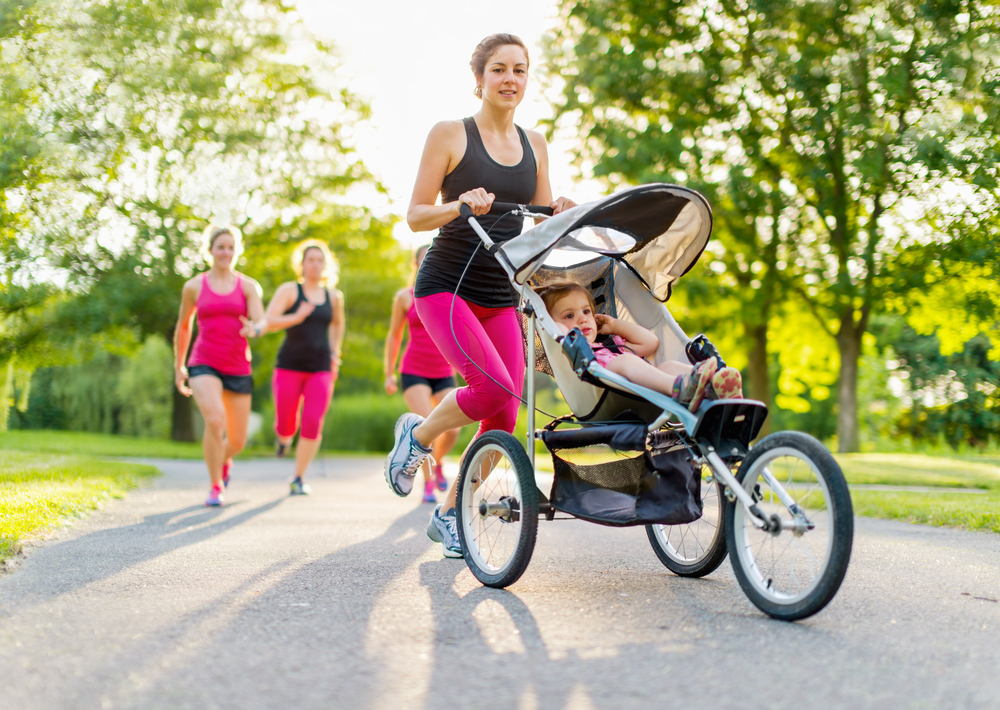
A jogging stroller is worth buying when you will use its special features often. If it sits in the garage for most of the year, it may not provide good value.
Consider a jogging stroller if you:
Run at least once or twice a week
Running with a child changes the way you move. A jogging stroller can offer better control, smoother handling, and more stability than a basic stroller. It can also reduce the need to stop when the path becomes uneven.
Still, a jogging stroller does not make every run safe. You need a clear route, good visibility, and the ability to control the stroller at all times.
Use trails or rough paths
Large wheels and suspension can make a major difference on packed dirt, grass, and cracked sidewalks. A small-wheel stroller may catch on stones or feel shaky on rough ground.
A jogging stroller is not always ideal for deep sand, steep hills, or very rocky trails. Check the wheel size and suspension before buying if you spend time outdoors.
Want to exercise with your child
A jogging stroller can make it easier to return to an active routine after having a baby. It may help you combine childcare and exercise when you cannot arrange a babysitter.
The American Academy of Pediatrics advises parents to follow the stroller maker’s age and readiness guidance. Many manufacturers recommend waiting until a child has strong head and neck control, and some advise waiting until around 6 months before jogging. Always follow the specific manual.
Prefer long-term outdoor use
Some jogging strollers have strong frames, adjustable handlebars, large storage areas, and reclining seats. These features can help families who spend lots of time outdoors.
However, outdoor strength often comes with extra weight. A stroller that feels excellent on a trail may feel inconvenient in a crowded store.

When Is a Regular Stroller the Better Choice?
A regular stroller is usually the better choice for daily life. It is easier to lift, turn, store, and use in places with limited space.
Choose a regular stroller for:
• Grocery shopping
• Mall trips
• Airports and vacations
• Public transportation
• Restaurants and cafés
• Doctor appointments
• Short neighborhood walks
• Day care drop-off
A regular stroller often has a smaller turning radius. That matters when you move between clothing racks, store aisles, elevator doors, and crowded sidewalks.
Many regular strollers also offer useful features such as a reversible seat, car seat compatibility, a large basket, a sun canopy, and one-hand folding. These features may matter more to your daily routine than advanced suspension.
One mistake parents often make is buying a large stroller for occasional outdoor use, then finding it frustrating every day. Your stroller should fit your most common trips, not your most ambitious plans.
Can You Use a Jogging Stroller as an Everyday Stroller?
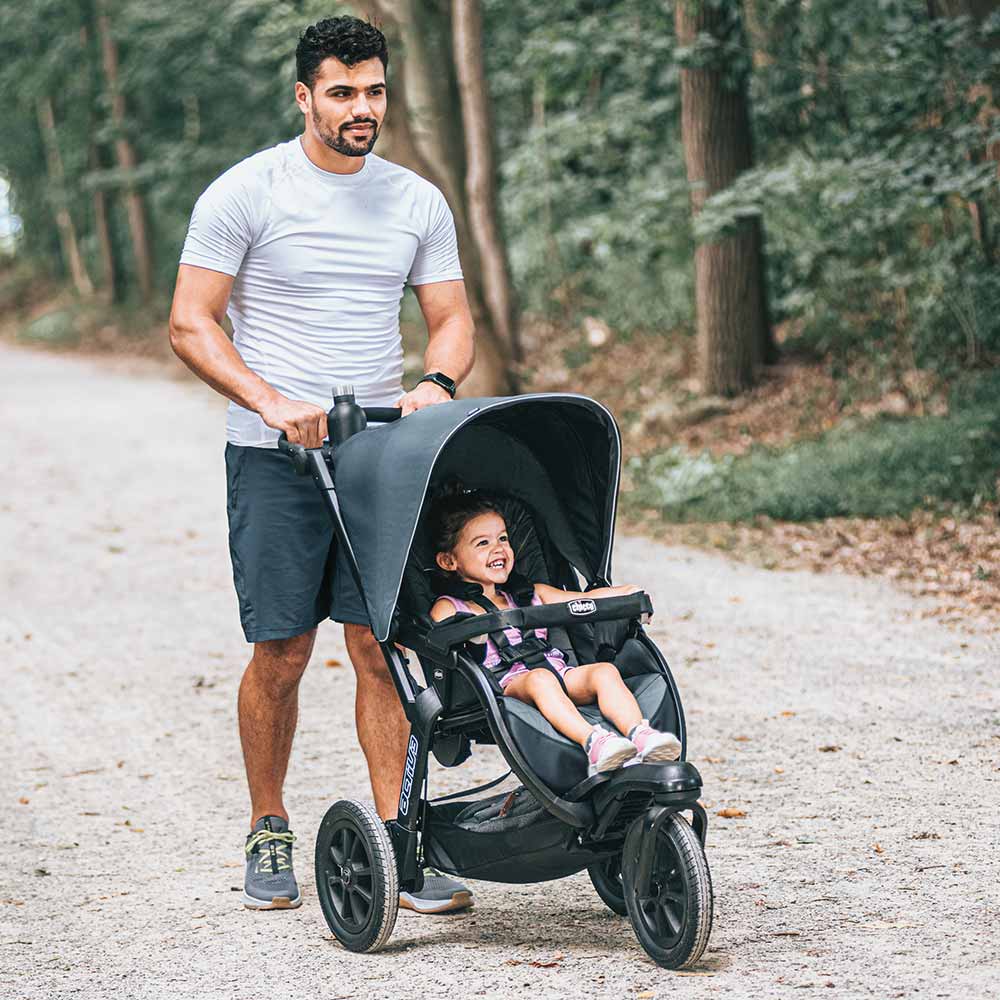
Yes, you can use some jogging strollers every day, but that does not mean they are the most convenient choice.
A jogging stroller may work well as your only stroller if you have a large car, plenty of storage, and mostly outdoor routines. It can handle walks, playground trips, and many errands.
There are also limitations:
• It may be too wide for narrow aisles.
• It may be heavy to lift into a vehicle.
• Its fixed front wheel can make tight turns harder.
• It may take more space in a home or apartment.
• It may not fit well in small restaurant spaces.
• Its tires may need regular inflation.
If you are asking, “do I need a jogging stroller and regular stroller,” consider whether one jogging stroller can meet all your needs. For some families, it can. For others, the weight and size become tiring after a few weeks.
A good test is to visit a store and push the stroller through narrow aisles. Fold it, lift it, place it in your trunk, and adjust the handle. A five-minute test can reveal more than a product description.

Important Jogging Stroller Safety Rules
A jogging stroller is not automatically safe for running just because it has three wheels. Safe use depends on the design, your child’s development, your route, and your handling.
Follow these basic rules:
Read the full instruction manual before use.
Use the safety harness on every trip.
Lock the front wheel before jogging if the manufacturer instructs you to do so.
Use the wrist strap whenever you run.
Test the hand brake before each run.
Keep both hands available when moving downhill or over rough ground.
Avoid traffic, steep slopes, and crowded paths.
Do not run with an infant who lacks adequate head and neck control.
Never attach a leash or strap in a way that could create a strangulation risk.
Check tires, brakes, buckles, and frame parts often.
The U.S. Consumer Product Safety Commission recommends using restraints correctly and checking strollers for defects or recalls. You can also look for products that meet current voluntary stroller safety standards, such as ASTM F833.
A jogging stroller should never be used as a substitute for careful supervision. It improves handling, but it cannot remove every risk.
What Features Should You Look For?
The best stroller depends on how you plan to use it. Do not pay for features that will not improve your daily life.
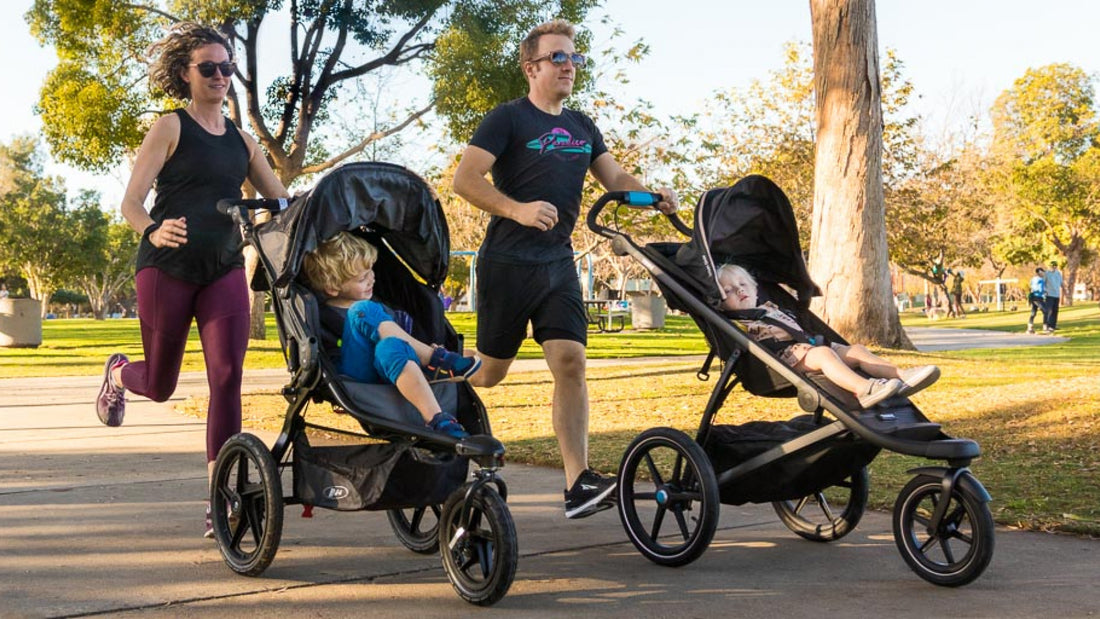
Features for a jogging stroller
Look for:
• A lockable front wheel
• Large air-filled or suitable all-terrain tires
• Reliable suspension
• A strong five-point harness
• A wrist tether
• A hand brake
• An adjustable handlebar
• A sun canopy with good coverage
• A secure storage basket
• A clear weight and age range
• Easy-to-find replacement parts
Air-filled tires can provide a smooth ride, but they can lose air or develop punctures. Foam-filled or solid tires need less maintenance, but the ride may feel different. Neither option is perfect for every family.
Features for a regular stroller
Look for:
• A compact fold
• Low carrying weight
• A comfortable seat
• A deep recline when appropriate
• An adjustable sun canopy
• A five-point harness
• Good wheel locks
• A useful storage basket
• Car seat compatibility if needed
• Washable or removable fabric
• A width that fits your doors and car
A stroller that folds quickly may be worth more than a stroller with extra accessories. In real life, the easiest stroller to use is often the one that gets used most.
Cost, Storage, and Long-Term Value
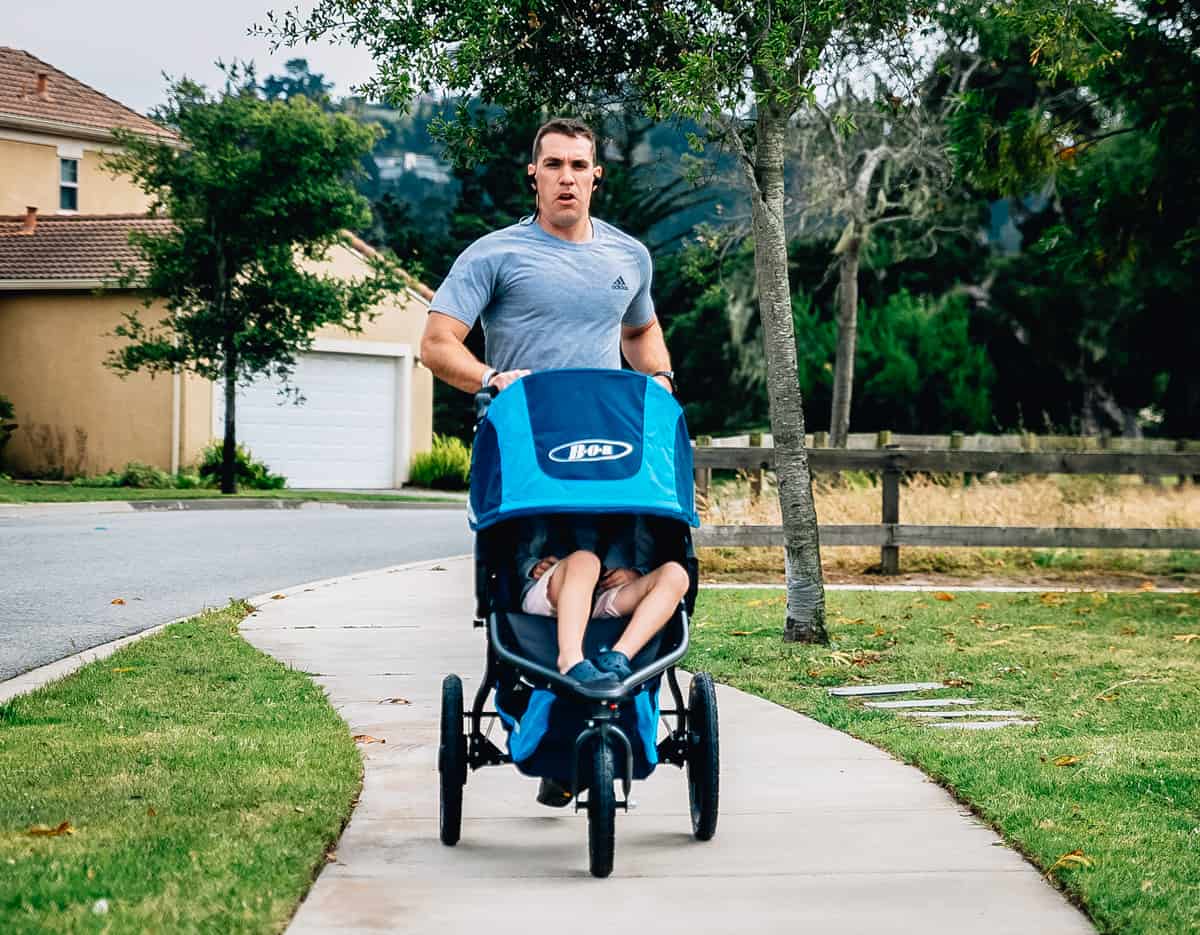
Buying two strollers costs more than buying one. Prices vary widely, but jogging strollers often cost more because they use stronger frames, larger wheels, and improved suspension.
Remember to include related costs:
• Rain covers
• Car seat adapters
• Replacement tires or tubes
• Maintenance parts
• Travel bags
• Stroller boards
• Extra sun shades
Storage also matters. A jogging stroller may take up much more room than a compact everyday model. Measure your closet, entryway, car trunk, and elevator before you buy.
If you buy only one stroller, think about your most frequent use. If you walk to stores every day, a regular stroller may offer better value. If you run several times each week, a jogging stroller may earn its space and cost.
A useful approach is to buy a dependable regular stroller first. Wait several months, then decide whether your actual routine justifies a jogging stroller. This can prevent an expensive purchase based on an ideal routine that never becomes real.

Personal Lessons and Common Buying Mistakes
One common lesson from helping parents compare stroller types is that comfort on paper does not always equal comfort in daily life. A stroller may have excellent wheels but still feel difficult to lift. Another may fold beautifully but lack the basket space a parent needs.
Parents often make these mistakes:
• Buying a jogging stroller before checking its folded size
• Assuming every three-wheel stroller is safe for running
• Ignoring the handlebar height
• Forgetting to test the brake
• Choosing style over harness comfort
• Not checking the stroller’s weight limit
• Expecting one stroller to be perfect for every setting
• Running with a baby before reading the age guidance
Before buying, place a weighted bag in the stroller and push it over the surfaces you use most. Try turning with one hand, walking uphill, and lifting the stroller into your vehicle. These simple tests show how the stroller may feel after a long day.
My practical advice is simple: choose for your real week, not your dream weekend. If you run once every two months, a regular stroller is probably enough. If running is part of your routine, a jogging stroller can be a useful investment.
How to Decide in Five Simple Steps
Use this process if you are still unsure whether you need both stroller types.
List your most common stroller trips. Include errands, walks, travel, playground visits, and exercise.
Count how often you realistically plan to run with your child.
Measure your car trunk, storage space, doors, and elevator.
Set a total budget, including accessories and maintenance.
Test several strollers in person before making a decision.
Then ask yourself:
• Will I use a jogging stroller every week?
• Can I lift and store it without help?
• Do I need a compact stroller for travel?
• Does my child meet the manufacturer’s age and development guidance?
• Would one stroller meet most of my needs?
If the answer to most of these questions is clear, your choice should be easier. The question “do I need a jogging stroller and regular stroller” becomes less confusing when you compare your actual habits instead of comparing features alone.
Frequently Asked Questions About Do I Need a Jogging Stroller and Regular Stroller
Do I need both a jogging stroller and a regular stroller?
You need both only if your lifestyle includes regular running and frequent everyday trips that require a lighter, more compact stroller. Many families can meet their needs with one well-chosen stroller.
Can I jog with a regular stroller?
You should not jog with a regular stroller unless the manufacturer clearly states that it is designed and approved for running. Most regular strollers are made for walking and may not provide the wheel control, suspension, or braking features needed for jogging.
At what age can a baby ride in a jogging stroller?
The correct age depends on the stroller and the child’s development. Many manufacturers recommend waiting until the baby has strong head and neck control, often around 6 months, but you should follow the product manual and your pediatrician’s advice.
Is a jogging stroller good for everyday use?
A jogging stroller can work for everyday use, especially for families who spend most of their time outdoors. However, its extra weight, wider frame, and larger fold may make shopping, travel, and tight indoor spaces less convenient.
Are jogging strollers safer than regular strollers?
Jogging strollers are designed for better stability and control during running, but they are not safer for every situation. A regular stroller may be more practical in stores, crowds, and narrow spaces, while both types require proper harness use and supervision.
Can a jogging stroller replace a travel stroller?
Sometimes, but not always. Jogging strollers are often larger and heavier, so a compact travel stroller may be more useful for airplanes, public transportation, and small hotel rooms.
What is the main benefit of a jogging stroller?
The main benefit is controlled movement during running and outdoor use. Large wheels, suspension, a lockable front wheel, and a hand brake can make uneven routes easier to manage.
Conclusion
Most parents do not need both stroller types. A regular stroller is the best starting point for daily errands, travel, and neighborhood walks. A jogging stroller becomes worthwhile when you run often, use rough paths, and have enough space for a larger product.
When deciding, “do I need a jogging stroller and regular stroller,” focus on your real routine, your child’s readiness, your budget, and the stroller’s safety features. Test the stroller before buying, read the manual, and choose the model that makes daily life easier. Explore trusted product guides, compare models carefully, and share your own stroller experience with other parents.