
Introduction
Strollers sold in the United States are usually made from a mix of aluminum, steel, molded plastic, synthetic fabric, foam, rubber, and other flexible materials. Each part has a different job. The frame must stay strong. The seat must support a child. The wheels must roll smoothly. The fabric should feel comfortable and resist daily wear.
The exact materials vary by stroller type, price, weight, and intended use. A lightweight umbrella stroller may use an aluminum frame and polyester fabric. A full-size stroller may add steel parts, thicker padding, larger wheels, and stronger plastic joints.
This guide explains what each stroller part is made of, why manufacturers use those materials, how to check material quality, and how to care for the stroller safely.


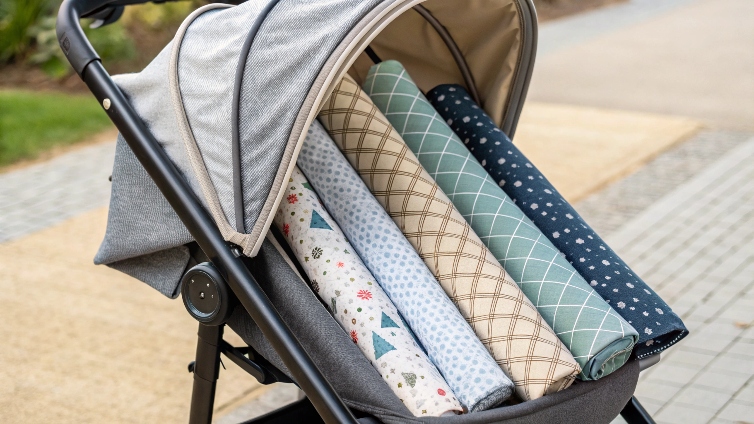
Quick answer: The main materials in a stroller
Most strollers contain these materials:
| Stroller part | Common materials | Main purpose |
|---|---|---|
| Frame | Aluminum alloy or steel | Provides structure and support |
| Joints and brackets | Nylon, polypropylene, ABS plastic, or metal | Connects and locks frame parts |
| Seat fabric | Polyester, nylon, cotton blends, or mesh | Supports the child and allows airflow |
| Padding | Polyurethane foam or polyester fiber | Adds comfort |
| Canopy | Polyester, nylon, plastic windows, or mesh | Provides shade and weather cover |
| Wheels | EVA foam, rubber, TPU, or plastic | Supports movement and absorbs bumps |
| Wheel hubs | Polypropylene, nylon, ABS plastic, or metal | Holds the wheel together |
| Handlebar | Foam, rubber, TPU, leatherette, or plastic | Improves grip |
| Brakes | Steel, aluminum, nylon, or reinforced plastic | Stops or parks the stroller |
| Basket | Polyester mesh, nylon, or woven fabric | Holds supplies |
| Fasteners | Steel or stainless steel | Joins parts and supports load points |
The most common overall combination is an aluminum frame, polyester fabric, molded plastic hardware, foam-filled wheels, and steel fasteners.
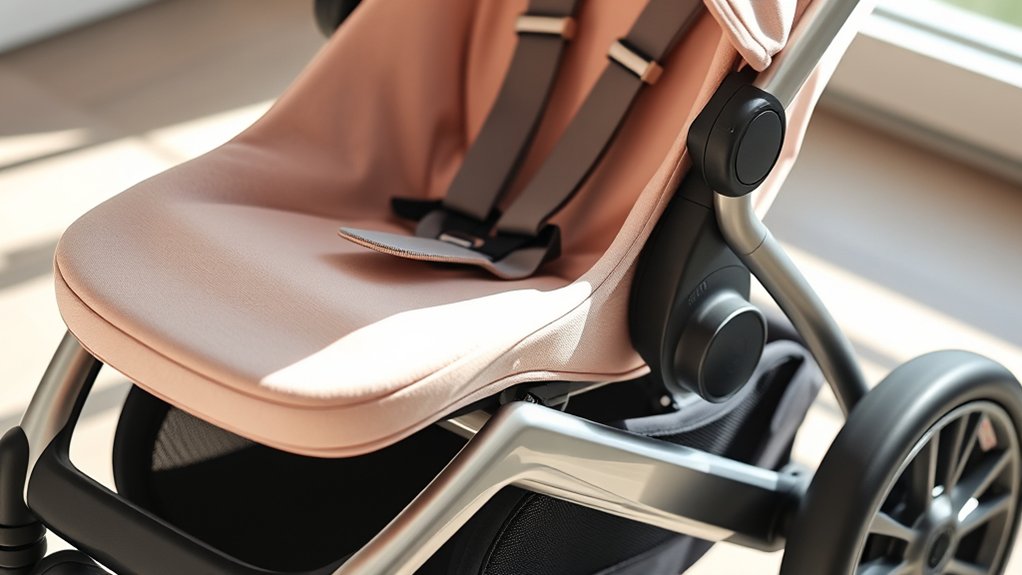
What is the stroller frame made of?
The stroller frame is most often made from aluminum alloy or steel. Some models use both.
Aluminum frames
Aluminum is common in lightweight strollers. It has a good strength-to-weight ratio and does not rust in the same way untreated steel does.
Manufacturers may use aluminum tubes for:
- Side rails
- Handle supports
- Folding bars
- Seat supports
- Wheel supports
Aluminum can make a stroller easier to lift and carry. This helps when using stairs, loading a stroller into a car, or traveling by air.
Aluminum is not automatically stronger than steel. The tube shape, wall thickness, joints, welds, and overall design also matter. A thin aluminum frame may feel less rigid than a well-built steel frame.
Steel frames
Steel is strong and stiff. It often appears in heavy-duty, jogging, convertible, or older stroller designs.
Steel may be used for:
- Main frame tubes
- Axles
- Brake parts
- Hinges
- Reinforcement bars
- Seat support structures
The main drawback is weight. Steel can also rust if its protective coating is damaged and moisture reaches the metal.


Many steel stroller frames use powder coating or another finish. The coating helps protect the surface, but it does not make the frame immune to rust.
Mixed-metal frames
some strollers combine aluminum tubes with steel pins, axles, springs, or brackets. This approach can balance low weight with strength at high-stress points.
A material list may say “aluminum frame” even though the stroller contains steel hardware. That wording usually describes the main frame, not every part.
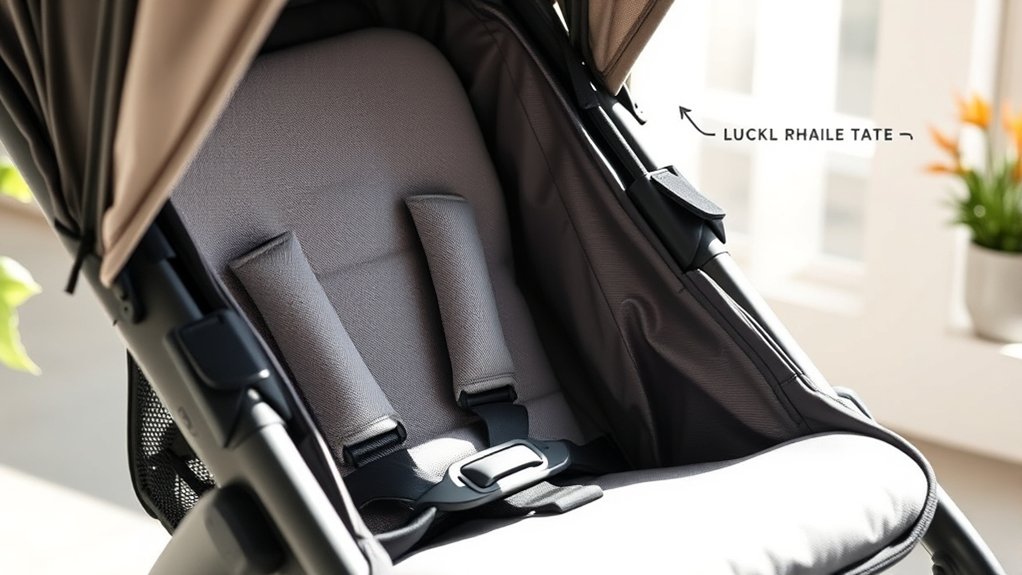
What plastics are used in strollers?
Strollers use several types of plastic. Plastic is useful because it can be molded into curved parts, covers, locks, hinges, and wheel hubs.
Polypropylene
Polypropylene, often marked PP, is light and resistant to moisture. It may be used for:
- Seat shells
- Storage trays
- Wheel parts
- Covers
- Clips
- Baskets and support parts
PP can flex slightly without breaking. It is also common in household products.
ABS plastic
ABS is a rigid plastic used for parts that need a firm shape and a smooth finish. It may appear in:
- Handle housings
- Folding mechanisms
- Brake covers
- Trays
- Decorative panels
ABS is not the same as polypropylene. It is usually harder and more rigid, but performance depends on the part design and thickness.
Nylon
Nylon is tough and resistant to wear. Manufacturers may use it for:
- Bushings
- Gears
- Wheel hubs
- Connectors
- Straps and webbing
- Small moving parts
Nylon is useful where parts rub or move against each other.
PVC and other flexible plastics
Flexible plastic may be used for rain covers, clear windows, grips, and protective coatings. The exact plastic can vary by product.
A clear rain cover should have good ventilation openings. Never cover a child with a loose plastic sheet or use an unapproved cover that can limit airflow.


Are stroller plastics safe?
A plastic name alone does not prove that a stroller is safe or unsafe. Safety depends on the finished part, its location, its strength, and its use.
In the United States, strollers are covered by federal product safety rules and the applicable ASTM stroller standard. The U.S. Consumer Product Safety Commission stroller guidance gives safety information for caregivers. The ASTM F833 standard covers performance requirements and test methods for carriages and strollers. Check the current standard edition before using it for technical or legal work.
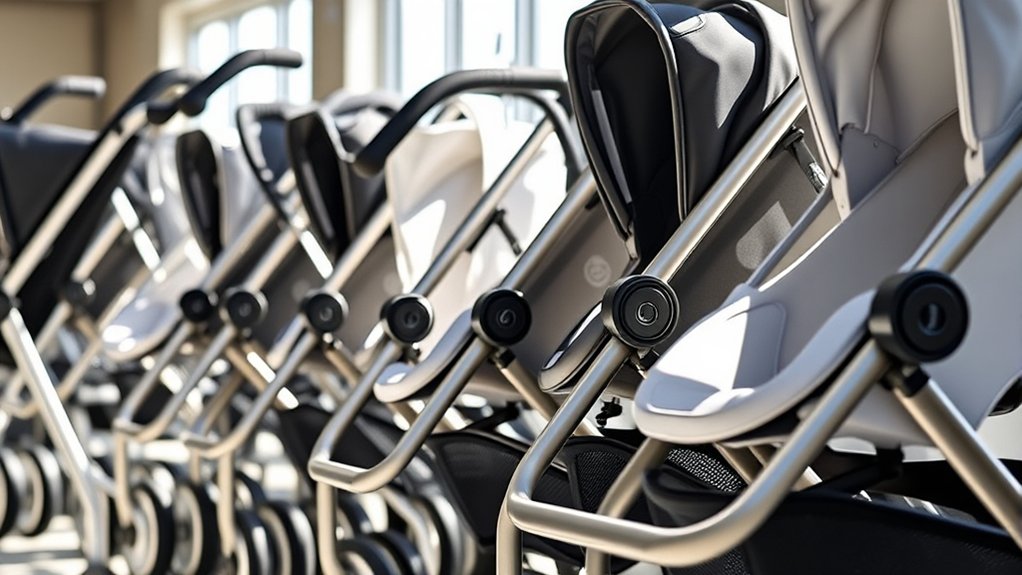
What fabric are stroller seats made of?
Stroller seats are usually made from polyester, nylon, mesh, or a blend of synthetic fibers.
Polyester
Polyester is the most common stroller fabric. It is popular because it is:
- Strong for its weight
- Resistant to stretching
- Fairly quick to dry
- Easy to dye
- Less likely to wrinkle than many natural fibers
Polyester may cover the seat, canopy, basket, and footrest.
Nylon
Nylon is light and strong. It can work well for seat panels, straps, and storage baskets.
Nylon may absorb more moisture than polyester, depending on its finish. A coated nylon fabric may resist water better than an untreated fabric.
Mesh
Mesh panels improve airflow. They are common in:
- Seat backs
- Side panels
- Canopies
- Bassinet covers
- Vent openings
Mesh is not always cooler in every condition. Its benefit depends on the size of the openings, the surrounding fabric, and the weather.
Cotton and natural fibers
Cotton may appear in lining, padding covers, or specialty products. It feels soft, but it can absorb water and take longer to dry.
A cotton blend may offer a soft feel with better strength or faster drying. Still, the care label matters more than the fiber name alone.
Fabric coatings
Some stroller fabrics have coatings that add water resistance, stain resistance, or UV resistance. These treatments can wear down with washing, sunlight, and friction.


Do not use bleach, harsh solvents, or strong cleaners unless the manufacturer allows them. These products may damage the coating or weaken the fabric.
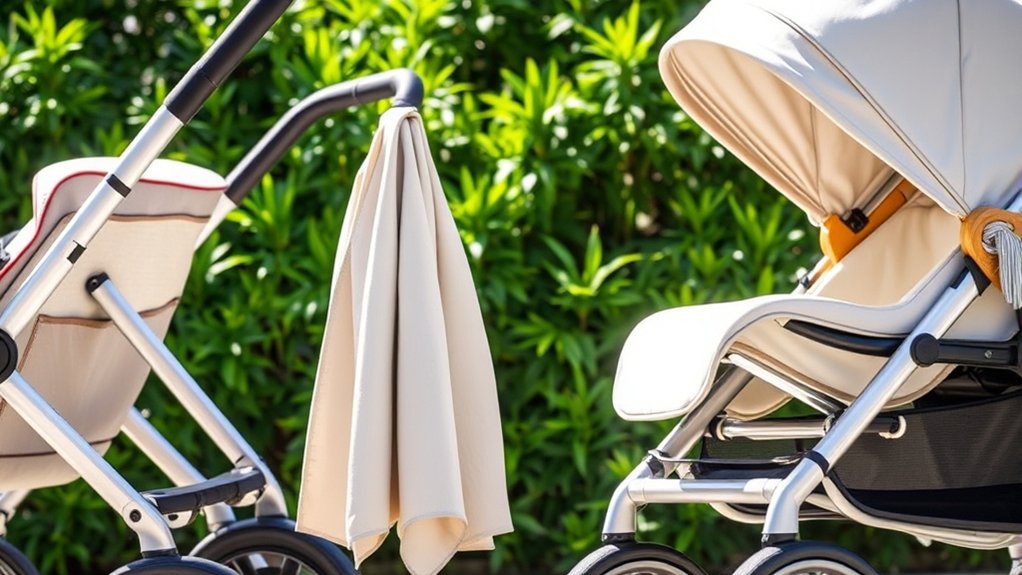
What is stroller padding and foam made of?
Stroller padding usually contains polyurethane foam, polyester fiber, or a combination of both.
Polyurethane foam
Polyurethane foam is light and compressible. It is often placed in:
- Seat cushions
- Head supports
- Armrests
- Shoulder pads
- Bassinet mattresses
- Footrests
Foam improves comfort but can lose shape over time. A thin pad may also feel firm because the child’s weight compresses it.
Polyester fiberfill
Polyester fiberfill looks like soft batting or loose fiber. It may be used in:
- Seat liners
- Canopy padding
- Footmuffs
- Bassinet covers
- Removable cushions
Fiberfill can feel soft and may be easier to wash than foam. It can flatten if it stays compressed or is washed incorrectly.
Foam safety and fit
Use only padding made for the stroller or approved by its manufacturer. Extra cushions can change the child’s position or interfere with the harness.
For infants, follow the stroller manual closely. A stroller seat is not automatically a safe sleep space. If a child falls asleep in a stroller, follow current pediatric and manufacturer guidance and move the child to a safe sleep surface when practical.

What are stroller wheels made of?
Stroller wheels are commonly made from EVA foam, rubber, TPU, or hard plastic. The wheel may also contain a plastic or metal hub.
EVA foam wheels
EVA means ethylene-vinyl acetate. EVA wheels are light and do not need an air-filled tube.
They are common on:
- Umbrella strollers
- Travel strollers
- Lightweight everyday strollers
EVA foam wheels cannot go flat like pneumatic tires. However, they may feel less cushioned than large rubber tires on rough ground.
Rubber wheels
Rubber provides grip and can absorb some vibration. It is common on jogging strollers and models designed for uneven surfaces.


Rubber wheels may be:
- Solid rubber
- Rubber over a foam core
- Air-filled pneumatic tires
Air-filled tires may offer a smoother ride, but they require pressure checks and can puncture.
TPU wheels
TPU, or thermoplastic polyurethane, can offer a balance of flexibility and wear resistance. It is used in some wheels and flexible parts.
The label “TPU” does not tell you how smooth the stroller will feel. Wheel diameter, tread, suspension, and frame design also affect the ride.
Plastic wheels
Small hard-plastic wheels may appear on compact or low-cost strollers. They are light and simple, but they may transmit more vibration on rough sidewalks.
What matters more than the wheel material?
Wheel size and design often matter as much as the material.
- Larger wheels usually handle cracks and uneven ground more easily.
- Swivel front wheels improve turning.
- Lockable front wheels help with some straight-line travel.
- Suspension can reduce vibration.
- Tread affects grip on some surfaces.
- A wide wheelbase can improve stability.
No wheel material makes a stroller suitable for every surface. Use a jogging stroller only for the activities and surfaces allowed by its manual.
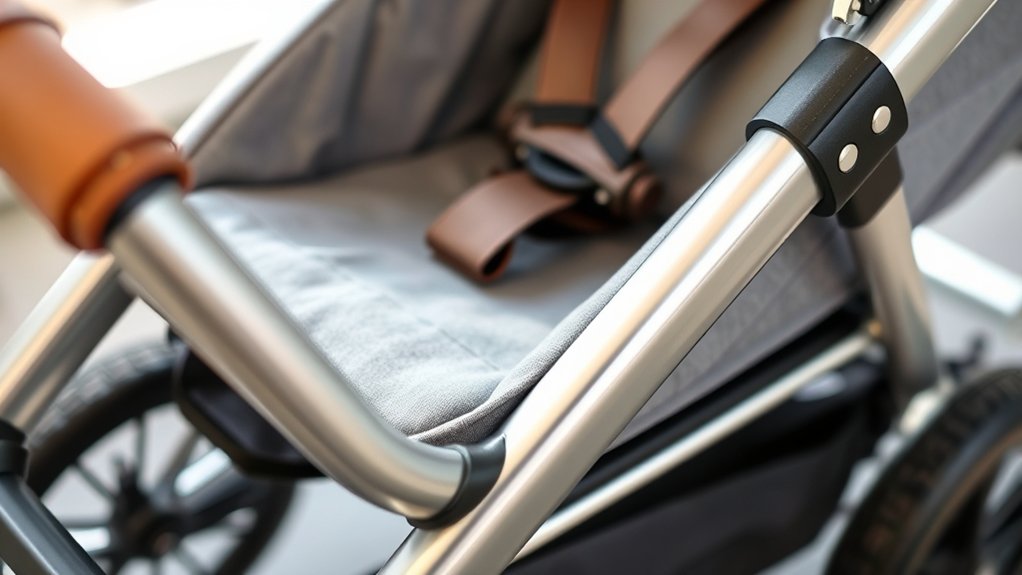
What are stroller handles and straps made of?
Handles often use plastic, foam, rubber, TPU, or leatherette. The grip may be placed over an aluminum or steel tube.
A foam grip can feel soft and reduce hand pressure. Rubber and TPU may offer more grip, especially when hands are damp. Leatherette can feel smooth, but it may crack or peel with heavy use, heat, or cleaning chemicals.
Harness straps are usually made from woven polyester or nylon webbing. Buckles are often molded plastic, sometimes with metal springs or internal parts.
Inspect the harness for:
- Frayed edges
- Loose stitching
- Torn webbing
- Cracked buckles
- Buckles that open without a firm release
- Straps that no longer adjust correctly
Do not sew, cut, extend, or replace harness parts with generic straps. Use manufacturer-approved replacement parts when available.
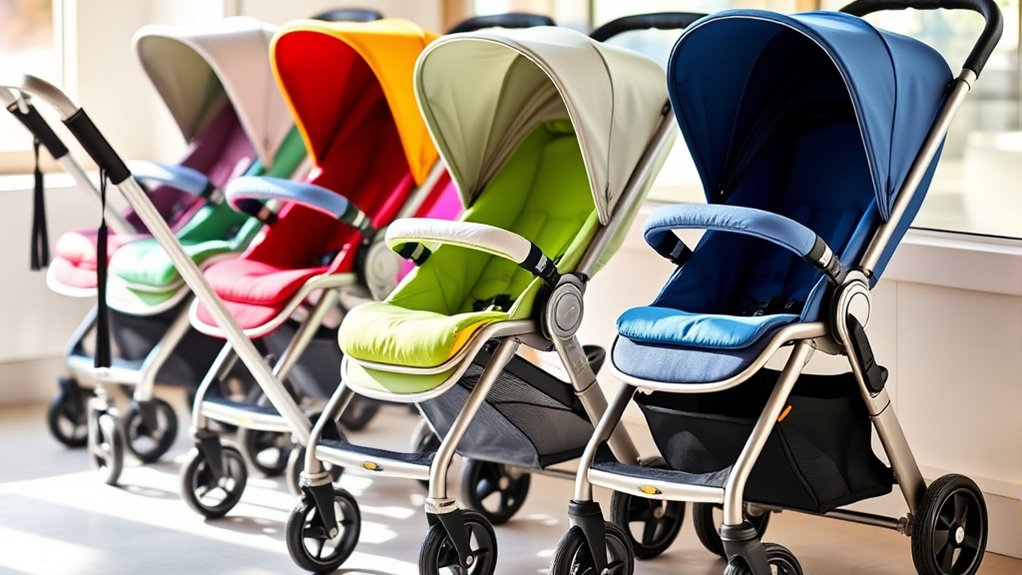
What are stroller brakes and fasteners made of?
Brakes and fasteners often combine steel, aluminum, nylon, and reinforced plastic.
Steel is common for:
- Axles
- Springs
- Pins
- Screws
- Brake rods
- Load-bearing joints
Plastic may cover the brake or form part of the pedal. Some brake systems use a cable or linkage that connects the foot pedal to the wheel lock.
Check the brakes on level ground before each use. Both parking brakes should engage as the manual describes. The stroller should not roll when parked on a mild slope or when you apply gentle push pressure.
Do not rely on a brake to hold a stroller on a steep hill. Never leave a child unattended in a stroller, even when the brake is engaged.
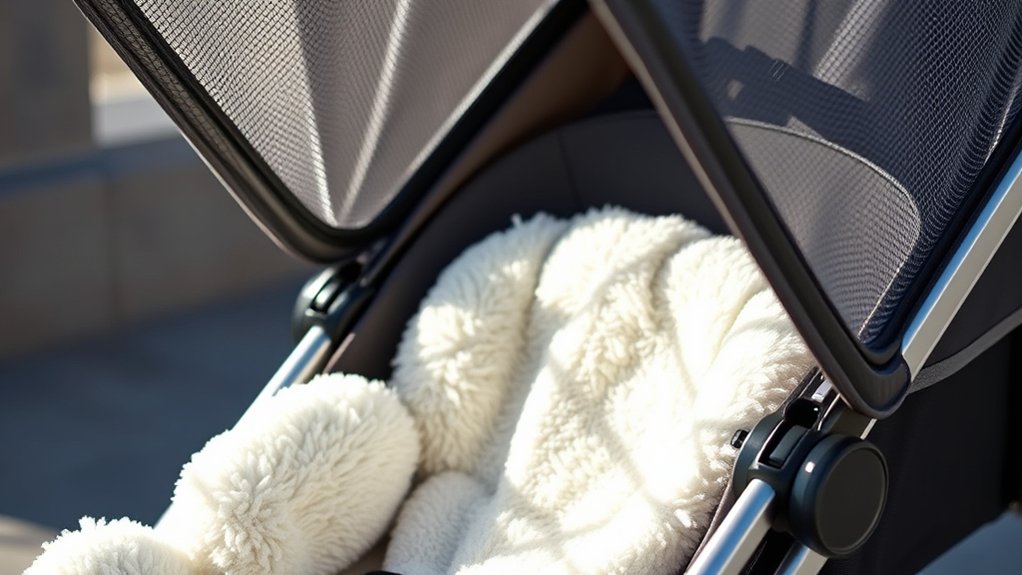
Why stroller materials vary by stroller type
The best material mix depends on how the stroller will be used.
| Stroller type | Common material choices | Main design goal |
|---|---|---|
| Umbrella stroller | Aluminum, polyester, EVA, molded plastic | Low weight and easy folding |
| Full-size stroller | Aluminum or steel, thick polyester, foam, rubber or EVA | Comfort and daily use |
| Jogging stroller | Aluminum or steel, large rubber tires, mesh, strong webbing | Stability and outdoor movement |
| Travel stroller | Aluminum, compact plastics, polyester, small EVA or TPU wheels | Small folded size |
| Double stroller | Reinforced aluminum or steel, larger wheel parts, stronger fabrics | Support for more weight |
| Bassinet stroller | Metal frame, fabric shell, foam pad, plastic support parts | Flat carry mode and cushioning |
| Car seat travel system | Stroller frame, plastic adapters, fabric, foam, metal locks | Compatibility between components |
This table shows common patterns, not a guarantee for every model. Always check the exact manual and product specification.

How to check the materials in a stroller
A product page may list only the main frame material. Use several sources to identify the full material mix.
1. Read the product manual
The manual may identify:
- Frame materials
- Fabric care rules
- Approved replacement parts
- Wheel maintenance
- Cleaning limits
- Harness instructions
- Weight limits
The manual is usually more useful than a short retailer listing.
2. Check sewn-in labels
Look inside the seat, canopy, basket, or padding cover. Textile labels may list fiber content and washing instructions.
A label might say:
- 100% polyester
- Nylon
- Polyester mesh
- Cotton-polyester blend
Not every part requires a consumer-facing material label, so the absence of a label does not identify the rest of the stroller.
3. Inspect the frame
Look for:
- Smooth or painted metal tubes
- Welded joints
- Rivets
- Plastic joint covers
- Steel axles
- Signs of rust or bending
Do not remove rivets or open folding joints to identify a material. Doing so can create a safety problem.
4. Contact the manufacturer
Give the manufacturer the exact model name, model number, and production date if available. Ask about a specific part rather than asking only for “all materials.”
Useful questions include:
- Is the frame aluminum, steel, or a mix?
- What fiber is used in the seat fabric?
- Does the canopy have a coating?
- Are the wheels EVA, rubber, TPU, or another material?
- Does the stroller contain natural rubber or latex?
- Which cleaning products are approved?
- Are replacement wheels or pads available?
5. Check recalls and safety notices
Material questions should not replace safety checks. Search the model on the CPSC recalls page. Use the model number, not just the brand name.

How to choose stroller materials for your needs
Choose the material mix based on your use, not on one label such as “aluminum” or “premium fabric.”
For stairs and public transit
A light aluminum frame, compact fold, and small EVA wheels may be helpful. Check the folded weight and carry handle.
For rough sidewalks
Look for larger wheels, useful suspension, a firm frame, and tires suited to the surface. Material alone does not guarantee a smooth ride.
For hot weather
Prioritize mesh ventilation, a breathable seat area, and a canopy with useful airflow. Dark fabric may feel hotter in direct sun, but color is only one factor.
For rain
Look for a canopy that covers well and a manufacturer-approved rain cover. Water-resistant fabric is not the same as waterproof fabric.
For frequent washing
Removable polyester covers and machine-washable parts may be easier to maintain. Confirm the wash temperature and drying method first.
For long-term use
Pay attention to replaceable wheels, brake parts, harness pads, and fabric components. A stroller with available parts may be easier to maintain than one that cannot be repaired.
For children with material sensitivities
Ask the manufacturer about specific materials, coatings, dyes, natural rubber, and adhesives. Do not assume that “hypoallergenic” means free of every possible trigger.

How to clean and maintain stroller materials
Clean the stroller according to its manual. Different materials need different care.
- Remove loose dirt first. Use a soft brush or vacuum attachment.
- Spot-clean fabric. Use mild soap and water if the manual permits it.
- Rinse away soap. Leftover soap can irritate skin and attract dirt.
- Dry every part fully. Keep the stroller open in a well-ventilated place.
- Wipe plastic and metal parts. Avoid soaking folding joints unless the manual allows it.
- Inspect moving parts. Look for cracks, rust, loose screws, and bent tubes.
- Check wheels and brakes. Remove hair, thread, and grit from axles.
- Test the harness and fold lock. Both should work as described by the manufacturer.
Avoid high-pressure water, abrasive pads, bleach, solvents, and unapproved oils. Oil can attract grit or affect a brake or locking mechanism.
Do not use a stroller with a cracked frame, broken fold lock, damaged harness, loose wheel, or brake that does not hold. Contact the manufacturer or a qualified repair service.

Are strollers recyclable?
Some stroller materials can be recycled, but the whole stroller usually cannot go into a curbside recycling bin.
A stroller combines metal, plastic, fabric, foam, rubber, and fasteners. These parts must often be separated before recycling.
For disposal:
- Check whether the manufacturer offers a take-back program.
- Ask your local recycling center about bulky metal items.
- Donate only a clean, complete stroller that meets current safety needs.
- Do not donate a stroller with a missing harness, damaged frame, or failed brake.
- Check the CPSC recall database before passing it to another family.
- Follow local rules for fabric, foam, and plastic disposal.
Do not remove safety parts and sell the remaining frame as a child-use product. A stroller that looks clean may still have hidden damage or an outdated design.
Common mistakes when judging stroller materials
Mistake 1: Assuming metal means stronger
A steel frame may be strong but heavy. An aluminum frame may be strong enough for its design. Joints, welds, tubes, and locks matter too.
Mistake 2: Assuming heavier means safer
Weight can improve a feeling of solidity, but it does not prove that a stroller is safer. Check the safety features, stability, harness, brakes, and instructions.
Mistake 3: Treating “water-resistant” as waterproof
Water-resistant fabric may repel light rain. It may still leak during long exposure or heavy rain.
Mistake 4: Adding aftermarket padding
Extra padding can affect fit, harness placement, and stability. Use only approved accessories.
Mistake 5: Ignoring hidden materials
A stroller marketed as aluminum may still contain steel axles, plastic locks, foam, coatings, adhesives, and synthetic fabric.
Mistake 6: Cleaning without checking the manual
Bleach, heat, solvents, and rough scrubbing can weaken fabrics and coatings. The care label should guide the process.

Frequently asked questions
Are stroller frames made of aluminum or steel?
Most modern lightweight strollers use aluminum alloy. Some full-size, jogging, double, or older strollers use steel. Many models use aluminum for the main frame and steel for axles, pins, springs, or fasteners.
Are polyester stroller seats safe?
Polyester is a common synthetic fabric used in stroller seats. The fabric name alone does not determine overall safety. Correct harness use, secure stitching, clean condition, and compliance with applicable safety requirements also matter.
What material is best for stroller wheels?
There is no single best wheel material. EVA foam is light and low-maintenance. Rubber may provide good grip and cushioning. TPU can balance flexibility and wear resistance. Wheel size, suspension, tread, and stroller design are also important.
Do stroller materials contain latex?
Some stroller parts may contain natural rubber or synthetic rubber. The answer varies by model and part. If latex is a concern, ask the manufacturer for a written material statement for grips, tires, elastic, and seals.
Can I wash a stroller in a washing machine?
Only wash removable parts in a machine if the manual or care label permits it. Remove the fabric carefully, use the stated cycle, and dry it fully before reinstalling it. Do not machine-wash the frame, wheels, harness hardware, or brake system.
Conclusion
Strollers are made from several materials because each part has a different job. Aluminum and steel provide structure. Polyester and nylon form the seat and canopy. Plastic shapes the joints and trays. Foam adds padding. EVA, rubber, or TPU supports the wheels.
The most useful way to judge a stroller is to look at the complete design. Check the frame, joints, harness, brakes, wheels, fabric care rules, weight limit, and replacement-part support. Then match those features to where and how you plan to use the stroller.
Before buying or handing down a stroller, read the exact manual, confirm the model details, inspect for damage, and check current U.S. recall information.
