
Introduction
For most babies in the United States, pacifiers can be helpful when used safely. They may calm a fussy baby, support sleep, and lower the risk of sudden infant death syndrome (SIDS) during naps and nighttime sleep. They are not required, though, and they do not replace feeding, safe sleep practices, or medical care.
Pacifiers also have limits. Long-term use may raise the chance of ear infections and dental problems. A baby who has trouble breastfeeding may need extra support before a pacifier is introduced. The best choice depends on the baby’s age, feeding pattern, health, and how the pacifier is used.

What are the benefits of pacifiers?
Pacifiers meet a baby’s natural need to suck. Sucking can help a baby settle between feeds and may make it easier to fall asleep. A pacifier can also give parents a simple way to soothe a baby who has been fed, burped, and checked for other needs.


Pacifiers may lower SIDS risk during sleep
The American Academy of Pediatrics (AAP) recommends offering a pacifier at nap time and bedtime during the first year of life. Research links pacifier use during sleep with a lower risk of SIDS, although the reason is not fully known.
A pacifier may help keep a baby in a lighter sleep state or support an open airway. These are possible explanations, not proven causes. The important point is that the AAP considers pacifier use one part of a wider safe sleep plan.
A pacifier does not make an unsafe sleep space safe. Babies should still sleep:
- On their backs for every sleep
- On a firm, flat sleep surface
- In their own crib, bassinet, or portable play yard
- Without pillows, blankets, bumpers, stuffed toys, or other loose items
- In the same room as a parent or caregiver, but not in the same bed
See the AAP safe sleep recommendations for current guidance.
Pacifiers can calm babies
Sucking can soothe babies during common stressful moments, such as:
- Falling asleep
- Waiting for a feeding
- Riding in a car seat
- Having a diaper changed
- Receiving a minor medical procedure
For premature babies, nonnutritive sucking may support the development of sucking skills. This use should follow the care plan from the baby’s doctor or neonatal team.
Pacifiers may help parents respond to fussiness
A pacifier can be useful when a baby needs comfort but is not hungry. This may help a caregiver avoid offering extra milk or formula every time the baby cries.
Still, crying has many causes. Hunger, pain, illness, heat, cold, tiredness, reflux, and the need for contact can all look similar. A pacifier should be a comfort tool, not a way to delay needed care or regular feeds.

What are the risks of pacifiers?
Pacifiers are generally safe when used correctly, but they are not risk-free. The main concerns are feeding problems, infection, choking, ear infections, and changes to the mouth and teeth.


Pacifiers can mask hunger cues
Newborns need frequent feeds. If a pacifier replaces a feeding, a baby may take in too little breast milk or formula. This can affect weight gain and, for a breastfeeding parent, may reduce breast stimulation and milk production.
Watch for early hunger signs instead of waiting for crying. A hungry baby may:
- Turn toward the breast or bottle
- Open and close the mouth
- Bring hands to the mouth
- Lick or smack the lips
- Become more alert or restless
If the baby feeds poorly, has fewer wet diapers, seems unusually sleepy, or is not gaining weight, contact the pediatrician or a lactation professional.
Pacifier use may affect breastfeeding for some newborns
The evidence on pacifiers and breastfeeding is mixed. Pacifier use may not cause early weaning in every family, but it can make it harder to notice feeding cues. The AAP advises breastfeeding families to wait until breastfeeding is going well before offering a pacifier.
For many families, this means waiting until:
- The baby latches well
- Feeds are comfortable
- Milk supply is established
- The baby is gaining weight as expected
Some babies need a pacifier sooner for medical reasons. In that case, follow advice from the baby’s health care team rather than stopping it without guidance.
Pacifiers can carry germs
A dropped pacifier can pick up dirt, viruses, and bacteria. An older or damaged pacifier can also develop small cracks that are difficult to clean.
Clean pacifiers as directed by the maker. For young babies, boiling or steam sterilizing may be advised, depending on the product instructions. Once the baby is older, washing with hot water and dish soap may be enough for routine cleaning. Do not use a pacifier that is cracked, sticky, torn, or changed in shape.
Pacifiers may increase the risk of ear infections
Studies have linked frequent or prolonged pacifier use with a higher risk of acute middle-ear infections, especially after infancy. The risk does not mean every pacifier-using child will get ear infections.
If a child has repeated ear infections, ask the pediatrician whether reducing or stopping pacifier use could help. The answer may also depend on age, daycare exposure, allergies, and other health factors.
Long-term use can affect teeth and jaw growth
Pacifier use past the toddler years may change how the front teeth meet. It can also affect the shape of the roof of the mouth. The American Academy of Pediatric Dentistry advises stopping nonnutritive sucking habits by about age 3, and earlier is often easier.
Dental effects depend on how often the child uses the pacifier, how long each day it stays in the mouth, and the child’s age. A brief nap-only habit is not the same as constant use.


How should you use a pacifier safely?
Safe use starts with the pacifier itself, then continues with supervision, cleaning, and timely replacement.
Choose a one-piece pacifier
Look for a pacifier that:
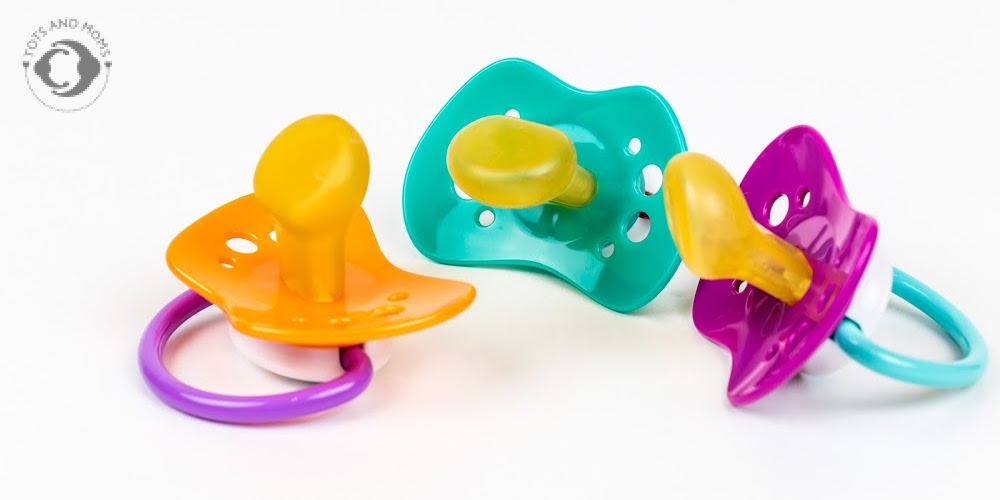
- Is made as one solid piece, when possible
- Has a shield wide enough to stay outside the baby’s mouth
- Has air holes in the shield
- Matches the baby’s age range
- Has no loose parts, cracks, ribbons, or decorations
- Comes from a reputable manufacturer
Do not enlarge the nipple hole. Do not attach beads, charms, clips with long cords, or homemade parts. These items can create a choking or strangulation hazard.
The U.S. Consumer Product Safety Commission regulates pacifiers and publishes recalls. Check CPSC recalls if you are unsure about a product.
Inspect the pacifier often
Before each use, pull gently on the nipple and check for damage. Replace the pacifier if you see:
- A tear or split
- A sticky or swollen nipple
- Discoloration
- A loose handle or shield
- A missing piece
- A change caused by heat or cleaning
Follow the manufacturer’s replacement instructions. Do not keep a pacifier just because it looks clean if the material has weakened.
Never use a pacifier cord during sleep
Do not attach a pacifier to clothing, blankets, stuffed toys, or the baby’s wrist during sleep. A cord, strap, or clip can wrap around the neck.
A short pacifier clip may be used while the baby is awake if it is made for that purpose and used under direct supervision. Remove it before naps and nighttime sleep.
Do not coat the pacifier with sweet foods
Never dip a pacifier in honey, sugar, syrup, juice, or other sweet foods. Honey can cause infant botulism in babies younger than 12 months. Sugar also promotes tooth decay.
Do not dip the pacifier in medicine unless a clinician specifically tells you to do so. A medication dose can become unclear, and some medicines may not be safe when used this way.
Do not force a pacifier into a baby’s mouth
Offer it gently. If the baby turns away or spits it out, do not force it. Some babies never like pacifiers, and that is fine.
Never put the pacifier back into the baby’s mouth after it falls out during sleep. There is no need to wake the baby to replace it.

How do pacifiers fit with safe sleep?
A pacifier can support safe sleep, but it is only one small part of the plan. The sleep surface and sleep position matter more.


Use this simple bedtime check:
- Place the baby on the back.
- Use a firm, flat mattress with a fitted sheet.
- Keep the sleep space empty.
- Offer a clean, undamaged pacifier if the baby accepts one.
- Remove clips, cords, blankets, and toys.
- Move the baby from a car seat, swing, or stroller to a firm sleep surface when practical.
The AAP does not recommend putting babies to sleep on couches, armchairs, adult beds, or other soft surfaces. Bed-sharing also increases sleep-related risk, especially for babies younger than 4 months and for babies born prematurely or with low birth weight.
Pacifier use does not cancel the risk from tobacco smoke, alcohol, sedating medicines, overheating, soft bedding, or unsafe sleep positions.

When should a baby start using a pacifier?
A healthy newborn may use a pacifier from the start, but breastfeeding families often benefit from waiting until feeding is established. There is no single correct day for every baby.
Bottle-fed babies do not face the same concern about protecting breast milk supply, but caregivers should still watch feeding cues. A pacifier should not replace scheduled feeds for a young baby.
Ask the pediatrician before using a pacifier if the baby:
- Was born premature
- Has trouble sucking or swallowing
- Has poor weight gain
- Has a cleft lip or palate
- Has a neurologic or muscle condition
- Has frequent choking or breathing problems
- Needs a special feeding plan
A clinician may recommend a specific type of nipple, feeding method, or therapy.

How do you wean a child from a pacifier?
Start reducing pacifier use before age 2 when possible, and aim to stop by age 3. Earlier weaning may lower the chance of dental changes and can be easier than stopping after a strong habit forms.
A gradual plan often works well:
- Limit where the pacifier is used. Start with no pacifier during play or daytime activities.
- Keep it for sleep only. Use cuddling, a song, or a comfort object instead during the day.
- Remove one sleep period. Some families begin with naps.
- Use clear, calm words. Tell the child what will change before the change begins.
- Offer another comfort routine. Try reading, rocking, a back rub, or a favorite stuffed toy.
- Praise the child. Notice each short success instead of focusing on setbacks.
Avoid cutting the nipple, coating it with a bitter substance, or using punishment. A damaged pacifier can become a choking risk, and harsh methods can make sleep problems worse.
If the child is older than 3 or has changes in the bite, ask a pediatric dentist for advice. The American Academy of Pediatric Dentistry provides guidance on nonnutritive sucking habits.

Pacifier or thumb sucking: which is better?
Neither habit is risk-free, but a pacifier has one practical advantage: adults can control when it is offered and can remove it later. A thumb is always available, so stopping thumb sucking may be harder.
The dental risk depends more on duration, frequency, and age than on the object alone. Both pacifier use and thumb sucking can affect tooth position when they continue for a long time.
Do not replace a pacifier with a bottle of juice or another sweet drink. That creates a separate risk of tooth decay. For a child who sucks a thumb, gentle praise and positive routines usually work better than punishment.


How do you choose the right pacifier?
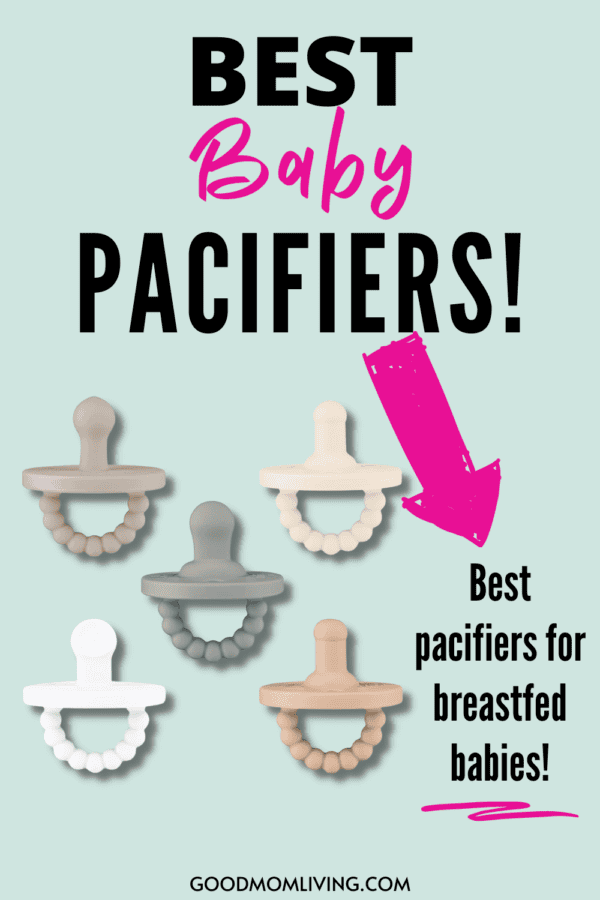
There is no universally best pacifier shape or brand. The right choice is one the baby accepts and that meets basic safety requirements.
Consider these features:
| Feature | What to look for | Why it matters |
|---|---|---|
| Size | Age-appropriate design | A very small or large pacifier may not fit safely |
| Construction | One piece with no loose parts | Fewer parts may reduce breakage and choking risk |
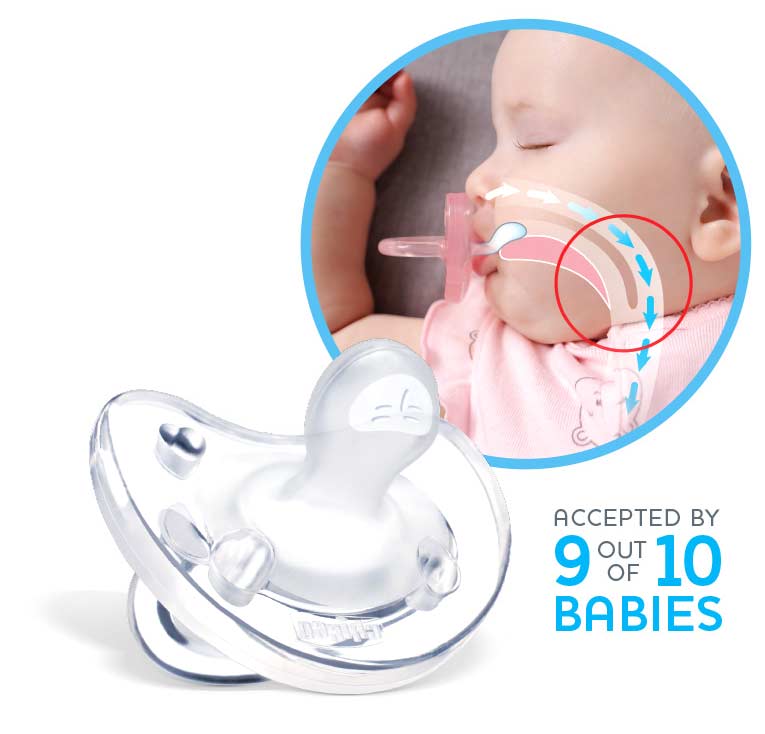
| Shield | Wide, firm shield with air holes | Helps keep the pacifier from entering the mouth and supports airflow |
| Nipple | Shape the baby accepts | Acceptance matters for soothing and sleep |
| Material | Durable, food-grade material from a known maker | Makes cleaning and inspection easier |
| Cleaning | Clear care instructions | Reduces the chance of damage or poor hygiene |
Orthodontic-shaped nipples are marketed as supporting oral development, but a shape alone does not guarantee better dental outcomes. Proper timing and weaning matter more than a marketing label.
If a baby refuses one style, another may work. Do not keep switching during every feeding or use a pacifier to solve a feeding problem without checking the cause.
When should you call the pediatrician?
Contact the baby’s health care provider if the baby has poor feeding, poor weight gain, choking, breathing trouble, or fewer wet diapers than expected.
Call for advice if the pacifier seems to cause a problem, including:
- Repeated ear infections
- Mouth sores
- Bleeding gums
- A damaged pacifier that may have been swallowed
- A child older than 3 who cannot stop using it
- A noticeable change in the bite or front teeth
Seek urgent help for choking, blue or gray skin, severe breathing trouble, unusual limpness, or a baby who is difficult to wake.
Pacifiers should never delay care for a sick or distressed baby.
Key takeaways
- Pacifiers can soothe babies and may lower SIDS risk during naps and nighttime sleep.
- Safe sleep still requires a back-sleep position, a firm flat surface, and an empty crib.
- Breastfeeding families may want to wait until feeding is established.
- Never use pacifier cords during sleep or dip a pacifier in honey, sugar, or medicine.
- Inspect pacifiers often and replace damaged ones.
- Begin limiting pacifier use during toddlerhood and aim to stop by about age 3.
- Ask a pediatrician or pediatric dentist when feeding, growth, breathing, ear infections, or dental changes are concerns.
Frequently asked questions
Can a newborn sleep with a pacifier?
Yes, a healthy newborn may sleep with a pacifier if the pacifier is offered safely. Do not attach it to clothing or bedding, and do not put it back after it falls out. If breastfeeding is not going well, ask the baby’s clinician before relying on a pacifier.
Does a pacifier cause nipple confusion?
“ Nipple confusion” is not a simple or certain outcome. Some babies move between breast, bottle, and pacifier without trouble. Others may have difficulty with latch or feeding. If a newborn is struggling to breastfeed, focus on feeding support and discuss pacifier use with a lactation consultant or pediatrician.
Can a pacifier help with colic?
A pacifier may calm some babies, but it does not treat the causes of prolonged crying. Call a clinician if crying is sudden, severe, paired with vomiting or fever, or unlike the baby’s usual behavior.
Should you give a pacifier during a feeding?
Do not use a pacifier to delay a feeding when the baby shows hunger cues. Offer breast milk or formula first. A pacifier may be useful after a complete feed when the baby wants to suck for comfort.
When should a child stop using a pacifier?
Try to reduce use during the second year and stop by age 3. Stop earlier if the child has frequent ear infections or a developing bite problem. A pediatric dentist can help if stopping is difficult or dental changes are visible.
Conclusion
Pacifiers can be good for babies when they are used as a safe comfort tool rather than a replacement for feeding or care. Their strongest potential benefit is during sleep, where the AAP links pacifier use with a lower risk of SIDS. Their main drawbacks involve missed feeding cues, germs, ear infections, and dental changes from long-term use.
Offer a clean, undamaged pacifier without force. Keep it away from cords and sweet foods, follow safe sleep rules, and plan to wean during toddlerhood. If the baby has feeding, growth, breathing, ear, or dental concerns, ask the child’s pediatrician or pediatric dentist for personal guidance.
