
Introduction
Most bassinets do not need a mattress protector. For safe sleep in the United States, your baby should sleep on the bassinet’s original, firm, flat mattress with only a fitted sheet made for that exact model.
A mattress protector may be useful for leaks or spit-up, but only if the bassinet maker allows it and the protector fits tightly. A loose, thick, padded, or universal protector can create gaps or change the sleep surface. Those changes may raise the risk of suffocation or entrapment.
The safest rule is simple: do not add anything under your baby unless the bassinet manufacturer says it is safe for that model.

What is a bassinet mattress protector?
A bassinet mattress protector is a thin cover placed between the mattress and the fitted sheet. It often has a waterproof layer to help keep milk, urine, or spit-up from reaching the mattress.


Protectors come in several forms:
- Waterproof fitted protectors: These wrap around the mattress.
- Flat waterproof pads: These sit on top of the mattress.
- Padded mattress covers: These add extra softness or cushioning.
- Universal protectors: These claim to fit more than one bassinet or crib.
These products are not all the same. A thin, model-specific protector is very different from a thick, quilted pad or a loose waterproof liner.
A protector also does not replace the bassinet’s original mattress. Do not use a folded blanket, towel, foam pad, pillow, or spare mattress as a substitute.

Is a mattress protector safe in a bassinet?
A mattress protector can be safe only when it is approved for the bassinet, fits correctly, and does not change the firm, flat sleep surface.
The American Academy of Pediatrics recommends a firm, flat sleep surface covered only by a fitted sheet. The AAP safe-sleep guidance does not call for a mattress protector. Its main focus is keeping soft and loose items out of the baby’s sleep area.
The U.S. Consumer Product Safety Commission also advises parents to follow the product instructions and use the mattress supplied with the bassinet. A protector that shifts, bunches, or leaves a gap can interfere with that design.
The key risks are:
- A gap: A baby’s face or body could become trapped.
- Extra softness: The surface may no longer be firm.
- Bunching: Wrinkles can form near the baby’s face.
- Poor fit: The mattress may not sit firmly in the bassinet frame.
- Overheating: Thick waterproof or padded layers may reduce airflow.
- False security: A “breathable” label does not prove that a product is safe for every bassinet.
“Waterproof” describes liquid resistance. It does not prove that a product is safe for infant sleep.

When should you use a bassinet mattress protector?
Use one only when the bassinet instructions allow it or the manufacturer sells one for that exact model.
A protector may be practical when:
- Your baby has frequent spit-up.
- The bassinet mattress cover cannot be removed for washing.
- The manufacturer lists a waterproof cover as an approved accessory.
- The protector is thin and designed for the mattress dimensions.
- The protector stays tight and flat during use.
Some bassinet mattresses already have a waterproof, wipe-clean cover. In that case, a second protector may add no useful benefit. It may only add another layer that can shift or affect the fit.


If you need protection from messes, two or more approved fitted sheets may be more useful than an extra pad. Store the spare sheets nearby so you can change the bedding quickly. Do not stack several sheets or protectors on the mattress at once.
When should you not use one?
Do not use a protector if:
- The manual says not to use one.
- The manufacturer does not identify it as a compatible accessory.
- It is loose, oversized, or too small.
- It has padding, quilting, foam, or a raised edge.
- It changes how the mattress fits in the bassinet.
- It creates wrinkles or folds.
- You must tuck it under the mattress to keep it in place.
- It is made for a crib, play yard, changing table, or another product.
- You cannot confirm its materials, size, or care instructions.
When the instructions are unclear, contact the bassinet maker before using the protector. Until then, use the original mattress and a properly fitted sheet.

How to choose a safe bassinet mattress protector
If you decide to use one, check the protector before putting your baby in the bassinet.
1. Read the bassinet manual first
Look for instructions about:
- Mattress size
- Approved sheets
- Approved mattress pads
- Maximum thickness
- Cleaning methods
- Replacement parts
- Prohibited accessories
The manual is more useful than a general product description. Bassinets vary in mattress size, edge height, attachment points, and frame design.
If you no longer have the manual, search for the exact model number on the manufacturer’s website. Do not rely on a similar-looking bassinet.
2. Choose the exact size
A safe protector should fit the bassinet mattress with no loose fabric. It should not extend beyond the mattress edges or leave exposed corners.
Avoid products labeled only “universal bassinet size.” A product may fit one bassinet well and fit another poorly.
3. Avoid added padding
Choose a thin, smooth cover if the manufacturer permits one. Avoid:
- Memory foam
- Quilted pads
- Pillow-like inserts
- Cushioned liners
- Wedge-shaped products
- Thick fleece layers
- Head-positioning pads
A baby needs a firm surface, not a soft or cushioned one.
4. Check the fit after installation
Place the protector on the mattress as directed. Then check that:


- The mattress remains fully flat.
- The protector does not slide.
- No corner lifts.
- No wrinkle forms where the baby’s face could rest.
- The mattress still fits tightly in the bassinet.
- There is no visible gap between the mattress and bassinet sides.
- The sheet fits over the protector without excess fabric.
Do not force the protector under the mattress if the manufacturer does not instruct you to do so. Do not use safety pins, clips, tape, or homemade ties.
5. Stop using it if the fit changes
Wash and dry the protector according to its instructions. Some fabrics shrink or lose their shape after washing. Check the fit again after every wash.
Replace it if it becomes stretched, torn, cracked, lumpy, or loose.

What should go on a bassinet mattress?
For routine sleep, the bassinet should contain:
- The original, firm, flat mattress.
- One fitted sheet made for that mattress.
That is usually all.
Keep these items out of the bassinet while your baby sleeps:
- Blankets
- Quilts
- Pillows
- Stuffed toys
- Sleep positioners
- Bumpers
- Nursing pillows
- Rolled towels
- Sheepskins
- Loose waterproof pads
- Extra mattresses
- Weighted products
If your baby needs warmth, use properly sized clothing or a wearable blanket that does not cover the head. Do not place a loose blanket over a sleeping baby.
The CPSC safe-sleep recommendations also stress using a firm, flat sleep surface and keeping soft bedding out of the sleep space. The National Institutes of Health Safe to Sleep program provides additional U.S. guidance for reducing sleep-related infant deaths.

What if the bassinet mattress gets wet or dirty?
Remove the baby from the bassinet before cleaning it. Then follow the bassinet maker’s cleaning instructions.
A practical cleaning plan is:
- Remove the fitted sheet.
- Remove the approved protector, if you use one.
- Wipe the mattress cover as the manual directs.
- Let all parts dry fully.
- Check the mattress and cover for damage.
- Reassemble the bassinet exactly as instructed.
- Use a clean, tight fitted sheet.
Do not use a wet mattress. Moisture can damage some materials and may support mold growth.
Do not cover stains with a towel or blanket. Do not add a second mattress because the original one is damp or uncomfortable. If the mattress has a tear, sag, lump, strong odor, or water damage, contact the manufacturer about an approved replacement.
If the mattress is contaminated with blood, vomit, or another body fluid, follow the product’s cleaning rules. A waterproof protector may limit mess, but it cannot make a damaged or contaminated mattress safe.


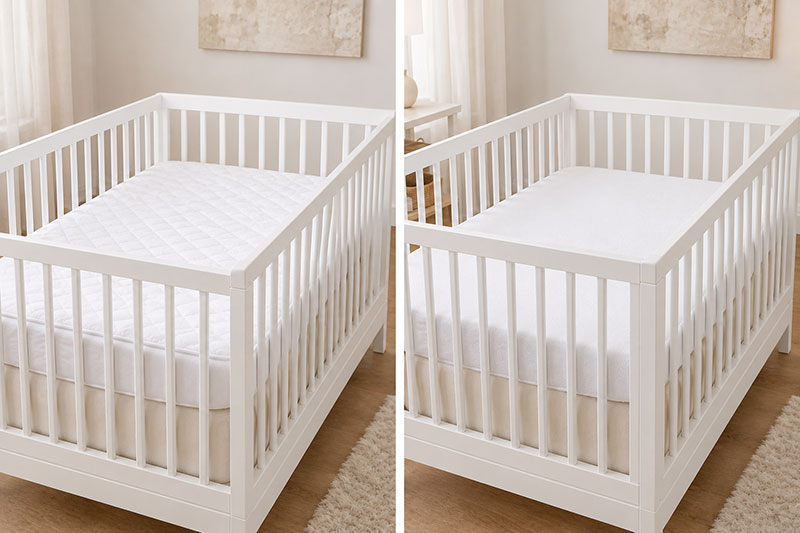
Mattress protector versus fitted sheet
A fitted sheet is required to keep the baby’s sleep surface covered. A mattress protector is optional and depends on the bassinet design.
| Item | Main purpose | Usual sleep-safety role |
|---|---|---|
| Original bassinet mattress | Provides the approved sleep surface | Required |
| Fitted sheet | Covers the mattress | Required |
| Model-specific protector | Helps protect the mattress from liquid | Optional if approved |
| Loose pad or towel | Absorbs liquid | Not recommended |
| Padded liner | Adds cushioning | Not recommended |
| Second mattress | Changes the sleep surface | Not recommended |
The most common mistake is treating a protector like ordinary bedding. A protector is part of the mattress setup. If it changes the mattress fit or firmness, it is not a harmless extra layer.

Can you use a crib mattress protector in a bassinet?
Usually, no. A crib mattress protector is made for a larger mattress and may not fit a bassinet.
Even if the material seems thin, excess fabric can fold beneath the baby or create a gap at the edges. A crib protector may also be designed to wrap around a mattress with different thickness and corner dimensions.
Use only a protector identified for your bassinet’s exact model or dimensions. Never cut down a crib protector. Cutting can remove elastic, expose waterproof material, or create loose edges.
The same rule applies to protectors made for:
- Mini cribs
- Play yards
- Bedside sleepers
- Moses baskets
- Portable cribs
- Changing pads
Similar size does not mean safe compatibility.

Common mistakes to avoid
Using a loose waterproof pad
A flat pad may shift under a baby. If the bassinet maker allows a flat protector, it must stay completely flat and secure. Otherwise, choose the original mattress cover and fitted sheet only.
Adding layers for comfort
A mattress should be firm and flat. Extra layers do not make it safer or more comfortable for an infant. They can create a softer surface and increase the chance of face covering.
Buying by the word “breathable”
“Breathable” is a marketing term unless it is tied to a specific product design and safety instruction. Air can pass through a fabric while the product still fits poorly or changes the mattress surface.
Assuming waterproof means safe
Waterproofing helps block liquid. It does not address gaps, firmness, compression, or entrapment.
Using a recalled product
Check the CPSC recall database before using secondhand bassinets, mattresses, or accessories. Also check the bassinet manufacturer’s safety notices.
A recall may apply to the bassinet, the mattress, or an accessory. A protector cannot correct a recalled or damaged product.
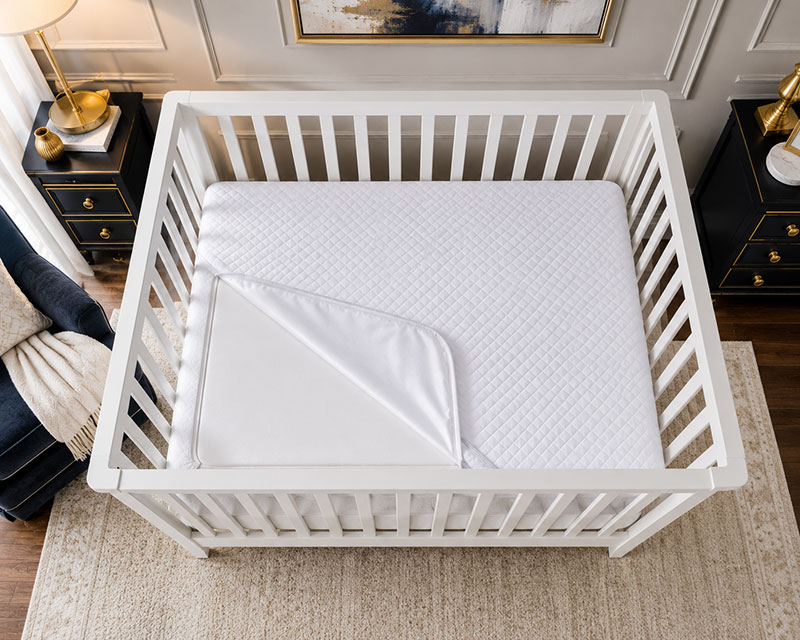
A simple decision guide
Use this quick guide:


Does the manual approve a protector?
- Yes: Use only the listed type and size.
- No or unclear: Do not use one until the manufacturer confirms compatibility.
Does the protector fit tightly and stay flat?
- Yes: Check it again after washing.
- No: Remove it.
Does it add padding or create a gap?
- Yes: Do not use it.
- No: It may be suitable if the manufacturer permits it.
Is the original mattress damaged?
- Yes: Replace it with an approved mattress.
- No: Continue using the original setup.
Is your baby sleeping in the bassinet now?
- Keep the space clear except for the fitted sheet and any approved protector.
When in doubt, the safer choice is to remove the protector and use the original mattress with one tight fitted sheet.

Key takeaways
- A bassinet usually does not need a mattress protector.
- Use the original firm, flat mattress and a tight fitted sheet.
- Add a protector only when the manufacturer approves it for that exact bassinet.
- Avoid loose, padded, quilted, universal, or crib-sized protectors.
- Never use towels, blankets, foam, or extra mattresses as padding.
- Check the fit again after washing the protector.
- Replace a damaged mattress instead of covering the damage.
FAQs
Can a baby sleep directly on a bassinet mattress?
A baby should sleep on the bassinet mattress with the fitted sheet required by the manufacturer. Do not place a baby directly on exposed foam or fabric unless the product instructions specifically describe that setup.
Do waterproof bassinet sheets replace a mattress protector?
A waterproof fitted sheet may help protect the mattress, but it does not automatically replace an approved mattress cover. It must fit the bassinet mattress tightly and follow the manufacturer’s instructions.
Can I put two fitted sheets on a bassinet?
Use only the number of sheets allowed by the bassinet instructions. In most cases, one fitted sheet is the correct setup. Two sheets can cause bunching or make the mattress fit too tightly.
What should I do if my bassinet has no waterproof cover?
Use the original mattress and an approved fitted sheet. Clean spills as soon as possible and contact the manufacturer about an approved replacement cover or mattress. Do not make a homemade liner.
Is a bassinet mattress protector needed for newborns?
Newborns do not need a mattress protector for comfort or safe sleep. A protector is only a convenience for mattress cleanup, and only a properly approved, well-fitting one should be used.
Conclusion
A mattress protector is optional, not a basic bassinet requirement. The safest sleep setup in the United States is the manufacturer’s original firm, flat mattress with one tight fitted sheet and no loose items.
If you want added protection from spills, check the bassinet manual first. Use only a thin protector made for that exact model, and remove it if it shifts, bunches, adds padding, or changes the mattress fit.
