
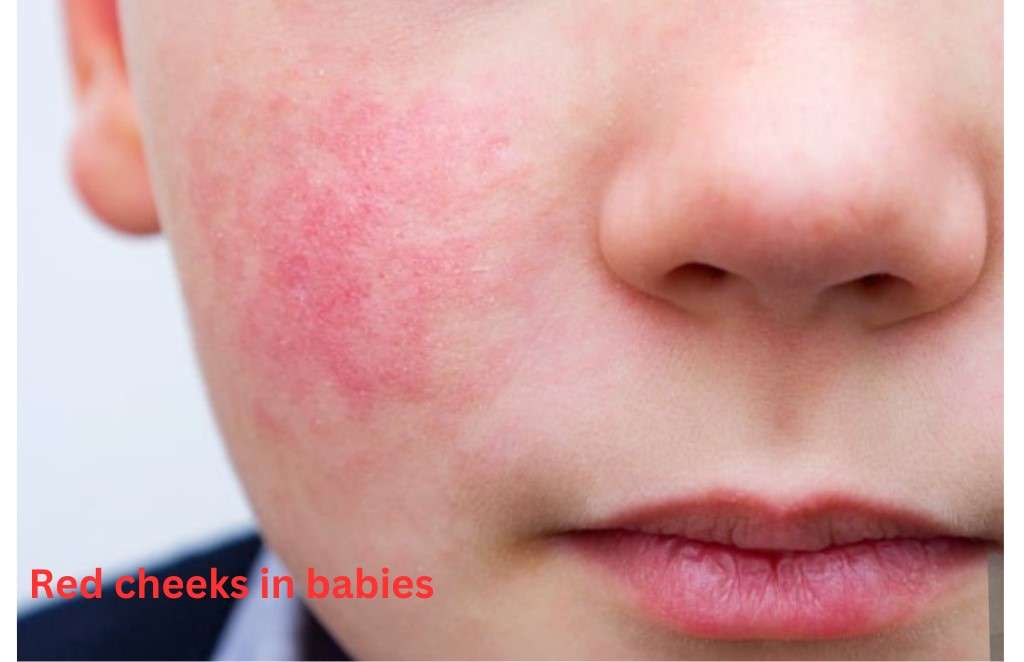
Red cheeks are often caused by warmth, crying, cold air, drooling, or mild skin irritation. They can also occur with eczema, a viral illness, an allergic reaction, or a skin infection. The color alone usually does not show the cause. Your baby’s age, temperature, other symptoms, and how the skin feels matter more.
In the United States, call your baby’s doctor promptly if your baby is younger than 3 months and has a rectal temperature of 100.4°F (38°C) or higher. Call 911 for trouble breathing, swelling of the lips or tongue, blue or gray skin, extreme sleepiness, or a baby who is hard to wake.

Common reasons a baby’s cheeks turn red
Most causes of red cheeks are mild and short-lived. Look for patterns, such as redness after crying, eating, sleeping in a warm room, or spending time outside.


Warmth, crying, or excitement
A baby’s cheeks may look red after crying, feeding, active play, or being held against a warm body. Crying increases blood flow to the face. Warm clothing, a hat, blankets, or a heated room can also make the cheeks flush.
The redness should fade as your baby cools and settles. Remove one light layer, move your baby to a comfortable room, and wait a few minutes. Do not use ice or very cold water on the skin.
Cold, wind, or dry air
Cold air and wind can make the cheeks red and dry. Indoor heating can remove moisture from the air and worsen chapped skin. This is common during winter in many parts of the United States.
Dry, wind-exposed skin may feel rough or tight. It may also peel or form small cracks near the mouth.
You can help by:
- Washing the face with lukewarm water.
- Using a soft cloth without scrubbing.
- Applying a plain, fragrance-free moisturizer.
- Protecting the cheeks from wind and cold.
- Avoiding scented wipes, soaps, and lotions.
Do not apply adult acne products, essential oils, or steroid creams unless your baby’s clinician recommends them.
Drool rash
Drooling can irritate the skin around the mouth, chin, and cheeks. Saliva, food, and repeated wiping may weaken the skin barrier. A drool rash often looks red, dry, or bumpy.
Pat the skin dry instead of rubbing it. A thin layer of plain petroleum jelly or another baby-safe barrier ointment may protect the skin from moisture. Change wet bibs and clothing often.
See your baby’s doctor if the rash spreads, forms blisters, leaks fluid, develops yellow crusts, or does not improve with gentle skin care.
Eczema
Baby eczema, also called atopic dermatitis, often causes dry, red, itchy patches. It may affect the cheeks, scalp, arms, legs, or body. The skin can become rough, cracked, or swollen.
Eczema can flare after contact with:


- Fragranced soap or detergent
- Saliva
- Heat and sweat
- Rough fabric
- Dry air
- Some foods or other triggers
Use a fragrance-free cleanser only when needed and apply a thick, plain moisturizer soon after bathing. Keep your baby’s nails short to reduce skin damage from scratching.
A clinician should assess eczema that is severe, painful, oozing, crusted, or not improving. Do not remove foods from a breastfeeding parent’s or baby’s diet without medical guidance.
A viral illness
A viral infection may cause flushed cheeks along with fever, runny nose, cough, poor appetite, vomiting, diarrhea, or unusual sleepiness. Some babies have red cheeks during a mild illness even when the rest of the skin looks normal.
A fever is a measured temperature, not just skin that feels warm. Use a thermometer and follow the device directions. For young infants, a rectal temperature is generally the most reliable method, but ask your clinician if you are unsure how to take it safely.
Fifth disease
Fifth disease is a common infection caused by parvovirus B19. It can cause bright red cheeks that look as if the child has been lightly slapped. A lacy rash may later appear on the arms, legs, or body.
Many children have few symptoms and recover without special treatment. However, contact your baby’s doctor if you suspect fifth disease, especially if your baby has a blood disorder or a weakened immune system.
Pregnant people who have been exposed should contact their prenatal clinician. Parvovirus B19 can sometimes cause problems during pregnancy, even though it is usually mild in children.
Irritation or contact allergy
A new lotion, sunscreen, detergent, wipe, food, or fabric may cause red cheeks. Contact irritation usually affects the areas that touched the product. The skin may sting, itch, peel, or develop small bumps.
Stop the suspected product and rinse the skin gently with lukewarm water. Do not keep testing new products on the rash. If the rash keeps returning, ask your baby’s clinician to help identify the trigger.
A food allergy can cause hives, facial swelling, vomiting, coughing, wheezing, or sudden behavior changes. That needs faster action than a simple dry rash.
Teething
Teething can increase drooling and lead to redness around the mouth and cheeks. Teething itself does not usually cause a high fever or make a baby very ill. If your baby has a significant fever, breathing symptoms, repeated vomiting, or marked sleepiness, look for another cause and call the doctor.
How to check your baby’s red cheeks at home
Start with the whole picture, not just the color. A calm baby with normal breathing, normal feeding, and no fever is less likely to have an emergency than a baby with the same rash plus swelling or poor responsiveness.
Use this simple check:
- Check breathing. Look for fast breathing, ribs pulling in, grunting, wheezing, or pauses.
- Check alertness. Your baby should respond in their usual way. Extreme sleepiness or difficulty waking is a warning sign.
- Take the temperature. Use a thermometer rather than your hand. Record the number and method used.
- Look at the skin. Note whether the redness is on both cheeks, one side, around the mouth, or elsewhere.
- Feel the skin gently. Is it dry, hot, swollen, tender, blistered, or leaking fluid?
- Think about timing. Did it start after crying, feeding, a bath, outdoor exposure, a new product, or a new food?
- Check feeding and wet diapers. A baby who is feeding poorly or making fewer wet diapers may be getting dehydrated.
A useful clue is whether the redness fades when your baby cools down and stops crying. Another clue is whether the rash changes when you press it gently. Do not rely on this test alone.
A rash that does not fade with pressure can have several causes, and a clinician should assess it when your baby also has fever or seems unwell.

A quick decision guide
| What you notice | Possible meaning | What to do |
|---|---|---|
| Both cheeks red after crying or warmth; baby acts well | Temporary flushing | Cool gently and watch |
| Dry, rough, itchy patches | Eczema or irritation | Use gentle skin care; call if persistent |
| Redness around the mouth with drooling | Drool rash | Pat dry and use a barrier ointment |
| Red cheeks with fever or poor feeding | Infection or illness | Contact the pediatrician |
| One cheek is hot, painful, swollen, or spreading | Possible skin infection | Call the doctor promptly |
| Hives with vomiting, swelling, cough, or wheeze | Possible serious allergy | Call 911 |
| Fever in a baby younger than 3 months | Needs medical assessment | Call the doctor promptly |
Red cheeks alone cannot confirm a diagnosis. The table helps you decide what to check next, not what condition your baby has.
When red cheeks may be an emergency
Call 911 in the United States if your baby has red cheeks with any sign of a severe allergic reaction or breathing problem. Emergency signs include:
- Trouble breathing, wheezing, or gasping
- Swelling of the lips, tongue, face, or throat
- Blue, gray, or very pale skin
- Sudden limpness or inability to wake
- A seizure
- Widespread hives with vomiting or breathing trouble
Do not wait to see if these symptoms pass. If your baby has a known allergy and an emergency medicine plan, follow that plan while calling 911.
When to call the pediatrician today
Contact your baby’s doctor promptly if:
- Your baby is younger than 3 months and has a rectal temperature of 100.4°F (38°C) or higher.
- Your baby has a fever and looks very ill, feeds poorly, or is unusually sleepy.
- The cheek is hot, painful, swollen, or red in one area that is getting larger.
- The skin has pus, yellow crusts, blisters, open sores, or red streaks.
- Your baby has fewer wet diapers, a dry mouth, no tears when crying, or repeated vomiting.
- The redness began after a new food or medicine.
- The rash is purple, dark red, or does not fade with pressure, especially with fever.
- The redness lasts, keeps returning, or is getting worse.
A skin infection called cellulitis can cause a warm, tender, swollen area that spreads. Babies may need prescription treatment, so do not treat a suspected infection with leftover medicine.
A fever lasting several days with other signs
Kawasaki disease is uncommon but serious. It most often affects children younger than 5 years. Call a clinician urgently if your baby has a fever lasting five days or longer, especially with several of these signs:
- Red eyes without much discharge
- Cracked, red lips or a “strawberry” tongue
- Swelling or redness of the hands and feet
- A widespread rash
- A swollen neck gland
- Extreme irritability
Do not wait for every sign to appear. A pediatric clinician can decide whether urgent evaluation is needed.

Safe ways to soothe mild red cheeks
If your baby is comfortable, breathing normally, feeding well, and has no concerning fever, gentle skin care is usually reasonable.
For dry or irritated skin
- Wash with lukewarm water.
- Use a mild, fragrance-free cleanser only when needed.
- Pat the cheeks dry.
- Apply a plain, fragrance-free cream or ointment.
- Keep saliva, food, and wet fabric off the skin.
- Dress your baby in soft, breathable layers.
- Avoid scrubbing, scented products, and adult skin treatments.
Test a new skin product on a small area first. Stop using it if the redness worsens.
For warmth or flushing
Remove an extra layer and move your baby away from direct heat. Do not cool your baby with ice, alcohol rubs, cold baths, or fans blowing directly at the skin.


Check the room, bedding, hat, and car seat. Babies can become overheated more easily than adults because they cannot adjust clothing on their own.
For fever or discomfort
Ask your baby’s clinician which medicine, if any, is suitable. Doses depend on age, weight, and the specific product. Do not give aspirin to a child. Do not give ibuprofen to a baby younger than 6 months unless a clinician specifically tells you to do so.
Never use cold baths or alcohol rubs to lower a fever. Offer breast milk or formula as usual unless a clinician gives different instructions. Do not give water to a young infant unless the pediatrician recommends it.

Common mistakes to avoid
Judging fever by touch
A baby’s cheeks can feel hot after crying or being bundled. Touch cannot tell you the exact temperature. Use a thermometer when your baby feels warm or seems unwell.
Assuming every red rash is teething
Teething may cause drooling and local irritation, but it does not explain every fever, rash, or change in behavior. Check for other symptoms.
Using several new products at once
Multiple creams make it hard to know what caused improvement or irritation. Use simple, fragrance-free care until you know what your baby’s skin needs.
Waiting because the baby is still smiling
Babies can look fairly well early in an illness. Watch feeding, wet diapers, breathing, temperature, and alertness as well as mood.
Sending a rash photo without other details
A photo may help a clinician, but include your baby’s age, temperature, when the rash started, whether it fades, recent products or foods, and any changes in feeding or urine output. A photo cannot replace an exam when the baby is unwell.

Frequently asked questions
Is it normal for a baby’s cheeks to be red after crying?
Yes. Crying can briefly increase blood flow to the face. The redness should fade as your baby calms and cools. Persistent redness, swelling, pain, fever, or a baby who seems ill needs medical advice.
Can teething cause red cheeks?
Teething can cause drooling, and drool can irritate the cheeks and skin around the mouth. Teething does not usually cause a high fever or serious illness. Do not assume teething is the cause if your baby has other concerning symptoms.
Why is only one cheek red?
One-sided redness may come from rubbing, sleeping against a warm surface, drool, or contact with an irritating product. If the cheek is hot, tender, swollen, or the redness is spreading, call the pediatrician because this can be a sign of cellulitis.
Should I worry about red cheeks without a fever?
Usually not, if your baby is acting normally, breathing well, feeding normally, and the redness fades. Continue to watch the skin. Call the doctor if it lasts, returns often, becomes painful, or comes with other symptoms.
Can a baby’s red cheeks be an allergy?
Yes, but allergy symptoms often include hives, itching, swelling, vomiting, coughing, wheezing, or breathing trouble. Facial or tongue swelling and breathing problems are emergencies. Call 911 in the United States.
Key takeaways
- Red cheeks are often linked to warmth, crying, wind, drooling, eczema, or mild irritation.
- Use a thermometer instead of judging fever by touch.
- For a baby younger than 3 months, a rectal temperature of 100.4°F (38°C) or higher needs prompt medical advice.
- One-sided hot, painful, spreading redness may be a skin infection.
- Call 911 for breathing trouble, facial or tongue swelling, blue or gray skin, or a baby who is hard to wake.
- If you are unsure, call your pediatrician or the after-hours nurse line.


Conclusion
Your baby’s red cheeks are often harmless, especially when the color follows crying, warmth, cold air, drooling, or dry skin. The safest next step is to check your baby’s temperature, breathing, feeding, wet diapers, alertness, and the texture of the rash.
When redness is persistent, painful, spreading, linked with fever, or paired with breathing or swelling symptoms, seek medical care. In the United States, call 911 for emergency signs and contact your baby’s pediatrician when the symptoms do not fit a simple skin irritation.
Sources and further reading
- American Academy of Pediatrics, HealthyChildren.org: Fever and Your Baby
- American Academy of Pediatrics, HealthyChildren.org: Eczema: What Parents Need to Know
- Centers for Disease Control and Prevention: Parvovirus B19
- Centers for Disease Control and Prevention: Signs and Symptoms of Food Allergies
- Mayo Clinic: Cellulitis
- American Academy of Pediatrics, HealthyChildren.org: Kawasaki Disease
