
If your newborn will sleep in your arms but wakes in the bassinet, you are not doing anything wrong. Many newborns resist the bassinet because it feels still, cool, and far less like the womb than a warm caregiver’s body.
The most common causes are normal newborn sleep patterns, hunger, gas, an immature body clock, or waking during the transfer. You can improve the odds with a short routine, a safe sleep setup, and a slow transfer. Still, no trick works for every baby.
In the United States, the safest place for a newborn to sleep is on their back, on a firm, flat, separate sleep surface in the same room as a caregiver. The American Academy of Pediatrics (AAP) advises keeping the bassinet free of pillows, blankets, bumpers, toys, and other soft items.

Why your newborn may reject the bassinet
Your newborn may dislike the bassinet because it removes the warmth, movement, smell, and contact they had while being held. A newborn may also wake because they are hungry, uncomfortable, overtired, or still in a light stage of sleep.


Newborn sleep is not yet organized like adult sleep. Babies move between light and deep sleep often. They may grunt, twitch, cry briefly, or wake soon after being placed down.
Common reasons a newborn wakes in the bassinet
- The transfer happens too soon. Your baby may be asleep in your arms but still in light sleep.
- Your baby is hungry. Newborns need frequent feeds, including at night.
- Your baby has gas or needs to burp.
- Your baby is too hot or too cold.
- The bassinet feels different. It does not smell, move, or feel like your body.
- Your baby is overtired. A very tired newborn may cry more and settle less easily.
- Your baby prefers contact. This is common and does not mean you have created a bad habit.
- Your baby has a health problem. Congestion, fever, pain, eczema, reflux symptoms, or breathing trouble can affect sleep.
A newborn who sleeps for only short periods may still be sleeping normally. The goal is not to force a long stretch. The goal is to offer a safe place to sleep each time your baby is ready.
A bassinet may be the wrong sleep space if it is not safe
Check the bassinet before changing your baby’s routine. It should have a firm, flat mattress that fits well. Use only the mattress and fitted sheet made for that product.
Do not add a positioner, wedge, pillow, sleep nest, rolled towel, or extra pad. These products can increase the risk of suffocation or entrapment. Do not use an inclined sleeper for routine sleep, even if your newborn seems to settle better there.

Safe sleep comes before better sleep
A safe bassinet setup matters more than how long your newborn sleeps. Place your baby alone, on their back, on a firm, flat surface every time they sleep.
The CDC and AAP recommend room sharing without bed sharing. Keep the bassinet or crib near your bed, but do not place your baby in an adult bed, on a sofa, or in a recliner for sleep.
Use this safe sleep checklist
- Put your newborn on their back for every nap and night sleep.
- Use a firm, flat, level bassinet, crib, or play yard.
- Keep only a fitted sheet on the mattress.
- Keep pillows, quilts, loose blankets, stuffed toys, and bumpers out of the sleep space.
- Keep your baby’s face and head uncovered.
- Share your room, not your bed.
- Keep smoke and vape exposure away from your baby.
- Avoid overheating.
- Stop swaddling when your baby shows signs of rolling, or by the time rolling begins.
- Never use a weighted swaddle, weighted blanket, or weighted sleep product.
If you swaddle, use a light, nonweighted swaddle that allows room for hip movement. Place your baby on their back after swaddling. A wearable blanket can be used when your baby no longer needs to be swaddled.
What if your baby falls asleep while being held?
Move your baby to the bassinet as soon as you can. Do not sleep while holding your baby on a couch or chair. These surfaces are especially dangerous because a baby can become trapped between a body and a cushion.
If you feel very tired, place your baby in the bassinet and take a short break. Ask another adult for help if one is available. A crying baby in a safe bassinet is safer than a sleeping baby on an unsafe surface.


How to help a newborn sleep in the bassinet
You cannot make a newborn sleep on command, but you can make the transition calmer. Start with the basic needs, then use a repeatable transfer method.
1. Check hunger and comfort first
Offer a feed if your baby shows hunger cues. Early cues include rooting, sucking on hands, lip smacking, and increased movement. Crying is a later hunger cue.
Burp your baby if they seem uncomfortable. Hold them upright for a short time after feeding if that helps, but do not place anything under the bassinet mattress to raise your baby’s head.
Check the diaper, clothing, and room temperature. Dress your baby in about one more light layer than an adult would wear in the same room, while watching for sweating, flushed skin, or a hot chest.
2. Watch for early sleep cues
Try the bassinet when your baby is calm and drowsy, rather than waiting until they are very upset. Sleep cues may include:
- Slower movement
- Looking away
- Yawning
- Red eyebrows or eyelids
- Quiet fussing
- Closing the eyes
Newborn wake periods are often short, but they vary. A clock can help you notice patterns, but your baby’s cues matter more than a strict schedule.
3. Use a brief, repeatable routine
A newborn does not need a long bedtime program. Try the same few steps before sleep:
- Dim the lights.
- Feed your baby.
- Change the diaper if needed.
- Burp your baby.
- Swaddle safely if your baby is not rolling.
- Hold and soothe your baby.
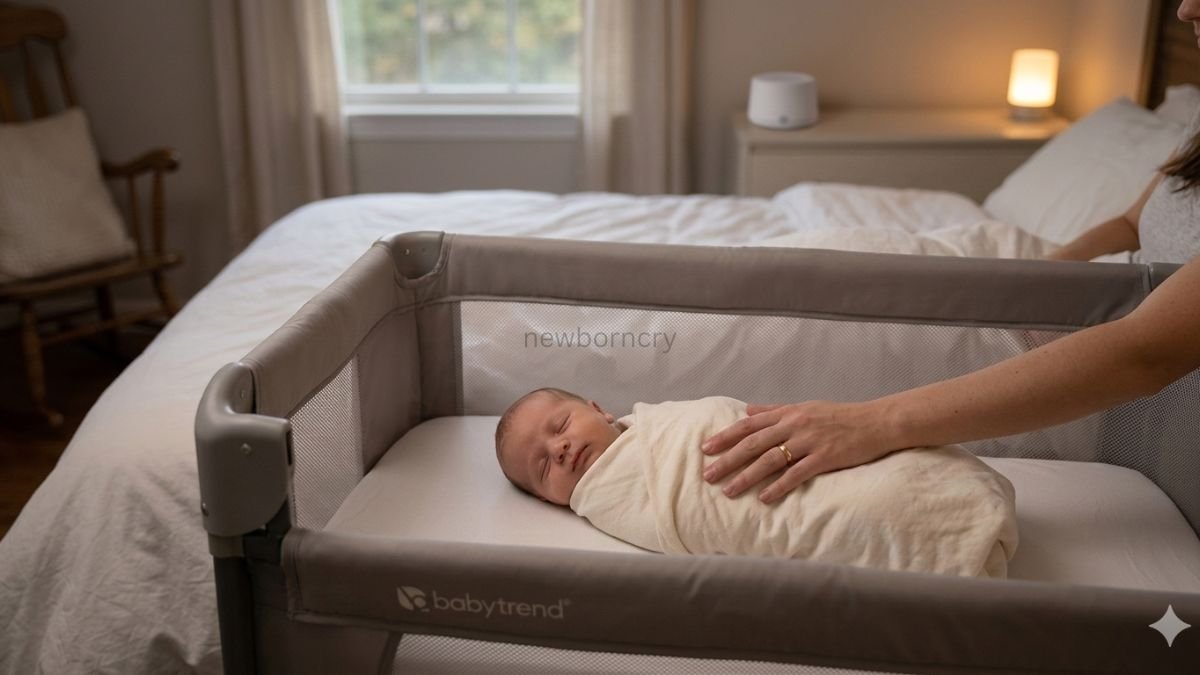
- Place your baby on their back in the bassinet.
Keep nighttime care quiet and boring. Use low light and a soft voice. This helps your baby learn that night is for sleep, even though a mature day-night rhythm takes time.
4. Make the transfer slowly
A slow transfer can help when your baby wakes the moment their back touches the mattress.
- Hold your baby close to your body.
- Lower your baby bottom-first, then shoulders, then head.
- Keep one hand gently on the chest for a few breaths.
- Remove your hand slowly.
- If your baby stirs, pause before picking them up.
This method is not a guarantee. Some babies need more support, and some wake during every transfer for a while.
5. Try soothing in the bassinet
If your baby is calm but awake, you can try gentle soothing without lifting them right away. Use a steady hand on the chest, quiet shushing, or a gentle jiggle of the bassinet only if the bassinet is designed for that movement.
Do not shake, bounce, or vigorously move your baby. Stop if your baby becomes more upset. Pick them up, calm them, and try again later.


A low, steady background sound may mask sudden household noise. Keep the device well away from the bassinet and at a low volume. Do not place a sound machine inside the sleep space.
What to do when your newborn only sleeps while held
Contact sleep is common in the first weeks. Your newborn may settle because your body provides warmth, movement, pressure, and a familiar smell. This preference usually does not mean your baby will always need to be held for sleep.
For safety, plan contact naps only when an alert adult is watching. If you may fall asleep, put your baby in the bassinet first. Do not rely on a couch, recliner, nursing pillow, or adult bed as a routine sleep location.
You can build bassinet practice into the day:
- Choose one calm sleep period.
- Follow the same short routine.
- Try one transfer.
- If it fails, soothe your baby and try again later.
- Keep the rest of the day flexible.
You do not need to practice every sleep. Feeding, healing, and rest also matter. If another adult can safely take a shift, use that help so you can sleep.
If your newborn cries when placed down
A brief protest does not always mean something is wrong. Give your baby a moment to see whether they settle, but respond if the cry grows or your baby seems distressed.
Try these checks:
- Is your baby hungry?
- Is the diaper wet or soiled?
- Does your baby need to burp?
- Is the room too warm?
- Is clothing tight or irritating?
- Is your baby congested?
- Did your baby stay awake too long?
If the same problem happens at every sleep, write down feeds, wake periods, wet diapers, symptoms, and sleep location. This record can help your pediatrician find a pattern.

Troubleshooting by symptom
The best next step depends on what your newborn does when you use the bassinet. Use the table as a quick guide, not as a diagnosis.
| What you notice | Possible reason | What to try |
|---|---|---|
| Baby wakes as soon as you lower them | Light sleep or sudden temperature change | Wait for deeper sleep, then lower slowly |
| Baby cries after a few minutes | Hunger, gas, or discomfort | Check feeding cues, burp, and diaper |
| Baby sleeps only on a caregiver | Contact is soothing | Practice one safe bassinet sleep at a time |
| Baby grunts and moves a lot | Normal newborn sleep sounds or gas | Watch breathing and color; do not add loose items |
| Baby arches, coughs, or seems in pain | Possible feeding or medical issue | Call your pediatrician for guidance |
| Baby wakes when swaddled | Swaddle may feel restrictive or unsafe | Check fit; stop when rolling signs appear |
| Baby sleeps better in an inclined product | The product may be unsafe for routine sleep | Use a firm, flat, level sleep surface instead |
| Baby wakes every hour | Normal short sleep cycles, hunger, or discomfort | Review feeds, cues, and symptoms with the pediatrician |
Newborns can be noisy sleepers. Grunts, squeaks, and brief movements may occur during normal sleep. Look at your baby’s color, breathing effort, and overall condition rather than reacting to every sound.
Seek urgent medical help if your baby has trouble breathing, turns blue or gray, is hard to wake, has a seizure, or seems seriously ill. For a baby younger than 3 months, call a health care professional promptly about a rectal temperature of 100.4°F (38°C) or higher, unless your clinician has given different instructions.

When to call your pediatrician
Call your baby’s pediatrician if poor sleep comes with feeding trouble, fewer wet diapers, repeated vomiting, persistent coughing, noisy breathing, fever, poor weight gain, unusual sleepiness, or signs of pain.
Do not assume that every sleep problem is reflux. Spitting up is common, but painful symptoms, breathing problems, poor feeding, or poor growth need medical review. Do not use medicine, thickened feeds, sleep products, or an inclined sleep surface unless your child’s clinician recommends and explains it.
You should also ask for help if exhaustion is affecting your ability to care for your baby safely. A pediatrician, lactation professional, postpartum nurse, or local support service may help with feeding and settling concerns.


The bassinet problem may be a normal adjustment, but the baby’s health and your safety come first.

Common mistakes that make bassinet sleep harder
Some popular fixes can create new risks or hide the real problem.
Waiting until the baby is fully exhausted
An overtired newborn may cry harder and have more trouble settling. Try earlier when you see quiet sleep cues.
Adding soft items to make the bassinet feel cozy
A pillow, blanket, nest, or rolled towel can block breathing or trap your baby. Keep the sleep surface bare except for the fitted sheet.
Using an unsafe sleep product because it works
A product that keeps a baby still or asleep is not automatically safe. Check whether it provides a firm, flat, level surface and whether it follows current U.S. safety guidance.
Keeping the room completely silent
Some babies settle with steady background sound, but the sound should stay low and far from the bassinet. Sudden loud sounds and high volume can harm hearing.
Changing the plan every few minutes
Newborns need time to calm. Use one simple method for a short period, then change course if your baby becomes upset. Too many fast changes can add stimulation.

Frequently asked questions
Should I put my newborn down awake or asleep?
Either can work. A calm, drowsy baby may sometimes settle in the bassinet, but many newborns need to fall asleep in your arms first. Safe placement matters more than whether your baby is fully awake.
How long should I wait before transferring my newborn?
There is no reliable timer for every baby. Wait until your baby’s body is relaxed, breathing is steady, and their arms are less active. Then lower them slowly. If the transfer fails, calm your baby and try again later.
Is it safe to put a blanket in the bassinet?
No. Keep loose blankets out of the bassinet. Use a properly fitted wearable blanket, or swaddle your baby safely if they are not showing signs of rolling.
Can my newborn sleep in a swing, bouncer, or car seat?
These products are not meant for routine sleep. If your baby falls asleep in one, move them to a firm, flat, separate sleep surface as soon as practical.
When will my newborn sleep through the night?
Newborns usually wake often for feeding and care. “Sleeping through the night” is not a useful early goal, and there is no single age when it happens. Ask your pediatrician about feeding intervals and night waking based on your baby’s age, growth, and health.
Conclusion
A newborn who will not sleep in the bassinet usually needs time, comfort, and a safe, repeatable routine—not a stronger sleep-training method. Check hunger, gas, temperature, and sleep cues. Then use a firm, flat, empty bassinet and transfer your baby slowly.
If your baby only sleeps while held, protect against accidental sleep on a couch or chair and ask for help with shifts. Call your pediatrician when sleep trouble comes with feeding problems, breathing symptoms, fever, poor output, pain, or unusual behavior.


Your next step is simple: check the sleep space, feed and comfort your baby, and try one calm bassinet transfer during the next sleep period.
Sources
- [American Academy of Pediatrics: Safe Sleep and Breastfeeding](https://publications.aap.org/pediatrics/article/150/1/e2022057990/188347/ Breastfeeding-and-the-Use-of-Human-Milk)
- HealthyChildren.org: How to Keep Your Sleeping Baby Safe
- CDC: About Back Sleeping
- U.S. Consumer Product Safety Commission: Safe Sleep
