
In the United States, babies can eat foods with naturally occurring sodium from the start of solid foods, usually around 6 months. However, experts advise no added salt during the first year. Breast milk and infant formula already provide the sodium babies need.
After your baby turns 1, small amounts of salt can fit into a varied diet. Still, most toddlers get enough sodium from everyday foods, so there is no need to add salt at the table.
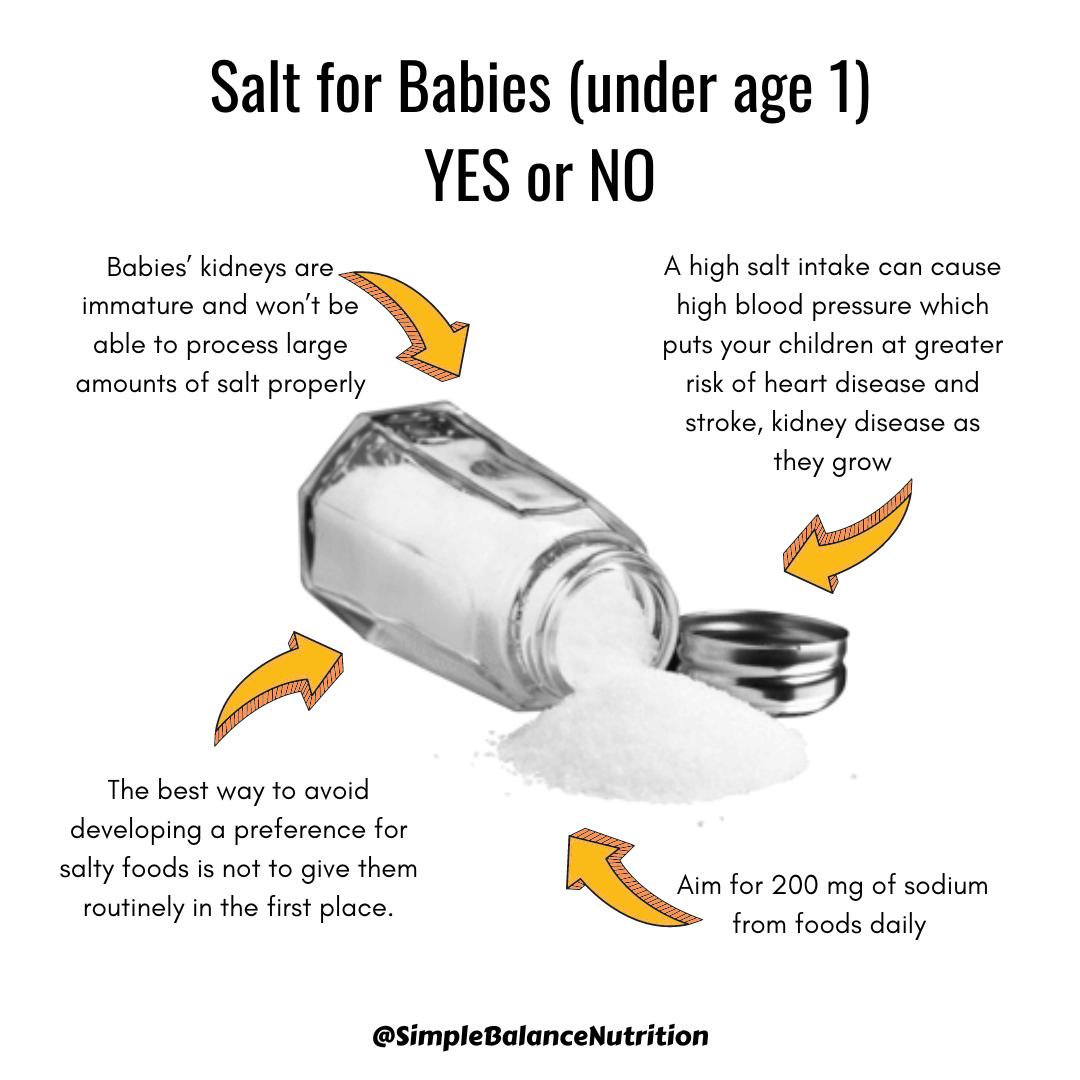
The short answer: avoid added salt before age 1
Babies under 12 months should not have added salt in homemade meals, packaged foods, or family dishes. This includes table salt, sea salt, kosher salt, garlic salt, onion salt, and seasoning blends that contain sodium.
That does not mean babies must avoid every food that contains sodium. Sodium occurs naturally in foods such as:


- Breast milk and infant formula
- Meat, poultry, and fish
- Eggs
- Beans and lentils
- Yogurt and cheese
- Vegetables and grains
The key difference is natural sodium versus added salt. A baby may eat plain, soft family foods that contain a small amount of natural sodium. Parents should avoid adding salt or serving foods that are very high in sodium.
The U.S. Centers for Disease Control and Prevention advises limiting foods high in sodium for young children. The American Academy of Pediatrics also recommends helping children build low-sodium eating habits early.

Why babies do not need added salt
Babies need sodium for normal body functions, including fluid balance, nerve signals, and muscle movement. But they need only a small amount, and breast milk or properly prepared infant formula supplies it.
Adding salt can make a baby’s diet less healthy in two ways. First, salty foods may add more sodium than a young child needs. Second, processed salty foods can replace foods that provide iron, protein, fiber, and other nutrients.
Babies also have small stomachs. A few bites of a salty food can take up space that could otherwise go to nutrient-rich foods. The goal is not to remove all sodium. The goal is to avoid making salty foods a regular part of the diet.
Salt is made mostly of sodium chloride. Sodium is the part that matters when you read a Nutrition Facts label. Sea salt, Himalayan salt, kosher salt, and table salt may look different, but they all add sodium.

What can babies eat before 12 months?
Before age 1, offer plain foods with no added salt when possible. Babies can usually try a broad range of soft foods once they are ready for solids.
Good options include:
- Mashed avocado
- Soft-cooked vegetables
- Unsalted beans
- Plain oatmeal
- Shredded or finely minced meat
- Flaked fish with bones removed
- Scrambled egg
- Plain whole-milk yogurt
- Soft fruit
- Unsalted nut or seed butter spread thinly
- Soft pasta, rice, or quinoa without salty sauce
You do not need to make every meal bland or separate from the family meal. Set aside the baby’s portion before adding salt, soy sauce, bouillon, soup mix, or a salty sauce.
For example, you can cook a vegetable and chicken stew without salt, remove a soft portion for your baby, and then season the adult servings. This keeps family meals simple while limiting added sodium.


Foods to limit for babies
Some foods are especially high in sodium or may contain other risks for infants. Limit or avoid:
- Bacon, ham, sausage, and hot dogs
- Deli meat and cured meat
- Canned soup
- Instant noodles
- Chips and salty crackers
- Cheese-flavored snack foods
- Pickles and olives
- Soy sauce and teriyaki sauce
- Bouillon cubes and soup stock
- Frozen meals
- Jarred pasta sauce with high sodium
- Fast food and restaurant meals
Some of these foods also create choking risks. Cut food into safe shapes and textures, and follow current infant feeding guidance for choking prevention.

Can babies have salt after 12 months?
Yes. After a baby’s first birthday, small amounts of added salt may be used in family meals. But toddlers still do not need much salt, and low-sodium habits remain the better choice.
The Dietary Guidelines for Americans recommend limiting sodium for everyone age 2 and older to less than 2,300 milligrams per day. Children under age 2 should also avoid foods and drinks with added sugars. For toddlers, the practical focus is simple: serve mostly fresh or lightly processed foods and avoid making salty packaged foods daily staples.
You do not need to count every milligram for a healthy toddler. Instead:
- Taste food before adding salt.
- Use herbs, garlic, onion, lemon, or mild spices for flavor.
- Choose “no salt added” or “low sodium” foods when practical.
- Rinse canned beans and vegetables.
- Offer water and plain milk instead of salty snacks and sweet drinks.
- Keep processed meats and fast food occasional.
- Avoid putting a salt shaker on the child’s table.
A toddler may share a lightly salted family meal. The concern is the overall pattern, not one bite of a food that contains salt.

How much sodium do babies need?
The National Academies set an adequate intake for sodium of:
| Age | Adequate intake of sodium per day |
|---|---|
| Birth to 6 months | 110 milligrams |
| 7 to 12 months | 370 milligrams |
| 1 to 3 years | 800 milligrams |
These numbers are not targets that parents need to count at home. They show why extra salt is unnecessary for babies. Breast milk, formula, and age-appropriate foods can provide sodium without adding table salt.
The number on a food label refers to sodium, not salt. As a rough guide:
- 1 gram of table salt contains about 390 milligrams of sodium.
- 1 teaspoon of table salt contains about 2,300 milligrams of sodium.
- A quarter teaspoon contains about 575 milligrams of sodium.
These are approximate values. The exact amount can vary by product and how the salt is measured.
Do not add salt to infant formula, and do not dilute formula to reduce sodium. Always mix formula exactly as the package directs. Adding extra water can cause dangerous electrolyte problems, while adding extra formula powder can provide too much nutrition and strain a baby’s body.

How to read food labels for a baby
The Nutrition Facts label lists sodium in milligrams and gives a percent Daily Value. The standard Daily Value is based on a 2,300-milligram adult diet, so it is not a personal target for an infant.


For baby food, compare products in the same category. A plain vegetable puree, for example, may have much less sodium than a vegetable meal with broth or cheese.
Look for:
- “No salt added”
- “Unsalted”
- “Low sodium”
- A short ingredient list
- Little or no broth, seasoning salt, or soy sauce
Remember that “no salt added” does not always mean sodium-free. Ingredients may contain natural sodium, and some products may have sodium from other ingredients.
Common names for added sodium include:
- Salt
- Sodium chloride
- Monosodium glutamate, or MSG
- Sodium bicarbonate
- Sodium phosphate
- Sodium benzoate
- Soy sauce
- Broth or stock
MSG is not automatically unsafe, but it does add sodium. The total sodium amount on the label gives the clearest answer.

Is salt in baby food dangerous?
A small accidental taste of a salty food is usually not a reason to panic. Give the baby their normal breast milk or formula, and return to low-sodium foods at the next meal.
The concern is repeated exposure to high-sodium foods or a large amount of salt at once. Never give a baby salt water or use salt as a home remedy. A large salt ingestion can cause serious illness.
Call Poison Control at 1-800-222-1222 in the United States if a baby or child eats a large amount of salt or a product containing concentrated sodium. Call 911 for severe symptoms such as trouble breathing, a seizure, loss of consciousness, or extreme difficulty waking.
Contact the child’s health care professional if the baby has kidney disease, heart disease, liver disease, a metabolic condition, or another condition that affects fluid or sodium balance. These children may need advice that differs from general feeding guidance.

Common questions about babies and salt
Can a 6-month-old have food with salt?
A 6-month-old can eat solid foods that contain small amounts of natural sodium. Avoid adding salt to the food. Choose plain versions of foods and check labels on packaged products.
Can babies eat salted butter?
Salted butter is not toxic in a small amount, but unsalted butter is the better choice for cooking baby food. Babies do not need butter added to meals, and salted butter can increase sodium without adding much nutritional value.
Can babies have soy sauce?
It is best to avoid soy sauce for babies. Even a small spoonful can contain a large amount of sodium. Use plain food, herbs, or a squeeze of lemon instead.
Can babies eat cheese?
Babies can usually eat pasteurized cheese once they are ready for solids, but many cheeses contain a lot of sodium. Offer small portions and choose lower-sodium options when available. Avoid unpasteurized cheese and prepare pieces in a safe texture to reduce choking risk.
When can babies eat processed meat?
Processed meats such as hot dogs, bacon, ham, and deli meat are best limited. They are often high in sodium and may contain preservatives. If served, choose a safe texture, cut the food carefully, and keep the portion small and occasional.


Does homemade baby food need salt?
No. Homemade baby food does not need added salt. Cook vegetables, beans, grains, meat, or fish without salt, then use herbs or mild spices for flavor if desired.
Key takeaways
- Avoid added salt before a baby turns 1.
- Breast milk and properly prepared infant formula provide the sodium babies need.
- Babies can eat foods with natural sodium as part of a varied diet.
- After age 1, small amounts of salt can fit into family meals, but salty processed foods should remain limited.
- Do not add salt to formula or dilute formula.
- Call Poison Control at 1-800-222-1222 after a large salt ingestion.
Final answer
Babies can start solid foods with natural sodium at about 6 months, but they should not have added salt during the first year. After 12 months, a small amount of salt in family meals is generally reasonable, yet a low-sodium diet built around fresh foods is still best.
The simplest rule is: do not add salt to baby food, choose plain foods when possible, and limit highly processed salty foods.
