
Yes. A newborn can sleep in a bassinet if it is made for infant sleep, meets current U.S. safety rules, and has a firm, flat surface with no loose items. Place your baby on their back for every sleep, in their own sleep space, ideally in your room but not in your bed.
A bassinet can be a practical choice during the first weeks and months. It keeps your baby close for feeds and checks while giving them a separate sleep area. But not every small baby bed is safe for overnight sleep. Some products look similar to bassinets but are made only for lounging, travel, play, or supervised use.
This guide explains how to tell the difference, how to set up a bassinet, when to stop using it, and what to do if your newborn falls asleep somewhere else.


Introduction
For families in the United States, the safest setup is simple: use a safety-approved bassinet or crib with a firm, flat, level sleep surface; use only a fitted sheet; and place the baby on their back. The American Academy of Pediatrics (AAP) recommends room-sharing without bed-sharing, especially for at least the first six months.
Check the bassinet’s instructions before use. Follow its weight limit, age range, height limit, and rules about movement. Stop using it sooner if your baby can roll, push up, sit, or reach the product’s stated limit.

What Makes a Bassinet Safe for a Newborn?
A safe bassinet is a product designed and marketed for infant sleep. It should have a firm, flat, level mattress and secure sides. It should not have an incline, hammock-like base, soft walls that can trap a baby, or a large gap between the mattress and the frame.
In the U.S., bassinets and cradles are covered by federal safety rules enforced by the U.S. Consumer Product Safety Commission (CPSC). These rules address issues such as structural strength, stability, mattress fit, and side-height requirements.
Look for these features:
- A firm, flat, level sleep surface
- A mattress that fits tightly
- A fitted sheet made for that exact bassinet
- Stable legs or a secure base
- No missing, broken, loose, or recalled parts
- Clear instructions and product labels
- A stated weight, age, or developmental limit
- A product intended for sleep, not just rest or play
A bassinet does not need to be expensive to be safe. A basic model that meets safety rules can be a better choice than a padded or highly curved product that does not provide a flat sleep surface.
Bassinet, bedside sleeper, and portable crib
These terms can overlap, but they do not always mean the same thing.
- A bassinet is usually smaller and may have a lower weight or age limit than a crib.
- A bedside sleeper is designed to sit next to an adult bed. Some have a side that lowers, while others are simply placed near the bed.
- A portable crib or play yard may be designed for sleep and travel. Use only the mattress and sheet made for that product.
- A baby lounger, nest, pod, or dock is not automatically a safe sleep space. Many are not designed for unsupervised or overnight sleep.
The product name is not enough. Read the manual and check the intended use.
How Should a Newborn Sleep in a Bassinet?
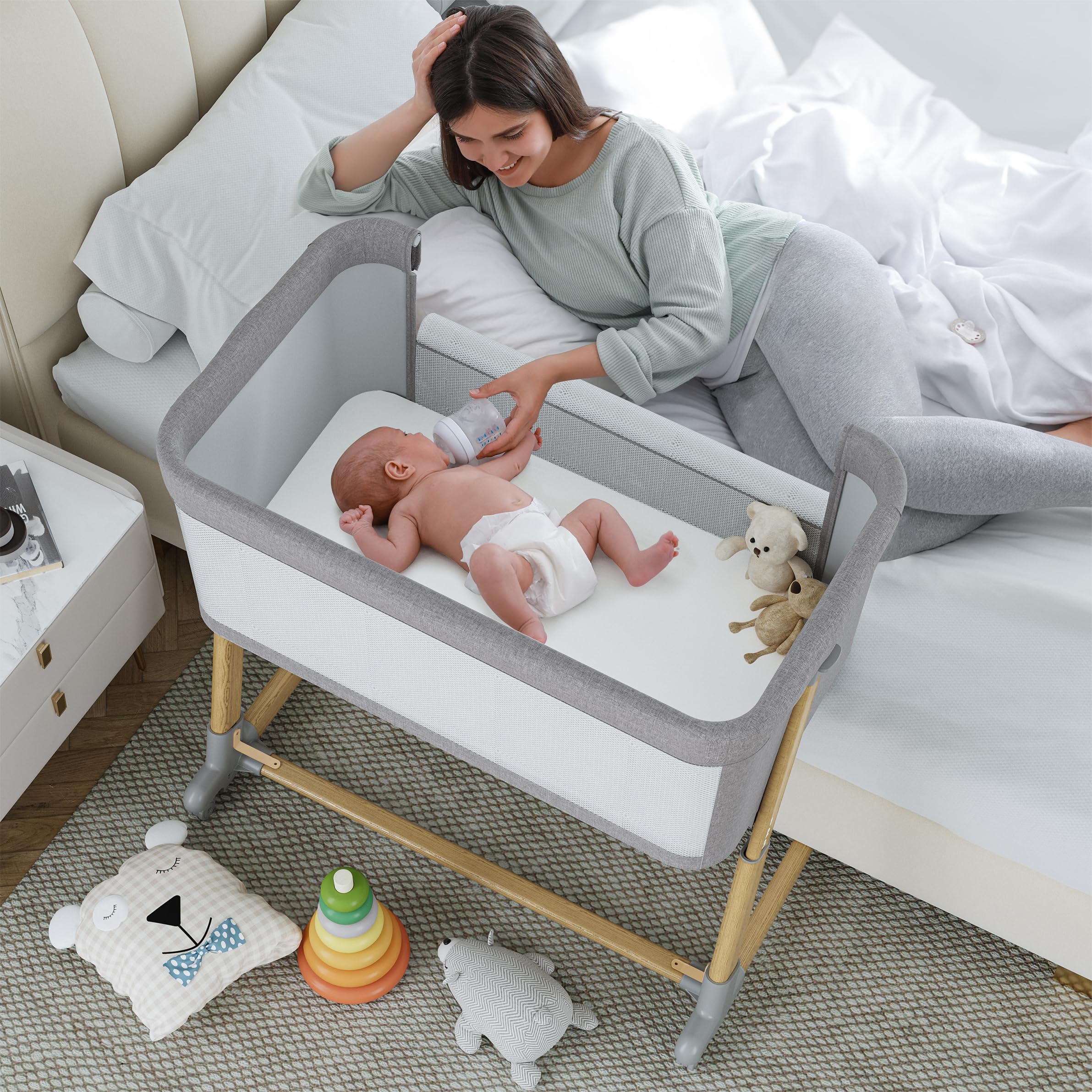
Set up the bassinet with only the baby and a fitted sheet. Place your newborn on their back, with their feet near the foot of the bassinet. Keep the bassinet on a stable surface and away from cords, blinds, heaters, windows, pets, and other hazards.
Use this setup:
- Place the bassinet in your room. Room-sharing makes it easier to feed and check your baby. The AAP recommends room-sharing without bed-sharing, ideally for at least the first six months.
- Use the original or approved mattress. Do not add a topper, pillow, folded blanket, or extra pad.
- Cover the mattress with one fitted sheet. The sheet should stay tight and should not come loose at the corners.
- Put your baby on their back. Do this for naps and nighttime sleep.
- Keep the sleep area empty. Remove blankets, pillows, stuffed animals, bumpers, wedges, positioners, and toys.
- Dress your baby for the room. Avoid overheating. A wearable blanket may be used if it fits well and does not cover the baby’s face.
- Check the bassinet each time. Make sure the frame is locked, the base is stable, and no part is damaged.


A newborn may turn their head or move their arms and legs. You do not need to hold the baby in place with a positioner. Positioners can increase the risk of suffocation.
What if the bassinet is next to your bed?
A bassinet beside your bed can support room-sharing, but it does not make bed-sharing safe. Keep the bassinet’s sleep surface separate from the adult mattress. Do not remove a side panel, tie the bassinet to the bed, or use it in a way the manufacturer does not allow.
If you bring your baby into bed to feed or comfort them, move the baby back to the bassinet before you go to sleep. Be extra cautious if you are very tired, have used alcohol or sedating medicine, or are on a couch or recliner. The CDC’s safe sleep guidance warns that couches and armchairs are especially dangerous places for an infant to sleep.

Can a Newborn Sleep in a Bassinet Overnight?
Yes, a newborn may sleep overnight in a bassinet when the bassinet is approved for sleep and the setup follows safe sleep guidance. “Overnight” does not change the basic rules. Your baby still needs a separate, empty, flat sleep space.
Newborns often wake many times to feed. Follow the feeding plan given by your baby’s pediatrician. Do not try to make a newborn sleep longer by adding cereal, using weighted sleep products, or placing the baby on their stomach.
Safe swaddling in a bassinet
Swaddling may calm some newborns, but it must be done safely:
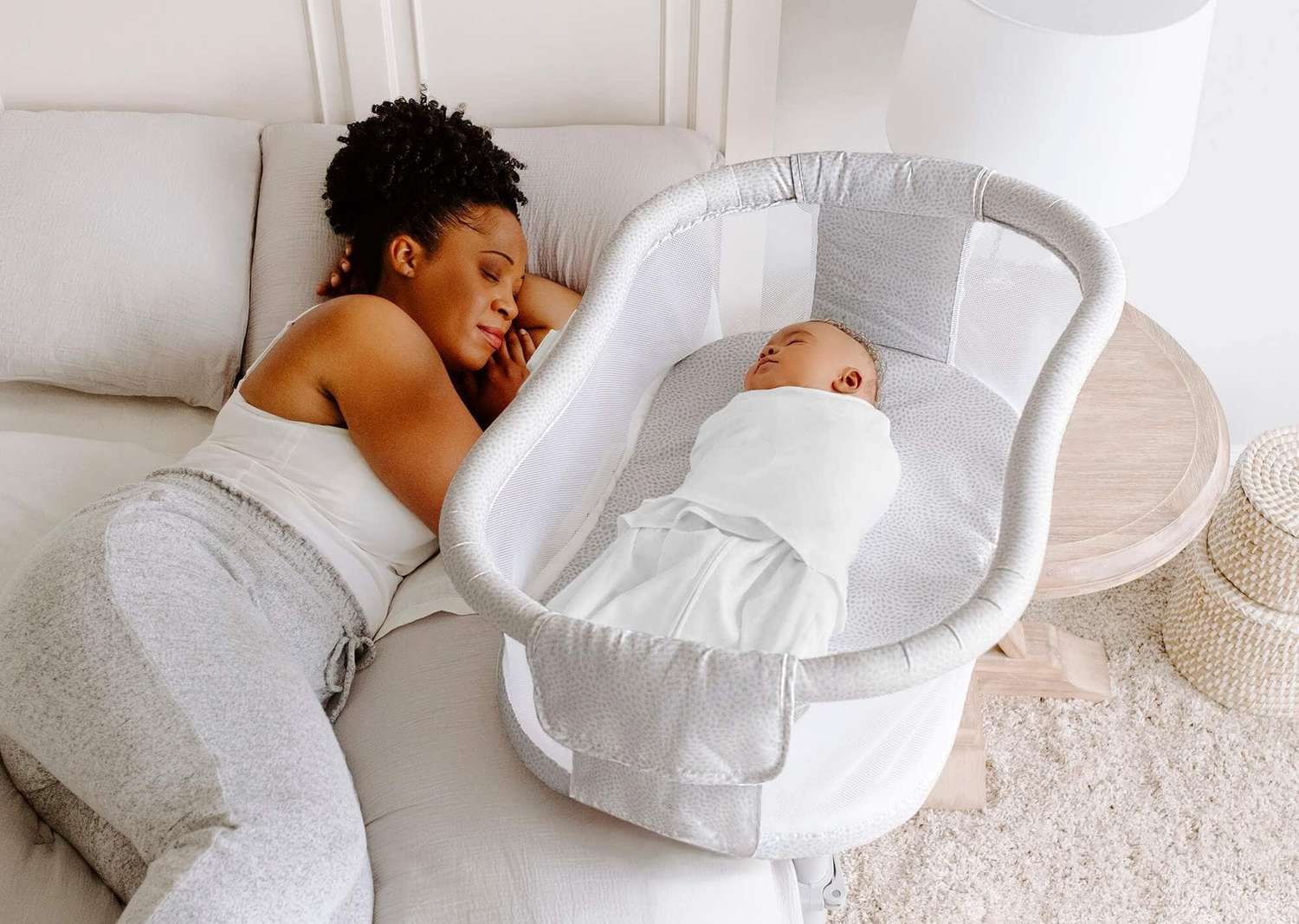
- Always place a swaddled baby on their back.
- Keep the swaddle snug around the chest but loose around the hips and legs.
- Keep the fabric away from the face.
- Do not use weighted swaddles or weighted blankets.
- Stop swaddling as soon as your baby shows signs of trying to roll.
- Use a wearable blanket after swaddling ends.
The AAP notes that swaddling does not reduce the need for back sleeping. A swaddled baby should still sleep alone on a firm, flat surface.
Temperature and clothing
Babies can overheat more easily than adults. Dress your newborn in about one more light layer than you are wearing in the same room, then check for signs of overheating such as sweating, a hot chest, or flushed skin.
Do not use a hat indoors during sleep unless your medical team gives you a specific reason. Hats can slip over the face and may contribute to overheating.
When Should You Stop Using a Bassinet?
Stop using the bassinet when your baby reaches the product’s limit or can move in a way that makes the bassinet unsafe. Common stop points include:
- Rolling or trying to roll
- Pushing up on hands and knees
- Sitting up
- Pulling up
- Reaching the maximum weight
- Reaching the maximum length or height
- Outgrowing the mattress area
- A damaged frame, loose hardware, or sagging mattress
Do not wait for your baby to sleep through the night before moving them to a crib. The change is based on safety and development, not sleep habits.
Federal CPSC rules for bassinets and cradles include a stop-use point tied to a baby’s ability to push up on their hands and knees, along with product-specific limits. Your bassinet’s manual may require an earlier transition. When the rules and manual differ, use the more cautious limit.
Move the baby to a full-size crib, mini crib, or approved portable crib with a firm, flat mattress. Keep the same safe setup: baby on the back, fitted sheet only, and no loose objects.


What if the baby rolls in the bassinet?
If your baby rolls onto their stomach by themselves, place them on their back when you put them down. Once they can roll both ways, you do not need to keep turning them back each time, but the bassinet must still be empty and safe for their stage of development.
If the bassinet is not approved for a rolling baby, move the baby to a crib or other approved sleep product right away. Stop swaddling when rolling begins.

Where Should a Newborn Not Sleep?
A newborn should not sleep unsupervised in a car seat, stroller seat, swing, bouncer, baby carrier, lounger, nursing pillow, or adult bed. These products may be useful while you are awake and watching your baby, but they are not a replacement for a safe sleep space unless the product is specifically approved for sleep and used as directed.
If your baby falls asleep in a car seat after a trip, move them to a firm, flat sleep surface as soon as practical. Do not place the car seat on a table, counter, couch, or bed. A seated or inclined position can allow the baby’s head to fall forward and affect breathing.
Avoid these common hazards:
- Inclined sleepers marketed for overnight use
- Padded nests or pods
- Crib bumpers
- Loose blankets
- Pillows and stuffed toys
- Sleep positioners
- Weighted sleep sacks or swaddles
- Mattress wedges
- Adult beds and couches
- Homemade bassinet modifications
- Secondhand products with missing instructions or unknown recall status
The AAP safe sleep policy recommends a firm, non-inclined surface that conforms to federal safety standards. A product can feel soft and cozy but still create a suffocation or entrapment risk.
How to check a used bassinet
Before using a secondhand bassinet, identify the exact brand and model. Then:
- Find the manual.
- Check the CPSC recall database.
- Confirm that all parts are present.
- Inspect the frame, fasteners, mattress, and fabric.
- Make sure the mattress fits tightly.
- Confirm that the product has not been modified.
- Check its age and condition.
Do not use a bassinet if you cannot verify its safety history or if it has a recalled or altered part.

What If Your Newborn Will Not Sleep in the Bassinet?
A newborn who wakes after being placed in a bassinet is common. It does not necessarily mean the bassinet is unsafe or that your baby needs a softer surface. Start with basic checks rather than adding padding or loose bedding.
Try this sequence:
- Check basic needs. Your baby may be hungry, wet, too warm, too cold, or uncomfortable.
- Use a calm transfer. Hold your baby until their body relaxes, then lower them slowly.
- Put the bottom down first. Gently place the legs and bottom on the mattress, then the shoulders and head.
- Keep one hand on the chest for a moment. Remove it slowly once the baby settles.
- Use a consistent routine. Dim lights, quiet voices, feeding, and a clean diaper can signal sleep.
- Try a safe swaddle if your baby is not showing signs of rolling.
- Keep practicing. Short, calm attempts can help your baby learn the sleep space.
Do not solve poor sleep by placing the bassinet mattress at an angle, adding a pillow, or letting the baby sleep on their side. These changes can increase risk even if they seem to help.
If your baby repeatedly appears to struggle to breathe, turns blue or gray, has unusual pauses in breathing, is difficult to wake, or feeds poorly, seek urgent medical help. For less urgent concerns, contact your pediatrician. A newborn’s sleep problem may sometimes be linked to reflux, illness, feeding difficulty, or another medical issue.
Bassinet Safety Checklist for U.S. Parents
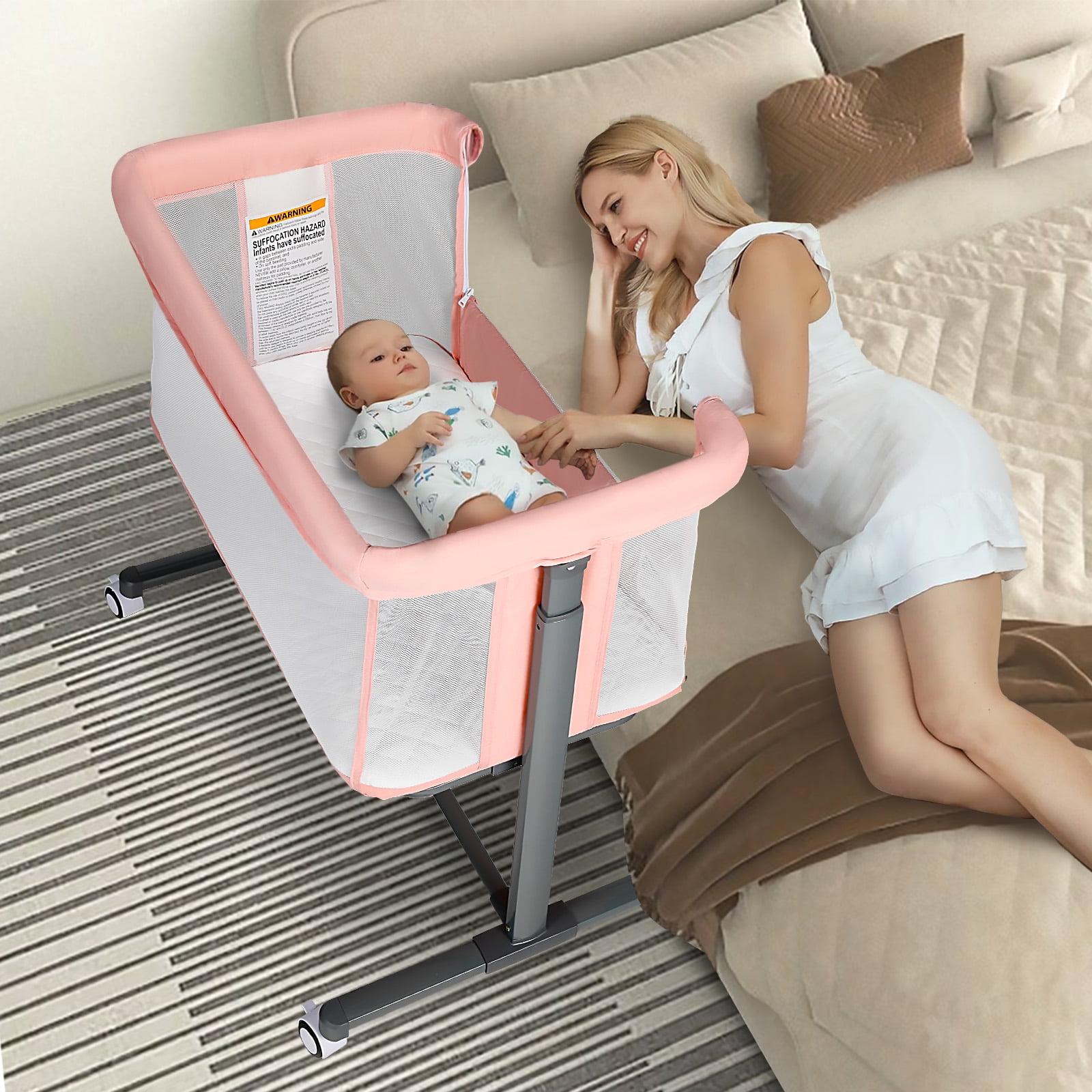
Use this quick check before each sleep period:
| Check | Safe answer |
|---|---|
| Is the product made for infant sleep? | Yes |
| Is the sleep surface firm, flat, and level? | Yes |
| Is the baby placed on their back? | Yes |
| Is the mattress the correct one for the product? | Yes |
| Is there only a fitted sheet? | Yes |
| Are blankets, pillows, toys, and bumpers removed? | Yes |
| Is the bassinet stable and undamaged? | Yes |
| Is it away from cords, windows, heaters, and pets? | Yes |
| Is the baby below the product’s weight and developmental limits? | Yes |
| Has the product been checked for recalls? | Yes |
If any answer is no, correct the setup before putting your baby down.


Keep the bassinet close enough to hear and reach your baby, but do not place it on an adult bed, couch, counter, or other raised surface. If the bassinet has wheels, lock them when the product is in use unless the manual says otherwise.

Frequently Asked Questions
Can a newborn sleep in a bassinet from day one?
Yes. A bassinet can be used from birth if the manufacturer states that it is suitable for a newborn and the baby meets its size and weight limits. Use a firm, flat mattress and place the baby on their back.
Is a bassinet safer than a crib for a newborn?
A safe bassinet and a safe crib can both support safe sleep. A bassinet may be easier to keep beside your bed, while a crib usually lasts longer as your baby grows. The key safety features are the same: a firm, flat surface, an empty sleep area, and a baby placed on their back.
Can a newborn sleep in a rocking bassinet?
It depends on the product. If the bassinet is approved for sleep, follow its instructions and make sure the sleep surface remains safe. Do not leave a baby sleeping in a product that is designed only for soothing, motion, or supervised use. Stop using it when the manual says to stop or when your baby reaches its developmental limit.
Can a newborn sleep in a bassinet with a blanket?
The safest choice is to keep loose blankets out of the bassinet. Use properly fitted clothing or a non-weighted wearable blanket instead. If you use a swaddle, place the baby on their back and stop swaddling at the first signs of rolling.
Can a newborn sleep in a bedside bassinet?
Yes, if it is designed for infant sleep and used according to its instructions. Keep the baby on the bassinet’s separate sleep surface. Do not remove parts, attach it to your bed in an unapproved way, or allow the baby to sleep partly on the adult mattress.
Key Takeaways
- Yes, a newborn can sleep in a bassinet.
- Choose a product made for infant sleep and follow its manual.
- Use a firm, flat, level mattress with one fitted sheet.
- Place your baby on their back for every sleep.
- Keep the bassinet empty: no pillows, blankets, toys, bumpers, or positioners.
- Room-share without bed-sharing, ideally for at least the first six months.
- Stop using the bassinet when your baby reaches its limit or begins rolling, pushing up, or sitting.
- Move a sleeping baby from a car seat, swing, lounger, or other unsuitable product to a safe sleep surface.
Conclusion
A bassinet is a safe sleep option for many newborns in the United States. The safest choice is not the softest or most expensive model. It is a stable product with a firm, flat surface, used exactly as directed.
Before your baby’s next nap, check the bassinet, remove every loose item, place your baby on their back, and confirm that the product still fits your baby’s size and development. When in doubt about your baby’s breathing, feeding, movement, or sleep setup, contact your pediatrician.
