
Introduction
A rocking bassinet can be safe for a baby’s sleep only when it is made for infant sleep, meets current U.S. safety rules, has a firm, flat, bare sleep surface, and is used exactly as the manual says. The rocking feature itself is not the main risk. The bigger concerns are an unsafe sleep angle, soft bedding, tipping, continued use after the baby can roll or push up, and leaving the bassinet moving when the product does not allow it.
In the United States, the safest sleep position is still on the baby’s back, alone, on a firm and flat surface in a crib, bassinet, or portable play yard. The American Academy of Pediatrics (AAP) does not recommend routine sleep in inclined products, swings, loungers, car seats, or other devices that are not designed for safe sleep.
Check the product label, owner’s manual, registration record, and recall history before using any rocking bassinet. If the instructions do not clearly say that the product is intended for infant sleep, do not use it as a bed.


What Is a Rocking Bassinet?
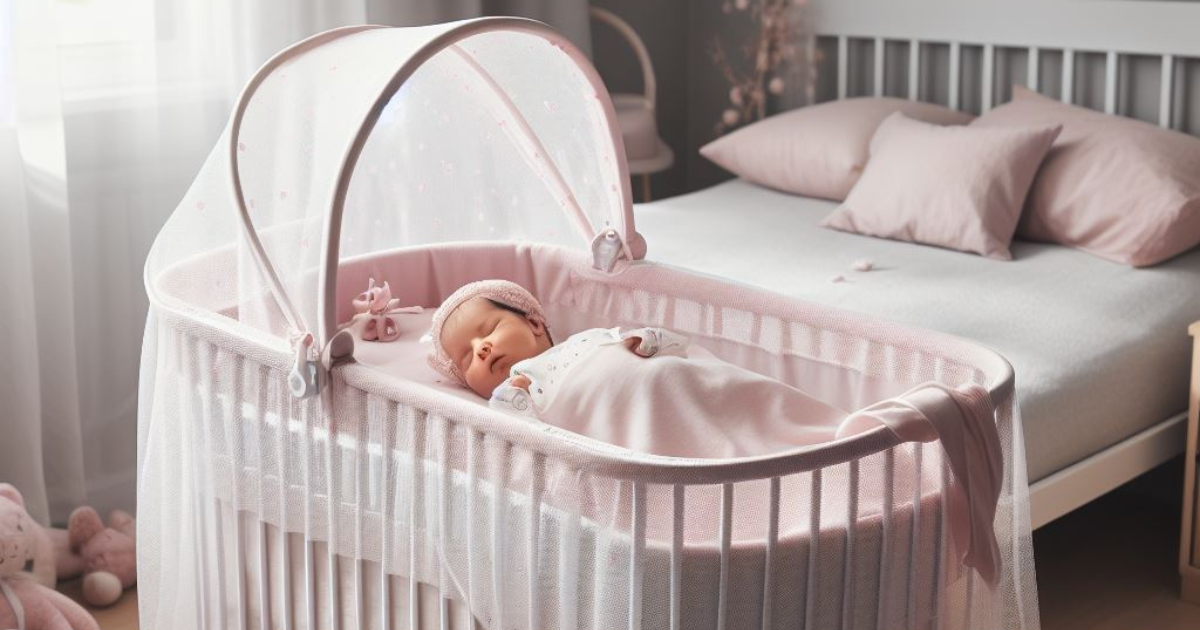
A rocking bassinet is a small infant sleep space that can move from side to side or back and forth. Some models rock by hand. Others use a motor, remote, app, or automatic response to crying.
A bassinet is usually smaller and more portable than a full-size crib. A cradle may have curved runners or another design that lets it rock. A bedside sleeper attaches to, or sits beside, an adult bed. These terms can overlap, so the product’s safety label and manual matter more than the marketing name.
A rocking bassinet is different from a swing or bouncer. Swings and bouncers are made for supervised awake time. They are not safe substitutes for a crib or bassinet during routine sleep unless the specific product is legally designed and labeled for infant sleep.
The key safety question
Ask this first:
Is this exact model designed, tested, and labeled for infant sleep in the United States?
If the answer is unclear, treat it as a supervised soothing device rather than a sleep space.
When Is a Rocking Bassinet Safe?
A rocking bassinet is generally suitable for sleep when all of these conditions are met:
- The product is sold and labeled for infant sleep.
- It complies with current U.S. rules for bassinets, cradles, or another applicable sleep-product category.
- The mattress is firm, flat, and fits tightly.
- The bassinet has no pillows, loose blankets, bumpers, toys, or positioners.
- The baby is placed on their back for every sleep.
- The bassinet stands on a stable surface and cannot tip or collapse.
- The rocking feature is used only as the manual permits.
- The baby is within the stated age, weight, height, and developmental limits.
- You stop using it when the baby reaches the product’s stop-use limit.
- You check for recalls and follow all assembly instructions.
Federal requirements for bassinets and cradles are found in 16 CFR Part 1218. These rules incorporate safety requirements based on the relevant ASTM standard, including requirements related to structure, stability, openings, mattress fit, and testing.
A product that meets a safety standard can still become unsafe if it is assembled incorrectly or used beyond its limits. Compliance is not a reason to add extra bedding or ignore the manual.

Why the Rocking Motion Is Not the Main Issue
Gentle rocking can help some babies settle. But movement does not make an unsafe sleep surface safe.


The main safe-sleep risks are linked to airway blockage, entrapment, falls, tipping, and unsafe body position. A baby may slide or turn into a dangerous position if the surface is tilted, soft, poorly fitted, or covered with loose items.
The AAP recommends that babies sleep on a firm, flat, noninclined surface. The mattress should have only a fitted sheet. This advice applies even when a product has a calming motion feature.
Rocking versus vibration
Rocking and vibration are not the same feature. A bassinet may offer one, the other, or both. Do not assume that a vibration setting is safe for unsupervised sleep simply because the product is called a bassinet.
Follow the exact instructions for:
- When the motion may be used
- Whether motion must be turned off for sleep
- Whether a locking mechanism must be engaged
- Whether the product may run while an adult is asleep
- How the product behaves if power fails
- Whether the product needs an app, cord, or battery
If the manual says to stop the motion before unattended sleep, follow that instruction. If the manufacturer gives no clear sleep guidance, contact the manufacturer before using the feature.
How to Use a Rocking Bassinet Safely
Use this checklist before the first nap and again each time you move or wash the product.
1. Confirm the product’s purpose
Look for a clear statement that the product is intended for infant sleep. A product described only as a swing, lounger, napper, seat, or soothing device should not be treated as a bassinet.
Do not rely on online photos or seller descriptions alone. Check the model number and the manufacturer’s manual.
2. Check for recalls
Search the model on the U.S. Consumer Product Safety Commission website at CPSC.gov/Recalls. Also check the manufacturer’s safety notices.
Do not use a recalled product until the approved repair or replacement is complete. If the recall remedy is unclear, stop using the product and contact the manufacturer.
3. Build it exactly as directed
Use every required fastener, support, lock, and mattress part. Do not replace the mattress with one from another brand unless the manufacturer specifically approves it.
After assembly, check that:
- The base sits level and stable.
- The legs or supports are fully open.
- Rocking locks engage and release as intended.
- The mattress does not bow or slide.
- No gap exists between the mattress and the side walls.
- The fabric and frame have no tears, broken parts, or sharp edges.
- Cords stay outside the baby’s reach.
4. Prepare a bare sleep space
Place the baby on the back in a sleep sack or other properly fitted wearable blanket if needed. Keep the sleep space free of:
- Loose blankets
- Pillows
- Quilts
- Stuffed animals
- Crib bumpers
- Wedges and positioners
- Nursing pillows
- Aftermarket mattress pads
- Weighted sleep products
A fitted sheet made for that exact mattress is the usual exception.


5. Place the bassinet correctly
Put the bassinet on a firm, level floor. Keep it away from stairs, cords, blinds, heaters, fireplaces, pets, and other hazards.
Do not place it on a bed, sofa, table, counter, or other raised surface unless the product is specifically designed and approved for that location.
6. Use the motion feature within its limits
Use only the speed, timer, and mode allowed by the manual. Never modify the motor, add weights, block the rocking base, or attach a device that the manufacturer does not approve.
If the bassinet rocks too far, makes a new sound, shifts position, or feels unstable, turn it off and stop using it until the problem is resolved.
7. Move the baby when needed
If your baby falls asleep in a swing, bouncer, stroller, carrier, or car seat, move the baby to a firm, flat sleep surface as soon as practical. A rocking bassinet may be a proper sleep space only if the specific model is designed and labeled for sleep.

When Should You Stop Using a Rocking Bassinet?
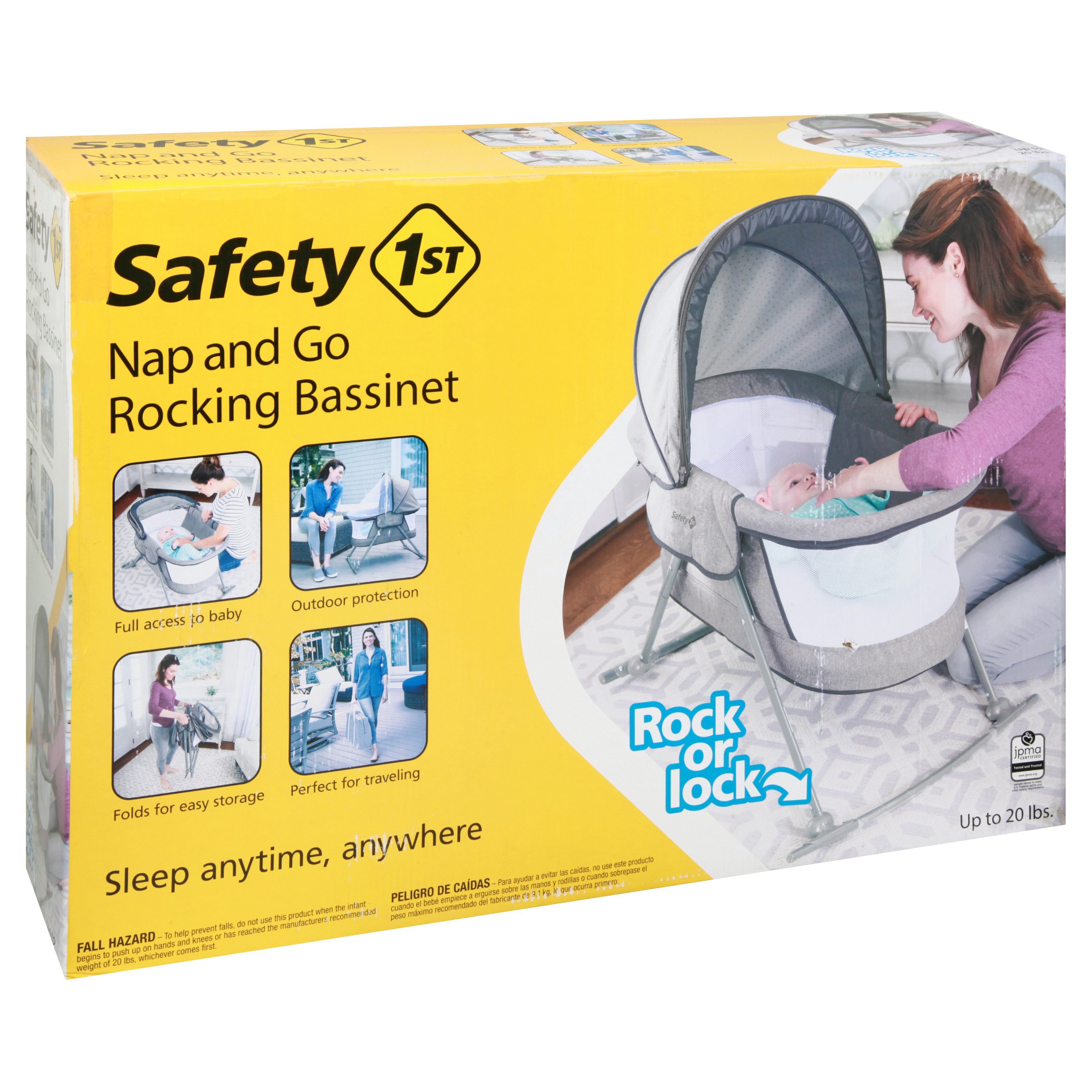
Stop using a rocking bassinet when the baby reaches any of the product’s limits. These may include age, weight, height, or developmental milestones.
The most important milestone is often when the baby can:
- Roll over
- Push up on hands and knees
- Sit up
- Pull up
- Climb or lean over the side
- Move the bassinet from its position
Many bassinets are intended only for the early months. The exact limit varies by model, so read the manual rather than relying on a general age estimate.
A baby who can roll should still be placed on their back. If the baby rolls over alone, you do not need to keep turning them back, provided the sleep space is clear and the baby is no longer swaddled. Stop swaddling when the baby shows signs of trying to roll.
A practical stop-use rule
Use the earliest limit listed by the manufacturer:
Stop at the first of the age, weight, height, or developmental limits.
For example, if a manual says to stop at 20 pounds, 5 months, or when the baby can push up, the first condition reached ends safe use.
Is an Automatic Rocking Bassinet Safe Overnight?
It may be safe for overnight sleep only if the product is designed and labeled for overnight infant sleep and the manual permits the automatic feature during sleep.
Do not assume that a product is safe overnight because it runs for several hours or has a “sleep” setting. A long timer shows how the product operates. It does not, by itself, prove that every use is safe.
Before using automatic rocking overnight, check:


- Whether the product is intended for unsupervised sleep
- Whether motion may continue while caregivers sleep
- Whether the motor can stop safely
- What happens during a power outage
- Whether cords and adapters are secured
- Whether the rocking base can be locked
- Whether the baby’s movement changes the product’s stability
- Whether the manufacturer requires supervision
If the manual says that rocking is for soothing only, turn it off before leaving the baby unattended.
Can a Baby Sleep in a Rocking Bassinet All Night?
A baby may sleep overnight in a rocking bassinet only when the exact product is approved for that use and all safe-sleep conditions are met.
The word “rocking” does not decide the answer. The product’s design, labeling, instructions, stability, sleep angle, and developmental limits do.
Do not use a rocking bassinet overnight if:
- It is a swing, bouncer, or seat
- The sleep surface is inclined
- The baby can roll, sit, push up, or climb
- The product has a known recall
- The mattress is soft or does not fit
- The manual limits use to supervised soothing
- The device rocks without a stable base
- You have added an unapproved insert or accessory
For room sharing, the AAP recommends keeping the baby’s sleep space in the parents’ room, close to the adult bed, without sharing the same bed. A bedside bassinet may support room sharing, but it must still have its own safe sleep surface.

Do You Need to Lock the Rocking Feature?
Lock the rocking feature when the manual tells you to lock it. Some products require a locked base for sleep. Others are designed to rock during use. The correct choice depends on the model.
If the manual offers a lock, learn how it works before the baby uses the bassinet. Test that the lock fully engages and that the bassinet does not move when gently pushed.
Never improvise a lock with:
- Books
- Towels
- Furniture wedges
- Straps
- Tape
- Household weights
- Homemade blocks
Improvised parts can change the product’s balance or create entrapment hazards.
When the instructions are missing, search for the official manual by model number. If you cannot find it, contact the manufacturer or choose a sleep product with clear instructions.
Are Rocking Bassinets Safe for Babies With Reflux?
A rocking bassinet does not treat reflux, and raising one end of the mattress is not a safe home remedy.
The AAP and other pediatric guidance generally support placing babies with reflux flat on their backs for sleep. Babies with reflux can still choke while lying on their backs; their anatomy and normal protective reflexes help protect the airway.


Do not use a wedge, pillow, inclined insert, or rolled towel unless a qualified health professional gives specific medical instructions for that exact situation. Even then, ask how the advice fits with current safe-sleep guidance.
Contact the baby’s pediatrician if reflux causes poor feeding, repeated breathing problems, poor weight gain, forceful vomiting, blood in vomit or stool, or signs of dehydration.
What Makes a Rocking Bassinet Unsafe?
The following problems can change a safe-looking setup into a dangerous one.
An inclined sleep surface
A baby’s head can fall forward on an incline. This can narrow the airway and allow the body to slide. A safe sleep surface should be flat and level, not shaped like a chair or lounger.
Soft or added bedding
Extra padding may create a pocket around the baby’s face. It can also make the baby’s body sink or slide. Use only the mattress and fitted sheet approved for that model.
A loose mattress
A gap between the mattress and side wall can trap a baby’s head, neck, arm, or leg. Replace a damaged or poorly fitting mattress with the correct manufacturer-approved part.
Continued use after rolling
A baby’s movement can make a small bassinet unstable or allow the baby to lean over the side. Follow the earliest developmental stop-use limit.
A damaged or recalled product
Broken mesh, loose stitching, cracked plastic, missing hardware, or a bent frame can affect stability. Secondhand products may also be missing parts or instructions.
Unsafe placement
A bassinet can tip if placed on a raised or uneven surface. Keep it on the floor unless the manufacturer specifically approves another setup.
Unapproved accessories
Aftermarket liners, rocking attachments, canopies, sleep positioners, and monitoring devices may alter airflow, fit, or stability. Approval for one product does not transfer to another.
Rocking Bassinet Safety: Quick Decision Table
Use this table as a starting point, then confirm the answer in the product manual.
| Situation | Safer choice |
|---|---|
| Product is labeled for infant sleep and meets U.S. requirements | Use as directed |
| Product is a swing, bouncer, or lounger | Do not use for routine sleep |
| Surface is soft, curved, or inclined | Do not use for sleep |
| Baby is on the back on a firm, flat surface | Meets a core safe-sleep condition |
| Loose blanket, pillow, toy, or bumper is present | Remove it |
| Baby can roll, sit, push up, or climb | Stop using the bassinet if the manual lists that milestone |
| Rocking lock is required but not engaged | Correct it before use |
| Model has a recall | Stop use and follow the recall remedy |
| Manual is missing or unclear | Contact the manufacturer before use |
| Product is used secondhand with unknown history | Verify the model, parts, instructions, and recall status |
The table cannot replace the manual. It helps identify when a product needs closer review or should not be used.
How to Check a Used Rocking Bassinet
A used bassinet can have hidden safety problems. Before accepting or buying one, record the brand, model number, manufacture date, and serial number.
Then:
- Search the model on the CPSC recall database.
- Find the current manual on the manufacturer’s website.
- Confirm that all parts are present.
- Check the frame, base, mesh, locks, wheels, and mattress.
- Confirm that the mattress fits tightly.
- Ask whether the product was in a crash, flood, fire, or major fall.
- Check whether the model has been altered or repaired.
- Replace missing or damaged parts only with approved parts.
Avoid a product with an unknown model, missing safety label, homemade repairs, or no reliable way to confirm its history.
What to Do if Your Baby Falls Asleep in an Unsafe Place
Move the baby to a firm, flat, bare sleep surface as soon as you can do so safely. Do not add a pillow or blanket to make the new space feel familiar.
If the baby has trouble breathing, turns blue, becomes limp, cannot be awakened, or may have suffered an injury, call 911 in the United States. For less urgent concerns, contact the child’s pediatrician.
If the unsafe sleep happened because the baby was hard to settle, review the setup rather than adding products. A dark room, a calm routine, feeding support, and a properly fitted wearable blanket may help, but no soothing method should replace a safe sleep surface.

U.S. Safety Standards and Trusted Sources
The main U.S. sources for this topic include:
- American Academy of Pediatrics: HealthyChildren.org safe-sleep guidance
- U.S. Consumer Product Safety Commission: Safe sleep for babies
- U.S. Consumer Product Safety Commission: Recall search
- Electronic Code of Federal Regulations: 16 CFR Part 1218—Safety Standard for Bassinets and Cradles
These sources support the main points in this guide: use a firm and flat surface, keep the sleep space bare, follow product limits, check recalls, and use only products intended for infant sleep.
Standards and product rules can change. Check the current federal rule and the manufacturer’s instructions for the exact model you own.
Frequently Asked Questions
Is a rocking bassinet safer than a regular bassinet?
Not automatically. A rocking bassinet may soothe some babies, but safety depends on the sleep surface, stability, product certification, instructions, and the baby’s development. A regular bassinet may be the simpler choice if you do not need motion.
Can a newborn sleep in a rocking bassinet?
A newborn can sleep in one if the product is designed for newborn sleep, has a firm flat surface, and is used within the stated limits. Place the newborn on the back with no loose items in the bassinet.
Can I rock the bassinet by hand while my baby sleeps?
Only if the manufacturer allows it. Keep the motion gentle and controlled. Stop if the bassinet shifts, tips, hits another object, or moves outside its intended range.
Are motorized rocking bassinets safe during a power outage?
The answer depends on the model. Some may stop safely, while others may require a battery or manual reset. Read the emergency and power-failure instructions. Do not use an unapproved battery pack or adapter.
Can I use a sleep positioner in a rocking bassinet?
No. Do not add a sleep positioner unless a qualified medical professional gives specific instructions for a diagnosed medical need. Positioners can increase the risk of suffocation or entrapment.
Conclusion
A rocking bassinet can be safe, but the rocking feature does not guarantee safety. The product must be intended for infant sleep, stable, properly assembled, and used with a firm, flat, bare sleep surface.
Place your baby on their back, follow the manual, check recalls, and stop using the bassinet at the first age, weight, height, or developmental limit. If the product is inclined, damaged, recalled, missing instructions, or not clearly made for sleep, choose a standard crib, bassinet, or portable play yard instead.
