
A FridaBaby thermometer is used by turning it on, choosing the right measurement site, placing the tip correctly, and waiting for the beep. For babies, a rectal reading is often the most accurate, but you should use the method recommended for your child’s age and the exact FridaBaby model you own.
This guide covers the FridaBaby digital thermometers sold in the United States, including models designed for rectal, oral, and underarm use. Features can vary by model, so check the product label and instruction sheet before use.

Before You Use the FridaBaby Thermometer
Gather the thermometer, a clean tissue or cloth, and an alcohol wipe or mild soap and water for cleaning. If you plan to take a rectal temperature, have a small amount of water-based lubricant available.
Check these points first:
- Make sure the battery has power.
- Inspect the tip for cracks or damage.
- Confirm that the thermometer is clean.
- Read the markings on the thermometer or packaging.
- Decide whether you will use the rectal, oral, or underarm method.
- Keep a young child still during the reading.


Do not use one thermometer interchangeably for rectal and oral readings unless you clean it fully and the manufacturer allows it. Many parents use a separate thermometer for rectal use to prevent mix-ups.
Choose the right temperature method
The best method depends on your child’s age, comfort, and health needs.
| Method | Common use | Key point |
|---|---|---|
| Rectal | Infants and young children | Often gives the most accurate core temperature |
| Underarm | Quick screening | Easier but may be less accurate |
| Oral | Older children who can hold the thermometer safely | Not suitable for babies or children who may bite it |
For infants younger than 3 months, the American Academy of Pediatrics considers a rectal temperature the most reliable method. Ask your child’s health care professional which method to use if you are unsure.
How to Take a Rectal Temperature With a FridaBaby Thermometer
Use the rectal method only if the thermometer model is designed for it and you feel comfortable doing so. Never force the tip or leave a baby alone during the reading.
- Wash your hands.
- Clean the thermometer tip with soap and water or an alcohol wipe, following the product instructions.
- Turn on the thermometer. Wait until the display shows that it is ready.
- Apply a small amount of water-based lubricant to the tip. Do not use oil, petroleum jelly, or a thick cream unless the manual says it is safe.
- Place your baby on their back with the legs gently lifted, or place the baby across your lap with the stomach down.
- Insert the tip gently. For a young infant, insert only the amount stated in the FridaBaby instructions. Never push against resistance.
- Hold the thermometer and your child still. Do not let go of the device.
- Wait for the signal. The beep or display change means the reading is complete.
- Remove the thermometer gently and read the number.
- Clean the tip again and wash your hands.
Stop if your child resists strongly, cries in pain, or you feel resistance. A rectal thermometer can cause injury if inserted too far or at the wrong angle.
What counts as a fever?
In the United States, a rectal temperature of 100.4°F (38°C) or higher is generally considered a fever. For a baby younger than 3 months, call the child’s health care professional promptly if the rectal temperature reaches 100.4°F or higher.
Do not rely only on how warm your child feels. Skin can feel hot or cool for many reasons, so use a thermometer when you need a temperature reading.

How to Take an Underarm Temperature
The underarm method, also called axillary measurement, is simple and avoids inserting the thermometer. It can be useful for screening, but it may not give the same result as a rectal reading.
- Turn on the FridaBaby thermometer.
- Remove your child’s shirt from one arm.
- Make sure the underarm is dry.
- Place the tip high in the center of the armpit.
- Lower the arm firmly against the body.
- Hold the thermometer in place until it beeps.
- Remove it and record the reading.
- Clean the tip after use.
If the underarm reading is high, unusual, or does not match your child’s symptoms, repeat the measurement. You may need to confirm it with the method recommended by your pediatric health care professional.


An underarm reading can be affected by sweat, loose clothing, poor tip placement, or movement. Keep the arm snug against the body for the full reading.
How to Take an Oral Temperature
Use the oral method only when your child can follow directions and hold the thermometer safely. Do not use it with a baby, a sleeping child, or a child who may bite the device.
- Wait about 15 minutes after your child eats or drinks.
- Turn on the thermometer.
- Place the tip under the tongue, toward the back but not so far that it causes gagging.
- Ask your child to close their lips around the thermometer.
- Tell your child not to talk, bite, or breathe through the mouth.
- Wait for the beep.
- Remove the thermometer and read the display.
- Clean the tip before storing it.
Cold drinks, hot drinks, mouth breathing, and recent exercise can affect an oral reading. If one reading seems wrong, wait a few minutes and take it again.
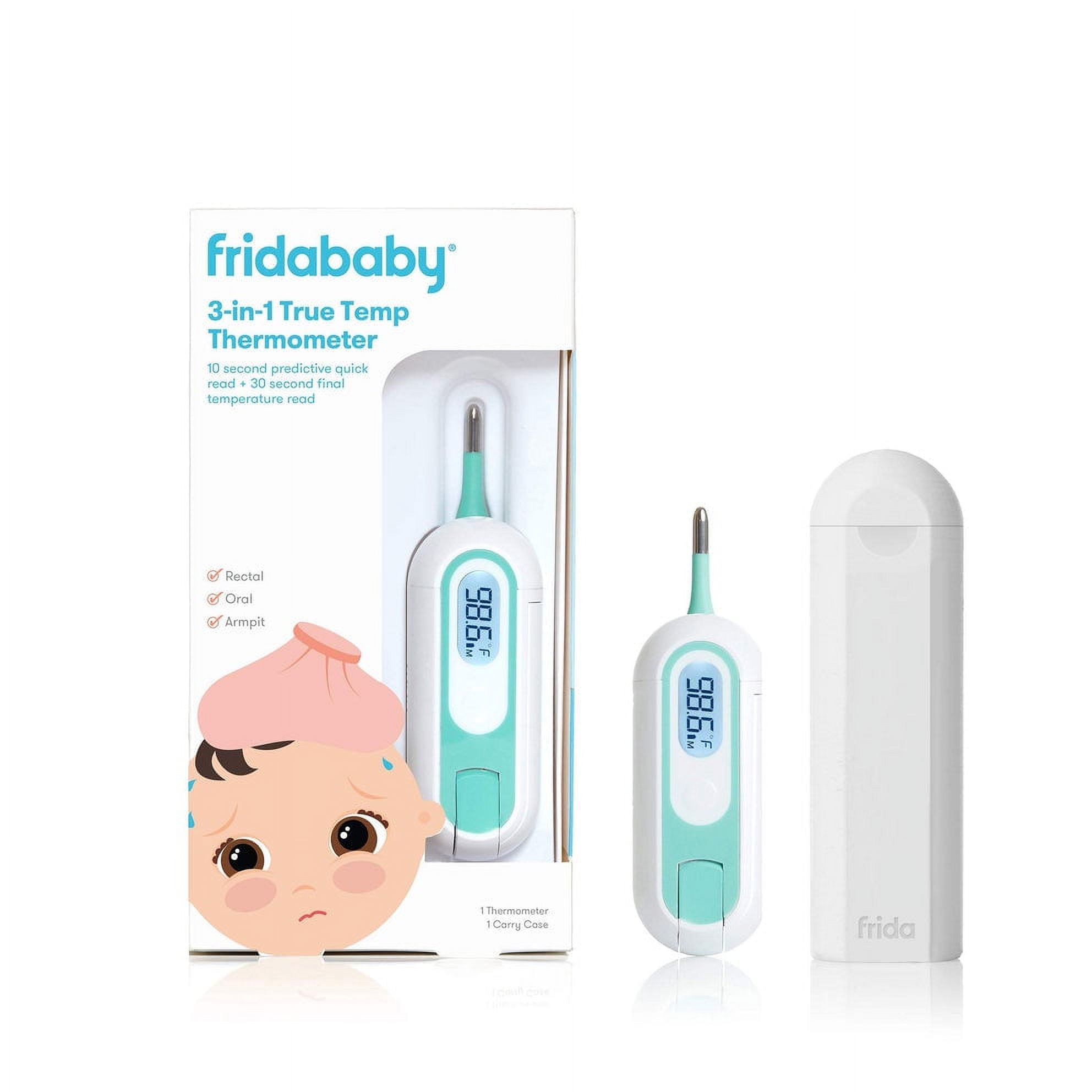
How to Read the FridaBaby Thermometer Display
Most FridaBaby digital thermometers show the temperature in degrees Fahrenheit. Some models let you switch between Fahrenheit and Celsius.
Look for these common display signals:
- A number: The measured temperature.
- A flashing display: The device may still be measuring or starting up.
- A beep: The reading is usually complete.
- “Lo” or a low reading: The tip may not be placed correctly, or the temperature may be below the device’s measuring range.
- “Hi” or a high reading: The temperature may be above the device’s range.
- A battery symbol: The battery may need replacement.
- An error message: The device may need to restart, or the sensor may not be positioned correctly.
The exact symbols differ between FridaBaby models. Use the manual for your thermometer if the screen shows an unfamiliar code.
Fahrenheit and Celsius conversion
To convert Celsius to Fahrenheit:
°F = (°C × 9/5) + 32
To convert Fahrenheit to Celsius:
°C = (°F − 32) × 5/9
For example, 38°C equals 100.4°F. You usually do not need to calculate this yourself if the thermometer can display Fahrenheit.
How to Clean and Store a FridaBaby Thermometer
Clean the thermometer after every use. This is especially important after rectal use.
Follow these steps:
- Turn off the thermometer.
- Wipe or wash the tip as directed by the manual.
- Dry the thermometer fully.
- Store it in its case or a clean, dry place.
- Keep it away from heat, moisture, and children.
Do not boil the thermometer, place it in a dishwasher, or soak the entire device unless FridaBaby specifically says that the model is waterproof. Water can damage the battery compartment and electronics.
Avoid harsh chemicals unless the product instructions approve them. A damaged or cloudy tip should be replaced rather than reused.


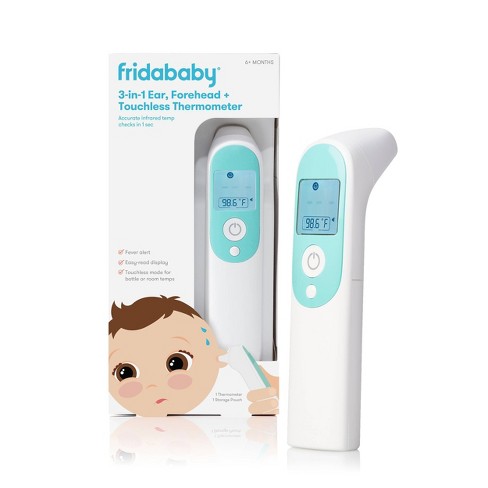
Troubleshooting FridaBaby Thermometer Problems
Most problems come from battery power, placement, movement, or cleaning. Check the safest and simplest causes first.
The thermometer will not turn on
Try these steps:
- Press and hold the power button as shown in the manual.
- Replace the battery if the display is blank.
- Check that the battery is installed in the correct direction.
- Look for corrosion or moisture in the battery area.
- Close the battery cover securely.
If the thermometer still does not turn on, stop using it. Contact FridaBaby customer support or replace the device.
The reading seems too high or too low
A reading may be affected by:
- Incorrect placement
- A wet underarm
- Recent food or drink
- Movement during measurement
- A cold room or recent bath
- A weak battery
- Use at a site not approved for that model
Take a second reading using the same method. If the result remains unusual, confirm it with another reliable thermometer or ask a health care professional which method to use.
The thermometer beeps too soon
The device may have detected a completed reading, or the tip may not be placed correctly. Turn it off, wait briefly, and start again. Keep the child still and maintain contact with the measurement site until the thermometer signals completion.
The thermometer shows “Lo”
“Lo” often means the measured temperature is below the thermometer’s normal measuring range. It can also appear when the tip is exposed to air before use.
Place the tip correctly and take the reading again. If the result remains low and your child feels cold, is unusually sleepy, or seems unwell, seek medical advice.
The thermometer shows “Hi”
A “Hi” message may mean the temperature is above the device’s range. It can also result from incorrect placement or a problem with the sensor.
Retake the temperature carefully. If your child has a very high temperature, trouble breathing, confusion, a seizure, severe weakness, signs of dehydration, or a rapidly worsening condition, seek urgent medical help.
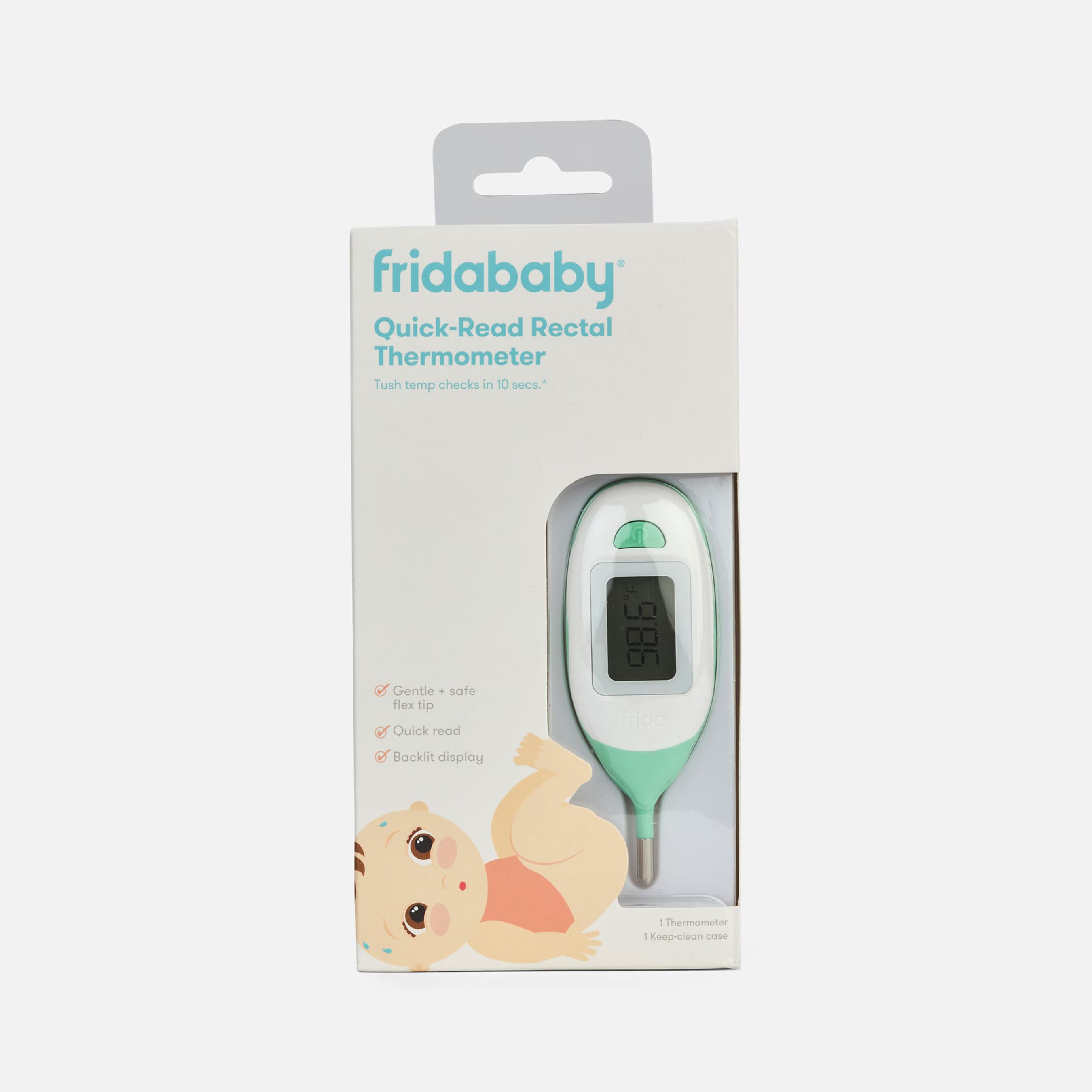
FridaBaby Thermometer Safety Tips
Use a rectal thermometer carefully. Never force it, insert it deeply, or leave a baby unattended while it is in use.
Keep these safety rules in mind:
- Do not use a damaged thermometer.
- Do not let a child chew the thermometer.
- Do not use an oral thermometer in the rectum unless the manufacturer clearly permits it.
- Label separate rectal and oral thermometers if you keep both.
- Do not wake a child repeatedly to chase a small change in temperature unless a clinician told you to monitor closely.
- Do not give fever medicine based only on a number without checking the medicine label and asking a professional when needed.
- Keep batteries away from children. A swallowed button battery is an emergency.
- Take note of the measurement method, time, and result when reporting a fever.
A thermometer helps measure temperature, but it does not diagnose the cause. Your child’s age, symptoms, behavior, breathing, fluid intake, and medical history also matter.


When to Call a Doctor About a Child’s Temperature
Call a health care professional promptly for a baby younger than 3 months with a rectal temperature of 100.4°F (38°C) or higher.
Seek urgent care for symptoms such as:
- Trouble breathing
- Blue, gray, or very pale skin
- A seizure
- Severe difficulty waking
- A stiff neck
- A widespread purple or bloody-looking rash
- Signs of serious dehydration
- Repeated vomiting
- Severe pain
- A child who looks very ill
For older children, contact a pediatric professional if a fever lasts, returns often, or occurs with concerning symptoms. The exact advice can vary based on age and medical history.
Do not use a thermometer reading as the only reason to delay care. If your child looks seriously ill, seek help even if the temperature is normal.

Quick Checklist for Using a FridaBaby Thermometer
Use this short checklist when you need a fast reminder:
- Check the battery and thermometer tip.
- Choose the correct measurement site.
- Turn on the thermometer.
- Place the tip correctly.
- Keep your child still.
- Wait for the beep.
- Record the temperature and method used.
- Clean the tip.
- Follow age-based medical guidance for fever.
The most important detail is the measurement method. A rectal, oral, and underarm temperature are not interchangeable without context.
Frequently Asked Questions
How far do you insert a FridaBaby rectal thermometer?
Insert only the amount listed in the instructions for your exact model. Never force the tip or push it deep into the rectum. If you feel resistance, stop and ask a health care professional for guidance.
Can I use a FridaBaby thermometer in the ear?
Only if your FridaBaby model is specifically an ear or infrared ear thermometer. A standard digital probe thermometer is not designed for ear readings. Check the model name and manual before using a new measurement site.
How long does a FridaBaby thermometer take to read?
The time varies by model and measurement method. Wait for the completion beep or display signal instead of estimating the time. Underarm readings may require careful placement for the full measurement period.
Can I use rubbing alcohol to clean the thermometer?
Some digital thermometers allow an alcohol wipe, while others recommend soap and water. Follow the cleaning instructions for your model. Do not soak the electronic body or use harsh chemicals without approval.
Is an underarm temperature accurate for a baby?
An underarm temperature can help screen for fever, but it may be less accurate than a rectal reading. If a baby is younger than 3 months or seems ill, ask a health care professional which method to use and whether the reading should be confirmed.
Final Takeaway
To use a FridaBaby thermometer, turn it on, select the correct measurement method, place the tip properly, wait for the completion signal, and clean it after use. For babies, rectal readings are often the most accurate, but they require careful handling and should never be forced.
If your child is younger than 3 months and has a rectal temperature of 100.4°F or higher, contact a health care professional promptly. When the reading and your child’s behavior do not match, repeat the measurement and seek medical guidance rather than relying on the number alone.


