
Introduction
Yes. The Newton Baby Bassinet is designed to rock manually. You can gently move the bassinet from side to side to soothe your baby.
However, it is not an automatic or motorized bassinet. It does not rock by itself, and it does not include a built-in timer, remote, or app-controlled motion. Parents must provide the movement by hand.
The bassinet can also be used in a stationary position. Its rocking function is meant for brief soothing while you are nearby, not as a replacement for safe sleep practices recommended for families in the United States.

How the Newton Bassinet’s Rocking Function Works
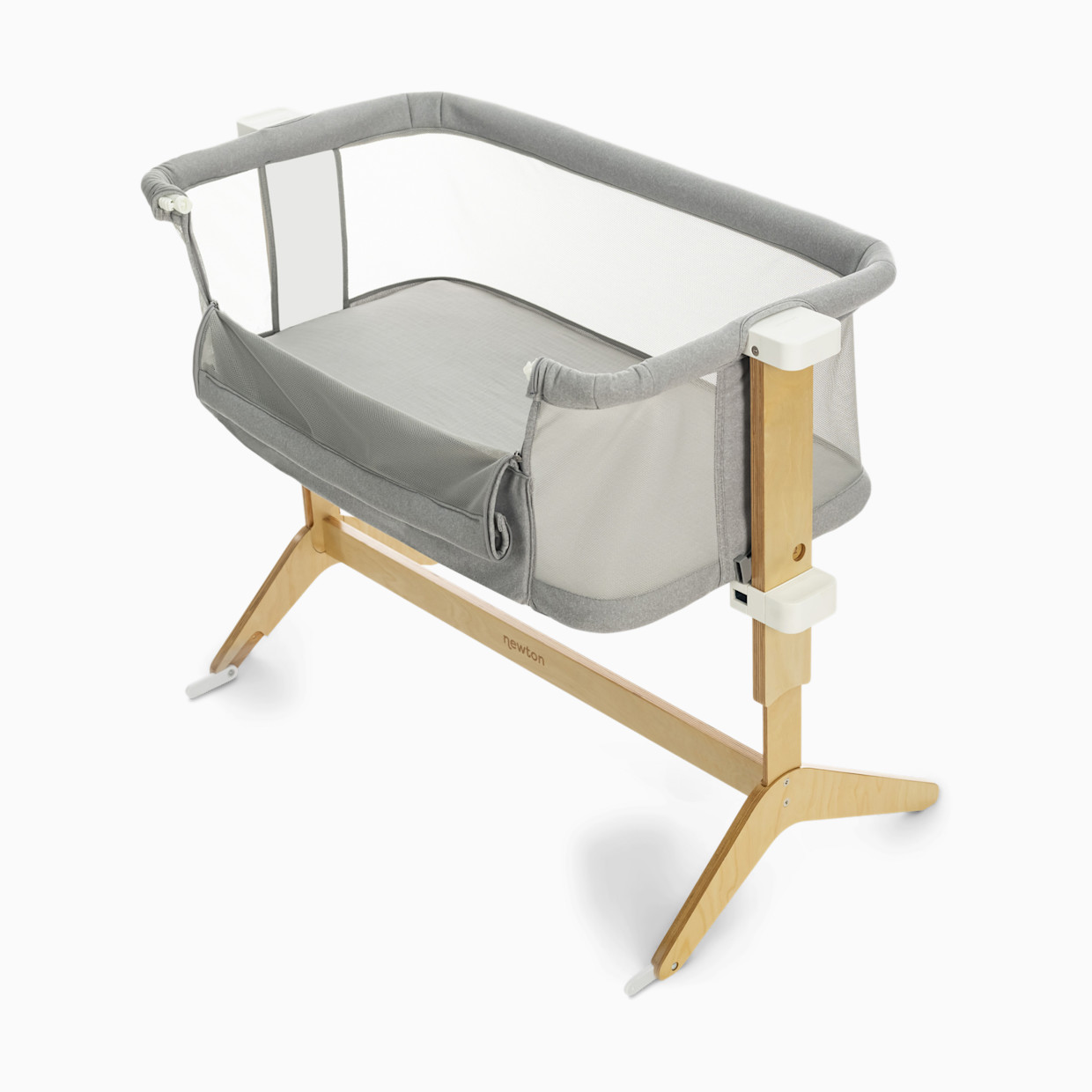
The Newton Bassinet uses a rocking base. When the base is unlocked, a parent can gently rock the bassinet by hand.


The movement is similar to a traditional cradle. It is slow and limited rather than fast or wide. The bassinet does not swing continuously after one push.
The rocking feature is useful when your baby is fussy, settling down, or needs a little motion before sleep. Once your baby is calm, you can stop the movement and use the bassinet as a stationary sleep space.
Manual rocking, not automatic rocking
The Newton Bassinet does not appear to be designed as a smart bassinet. It does not provide:
- Automatic rocking
- A built-in motor
- A remote control
- App controls
- Motion detection
- Timed rocking cycles
- Cry-activated movement
This difference matters. Some parents search for a “rocking bassinet” but expect hands-free motion. The Newton Bassinet offers manual rocking instead.
Can you lock the bassinet in place?
The bassinet is designed to offer a stationary mode as well as a rocking mode. Use the locking feature when you want the sleep surface to remain still.
Check the owner’s manual for the exact locking steps on your model. Product parts and instructions can change, especially if Newton releases a revised version.
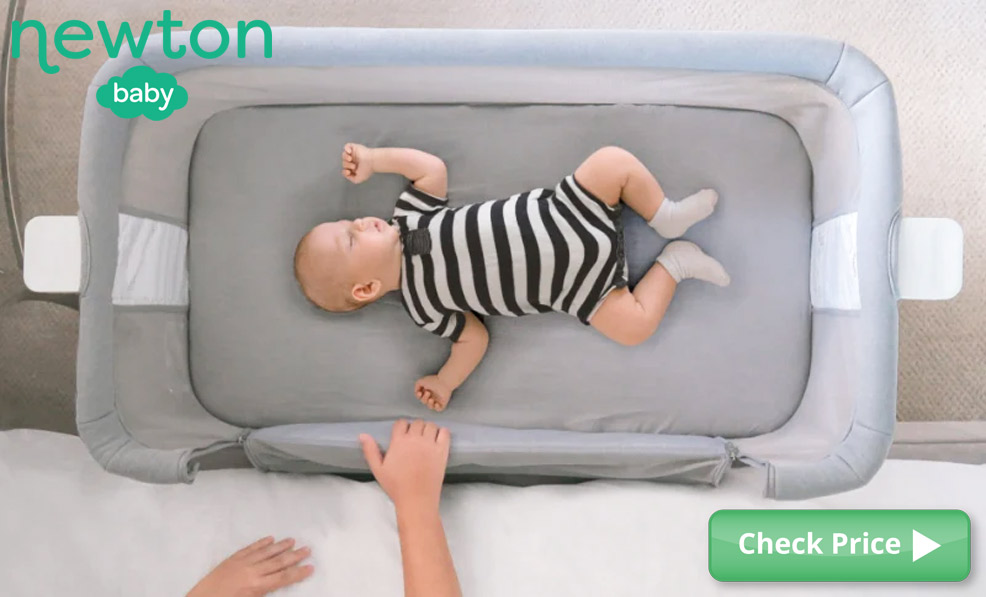
Does the Newton Bassinet Rock While the Baby Sleeps?
The bassinet may rock when an adult moves it, but you should not treat the rocking motion as an automatic sleep feature.
For routine sleep, place your baby on their back on the bassinet’s firm, flat sleep surface. Keep the bassinet clear of loose blankets, pillows, toys, bumpers, and other soft items.
If you rock the bassinet to calm your baby, stop moving it once your baby settles. Then engage the stationary lock if the design and manual instruct you to do so.
The American Academy of Pediatrics recommends a firm, flat, non-inclined sleep surface. A rocking bassinet should still meet the applicable safety requirements for its product category, and you should use it only as the manufacturer directs.


Rocking and soothing are not the same as sleep supervision
A rocking feature can help with soothing, but it does not supervise your baby. You still need to remain aware of your baby’s position and condition.
Do not leave the bassinet rocking near stairs, pets, cords, heaters, or other hazards. Keep the bassinet on a stable, level floor and away from windows and blind cords.
Never add a third-party motor or attempt to modify the frame. An added motor may create movement, tipping, pinch, or product-failure risks that the manufacturer did not test.

How to Use the Newton Bassinet’s Rocking Feature
Use the following basic process. Always give priority to the instructions included with your specific Newton Bassinet.
Place the bassinet on a level floor.
Keep it away from edges, stairs, cords, curtains, and heat sources.Check the frame and base.
Make sure the bassinet is fully assembled and that all parts are secure.Confirm the rocking mode.
Release the base lock only when you want the bassinet to move.Rock it gently by hand.
Use small, slow movements. Do not push the bassinet hard or lift one side.Stay with your baby.
Manual rocking requires an adult to remain present.Stop the motion when your baby settles.
Lock the bassinet in its stationary position if the manual calls for that step.Check the sleep area.
Your baby should be on their back, on the original firm mattress, with no loose items around them.
Signs that the rocking feature is working correctly
The base should move smoothly and in a controlled way. It should not scrape, tilt, wobble, or make sudden jumps.
Stop using the rocking function if you notice:
- A loose frame
- A cracked base
- A missing part
- Uneven movement
- A lock that will not engage
- Excessive noise
- A bassinet that shifts across the floor
Contact Newton Baby for model-specific help before using the product again.
Newton Bassinet Rocking vs. Automatic Bassinets
The main difference is who creates the motion.
| Feature | Newton Bassinet | Automatic smart bassinet |
|---|---|---|
| Rocking method | Manual | Motorized |
| Hands-free motion | No | Often available |
| App or remote | Not generally included | May be included |
| Power source | Not needed for rocking | Usually required |
| Motion control | Parent controls it by hand | Product controls speed and timing |
| Stationary mode | Available | Usually available |
| Main benefit | Simple manual soothing | Automated soothing options |
A manual rocking bassinet may suit parents who want a simple design without an app, motor, or subscription. An automatic bassinet may suit parents who specifically want hands-free motion, but it may cost more and require power or electronic parts.
Neither type replaces safe sleep habits. The key question is whether the product provides a firm, flat, clear sleep surface and is used within its stated limits.

Does the Newton Bassinet Need to Be Plugged In?
No. The Newton Bassinet does not need electrical power for its manual rocking function.
That is one of the practical differences between this type of bassinet and a motorized smart bassinet. You do not need to place it near an outlet to rock it by hand.
The bassinet may still include other parts or accessories with separate instructions. Check the current manual for any model-specific details.


Do not use an extension cord, aftermarket vibration unit, or homemade motor attachment to create automatic movement. These changes can affect stability and may void the warranty.
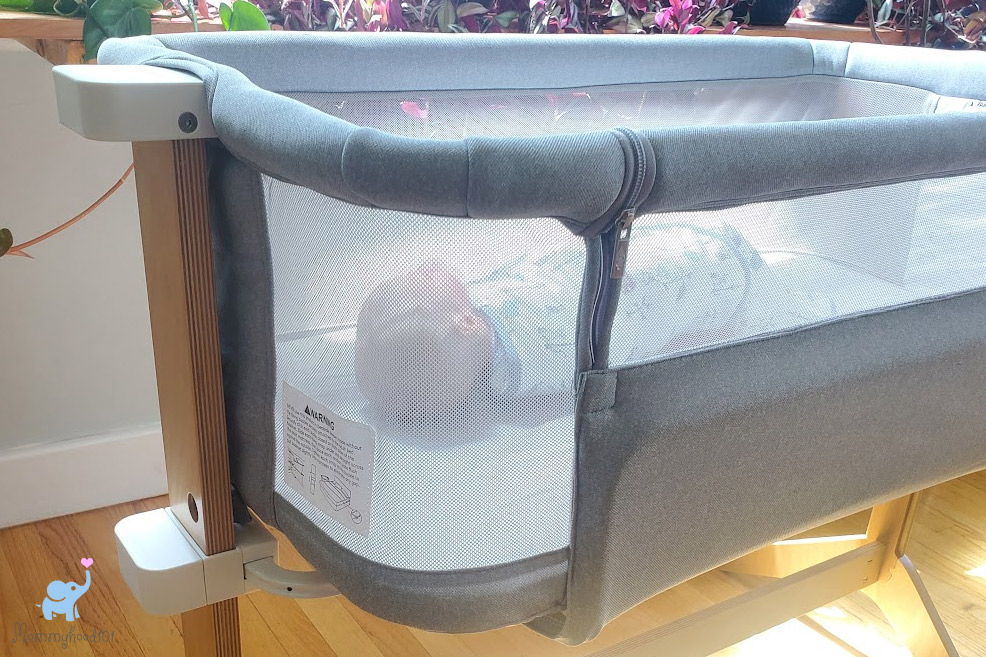
Is the Newton Bassinet Safe for Overnight Sleep?
The Newton Bassinet is intended to provide a sleep space for infants, but safe use depends on the exact model, setup, and condition of the product.
Before using it for overnight sleep:
- Read the current Newton Baby owner’s manual.
- Use only the mattress and fitted sheet approved for the bassinet.
- Keep the sleep surface flat.
- Place your baby on their back.
- Keep the bassinet empty except for the baby.
- Use the product only within its weight and developmental limits.
- Stop using it when your baby reaches a stated limit or can perform a movement that makes the bassinet unsuitable.
Do not add an inclined insert, positioner, sleep pod, extra padding, or aftermarket mattress. A soft or poorly fitted surface can increase the risk of suffocation or entrapment.
Rocking bassinet safety limits
A bassinet should not be used once the child can sit, kneel, pull up, or otherwise reach a milestone listed as a stop-use condition in the manual.
Weight limits also matter. Do not assume that a bassinet is safe simply because your baby still fits inside it.
If you bought the bassinet secondhand, look for:
- The original model name
- Missing or damaged parts
- The owner’s manual
- A product recall
- A clear manufacturing date
- Signs of frame damage or mold
- A mattress that fits tightly and correctly
If you cannot confirm the model or its safety history, contact the manufacturer before use.
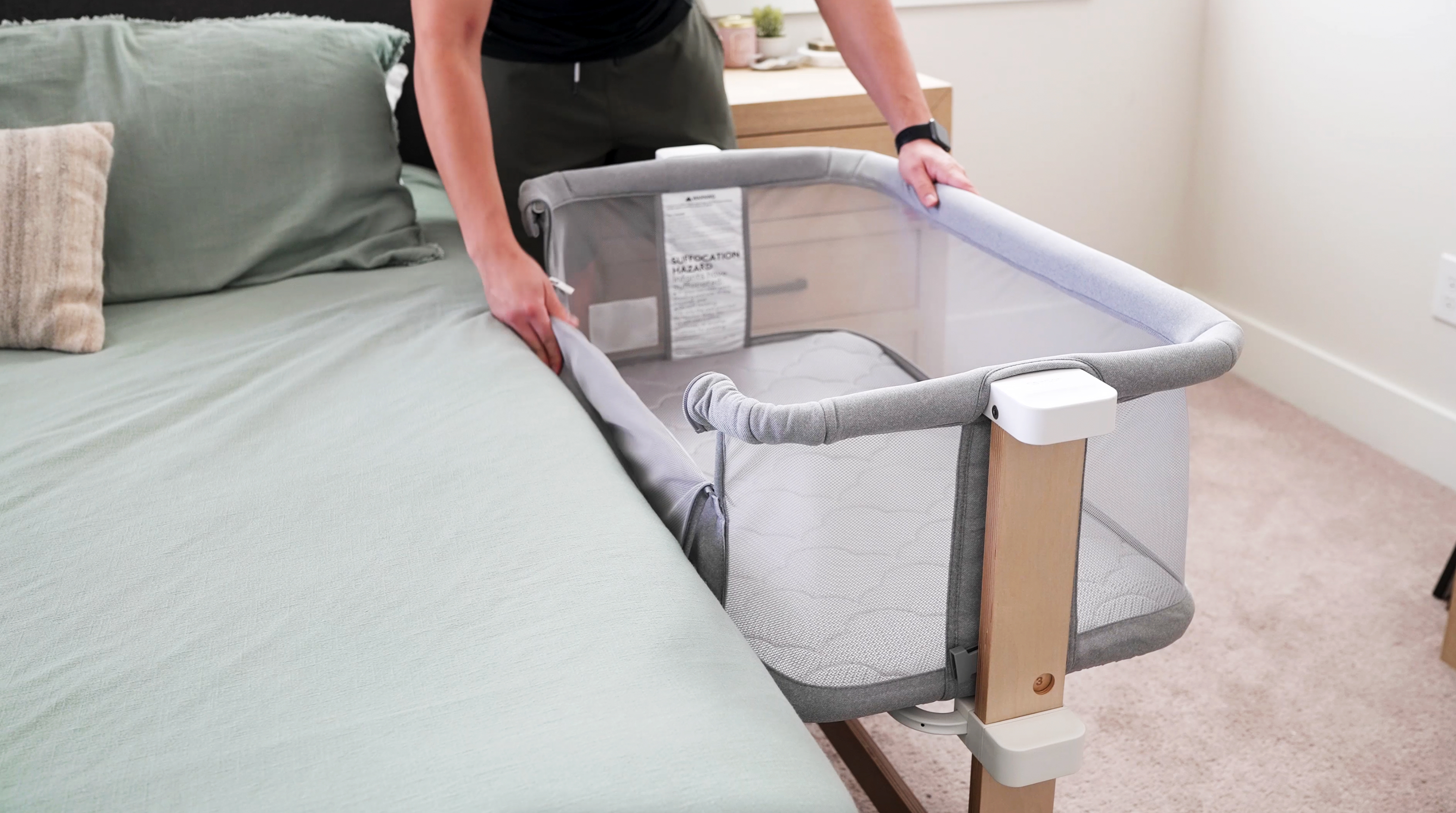
Common Problems With the Newton Bassinet Rocking Feature
The bassinet does not rock
First, check whether the rocking lock is engaged. Some parents mistake the stationary setting for a malfunction.
Next, place the bassinet on a flat floor and check whether the base is assembled correctly. Do not force the frame. If the base still will not move as intended, stop and contact Newton Baby.
The bassinet rocks too much
Use smaller movements and confirm that the bassinet is on a stable surface. Remove nearby objects that could strike the frame.
Do not place the bassinet on a rug edge, uneven flooring, a raised platform, or a soft surface that affects stability.
The rocking motion makes noise
A small amount of sound may come from the base contacting the floor. A new squeak, grinding sound, or clicking noise can signal a loose or damaged part.


Inspect the assembly according to the manual. Do not apply oil or make an unapproved repair unless Newton Baby specifically directs you to do so.
The lock will not stay engaged
Do not use the bassinet if you cannot secure it in the intended position. A lock that slips can create unwanted movement.
Keep your baby in another approved sleep space until the issue is resolved.

What Parents Should Check Before Buying
If manual rocking is the feature you want, the Newton Bassinet may fit that need. It offers a simple way to provide gentle movement without a motor or power cord.
It may not fit your needs if you want:
- Automatic rocking during the night
- Cry detection
- A smartphone app
- Remote control
- Continuous motion after you walk away
- Built-in white noise or vibration
Ask these questions before purchasing:
- Do I want manual soothing or hands-free movement?
- Is the bassinet approved for the age and size of my baby?
- Can I easily lock the base in a stationary position?
- Will it fit beside my bed without blocking walkways?
- Can I obtain replacement parts and the current manual?
- What are the exact stop-use limits for this model?
The most important trade-off is simple: manual rocking keeps the design basic, while automatic bassinets offer more convenience but add motors, electronics, and cost.

Frequently Asked Questions
Does the Newton Bassinet rock on its own?
No. The Newton Bassinet is designed for manual rocking. It does not normally rock continuously without a parent moving it.
Can the Newton Bassinet be used as a stationary bassinet?
Yes. It is designed to offer a stationary mode. Engage the appropriate lock according to the product manual.
Does the Newton Bassinet vibrate?
The manual rocking feature should not be confused with vibration. The Newton Bassinet is not generally marketed as a vibration bassinet. Check the features for your exact model before buying.
Can I add a motor to make it rock automatically?
No. Do not add a third-party motor or modify the frame. Unapproved modifications can affect stability, safety, and warranty coverage.
Should I leave the bassinet unlocked while my baby sleeps?
Use the stationary setting for routine sleep unless the current Newton Baby instructions say otherwise. Stop rocking once your baby settles, and follow safe sleep guidance from the manufacturer and the American Academy of Pediatrics.
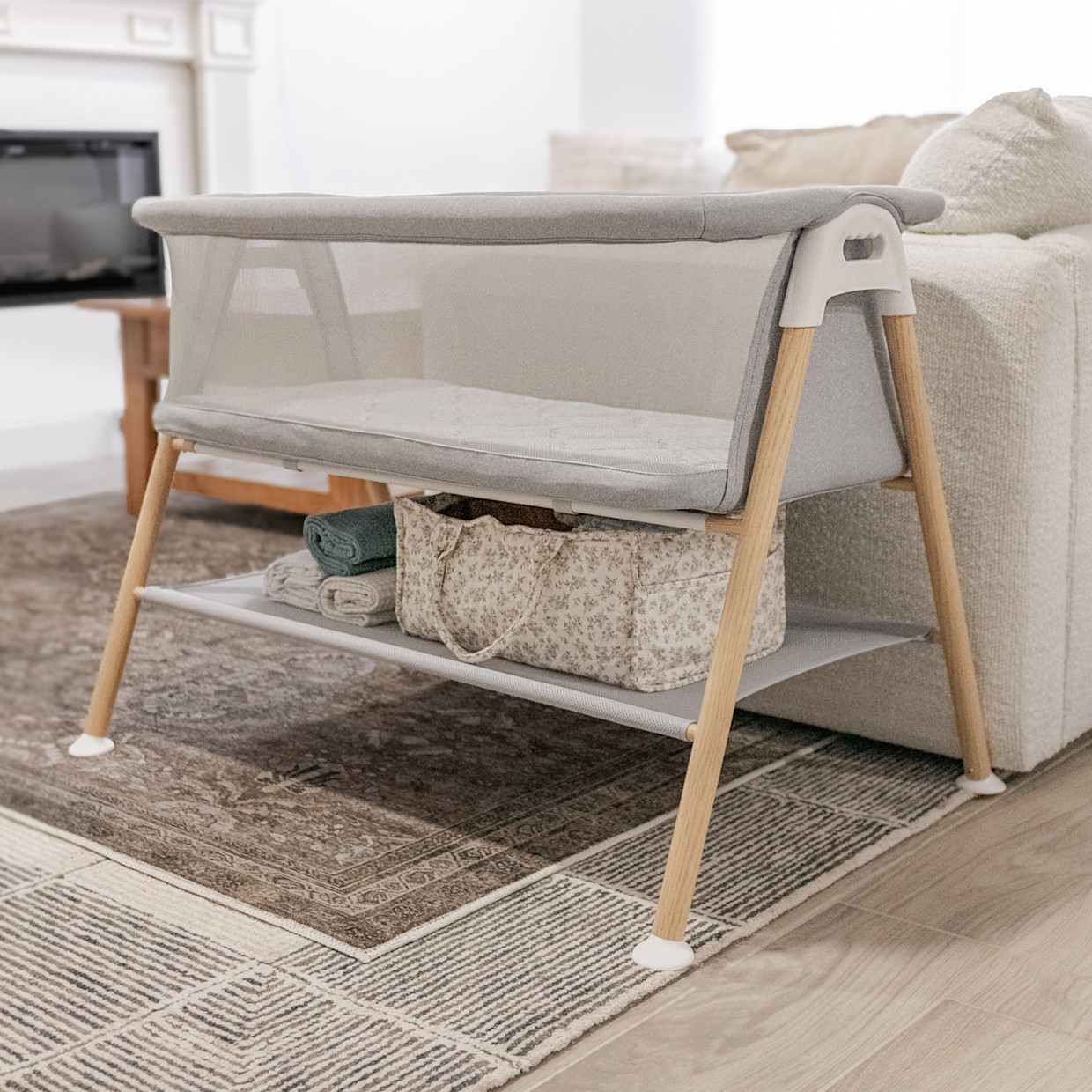
Final Answer: Does the Newton Bassinet Rock?
The Newton Bassinet does rock manually, but it is not an automatic rocking bassinet. A parent can gently move it by hand, then use the stationary lock when the baby is ready to sleep.


Before using it, confirm the instructions for your exact model. Keep the sleep surface firm, flat, and empty, and stop using the bassinet when your baby reaches the listed weight or developmental limit.
For official guidance, review the current Newton Baby manual, the U.S. Consumer Product Safety Commission’s bassinet requirements, and the American Academy of Pediatrics safe sleep recommendations.
