
No. Newborns in the United States do not have to sleep in a bassinet. A bassinet is one safe-sleep option, but a full-size crib, portable crib, or play yard can also be used from birth if it has a firm, flat mattress and a fitted sheet.
The key is not the name of the product. The key is the sleep setup. The American Academy of Pediatrics (AAP) recommends that babies sleep on their backs, on a firm and flat surface, in their own sleep space, with no loose items.
A newborn may sleep in your room without sleeping in your bed. Room-sharing is recommended for at least the first six months, and ideally the first year. Bed-sharing is not recommended because it raises the risk of sleep-related injury and death.

What Can a Newborn Sleep In?
A newborn can sleep in a bassinet, crib, portable crib, or play yard made for infant sleep. The product must be designed for sleep and used according to its instructions.


Here are the main options:
| Sleep space | Can a newborn use it? | Main points |
|---|---|---|
| Bassinet | Yes | Small and easy to keep near the bed; use only within its weight, age, and movement limits |
| Full-size crib | Yes | A long-term option; use a firm mattress and fitted sheet |
| Portable crib | Yes | Useful for travel or small rooms; check the product instructions |
| Play yard | Often yes | Use only the manufacturer-approved infant sleep setup |
| Bedside sleeper | Yes, if compliant | It should attach or sit beside the adult bed without creating a gap |
| Adult bed | No | Bed-sharing is not considered a safe sleep arrangement |
| Couch or recliner | No | These surfaces are especially dangerous for infant sleep |
| Swing, bouncer, or car seat | Not for routine sleep | Move the baby to a firm, flat sleep surface as soon as possible |
The U.S. Consumer Product Safety Commission sets safety requirements for bassinets and cradles. Other infant sleep products also have specific rules and limits.
A product that looks comfortable is not always safe for sleep. Cushioned nests, inclined sleepers, pods, and positioners can allow a baby’s head to fall forward or become covered. Do not add pillows, blankets, bumpers, sleep positioners, or extra padding.

Why Do Many Parents Choose a Bassinet?
Parents often choose a bassinet because it is small, light, and easy to place beside the bed. A newborn may wake often to feed, so keeping the baby nearby can make nighttime care easier.
A bassinet can also help families use one room for sleep without placing the baby in the adult bed. This supports the AAP recommendation to share a room while keeping a separate sleep surface.
A bassinet is not automatically safer than a crib. Safety depends on the product’s design and how it is used. A poorly assembled bassinet, a damaged mattress, or loose bedding can create risks.
Before using any bassinet, check that:
- The mattress is firm and flat.
- The mattress fits tightly, with no gaps around the edges.
- The product has not been recalled.
- The frame is stable and fully assembled.
- The fitted sheet is made for that mattress.
- The product has no loose padding or added accessories.
- You follow the weight, age, and movement limits.
- You stop using it when the baby reaches the stated limit or can push up, roll, sit, or get out, if the manual says to stop sooner.
Do not use a family heirloom bassinet unless you can confirm that it is stable, intact, and suitable for infant sleep. Older products may not meet current U.S. safety rules.

Is a Crib Safer Than a Bassinet?
A crib is not automatically safer than a bassinet, and a bassinet is not automatically safer than a crib. Both can be safe when they meet current safety standards and provide the right sleep conditions.
A crib may be the simpler choice for families who want to avoid a later move. Most babies outgrow a bassinet within the first few months. A crib can usually remain the baby’s sleep space for much longer.
A bassinet may be more practical when:


- The family wants the baby close to the adult bed.
- The bedroom is small.
- The parents need a light sleep space for the early weeks.
- The baby’s room is not ready yet.
A crib or portable crib may be more practical when:
- The family wants one sleep space from birth onward.
- The baby is close to rolling or pushing up.
- The bassinet has a short use period.
- The parents want more room for the baby to move safely.
The best choice is the safe option that fits your home and your routine. A crib in the parents’ room is just as valid as a bassinet in the parents’ room.
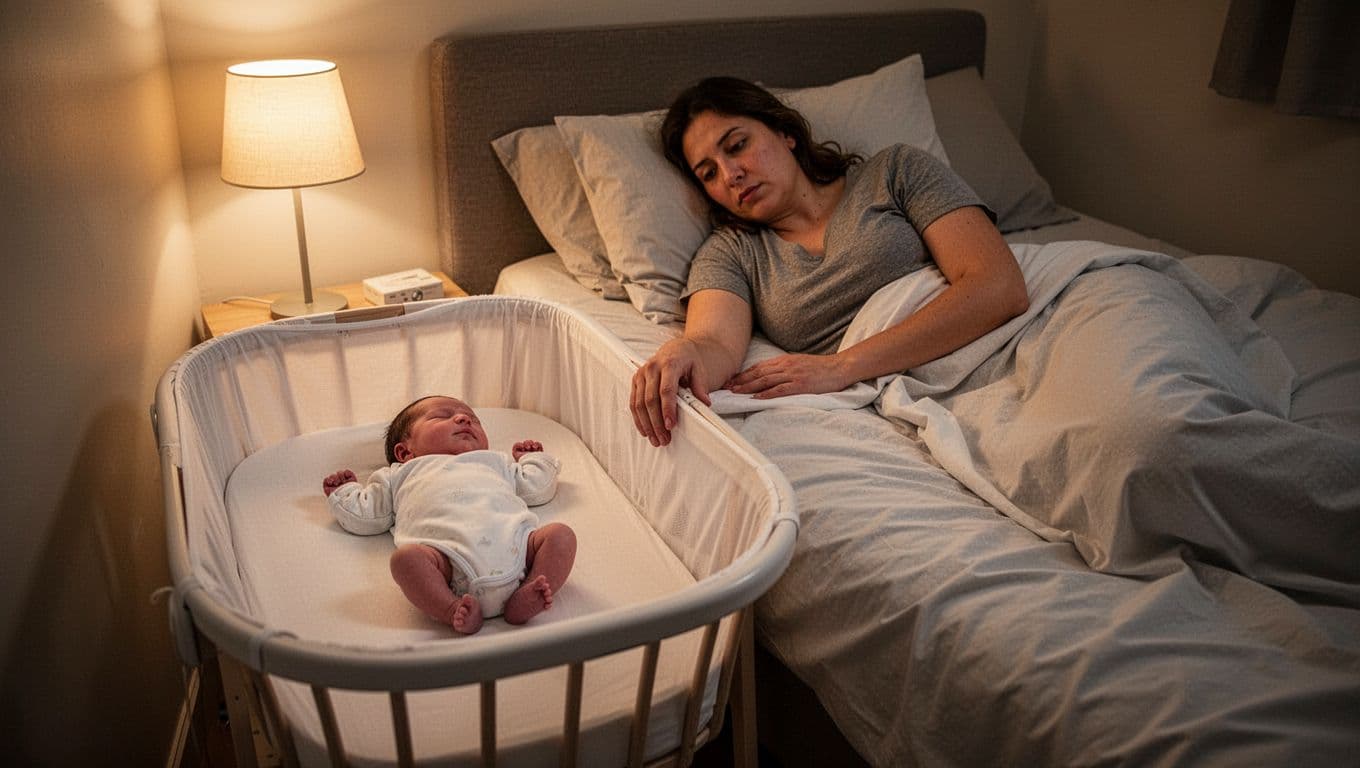
How to Set Up a Safe Sleep Space for a Newborn
Use the following steps for every sleep, including naps.
1. Place the baby on the back
Put the baby on their back for every sleep. Do this for naps and nighttime sleep.
Once a baby can roll from back to stomach and stomach to back without help, you should still place the baby on the back. You do not need to keep turning the baby back all night. Keep the sleep area clear.
2. Use a firm, flat mattress
The mattress should not sag or allow the baby to sink into it. It should fit snugly in the crib, bassinet, portable crib, or play yard.
Do not use an adult mattress, waterbed, air mattress, sofa, or cushioned surface. Do not place a mattress topper in a bassinet or crib unless the manufacturer specifically provides it for that model.
3. Keep the sleep space empty
The sleep area should contain only:
- The baby.
- The firm mattress.
- A fitted sheet made for that mattress.
Keep these items out of the sleep space:
- Loose blankets.
- Pillows.
- Quilts.
- Crib bumpers.
- Stuffed animals.
- Toys.
- Sleep positioners.
- Weighted blankets.
- Nursing pillows.
- Sheepskins.
- Extra padding.
4. Dress the baby safely
Use clothing that keeps the baby warm without covering the face. A wearable blanket or sleep sack may replace a loose blanket if it fits correctly and is not weighted.
Avoid overheating. Signs of overheating may include sweating, a hot chest, flushed skin, or damp hair. Ask the baby’s clinician how to dress the baby if you are unsure.


5. Keep the baby’s sleep space nearby
Place the bassinet or crib in the parents’ room, close to the bed but on a separate surface. Do not attach products to the adult bed unless they are specifically designed and approved for that use.
Never leave a gap between the adult bed and a bedside sleeper. A baby can become trapped in a gap.
6. Move the baby after accidental sleep
If the baby falls asleep in a car seat, swing, stroller, or carrier, move the baby to a firm, flat sleep surface when practical. Keep the airway clear while moving the baby.
Car seats remain necessary for travel. They are not designed to replace a crib or bassinet for routine sleep.

When Should a Baby Stop Using a Bassinet?
Stop using a bassinet when the baby reaches the manufacturer’s limit or begins showing movement that makes the product unsafe. The exact limit varies by model.
Common signs include:
- The baby can roll.
- The baby can push up on their hands or knees.
- The baby can sit up.
- The baby can pull up.
- The baby can move close to or over the side.
- The baby reaches the listed weight or height limit.
Read the bassinet manual. Some products list a weight limit. Others also set a developmental limit. Use the earliest limit that applies.
A baby does not need to be sleeping through the night before moving to a crib. The move is based on safety and product limits, not on the baby’s sleep habits.
If the bassinet has a rocking or vibrating feature, use it only as the instructions allow. Motion does not make an unsafe sleep surface safe. Stop using motion if the product manual says to stop at a certain age, weight, or movement stage.
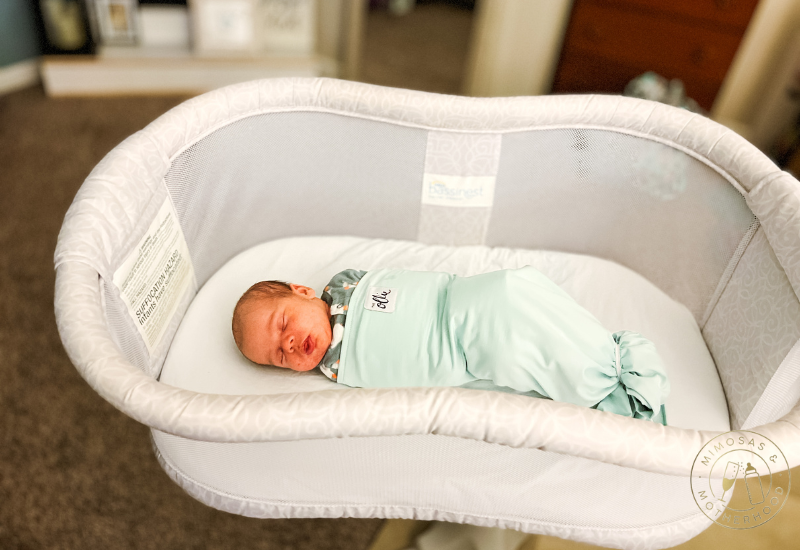
What If the Baby Will Not Sleep in the Bassinet?
A baby who dislikes the bassinet may still need to sleep there or in another safe sleep space. Do not solve the problem by adding pillows, padding, wedges, or loose blankets.
Try these safer steps:
- Check that the baby is fed, dry, and comfortable.
- Make sure the room is not too hot.
- Use a correctly fitted wearable blanket if needed.
- Place the baby down on the back when drowsy or asleep.
- Keep the room calm and dim at night.
- Use a steady routine before sleep.
- Offer a pacifier if the baby accepts one and feeding is going well.
- Try a safe crib if the bassinet seems too small or unstable.
- Ask the baby’s health care professional about feeding, reflux, pain, or other concerns.
Some babies settle when held and wake when placed down. That is common, but it can be exhausting. If you feel yourself becoming too tired to stay awake, place the baby in the crib or bassinet and step away for a short break.
Never sleep with a baby on a couch or recliner. If you fall asleep while feeding or comforting the baby in bed, move the baby back to their own sleep space as soon as you wake.

What Sleep Products Should You Avoid?
Avoid any product that does not provide a firm, flat, and clear sleep surface. This includes products that hold the baby in a seated, curled, or inclined position.
Inclined sleepers
Inclined sleepers can allow a baby’s chin to fall toward the chest. This can block the airway. Do not use an inclined sleeper for routine sleep, even if it is marketed for newborns.


Sleep positioners and wedges
Positioners and wedges can trap or cover a baby. They are not needed to keep a healthy baby on the back.
Dock-style loungers and nests
Loungers may be useful for supervised awake time when used exactly as directed, but they are not a substitute for a crib or bassinet. Never use them for unsupervised sleep.
Swings and bouncers
These products are for awake time and supervision. If a baby falls asleep in one, move the baby to a safe sleep surface.
Weighted sleep products
The AAP advises against weighted blankets, weighted swaddles, and weighted sleep sacks for infants. Extra weight can make it harder for a baby to move or breathe.
Swaddles
A swaddle must be snug but not tight around the chest or hips. Stop swaddling when the baby shows signs of trying to roll. Never use a weighted swaddle.

Can a Newborn Sleep in a Crib From Birth?
Yes. A newborn can sleep in a full-size crib from the first night at home. A bassinet is optional.
Set up the crib before birth with a firm mattress and a fitted sheet. Keep the crib free of blankets, pillows, toys, bumpers, and other items.
A full-size crib may take up more space than a bassinet, but it can remove the need to transfer the baby later. The crib can be placed in the parents’ room for room-sharing.
If the crib is in another room, use a separate safe sleep space in the parents’ room instead. A baby monitor does not replace room-sharing or direct safety checks.

Are There Medical Exceptions?
Some babies need special care because of prematurity, breathing problems, poor growth, reflux symptoms, or other health concerns. Even then, parents should not change the sleep position or add sleep products without medical guidance.
For example, a baby with reflux should generally still sleep flat on the back unless the baby’s clinician gives a specific medical plan. Elevating the mattress can cause the baby to slide into an unsafe position.
Contact the baby’s pediatrician or other qualified health professional if the baby:
- Has trouble breathing.
- Turns blue, gray, or very pale.
- Has repeated choking or pauses in breathing.
- Is difficult to wake.
- Has poor feeding or fewer wet diapers.
- Has unusual sleepiness or weakness.
- Has a condition that makes safe sleep difficult.
Call 911 in the United States for a baby who is not breathing normally, is unresponsive, or has a serious change in color.

Common Mistakes to Avoid
The most common mistake is treating a bassinet as safe because it is sold for babies. The label does not replace correct use.


Avoid these errors:
- Using a loose sheet or one that does not fit.
- Adding a blanket under the baby.
- Placing the baby on the stomach to help with reflux.
- Letting the baby sleep overnight in a car seat.
- Using a secondhand product without checking recalls.
- Keeping the bassinet in use after the baby reaches its limits.
- Bringing the baby into an adult bed when very tired.
- Using a couch or recliner for nighttime feeding.
- Covering the bassinet with a blanket to block light.
- Assuming a monitor can detect every breathing problem.
- Putting a hat on the baby indoors during sleep unless a clinician gives that advice.
Check the CPSC recall database before using a secondhand bassinet, crib, portable crib, or play yard. Keep the product manual so you can review its limits and assembly instructions.
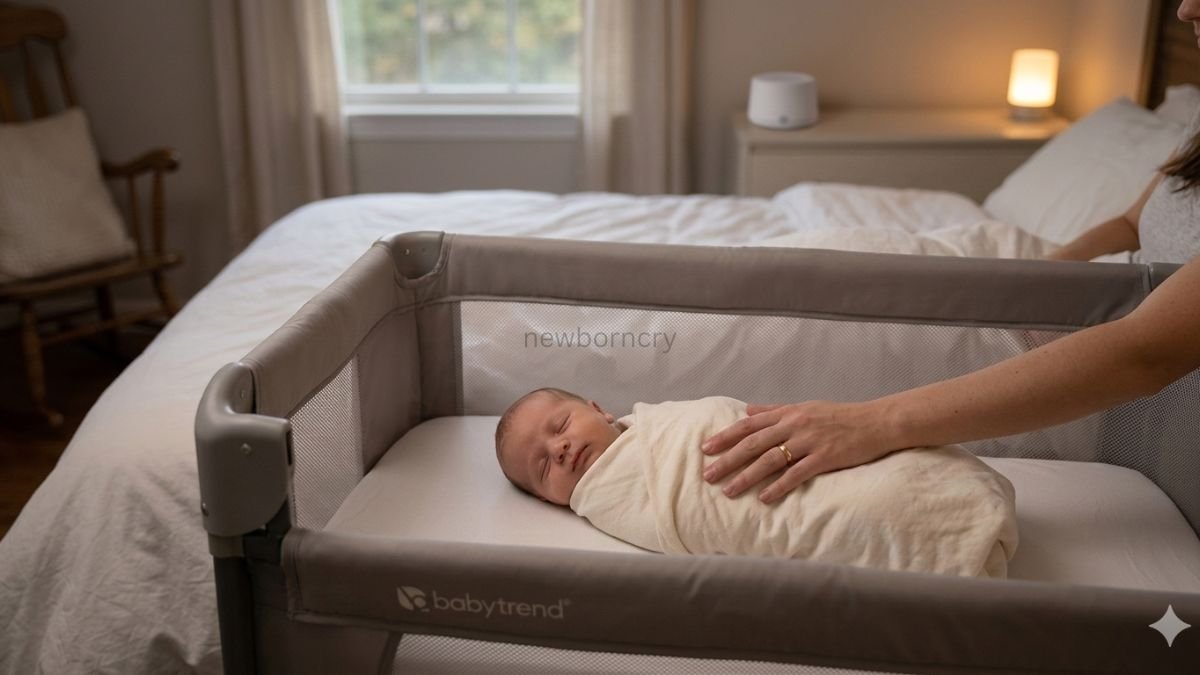
Quick Decision Guide
Choose a bassinet if you want a small sleep space near your bed and can follow its limits.
Choose a crib if you want a longer-term sleep space and have room for it.
Choose a portable crib or play yard if the manufacturer approves it for infant sleep and you need a flexible setup.
Choose none of these for routine sleep if the product is inclined, padded, enclosed with loose material, or not designed for infant sleep.
The central rule is simple: a newborn does not need a bassinet, but a newborn does need a safe, separate sleep surface.

Frequently Asked Questions
Can a newborn sleep in a pack-and-play?
Often, yes. Many portable play yards include a sleep surface approved for infants. Use only the parts supplied or approved by the manufacturer. Do not add a third-party mattress, topper, or padding unless the manufacturer specifically allows it.
Can a newborn sleep in a bedside sleeper?
Yes, if the bedside sleeper is made for infant sleep and is assembled correctly. Keep it next to the bed, not inside the bed. Check that it has no dangerous gap or loose side.
Can a newborn sleep in a swing for a nap?
No. A swing is not a safe routine sleep space. Move the baby to a firm, flat surface when possible.
Can a baby sleep in a bassinet overnight?
Yes, when the bassinet is approved for infant sleep, used according to its instructions, and within its limits. Keep the baby on the back with no loose items.
Do babies need a bassinet before moving to a crib?
No. A baby can use a safe crib from birth. Families may start with a bassinet for convenience, but it is not a required step.
What is the safest place for a newborn to sleep?
The safest place is a firm, flat, separate sleep surface that meets current U.S. safety requirements. Place it in the parents’ room, keep the baby on the back, and keep the surface clear.
Final Answer
Newborns do not have to sleep in a bassinet. In the United States, a safe crib, portable crib, play yard, or approved bedside sleeper can work from birth.
Before the baby sleeps, confirm three things: the surface is firm and flat, the baby is on their back, and the sleep space is clear of loose items. Check the product manual and move the baby to a crib when the bassinet reaches its weight or developmental limit.
