
Introduction
A bassinet mattress pad can be safe only when it is the original or approved pad for that bassinet, fits tightly, stays flat, and is covered only by a fitted sheet. An extra padded topper, quilted insert, memory-foam pad, or loose cushion can raise the risk of suffocation, entrapment, and overheating.
In the United States, the safest sleep setup is a baby on their back, alone, on a firm, flat, non-inclined sleep surface. The American Academy of Pediatrics (AAP) recommends a safety-approved crib, bassinet, portable crib, or play yard with a firm mattress and a fitted sheet. Keep pillows, blankets, toys, bumpers, and other soft items out of the sleep space.
The key question is not whether a pad feels soft or comfortable. It is whether the pad was made for that exact bassinet and preserves a firm, flat, well-fitting sleep surface.
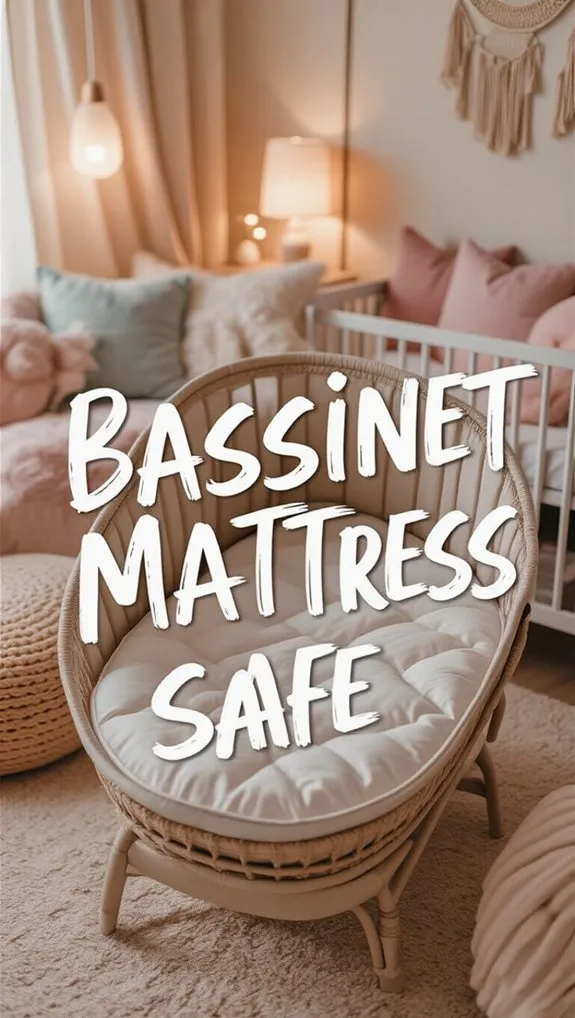
What Is a Bassinet Mattress Pad?
A bassinet mattress pad is the pad or mattress designed to sit at the bottom of a bassinet. It may be:


- A firm foam mattress supplied with the bassinet
- A manufacturer-approved replacement mattress
- A thin, waterproof cover made for that specific mattress
- An aftermarket cushion or topper added by a caregiver
These products are not equal. A fitted waterproof protector may help keep the original mattress clean. A thick, soft pad changes the sleep surface itself and may create a hazard.
The difference between a mattress, protector, and topper
| Item | Main purpose | General safety concern |
|---|---|---|
| Bassinet mattress | Provides the sleep surface | Must fit the bassinet and remain firm and flat |
| Fitted mattress cover | Protects the mattress from leaks | Must fit tightly and not bunch |
| Waterproof mattress protector | Adds a moisture barrier | Must be made for the mattress and stay smooth |
| Mattress topper or cushion | Adds padding or softness | May create gaps, softness, or an unsafe incline |
| Quilted pad or blanket | Adds warmth or comfort | Loose and soft materials should not be used under a sleeping infant |
The word pad causes much of the confusion. A thin fitted protector is different from a soft layer placed under the baby. Always check the product manual and the label for the exact bassinet model.

When Is a Bassinet Mattress Pad Safe?
A bassinet mattress pad is generally safer when it meets all of these conditions:
- It is supplied by the bassinet maker or specifically approved for that model.
- It fits tightly in every direction.
- It leaves no gap between the pad and the bassinet sides.
- It is firm and does not allow the baby’s head or face to sink in.
- It lies flat without a raised edge, fold, dip, or tilt.
- It does not reduce the bassinet’s side height or interfere with its parts.
- It is used with only the recommended fitted sheet.
- It is clean, dry, intact, and free from tears or compressed areas.
The U.S. Consumer Product Safety Commission (CPSC) advises parents to use a firm, flat sleep surface with a fitted sheet and no added soft bedding. Federal bassinet rules also address issues such as structural integrity, side height, mattress fit, and entrapment hazards.
A pad that meets only one or two of these points is not enough. For example, a pad may fit well but still be too soft. Another may be firm but leave a dangerous gap around the edge.
A simple fit check
With the bassinet empty, place the pad in its normal position and press it toward each side. Look for:
- Gaps along the sides or corners
- Buckling or folding
- A pad that slides when pushed
- A raised area near the head or feet
- A mattress that sits higher than the manual allows
- Exposed fasteners, straps, or loose fabric
Do not rely on a “two-finger test” unless the manufacturer gives that instruction. Different bassinets have different designs. The correct standard is the fit required by the bassinet’s instructions.

Are Aftermarket Bassinet Mattress Pads Safe?
Aftermarket bassinet mattress pads are not automatically safe. The safest choice is usually the original mattress or a replacement identified by the bassinet manufacturer for the exact model.


A third-party pad may look like the right size but still have a problem. It may be too soft, too thick, too short, too narrow, or shaped in a way that creates a gap. It may also change the height of the sleep surface or interfere with the bassinet’s folding or locking parts.
Before using a replacement, confirm:
- The bassinet brand and model number
- The exact dimensions required by the manual
- Whether the maker approves replacement mattresses or pads
- The pad’s firmness and intended use
- Whether the product is a mattress, protector, or topper
- Whether the maker provides safety or care instructions for it
A product listing that says “universal,” “extra plush,” or “fits most bassinets” does not prove safe compatibility. Size alone is not enough.
If the original pad is missing, damaged, or no longer fits, contact the manufacturer. Do not fill a gap with towels, blankets, foam, or another cushion.

Why Soft or Extra Padding Can Be Dangerous
Soft padding can allow an infant’s face to press into the surface. That may make it harder for the baby to breathe. Extra layers can also create a gap where the baby’s head, neck, or body becomes trapped.
A thick pad can cause other problems:
- It may make the bassinet sides effectively lower.
- It may create an incline, even when the bassinet base is flat.
- It may shift during sleep.
- It may trap heat.
- It may hide tears or gaps in the original mattress.
- It may prevent the fitted sheet from staying tight.
- It may interfere with a folding bassinet or its support system.
The AAP states that infants should sleep on a firm, flat, non-inclined surface. It also warns against products that add softness or are not designed for infant sleep.
Do not add padding to make a firm mattress feel more like an adult bed. Babies need a stable sleep surface, not a plush one.

How to Choose a Safe Bassinet Mattress Pad
Use this order when deciding whether to buy or use a pad.
1. Start with the bassinet manual
Find the model name and model number. Read the sections on:
- Mattress use
- Replacement parts
- Fitted sheets
- Cleaning
- Folding and storage
- Weight and age limits
- Warnings about added products
If the manual says to use only the included mattress, follow that instruction.
2. Check for recalls
Search the CPSC recall database for the bassinet brand and model. Also check the manufacturer’s safety page. A recalled bassinet should not be used until the stated remedy is completed.


A replacement pad does not correct every bassinet problem. If the frame, locking system, side fabric, or support base is damaged, stop using the product and contact the manufacturer.
3. Confirm the fit
The mattress should sit flat and remain in place. Do not buy based only on a general size such as “small bassinet” or “standard bassinet.”
4. Check the surface
The pad should not feel pillow-soft. It should not form a deep impression under light pressure. Avoid pads with:
- Memory foam
- Egg-crate foam
- Loose fiber fill
- Quilted bumps
- Pillow-like sections
- Built-in wedges
- Raised head supports
- Removable inserts that can shift
These features may be marketed for comfort or airflow, but marketing language does not replace safe-sleep guidance.
5. Use the correct sheet
Use a fitted sheet made for that mattress. The sheet should stay tight at the corners and should not come loose when pulled gently.
Do not place a flat sheet, receiving blanket, waterproof pad, or towel under the fitted sheet unless the manufacturer specifically designed and approved it for that mattress.

Bassinet Mattress Pad Safety Checklist
Use this quick checklist before each use:
| Check | Safe sign | Stop and reassess if… |
|---|---|---|
| Fit | The pad fills the intended space | A gap appears at an edge or corner |
| Firmness | The surface stays stable and flat | The baby sinks into it |
| Shape | The pad has no raised or folded area | It has a wedge, dip, or bump |
| Cover | The fitted sheet stays tight | The sheet bunches or comes loose |
| Condition | The pad is dry and intact | It is torn, wet, warped, or compressed |
| Compatibility | The maker lists it for the model | It is labeled only “universal” |
| Contents | The sleep space is bare except for the baby | Pillows, blankets, toys, or cushions are present |
| Structure | The bassinet locks and stands as intended | The pad blocks a latch or changes the frame |
Check the mattress after washing the cover, moving the bassinet, folding it, or changing sheets. A pad can shift without looking obviously damaged.

What to Do If the Pad Does Not Fit
Do not modify the pad or fill the gap. Do not cut foam, add rolled towels, tape the mattress down, or place another pad around it.
Instead:
- Remove the pad from the bassinet.
- Check the model number and instructions.
- Measure only if the manufacturer provides measurement guidance.
- Contact the manufacturer for an approved replacement.
- Stop using the bassinet if you cannot obtain a correct, intact pad.
- Use another approved sleep space with its original firm mattress.
If the mattress is wet, allow it to dry fully only if the manufacturer permits cleaning and drying. A water-damaged or misshapen mattress may need replacement.
If the bassinet frame is broken, the side is loose, or the mattress no longer stays flat, do not try a home repair unless the manufacturer provides an approved repair method.

Common Bassinet Mattress Pad Mistakes
Using a crib mattress or play-yard mattress
A crib mattress may not fit a bassinet. A play-yard mattress may also be designed for a different frame and support system. Never swap mattresses between products unless the maker approves the exact combination.
Adding a pad under the original mattress
This can raise the mattress, create an incline, and change the fit. It may also cause the original mattress to shift.


Using a portable changing pad for sleep
Changing pads are made for diaper changes, not unsupervised sleep. They may be soft, contoured, waterproof, or shaped with raised edges.
Covering the mattress with a blanket
A blanket under the baby can bunch or shift. Use a fitted sheet made for the bassinet mattress instead.
Trusting a “breathable” claim
A breathable label does not prove that a product is safe for infant sleep. It also does not remove the risk of poor fit, softness, shifting, or entrapment.
Using a secondhand pad without checking its history
A used mattress may have hidden damage, moisture, mold, or an unknown recall history. If you cannot verify its condition and compatibility, replace it with an approved part.

Bassinet Mattress Pads and Safe Sleep Rules
A safe mattress is only one part of a safe sleep setup. The AAP recommends that babies sleep:
- On their backs for every sleep
- On a firm, flat, non-inclined surface
- In their own approved sleep space
- Without pillows, loose blankets, toys, bumper pads, or positioners
- In the same room as a caregiver when possible, but not in the same bed
The U.S. Food and Drug Administration warns against using infant sleep positioners and similar products that claim to hold a baby in place. Products that incline or surround a baby can create a risk of suffocation.
Do not use a bassinet mattress pad as a treatment for reflux. Elevating the sleep surface can cause a baby to slide or assume a position that makes breathing harder. Ask a pediatrician about reflux or other medical concerns rather than changing the sleep surface.
A fitted sheet is not the same as loose bedding. It should be made for the mattress, fit tightly, and remain secure.

Are Waterproof Bassinet Mattress Protectors Safe?
A waterproof protector may be safe when it is thin, fitted, and made for the exact bassinet mattress. It should not change the mattress shape or make the sheet loose.
Before use, check that the protector:
- Fits the full mattress
- Does not wrinkle or bunch
- Has no loose straps or ties
- Does not make the surface soft or uneven
- Does not prevent the fitted sheet from staying tight
- Is approved or recommended by the bassinet maker when required
Avoid placing a loose waterproof pad under the baby. A protector that moves can create folds and gaps.
If the manufacturer does not approve a protector, the simplest option is often to use the original mattress with a properly fitted sheet and follow the cleaning instructions.

When Should You Replace a Bassinet Mattress Pad?
Replace the pad when it is damaged, misshapen, wet inside, permanently compressed, or no longer fits correctly. Also replace it if the manufacturer identifies it as part of a recall or says it is not suitable for continued use.


Look for:
- Tears or holes
- Exposed foam
- Sagging
- A permanent dip
- Warped edges
- Mold or a musty smell
- Water damage
- Loose fabric
- A cover that no longer fits tightly
- Changes after folding or storage
A small stain is not always a safety problem, but moisture can damage foam and fabric. Follow the care instructions. Do not soak or machine-wash a mattress unless the manufacturer allows it.
Bassinet use also ends when the child reaches the product’s stated limit. Many bassinets are intended for early infancy and must be stopped when the baby can roll, push up, sit, kneel, or reach the maker’s limit. The exact limit depends on the product, so read its instructions.

What If a Baby Falls Asleep on a Soft Pad?
Move the baby to an approved firm, flat sleep surface as soon as practical. Do not leave the baby sleeping on an adult bed, couch, recliner, nursing pillow, changing pad, or soft mattress pad.
If a baby has trouble breathing, turns blue or gray, becomes limp, or cannot be roused, call 911 in the United States. For non-emergency questions about a sleep product, contact the pediatrician and the manufacturer.
A brief accidental sleep on an unsafe surface does not mean harm occurred, but it is a reason to change the setup. Keep the approved sleep space ready before the baby becomes tired.

FAQ
Is a thin bassinet mattress pad safer than a thick one?
Not by thickness alone. A thin pad can still be unsafe if it is soft, loose, damaged, or not made for the bassinet. The better test is approved compatibility, firm support, a flat shape, and a tight fit.
Can I put a mattress protector under the fitted sheet?
Only if it fits the exact mattress, stays flat, and is allowed by the manufacturer. It should not be loose or create wrinkles. Never use a towel, blanket, or loose waterproof pad as a substitute.
Can I use a bassinet mattress pad from another brand?
Usually, you should not assume that it is safe. Use it only when the bassinet manufacturer confirms that the pad fits and is approved for that model.
Are quilted bassinet pads safe?
A quilted pad may be unsafe if it adds softness, creates bumps, shifts, or prevents the fitted sheet from staying tight. Check the product instructions and the bassinet maker’s requirements.
Can I add a bassinet mattress pad to make the surface softer?
No. Do not add softness to an infant sleep surface. The bassinet should already include the mattress or pad needed for safe use.
Conclusion
Bassinet mattress pads are safest when they are firm, flat, intact, and made for the exact bassinet. Use the original or manufacturer-approved pad, cover it with a tight fitted sheet, and keep the sleep space free of extra cushions and loose bedding.
Before your baby sleeps in the bassinet, check the model instructions, recall status, mattress fit, surface firmness, and condition. If the pad leaves a gap, shifts, feels soft, or is damaged, stop using it and obtain an approved replacement or use another safe sleep space.
