
Introduction
No. Bassinet mattresses are not all the same size. Their length, width, thickness, shape, and corner design can vary by brand and model. A mattress that fits one bassinet may leave gaps or sit too high in another.
In the United States, the safest choice is the mattress made for your exact bassinet or one that the manufacturer lists as compatible. Check the manual before buying a replacement. A firm, flat, snug fit matters more than a standard label such as “bassinet size.”

Why Bassinet Mattress Sizes Vary
Bassinet makers do not use one universal mattress size. Each company may design its sleep space around a different frame, folding system, canopy, rocking base, or bedside attachment.
Common differences include:
- Length and width
- Rounded, oval, or rectangular corners
- Mattress thickness
- Corner radius
- Firmness
- Cover and sheet fit
- Vent openings or slots beneath the mattress
- A molded mattress pad that fits only one frame


Even two bassinets that look similar may need different mattress pads. A “standard bassinet mattress” is not a reliable term unless the product states the exact dimensions and compatible models.
Bassinet versus bedside sleeper
A bedside sleeper may look like a bassinet, but it can have a different sleep surface and support system. Some bedside sleepers use a flat pad with a frame that attaches to an adult bed. Others use a removable insert with a special shape.
A play yard may also have a bassinet-level insert. Its mattress is usually made for that play yard and may not match a stand-alone bassinet. Do not assume that a play yard mattress, mini-crib mattress, or Moses basket pad will fit safely in a bassinet.
Why thickness matters
Parents often measure only length and width. Thickness matters, too.
A mattress that is too thick may:
- Raise the baby closer to the bassinet rim
- Prevent a fitted sheet from fitting correctly
- Block a locking feature or support panel
- Change the intended depth of the sleep area
A mattress that is too thin may move, bend, or leave space around the edges. Never use extra padding to make a mattress feel softer. For infant sleep, a firm, flat surface is the safer design.
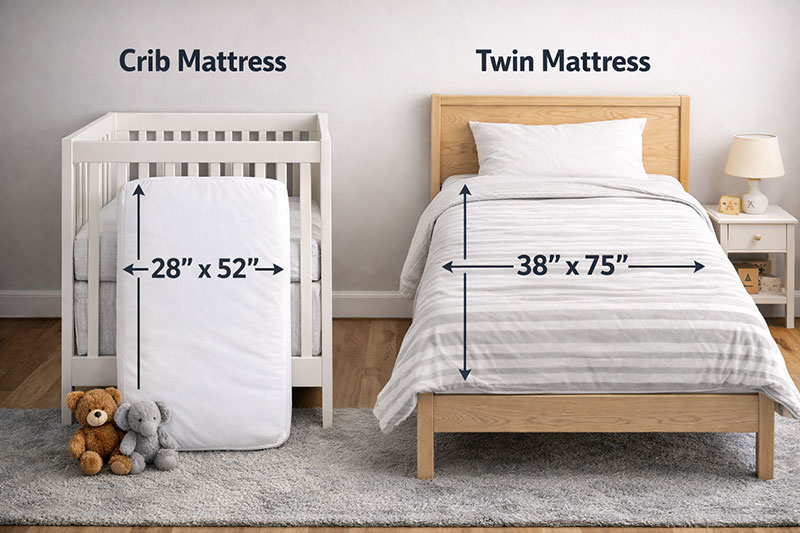
How to Find the Correct Bassinet Mattress Size
The safest method is to identify the exact bassinet model first. Then use the manufacturer’s instructions, replacement-parts page, or customer service team to confirm the mattress.
Follow these steps:
1. Find the model name and number
Look on:
- The bassinet frame
- A label under the mattress
- The product manual
- The original box
- The manufacturer’s website
- Your purchase record
A model number is more useful than a product color or general name. Some brands sell several versions of the same bassinet with different mattress inserts.
2. Check the manual before measuring
The manual may list:


- Approved mattress dimensions
- Mattress thickness
- Compatible replacement parts
- Approved fitted sheets
- Whether the mattress is removable
- Whether a replacement is allowed
If the manual says to use only the supplied mattress, follow that direction. Some bassinets use a custom pad that is part of the product’s tested design.
3. Measure the original mattress
If the manual does not list the size, measure the original mattress on a flat surface.
Measure:
- Length from the longest inside edge.
- Width from the widest inside edge.
- Thickness from the bottom support surface to the top of the mattress.
- Corner shape and radius.
- Overall shape, including any cutouts or angled sides.
Do not compress a soft edge while measuring. If the mattress has curved corners, measure the curve as well as the longest length and width.
4. Measure the bassinet frame
Measure the inside sleep area, not just the outer frame. The outside dimensions include fabric, rails, padding, and support parts that do not define the mattress space.
The mattress should fit the designed sleep surface without force. Do not bend, fold, trim, or squeeze a mattress into place.
5. Confirm the fit before use
After placing the mattress in the bassinet:
- Check all sides for gaps.
- Press gently around the edges.
- Make sure the mattress lies flat.
- Confirm that it does not rock or slide.
- Check that it does not cover vents or support parts.
- Use only the fitted sheet made for that mattress or approved by the manufacturer.
If the mattress does not fit clearly and securely, do not use it for infant sleep.
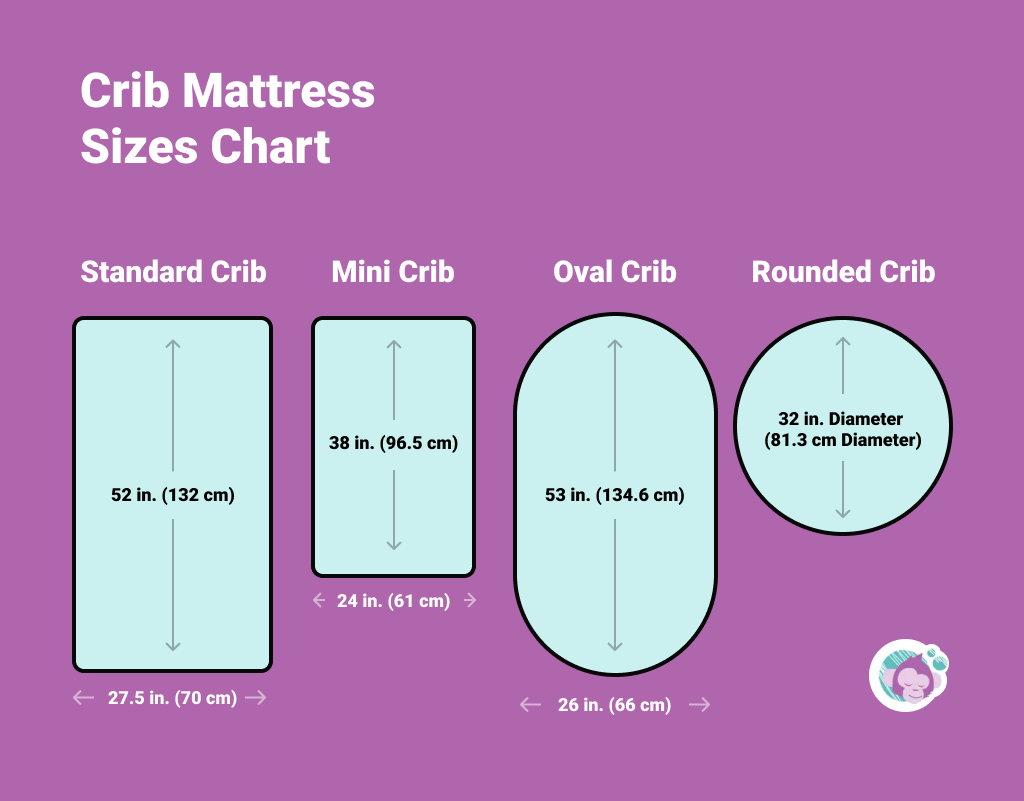
A Simple Bassinet Mattress Size Comparison
There is no single U.S. bassinet mattress size. The table below shows the measurements that matter when comparing options.
| Feature | What to check | Why it matters |
|---|---|---|
| Length | Exact inside length | A short mattress may leave an end gap |
| Width | Exact inside width | A narrow mattress may move or expose gaps |
| Thickness | Manufacturer-approved height | A thick mattress may raise the sleep surface |
| Shape | Rectangle, oval, tapered, or custom | A rectangular pad may not fit curved corners |
| Firmness | Firm and flat | Soft padding can create an unsafe sleep surface |
| Sheet fit | Snug fitted sheet | Loose fabric can bunch around the baby |
| Model match | Exact bassinet model | Similar products may use different inserts |
A hypothetical example
Imagine a bassinet with an approved mattress measuring 30 inches by 18 inches and 1.5 inches thick. A replacement that measures 30 by 18 inches but is 3 inches thick is not automatically safe or compatible.
Likewise, a mattress measuring 29.5 by 18 inches may seem close. But a half-inch gap along one end or side can matter. The correct decision depends on the bassinet’s design and the manufacturer’s fit requirements, not on whether the numbers look nearly identical.

Can You Use a Different Mattress in a Bassinet?
Sometimes, but only when the manufacturer permits it and the replacement meets the stated specifications. A generic mattress is not automatically safe because it feels firm or fits most of the opening.
The U.S. Consumer Product Safety Commission requires bassinets and cradles sold in the United States to meet federal safety requirements under 16 CFR Part 1218. That rule covers the product category, but it does not mean every aftermarket mattress will fit every bassinet.


The CPSC bassinet and cradle safety information advises consumers to follow the manufacturer’s instructions. The American Academy of Pediatrics recommends a firm, flat, non-inclined sleep surface with only a fitted sheet.
Avoid these replacement materials
Do not use:
- Adult bed pillows
- Memory foam toppers
- Quilted pads
- Sofa cushions
- Folded blankets
- Towels under the mattress
- Extra foam layers
- Homemade mattress inserts
- A mattress cut down to fit
Cutting foam can create uneven edges and hidden gaps. Adding a pad can also change the height and firmness of the sleep surface.
What about a mini-crib mattress?
A mini-crib mattress may be larger, thicker, or firmer in a different way than a bassinet pad. Even if it fits inside the bassinet opening, it may not fit the support base or leave the correct clearance below the rim.
Use a mini-crib mattress only in a mini crib that lists it as an approved size. Do not move it into a bassinet based on measurements alone.

Bassinet Mattress Safety Checks
The mattress should be firm, flat, clean, and made for the bassinet. The sleep space should contain no loose items.
Before each use, check:
- The mattress remains flat.
- The mattress does not slide.
- There are no visible gaps at the sides.
- The fitted sheet stays tight.
- The cover has no tears or loose fabric.
- The support base is fully installed.
- The bassinet has not been modified.
- No pillow, blanket, bumper, toy, or positioner is present.
Place the baby on their back for every sleep. Keep the bassinet on a stable, level surface and follow the product’s weight and age limits.
Do not add a second mattress. If the original pad is lost, damaged, wet, or recalled, contact the manufacturer for the correct replacement. A mattress that seems “more comfortable” to an adult may be too soft for an infant.
When to stop using the bassinet
Stop and seek a replacement or manufacturer guidance if:
- The mattress has a permanent dip.
- The cover is torn.
- The foam is exposed.
- The mattress bends at the center.
- The pad no longer stays in place.
- The frame or support board is damaged.
- You cannot confirm that the replacement is approved.
- The bassinet is subject to a recall.
You can search the CPSC recall database by brand and model. Keep the model number when contacting the manufacturer.

Common Mistakes When Buying a Bassinet Mattress
Buying by the word “universal”
“Universal” may describe a product’s marketing category, not a guaranteed fit. Read the full size chart and compatible-model list. If the maker does not provide both, treat the claim with caution.
Measuring the outside of the bassinet
The outer frame can be several inches wider than the mattress area. Measure the original pad and inside support surface instead.


Ignoring the corners
A mattress can match the length and width but still leave gaps at rounded corners. Shape is part of the fit.
Choosing softness over firmness
A soft mattress may feel pleasant, but infant sleep guidance calls for a firm, flat surface. Do not judge safety by adult comfort.
Using a loose sheet
A sheet made for a larger mattress can bunch or pull loose. Use a snug fitted sheet that matches the approved mattress.
Reusing a mattress without checking its history
A used mattress may have water damage, mold, hidden wear, or a changed shape. It may also belong to a recalled product. Check its condition, model, and recall status before use.

What to Do If You Cannot Find a Replacement
If the original mattress is unavailable, contact the bassinet maker before buying a third-party pad. Provide the model number, production date, and photos if requested.
Ask these questions:
- Is the bassinet still approved for use?
- What exact mattress dimensions are allowed?
- What thickness is approved?
- Is a third-party replacement permitted?
- Is there a fitted sheet made for the replacement?
- Has the bassinet or mattress been recalled?
If the manufacturer cannot confirm a safe replacement, replacing the entire bassinet may be safer than adapting an unrelated mattress.
Do not rely on a seller’s phrase such as “fits most bassinets.” The seller may not have tested the pad with your model.

Key Takeaways
- Bassinet mattresses are not one standard size.
- Length, width, thickness, shape, and firmness all affect fit.
- Use the mattress supplied with the bassinet or an approved replacement.
- Check the model manual before measuring or ordering.
- Do not use extra foam, blankets, pillows, or homemade inserts.
- A correct mattress should lie flat, stay in place, and leave no unsafe gaps.
- When in doubt, ask the manufacturer or replace the bassinet.
FAQs
Are bassinet mattresses a standard size in the United States?
No. U.S. bassinets use different mattress sizes and shapes. Some have custom pads that fit only one model.
How do I know if a mattress fits my bassinet?
Confirm the exact model, review the manual, compare the approved dimensions, and check that the mattress lies flat without gaps or movement. The manufacturer’s approval is more reliable than a general size label.
Can I use a crib mattress in a bassinet?
Usually, no. Crib mattresses are often too large or too thick. Use one in a bassinet only if the bassinet manufacturer specifically approves that exact mattress.
Can I add a mattress topper to make a bassinet softer?
No. Do not add a topper, blanket, pillow, or foam layer. These changes can make the sleep surface too soft or alter the fit.
What should I do if my bassinet mattress has a gap?
Stop using the setup for infant sleep. Recheck the model and measurements, then contact the manufacturer for an approved mattress. Do not fill the gap with towels, blankets, foam, or other materials.
Conclusion
Bassinet mattresses are not all the same size, and a close measurement is not enough to prove a safe fit. Identify the bassinet model, follow its manual, and use the original mattress or a manufacturer-approved replacement.


If you cannot verify the size, shape, thickness, and fit, do not modify the mattress or add padding. Contact the manufacturer or choose a replacement sleep product with clear, documented mattress specifications.
