
Baby-led weaning (BLW) is a way to start solid foods in which your baby self-feeds soft pieces of food instead of being fed only smooth purées. In the United States, the CDC and the American Academy of Pediatrics (AAP) advise starting complementary foods at about 6 months, when a baby shows the right signs of readiness. Breast milk or infant formula should still provide most nutrition at first.
Baby-led weaning can be a safe option for healthy, full-term babies when foods are soft, choking risks are reduced, and an adult watches every meal. It is not a race, and it does not need to replace mashed or spoon-fed foods. Many families use a mix of self-feeding, preloaded spoons, and responsive spoon-feeding.

What Is Baby-Led Weaning?
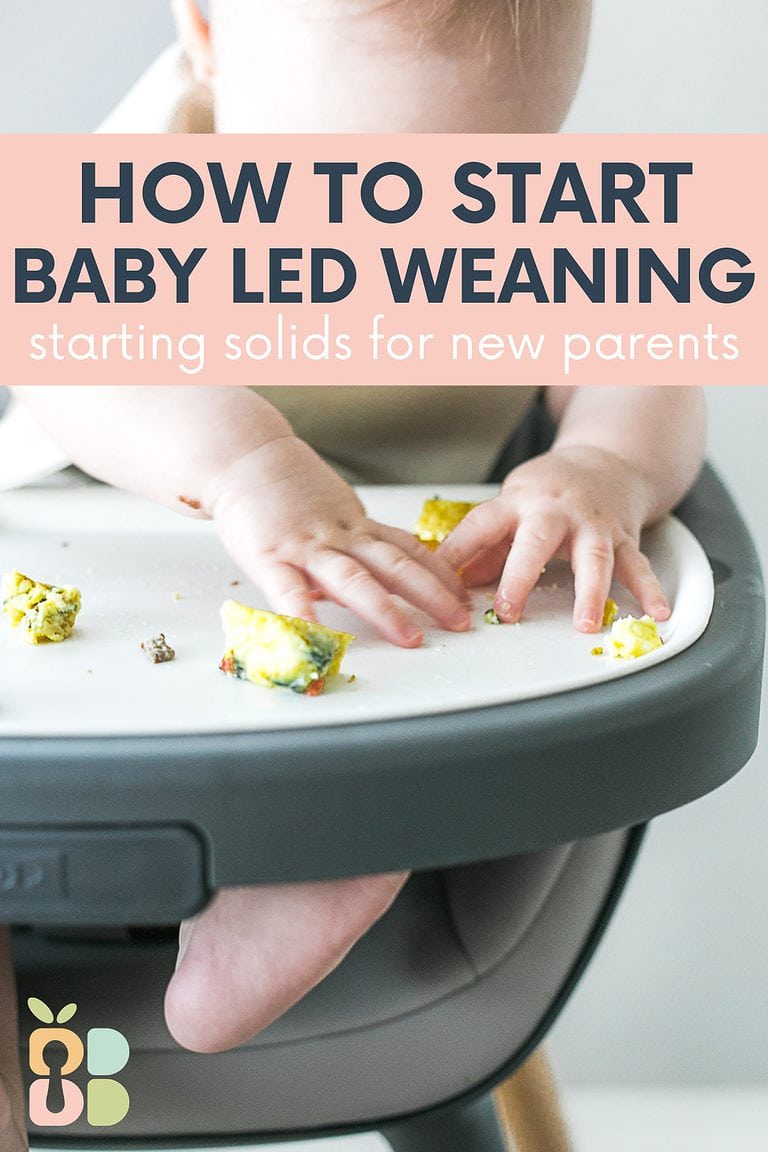
Baby-led weaning lets a baby explore food with their hands and feed themselves. You offer soft pieces that are easy to hold and safe to chew. Your baby decides what to pick up, how much to eat, and when to stop.
The term “weaning” can be confusing in the United States. It does not mean stopping breastfeeding or ending formula feeding. Here, it means adding solid foods to a baby’s usual milk feeds.


BLW differs from traditional spoon-feeding in a few key ways:
- The baby usually eats soft finger foods rather than thin purées.
- The baby controls the pace and amount.
- Food is offered as part of family meals when possible.
- Exploration is as important as intake at the start.
- Milk feeds continue while solid foods slowly increase.
Research has not shown that baby-led weaning is clearly better than traditional spoon-feeding for growth, nutrition, or choking prevention. A 2016 randomized trial published in JAMA Pediatrics found that a modified baby-led approach did not reduce choking compared with traditional feeding. The best method is the one that is safe, practical, and suited to your baby and family.
When Can a Baby Start Baby-Led Weaning?
Most babies can begin solids at around 6 months, but age alone is not enough. Your baby should show several signs of developmental readiness.
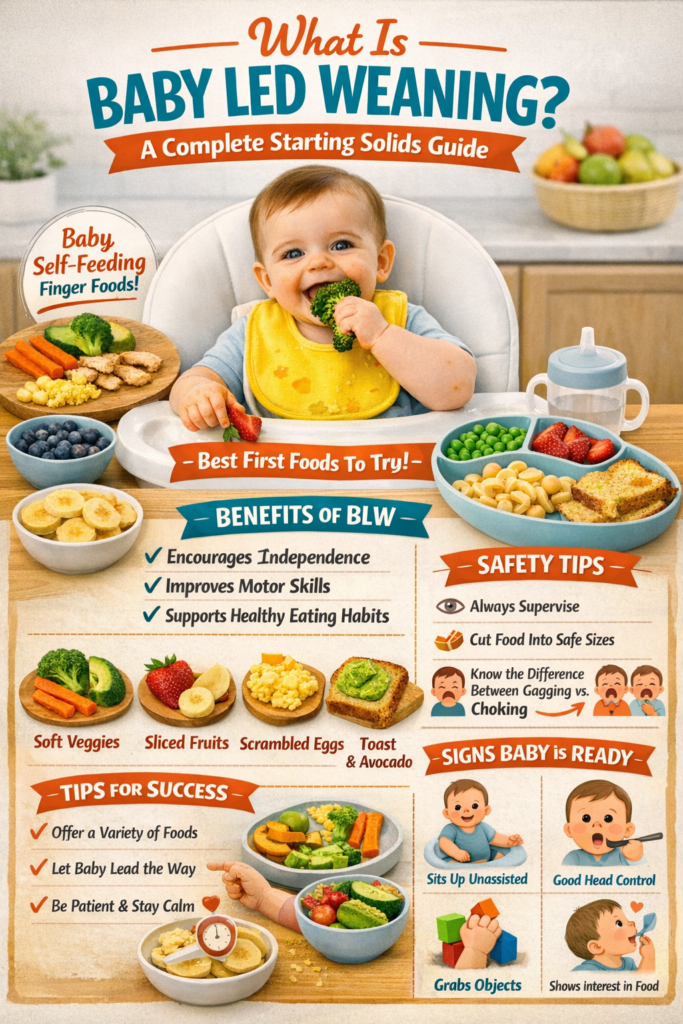
Look for all of these signs:
- Your baby can sit upright with little help.
- Your baby has good head and neck control.
- Your baby reaches for food and brings objects to their mouth.
- Your baby can grasp food and move it toward their mouth.
- Your baby no longer pushes most food out with their tongue.
- Your baby can swallow food rather than repeatedly spitting it out.
A baby does not need to sit perfectly without support before starting. However, your baby should remain upright and steady in a high chair. A reclined seat, stroller, bouncer, or car seat is not safe for eating.
Starting solids before 4 months is not recommended by the CDC or AAP. Starting much later than about 6 months may make it harder to provide key nutrients, especially iron, unless a health professional gives different advice.
Speak with your child’s pediatrician before starting BLW if your baby was born prematurely, has poor head control, has trouble swallowing, has a developmental delay, has poor growth, or has a known food allergy. Babies with these needs may require an individual feeding plan.
How to Prepare for Baby-Led Weaning
Prepare the feeding space, food, and safety plan before your first meal. A few simple steps can make the experience calmer.
Choose a safe high chair
Use a stable high chair with:
- A firm, upright seat
- A footrest, if possible
- A snug three-point or five-point harness
- A tray or table close enough for your baby to reach
- No loose cushions that allow slumping


Keep your baby fully upright during the meal. Stay within arm’s reach. Never leave a baby alone with food, even for a short time.
Learn the difference between gagging and choking
Gagging is a normal protective reflex. It may look loud and dramatic. A gagging baby may cough, retch, make noise, or bring food forward.
Choking is different. A choking baby may be silent, unable to breathe, unable to cry, or unable to cough effectively. Choking is an emergency.
All caregivers should take an infant CPR and choking-response class from a recognized provider, such as the American Red Cross or the American Heart Association. If a baby cannot breathe or becomes unresponsive, call 911 and follow emergency first-aid training.
Do not put your finger into your baby’s mouth to search for food. You may push the food farther back. Remove food only if you can clearly see it and easily sweep it out.
Set realistic expectations
At first, your baby may touch, lick, drop, or smear food. That is normal. Early meals teach taste, smell, texture, chewing skills, and hand control.
Your baby may eat very little for weeks. Breast milk or formula remains the main source of calories and nutrients during the early months of complementary feeding.

How to Start Baby-Led Weaning: A Step-by-Step Plan
1. Start when your baby is alert
Offer food when your baby is rested and calm. Avoid starting when your baby is very hungry, overtired, or upset.
You can offer breast milk or formula first if your baby becomes frustrated when hungry. As your baby gains skill, you may offer solids before a milk feed. There is no need to force a fixed order.
2. Begin with one or two soft foods
Offer one or two pieces of food at a meal. This keeps the meal simple and helps you see how your baby handles each texture.
Good first foods include:
- Steamed broccoli with a large stem for gripping
- Soft roasted sweet potato wedges
- Ripe avocado slices
- Very soft banana halves
- Cooked zucchini sticks
- Tender shredded meat
- Omelet strips
- Toast strips with a thin spread of smooth nut butter
- Soft beans pressed or mashed slightly
- Plain full-fat yogurt on a preloaded spoon
Food should be soft enough to squash between your thumb and forefinger. A piece should be large enough for a young baby to hold in a fist. Long, narrow pieces often work better than small cubes at the beginning.
3. Offer a mix of food groups
Try to include foods from several groups over the day:
- Iron-rich foods: Meat, poultry, fish, eggs, beans, lentils, tofu, and iron-fortified infant cereal
- Energy-rich foods: Avocado, nut butter, yogurt, olive oil, and full-fat dairy foods
- Fruits and vegetables: Soft cooked or ripe produce
- Grains: Soft toast, pasta, oatmeal, and rice
Iron deserves special attention because a baby’s iron stores begin to decline around 6 months. Include an iron-rich food often rather than relying only on fruit and vegetables.


4. Let your baby lead
Place the food on the tray and let your baby decide what to do. Your baby may pick it up, study it, lick it, or drop it.
Do not push food into your baby’s mouth. Do not pressure your baby to take “one more bite.” Pressure can make meals stressful and can interfere with hunger and fullness cues.
You can model eating by sitting with your baby and eating the same meal in a safe form. Babies learn by watching.
5. Add water in an open cup
Once solids begin, offer small sips of water with meals in an open cup or suitable training cup. Breast milk or formula remains the main drink during the first year.
The CDC advises against juice for children younger than 12 months. Juice offers less benefit than whole fruit and can add sugar to the diet.
6. Increase variety slowly
Start with one meal a day if that feels manageable. Move to two meals, then three meals as your baby shows interest and skill.
There is no required schedule. A simple progression may look like this:
| Stage | What to offer |
|---|---|
| Early meals | One or two soft foods once daily |
| Growing interest | Soft foods at two meals |
| More skill | Soft foods at three family meals |
| Around 9–12 months | A wider range of textures, flavors, and safe family foods |
This is a general example, not a rule. Your baby’s appetite and development may vary.
How to Cut and Prepare Food Safely
Food shape and texture matter more than the food name. A healthy food can still be a choking hazard if it is hard, round, sticky, or cut poorly.
Use these preparation rules
- Cook hard vegetables until soft.
- Remove bones, pits, and hard seeds.
- Shred meat or serve it in soft, graspable strips.
- Flatten round foods such as blueberries, grapes, and cherry tomatoes.
- Quarter grapes lengthwise.
- Spread nut butter in a thin layer rather than offering a spoonful.
- Grate or finely shred firm raw vegetables.
- Cut firm fruit into thin, soft slices or cook it first.
- Flake fish carefully and check for bones.
- Serve pasta until soft enough to mash.
- Avoid food that stays hard when pressed.
Foods that need special care
| Food | Safer preparation |
|---|---|
| Grapes and cherry tomatoes | Cut lengthwise into quarters |
| Hot dogs and sausage | Avoid in round coins; cut lengthwise into thin strips and use sparingly |
| Apples and raw carrots | Cook until soft or grate finely |
| Meat | Serve tender, moist strips or finely shred it |
| Nut butter | Thinly spread or mix into yogurt, oatmeal, or another soft food |
| Popcorn | Do not offer to babies |
| Whole nuts | Do not offer; use finely ground nuts or smooth nut butter |
| Hard candy and gummy candy | Do not offer |
| Raw chunks of firm cheese | Grate or use thin, soft pieces |
| Berries | Flatten or cut, depending on size and firmness |
Avoid giving foods that are hard, round, sticky, tough, or difficult to break apart. The CDC and AAP list foods such as whole grapes, nuts, popcorn, hot dogs, hard raw vegetables, and chunks of meat among common choking hazards.

Introducing Allergens During Baby-Led Weaning
Introduce common allergens when your baby is ready for solids rather than delaying them without medical advice. Early introduction of peanut and egg may reduce the risk of allergy in some children, especially those at high risk.
Common food allergens include:
- Peanut
- Tree nuts
- Egg
- Dairy
- Wheat
- Soy
- Sesame
- Fish
- Shellfish
Offer one new allergen at a time in a safe form. For example, mix a small amount of smooth peanut butter with water, breast milk, formula, yogurt, or oatmeal. Never give whole peanuts or a thick spoonful of peanut butter.


Once tolerated, keep the food in your baby’s usual diet on a regular basis. The exact amount and schedule should follow your pediatrician’s advice.
Call 911 for severe symptoms such as trouble breathing, swelling of the lips or tongue, widespread hives with other symptoms, repeated vomiting with weakness, or sudden lethargy. For milder symptoms, stop the food and contact your child’s health professional.
Ask a pediatrician before introducing peanut or other allergens if your baby has severe eczema, an existing food allergy, or a previous reaction to food. The 2017 NIAID guidelines recommend discussing peanut introduction with a clinician for babies with severe eczema, egg allergy, or both.

Foods and Drinks to Avoid Before 12 Months
Some foods should not be part of a baby’s diet during the first year.
Avoid:
- Honey: It can cause infant botulism.
- Cow’s milk as the main drink: It does not provide the right balance of nutrients for infants and may increase the risk of iron deficiency. Small amounts in cooking or yogurt are different.
- Unpasteurized milk, juice, or cheese: These can carry harmful germs.
- High-mercury fish: Choose lower-mercury options and follow FDA and EPA advice.
- Added sugar: Babies do not need sweetened foods or drinks.
- Foods high in sodium: Limit salty packaged foods and processed meats.
- Juice: The CDC recommends no juice before 12 months.
Do not use plant-based beverages as a replacement for breast milk or infant formula unless your child’s clinician recommends a specific product. Many plant-based drinks do not provide enough protein, fat, or other nutrients for infants.

A Simple Baby-Led Weaning Meal Plan
A baby-led weaning meal does not need to be complex. Build meals around one iron-rich food, one soft fruit or vegetable, and an energy-rich food when useful.
Sample day
Breakfast
- Soft omelet strips
- Ripe banana pieces
- Water from an open cup
Lunch
- Shredded chicken
- Soft-cooked sweet potato
- Avocado slices
Dinner
- Soft lentil patties or mashed beans on toast
- Steamed broccoli
- Plain whole-milk yogurt on a preloaded spoon
This sample is not a prescription. Portion size depends on your baby’s age, appetite, feeding skills, and milk intake.
A practical serving guide is to place two or three small pieces on the tray at first. Add more when your baby finishes, reaches for food, or remains interested. Babies may eat more on one day and almost nothing on another.

Common Baby-Led Weaning Mistakes
Starting before the baby is ready
A baby who cannot sit upright or control their head is not ready for finger foods. Wait and ask the pediatrician for guidance.
Offering food that is too hard
If you cannot easily squash the food between your fingers, your baby may not be able to manage it safely.
Giving only fruit and vegetables
Produce is valuable, but babies also need iron and energy. Offer meat, eggs, beans, tofu, iron-fortified cereal, dairy foods, and other nutrient-dense choices.


Treating gagging as failure
Gagging often happens as babies learn to move food around the mouth. Stay calm, watch closely, and learn choking first aid. Do not stop every meal at the first gag unless your baby is in distress or a health professional tells you to change the plan.
Pressuring the baby to eat
Your job is to choose what, when, and where to offer food. Your baby decides whether and how much to eat. This division of responsibility supports responsive feeding.
Using social media as a medical source
Online feeding advice can miss key details about prematurity, allergies, oral-motor skills, or growth. Use U.S. government guidance and your child’s pediatrician for safety decisions.
How to Know If Baby-Led Weaning Is Going Well
Signs of progress include:
- Your baby sits safely and stays engaged during meals.
- Your baby brings food to the mouth.
- Your baby explores different textures.
- Your baby gradually improves at biting, chewing, and swallowing.
- Your baby continues to breastfeed or take formula well.
- Your baby grows along their expected pattern.
- Meals remain mostly calm and pressure-free.
Mess is normal. Food waste is also common at first. A washable mat under the high chair can reduce stress, but it does not replace supervision.
Contact your pediatrician if your baby frequently coughs or chokes during meals, has a wet or gurgly voice after eating, struggles with many textures, vomits often, refuses all solids, loses weight, or shows signs of dehydration. A pediatric feeding therapist or registered dietitian may help when feeding problems continue.
Frequently Asked Questions
Is baby-led weaning safe?
It can be safe for a developmentally ready baby when food is soft, choking hazards are avoided, the baby sits upright, and an adult provides constant supervision. BLW does not remove choking risk, so caregiver training matters.
Does baby-led weaning cause choking?
There is no strong evidence that BLW causes more choking than traditional spoon-feeding when both methods use safe food preparation and supervision. However, any solid food can cause choking. Safe cutting and texture remain essential.
Can I combine baby-led weaning with purées?
Yes. Mixed feeding is fine. You can offer soft finger foods, mashed foods, preloaded spoons, and responsive spoon-feeding. The goal is safe skill-building, not following a strict label.
How much should my baby eat?
At first, your baby may eat only a few tastes. Milk remains the main source of nutrition. Appetite will vary, so focus on regular chances to eat, iron-rich foods, safe textures, and your baby’s hunger and fullness cues.
Should babies drink water with meals?
You may offer small sips of water with meals after solids begin. Breast milk or infant formula should remain the main drink during the first year. Avoid juice before 12 months.
What should I do if my baby gags?
Stay calm and watch your baby. Gagging is usually noisy and helps move food forward. Do not sweep blindly in the mouth. If your baby cannot breathe, cry, or cough effectively, treat it as choking and use infant choking first aid.
Key Takeaways
- Start around 6 months when your baby shows every major readiness sign.
- Keep your baby upright in a stable high chair.
- Offer soft, graspable pieces and avoid hard, round, sticky foods.
- Include iron-rich foods often.
- Introduce allergens in safe forms and ask a pediatrician about high-risk babies.
- Continue breast milk or infant formula.
- Learn infant CPR and choking first aid.
- Let your baby decide how much to eat without pressure.
Conclusion
Starting baby-led weaning in the United States can be simple: wait for readiness, prepare soft foods, offer variety, and stay close during every meal. Your baby does not need to eat much at first. Touching, tasting, and learning are meaningful early steps.
Before the first meal, review the CDC’s infant feeding guidance, learn choking first aid, and discuss any medical or developmental concerns with your child’s pediatrician. Then offer one soft food, sit with your baby, and let the learning begin.
