
Introduction
To measure your baby’s shoe size in the United States, place the child’s foot on paper, mark the heel and longest toe, measure the length in inches, and compare it with the shoe brand’s U.S. size chart. Measure both feet while your child is standing, then choose a shoe with a small amount of room for movement—not a large size for future growth.
Baby shoe sizes vary by brand. A U.S. infant size 3 in one brand may fit differently from a size 3 in another. The foot measurement is more useful than age alone.

What You Need Before Measuring
You only need a few simple items:
- A sheet of plain paper
- A pencil
- A ruler or measuring tape
- The socks your baby will wear with the shoes
- A flat, hard floor
- The brand’s current U.S. size chart


Avoid measuring on a soft rug. It can change the foot’s position and make the result less reliable.
If your baby cannot stand yet, you can measure the foot while they sit. However, a standing measurement is usually more useful for early walkers because the foot spreads slightly under body weight.
The American Academy of Pediatrics explains through HealthyChildren.org that babies do not need firm shoes before they walk. Bare feet or soft, flexible footwear can help babies move and learn balance indoors. Shoes become more useful when a child walks outside and needs protection from rough, hot, cold, or sharp surfaces.

How to Measure Baby Shoe Size Step by Step
Follow these steps for the most useful measurement.
1. Measure later in the day
Feet can swell and spread during the day. Measuring in the afternoon or evening can help you avoid choosing a shoe that feels tight later.
Have your child wear the socks planned for the shoes. If the shoes will be worn barefoot, measure without socks.
2. Place paper on a hard floor
Put the paper against a wall. Ask your child to stand with the heel lightly touching the wall.
Keep the foot flat. Do not let the toes curl.
For a young baby, you may need another adult to hold the child safely while you position the foot. Never force a child to stand if they are not ready.
3. Mark the heel and longest toe
Hold the pencil straight up and down. Mark the point at the back of the heel and the tip of the longest toe.
The longest toe may be the big toe or the second toe. Measure to the toe that reaches farthest.


Do not angle the pencil around the toe. An angled mark can make the foot seem longer than it is.
4. Measure the foot length
Measure the distance between the heel mark and the longest-toe mark. Record the result in inches and, if useful, centimeters.
Repeat the process with the other foot. Most people have one foot that is slightly larger.
Use the measurement of the larger foot when checking a shoe size.
5. Measure the width when possible
Measure across the widest part of the foot, usually near the ball of the foot. Width matters if your child has a broad foot, a narrow foot, or toes that feel crowded.
Many baby shoes use only one standard width. If a shoe feels tight across the sides, moving up in length may not solve the problem. Look for a wider shape instead.
6. Compare the measurement with the brand chart
Use the shoe maker’s own U.S. chart. Check whether the chart lists:
- Foot length
- Recommended shoe length
- Insole length
- U.S. infant or toddler size
- Width
These measurements are not interchangeable. An insole measurement describes the shoe part, while a foot-length chart describes the child’s foot.
If the chart gives only one measurement, read its notes before choosing a size.
7. Check the fit on the foot
After your child puts on the shoe, check the following:
- The heel stays in place without rubbing.
- The toes can move.
- The upper does not press into the top of the foot.
- The sides do not bulge or pinch.
- The child can stand and walk normally.
- The shoe does not slip off.
A shoe should feel secure but not tight. Do not rely only on pressing the front of the shoe while your child’s toes are curled.
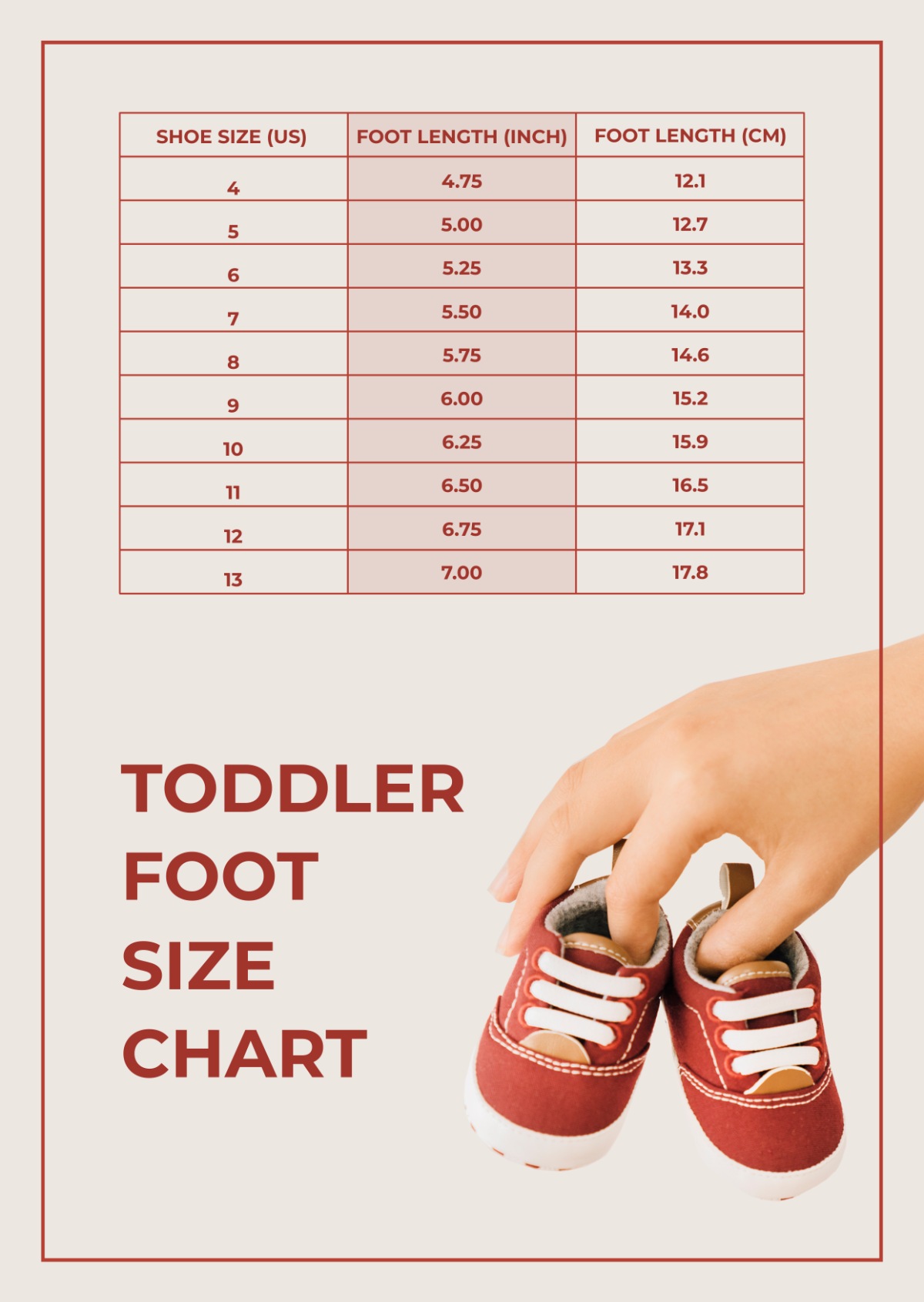
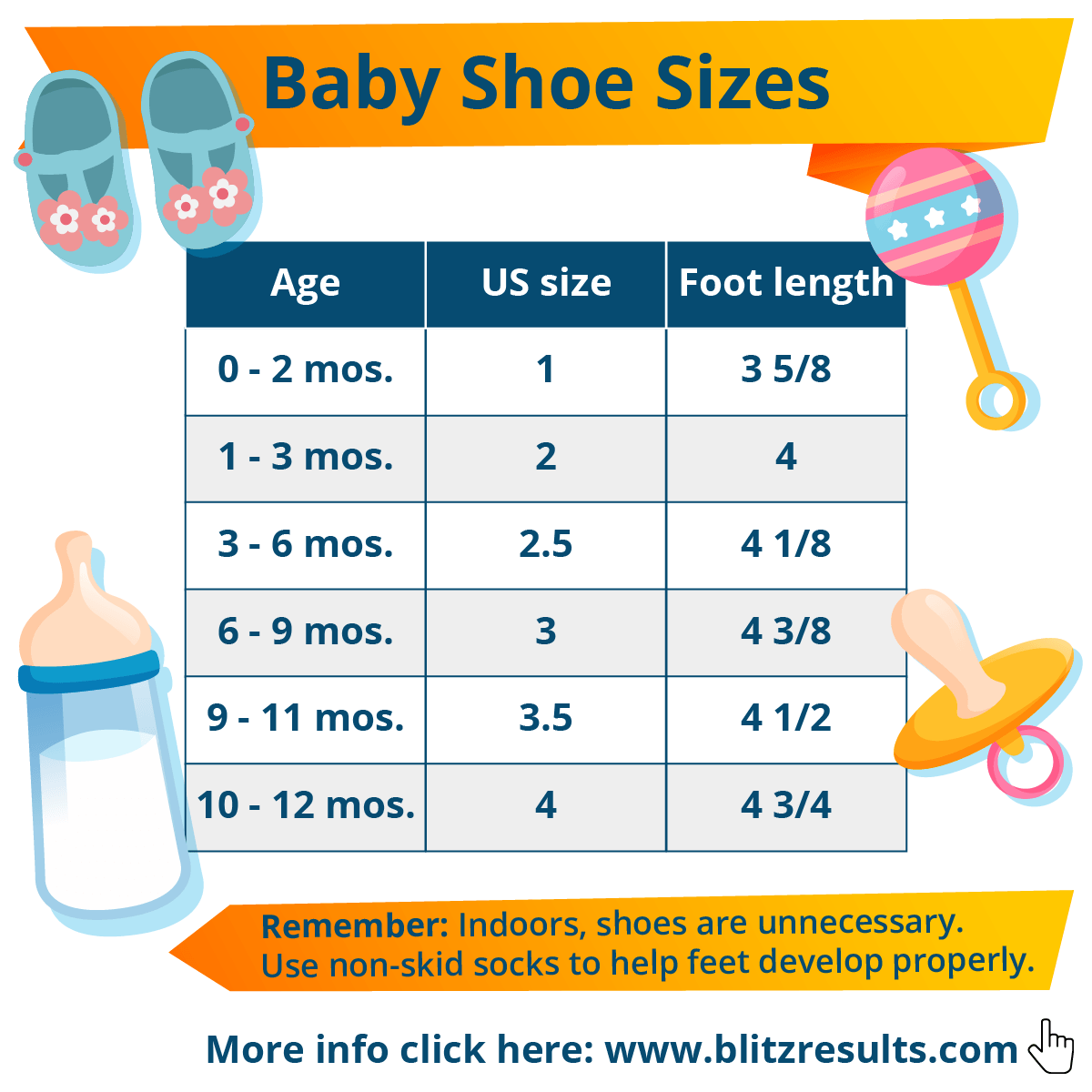
Baby Shoe Size Chart in U.S. Sizes
The table below gives a general starting point for U.S. infant and toddler sizing. It is not a replacement for the shoe brand’s chart because sizing systems differ.
| Approximate foot length | Common U.S. baby size range | Typical stage |
|---|---|---|
| 3.5 inches | 0–1 | Newborn or very young infant |
| 3.75 inches | 1–2 | Infant |
| 4.1 inches | 2–3 | Infant |
| 4.5 inches | 3–4 | Infant or early walker |
| 4.75 inches | 4–5 | Early walker |
| 5.1 inches | 5–6 | Toddler |
| 5.5 inches | 6–7 | Toddler |
| 5.75 inches | 7–8 | Toddler |
| 6.1 inches | 8–9 | Toddler |
These ranges are approximate. Some brands use different size labels, and some size charts measure the inside of the shoe rather than the foot.


For example, if your child’s larger foot measures 4.5 inches, do not automatically buy every U.S. size 4. Check the specific brand’s chart and then confirm the fit on the foot.
How much extra room should baby shoes have?
Choose enough room for the toes to move and the foot to grow slightly. A practical starting point is about 3/8 to 1/2 inch of space beyond the longest toe, but the shoe’s shape and the brand’s instructions also matter.
Too little room can press the toes. Too much room can make a new walker trip or cause the foot to slide forward.
A shoe should not be so large that your child must grip with the toes to keep it on.

How to Check the Fit After Measuring
Measurement is only the first step. A shoe can match the length on paper and still fit poorly.
Check the toe area
Ask your child to stand. Look for a small gap between the longest toe and the front of the shoe.
The toes should not touch the front when the child stands. They should also have room to spread.
Do not judge the fit by the big toe alone. The second toe may be longer.
Check the heel
The heel should remain inside the shoe while your child walks. A little movement can be normal, but repeated slipping may cause blisters or make walking less stable.
A strap or adjustable closure can improve the fit. Tightening it too much can create pressure across the top of the foot.
Check the width and instep
Look for red marks, pinching, or bulging after your child wears the shoes for a short time.
The instep is the top of the foot. A shoe can have the correct length but still feel tight over the instep.
If the shoe is tight at the sides or top, try a different shape or width. Do not keep increasing the length to solve a width problem.
Watch your child walk
A child who is new to walking may look less steady in any new shoe. The shoe should not make the child consistently stumble, drag the toes, or remove the shoes because of discomfort.
Shoes should bend near the ball of the foot. Very stiff soles can make natural foot movement harder for early walkers.


The American Podiatric Medical Association provides consumer information on children’s foot health and footwear. Its guidance supports choosing shoes that fit well and allow normal foot movement.

Common Mistakes When Measuring Baby Feet
Small errors can lead to a poor fit. Avoid these common problems.
Measuring only one foot
Measure both feet. Use the larger result. Buying for the smaller foot may leave the larger foot cramped.
Measuring while the toes are curled
Curled toes shorten the result. Keep the foot flat and relaxed.
Holding the pencil at an angle
An angled pencil can add extra length. Keep it vertical when marking the heel and toe.
Measuring on carpet
Soft flooring can change the foot’s position. Use a hard, flat surface.
Adding too much room
Buying several sizes too large may seem economical, but loose shoes can slip, rub, and affect balance.
Using age as the main guide
Age ranges are only rough estimates. Babies grow at different rates, and shoe brands use different size systems.
Trusting the printed number
The number on the shoe is a starting point, not proof of fit. Try the shoe on both feet when possible.
Measuring only the shoe’s removable insole
A removable insole may not show the true space inside a shoe. It can curve, compress, or differ from the shoe’s internal shape.

How Often Should You Recheck Baby Shoe Size?
Check the fit about every six to eight weeks during periods of fast growth, and sooner if the shoes show signs of pressure. This is a practical reminder, not a fixed medical rule.
Recheck the fit when:
- Your child starts walking more often.
- The season changes and socks become thicker.
- The child begins wearing a different type of shoe.
- You see red marks or blisters.
- Your child removes the shoes often.
- The toes appear crowded.
- The shoes become hard to put on.
Children may outgrow shoes before the shoes look worn. A visual check alone is not enough.
What to Do If the Measurement Does Not Match the Shoe
If the foot measurement falls between sizes, start with the brand’s fitting advice.


If the shoe feels short, try the next size. Then check that the heel does not slip and that the child can walk safely.
If the shoe is long but tight across the sides, do not simply size up. Choose a wider model or a shoe with a different upper shape.
If the left and right feet differ, fit the larger foot. Use an adjustable closure to help secure the smaller foot, but do not compress it.
If your child has a noticeable foot difference, unusual toe position, repeated pain, or frequent blisters, ask a pediatrician or pediatric podiatrist for advice. A qualified professional can assess foot shape and gait in person.

Key Takeaways
- Measure both feet while standing when your child can stand safely.
- Use the larger foot measurement.
- Measure in the afternoon or evening when possible.
- Wear the socks that will go with the shoes.
- Compare the result with the brand’s U.S. size chart.
- Leave modest toe room, not several extra sizes.
- Check length, width, heel security, and walking comfort.
- Recheck the fit often during periods of rapid growth.
- Babies who are not walking usually need protection only when the environment calls for it.
Frequently Asked Questions
Can I measure a baby’s foot without a printer?
Yes. You do not need a printable chart. Use paper, a pencil, and a ruler. Measure the marks in inches, then compare the result with the shoe brand’s online U.S. chart.
Should a baby wear shoes before walking?
Usually, babies do not need firm shoes before they walk. Bare feet or soft, flexible footwear can support natural movement indoors. Use protective footwear when the ground is cold, hot, rough, sharp, or unsafe.
Is a baby shoe size the same as a toddler shoe size?
The size numbers may continue across infant and toddler ranges, but the fit can change. Toddler shoes may have different soles, shapes, closures, and width options. Always check the brand’s chart and the actual fit.
How much bigger should baby shoes be?
The shoes should have a small amount of extra space beyond the longest toe, often around 3/8 to 1/2 inch as a starting point. The exact fit depends on the shoe shape and the brand. Too much extra space can make walking less stable.
Should I buy baby shoes by months or age?
No. Age and clothing-size labels are rough guides. Measure the foot and use the brand’s U.S. size chart instead.
Conclusion
The most reliable way to measure baby shoe size is to trace or mark the foot on a hard floor, measure both feet, and compare the larger measurement with the brand’s chart. Then check the shoe while your child stands and walks.
A good baby shoe protects the foot without squeezing it or adding unnecessary weight. If the shoe causes pain, repeated slipping, blisters, or unusual walking problems, stop using it and seek advice from a pediatrician or pediatric foot specialist.
