
Most babies use a bassinet for about 3 to 6 months. However, the correct time to stop depends less on age and more on your baby’s development, size, and the bassinet’s limits.
Move your baby to a crib when they reach the product’s weight limit, start rolling, push up on their hands and knees, or show signs that they may climb or pull out. Always follow the instructions for your specific bassinet.
In the United States, the safest sleep space is a firm, flat surface made for infant sleep. The American Academy of Pediatrics (AAP) recommends placing babies on their backs for every sleep and keeping the sleep space free of pillows, blankets, bumpers, and toys. The U.S. Consumer Product Safety Commission (CPSC) also regulates bassinets and bedside sleepers sold in the United States.


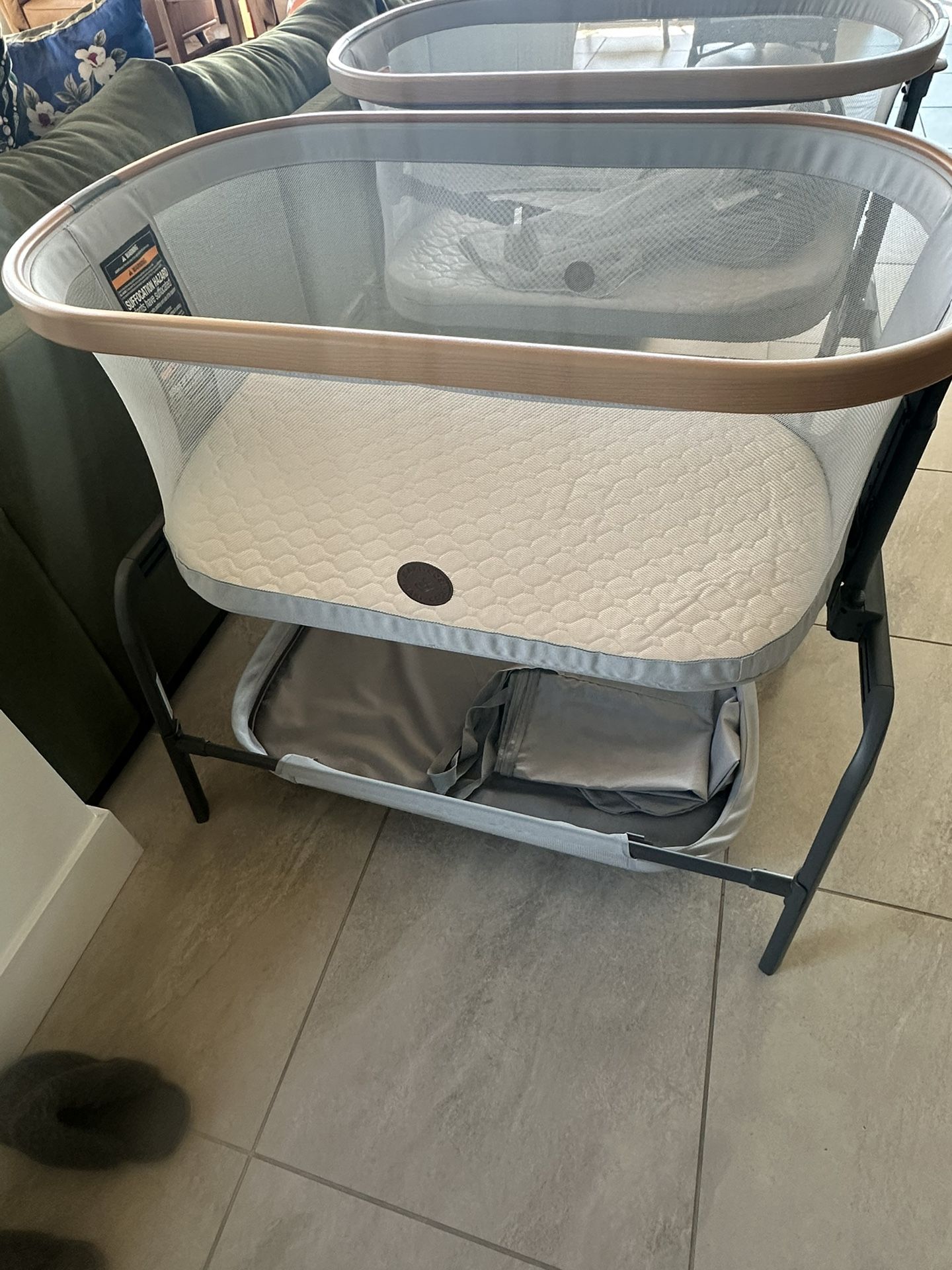
The short answer: How many months can a baby use a bassinet?
A bassinet is usually used from birth until around 3 to 6 months. Some babies outgrow one sooner, while others may fit safely for a little longer if they have not reached any safety limit.
The exact stopping point is based on four checks:
- Your baby’s movement: Stop use when your baby begins rolling, tries to sit, pushes up, or pulls up.
- The bassinet’s weight limit: Never exceed the limit listed by the manufacturer.
- The bassinet’s size and fit: Your baby should have room to lie flat without touching the sides in a way that creates a risk.
- The product instructions: Some models have age limits, height limits, or specific rules for rocking, folding, or bedside use.
Age is only a guide. A strong, active 3-month-old may need to leave a bassinet before a quiet 5-month-old. Developmental signs matter more than the calendar.
The AAP recommends room-sharing without bed-sharing for at least the first six months, and ideally for the first year. Moving from a bassinet to a full-size crib does not mean your baby must leave your room.

What is a bassinet?
A bassinet is a small sleep space designed for a young baby. It often has low sides, a compact frame, and a mattress or sleep surface that is smaller than a crib.
In the U.S., products sold as bassinets or bedside sleepers must meet applicable federal safety requirements. A bedside sleeper is designed to sit next to an adult bed. Some models attach to the bed, while others stand beside it without attaching.
A bassinet is not the same as:
- A crib, which is larger and usually supports sleep for several years.
- A play yard, which may have a bassinet insert but must be used only as directed.
- A stroller bassinet, which may not be approved for unsupervised sleep unless the manufacturer says it is.
- A nursing nest, lounger, or baby pod, which is not a safe sleep surface unless it meets the applicable rules for infant sleep.
- A car seat, which is designed for travel, not routine sleep outside the vehicle.
The name on the product does not prove that it is safe for sleep. Look for clear manufacturer instructions that state the product is intended for infant sleep. Use only the original mattress and fitted sheet made for that model.
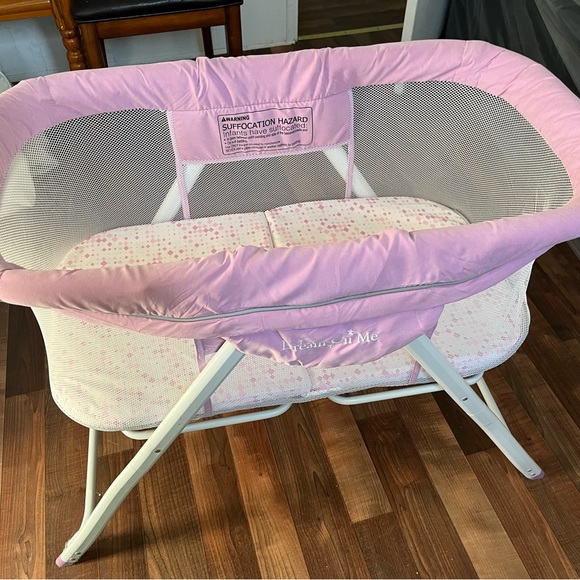
When should you stop using a bassinet?
You should stop using a bassinet as soon as your baby reaches one of its limits or shows a movement sign that makes continued use unsafe.
1. Your baby starts rolling
Many bassinets are not designed for a baby who can roll from back to front or front to back. Stop using the bassinet when rolling begins, even if your baby has not reached the weight limit.


Rolling can change how your baby’s face and body contact the sides. A baby who can roll may also shift into a position the bassinet was not built to handle.
If your baby rolls once by accident, check the manual right away. Some products require immediate discontinuation at the first sign of rolling. Do not use pillows, rolled towels, wedges, or positioners to keep your baby still.
2. Your baby pushes up or tries to sit
Stop using the bassinet if your baby can push up on their hands and knees, sit without help, or pull against the sides.
These movements can increase the risk of falling or climbing out. They can also make a small sleep space less suitable for an active baby.
Do not wait until your baby can fully stand. Early attempts to push up or sit are enough to review the product limits and prepare the crib.
3. Your baby reaches the weight limit
Every bassinet has a maximum weight. Common limits vary by model, so there is no single safe number for every product.
Find the limit in:
- The product manual
- The label on the bassinet
- The manufacturer’s website
- The original packaging
- The registration or warranty information
Do not estimate your baby’s weight. If your baby is close to the limit, use a current weight from a health visit or a reliable home scale. When in doubt, move to a crib before the limit is reached.
4. Your baby no longer fits well
A baby may outgrow a bassinet before reaching its stated weight limit. The sleep surface may feel too short, or your baby may repeatedly press against the sides.
Do not add a larger mattress. Do not replace the original mattress with a softer or thicker one. A replacement mattress may leave gaps or raise the baby high enough to create a fall risk.
5. The bassinet has damage or missing parts
Stop using the product if you find:
- A torn or sagging mattress
- Loose screws or fasteners
- Broken wheels or locks
- A bent frame
- A detached side
- Missing hardware
- A recalled part
- Fabric that blocks airflow or changes the shape of the sleep area
Check the CPSC recall database before using a secondhand bassinet. A product that looks clean may still be missing a safety part or have an expired recall notice.

Can a baby sleep in a bassinet all night?
Yes. A bassinet can be used for overnight sleep if the product is approved for infant sleep and you follow its instructions.
Use the bassinet in the same room as you, but not in the adult bed. Place it on a stable, level surface. Keep the sleep area bare except for the fitted sheet made for that product.


For every sleep:
- Place your baby on their back.
- Use a firm, flat mattress.
- Keep the baby’s face and head uncovered.
- Remove pillows, quilts, loose blankets, toys, and bumper pads.
- Keep the bassinet away from cords, window coverings, heaters, and other hazards.
- Do not use an inclined position unless the product is specifically designed and approved for that use.
- Follow the product’s locking and folding instructions.
The AAP recommends a separate sleep surface for the baby. Room-sharing can make feeding and checking your baby easier while avoiding the risks linked with bed-sharing.
A baby may fall asleep in a car seat, swing, stroller, or carrier. When practical, move the baby to a firm, flat sleep surface on their back. These products are not substitutes for a bassinet or crib for routine sleep.
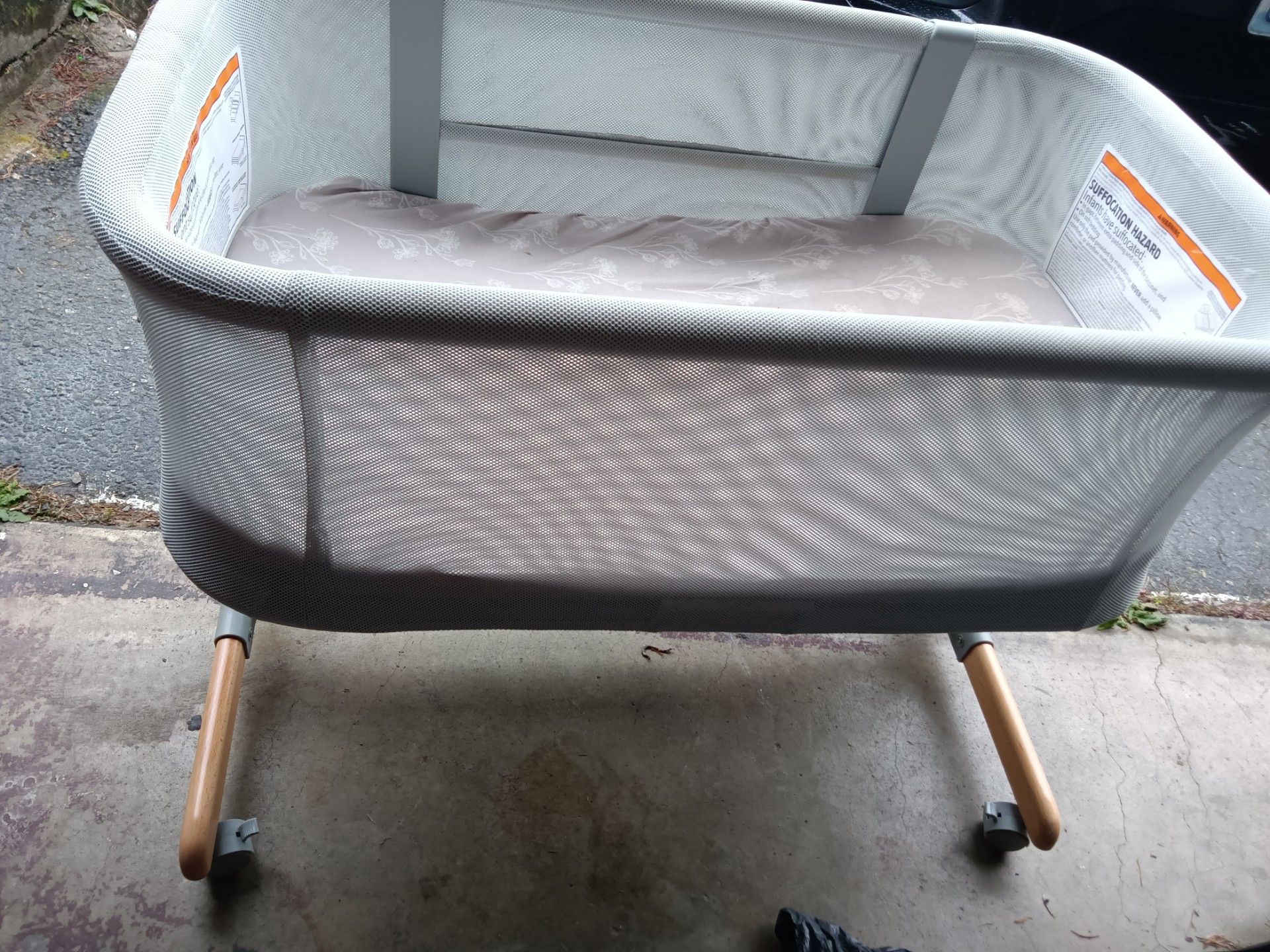
Bassinet vs. crib: When should you make the switch?
Move your baby to a crib when the bassinet no longer meets the baby’s needs or the product’s rules. The crib may stay in your bedroom if you want to continue room-sharing.
A crib offers more space and usually remains useful well beyond the first few months. It is often the next step after a bassinet, but the move does not need to happen at one exact age.
| Situation | Best next step |
|---|---|
| Baby is under the bassinet limits and cannot roll | Continue using the bassinet as directed |
| Baby begins rolling | Stop bassinet use and use a suitable crib or other approved sleep space |
| Baby pushes up, sits, or tries to climb | Move to a crib promptly |
| Baby reaches the weight limit | Stop using the bassinet |
| Baby still fits but the manual lists an age limit | Follow the manual and move to a crib |
| Bassinet is damaged or recalled | Stop use and find a safe replacement |
Before the switch, set up the crib with only a firm mattress and a fitted sheet. Make sure the mattress fits tightly, with no visible gaps around the edges.
A crib transition can feel emotional. The smaller space may seem cozy, but safety comes first when your baby becomes more mobile.

How to make the transition from a bassinet to a crib
The safest approach is to prepare the crib before your baby outgrows the bassinet. This avoids a rushed change after a new movement appears.
Prepare the crib
Confirm that:
- The crib meets current U.S. safety requirements.
- The mattress is firm and fits snugly.
- The fitted sheet fits the mattress.
- The crib has no pillows, bumpers, stuffed animals, or loose bedding.
- The crib is placed away from windows, cords, and heaters.
- Any used crib has all parts, instructions, and no recall history.
Practice when your baby is calm
You can place your baby in the crib for a short nap before the full transition. This gives your baby time to become familiar with the larger space.
Keep the sleep routine the same. For example, you might use a feed, diaper change, sleep sack, short song, and then the crib. A familiar routine can help the new space feel less strange.
Keep the sleep position safe
Always place your baby on their back. If your baby rolls independently, you do not need to keep turning them back throughout the night, but the crib must remain clear of loose items.
Use a wearable blanket if your baby needs warmth. Stop swaddling when your baby shows signs of trying to roll. A swaddled baby may not be able to use their arms to change position.
Give the change time
Some babies adjust quickly. Others need several nights. Keep the room calm and return to the same safe sleep steps each time.
Do not make the crib feel more familiar by adding a pillow, blanket, nest, or positioning device. These items can create an unsafe sleep environment.


How long can a baby sleep in a bedside bassinet?
A baby can use a bedside bassinet until the product’s stated limit or until the baby reaches a movement milestone that ends use.
Bedside bassinets vary. Some have a removable side, while others are freestanding. Some are approved only for use beside the bed, and others allow limited rocking or travel use. The manual controls which features are safe.
A bedside bassinet does not remove the need for a separate sleep surface. Do not leave a gap between the adult mattress and the bassinet. If the model attaches to the bed, use every required strap and locking part.
Never place an adult mattress, blanket, or pillow inside the bassinet. Do not use the bedside mode if the product is not attached exactly as directed.
If your baby can reach over the side or pull toward the adult bed, stop using the bedside bassinet and move the baby to a crib.

Is a bassinet safe for a newborn?
A bassinet can be safe for a newborn when it is designed for infant sleep and used correctly. Newborns should sleep on their backs on a firm, flat surface with no loose items.
Before bringing the baby home, check the following:
- The product is made for infant sleep.
- The bassinet has not been recalled.
- The mattress is firm and fits correctly.
- The fitted sheet is made for the product.
- The bassinet is stable and fully locked.
- The baby sleeps alone in the bassinet.
- The baby is not wearing a weighted sleep product.
- The bassinet is kept away from smoke and overheating.
Avoid products with deep padding, soft sides, loose fabric, or an inclined sleep surface. A soft surface can allow a baby’s face to press into the material.
The safest setup is simple: baby, back, firm flat surface, fitted sheet, and nothing else.

Common mistakes when using a bassinet
Many bassinet problems come from using a familiar product in a way the manufacturer did not approve.
Waiting for the baby to “look too big”
A baby does not need to look crowded before moving to a crib. Rolling, pushing up, or reaching the weight limit is enough.
Using a crib mattress in the bassinet
A standard crib mattress is too large for most bassinets. It may create gaps or change the height of the sleep surface.
Adding a bumper or positioner
Bumpers and positioners do not make a bassinet safer. They can interfere with breathing or trap a baby against the side.
Keeping a swaddled baby in the bassinet after rolling begins
Stop swaddling at the first signs of rolling. Use an arms-free wearable blanket instead, if needed.


Using a bassinet for unsupervised naps in other places
A bassinet should be used only in the way the product allows. Do not place it on a bed, table, couch, counter, or other raised surface unless the product is specifically designed and approved for that use.
Buying a secondhand product without checking it
Look for the model name and manufacture date. Check for recalls, confirm that all parts are present, and find the manual. If you cannot verify the product’s history or condition, choose another sleep space.
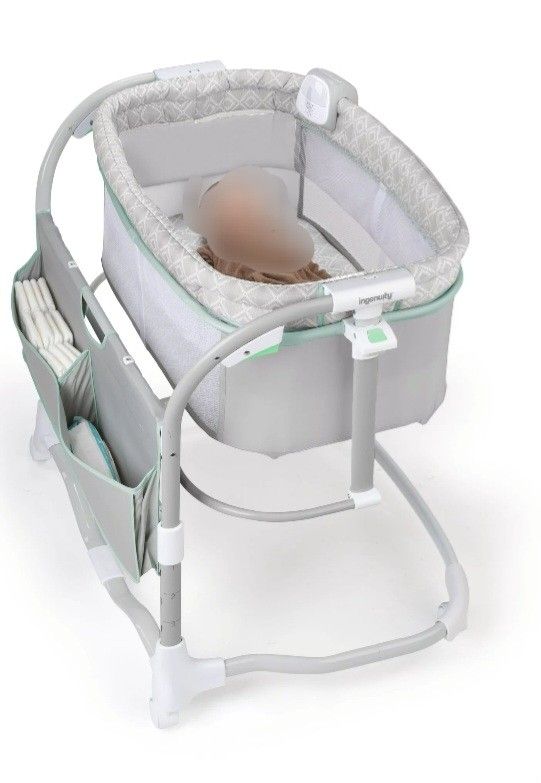
A simple bassinet safety checklist
Use this checklist each day:
- The bassinet is intended for infant sleep.
- The frame is stable and locked.
- The mattress is firm, flat, and not damaged.
- The fitted sheet fits tightly.
- Your baby is placed on their back.
- The baby’s head and face are uncovered.
- No loose items are in the sleep area.
- The baby has not reached the weight or age limit.
- The baby cannot roll, sit, push up, or pull up.
- The bassinet is not recalled.
- The product is used only as the manual allows.
If any answer is “no,” stop and correct the issue before the next sleep. If you cannot correct it, use a properly set-up crib or another approved sleep space.

Frequently asked questions
Can a baby sleep in a bassinet after 6 months?
Sometimes, but only if the baby still meets every product limit and has not reached a movement milestone that ends use. Many babies are ready for a crib before 6 months. The bassinet manual is more important than the age number.
Can a baby sleep in a bassinet if they roll over?
Usually not. Stop using the bassinet when rolling begins unless the manufacturer clearly states that the product is designed for that stage. Never use restraints, wedges, or positioners to prevent rolling.
Can a newborn sleep in a crib instead of a bassinet?
Yes. A newborn can sleep in a properly assembled crib from the first night. The crib must have a firm, flat mattress and a fitted sheet, with no loose bedding or soft objects.
Should a baby sleep in a bassinet or crib in the parents’ room?
Either can work. The AAP recommends room-sharing without bed-sharing, ideally for at least the first six months. Choose the sleep space that meets current safety rules and fits comfortably in the room.
What should I do if my baby reaches the bassinet weight limit early?
Stop using the bassinet and move your baby to a properly prepared crib or another approved sleep space. Do not continue use because your baby still appears to fit.
Can I use a bassinet for daytime naps?
Yes, if the bassinet is approved for sleep and used according to the manual. Keep the same safe setup for naps and nighttime sleep.
Key takeaways
- Most babies use a bassinet for about 3 to 6 months.
- Developmental milestones matter more than age.
- Stop use when your baby rolls, pushes up, sits, tries to climb, reaches the product limit, or no longer fits well.
- Always follow the specific bassinet manual.
- Use a firm, flat mattress with only a fitted sheet.
- Keep your baby on their back and the bassinet free of loose items.
- A crib can remain in your bedroom after the bassinet stage.
Conclusion
A bassinet is a short-term sleep space for the early months of life. For many U.S. families, it lasts about three to six months, but the safe end point depends on your baby and the product.
Check the manual today, confirm the bassinet’s limits, and prepare a safe crib before your baby begins to roll or push up. When a milestone or product limit is reached, make the switch rather than trying to extend bassinet use.
