
Teething can make sleep hard for babies and parents. A sore gum, extra drool, and the need to chew may lead to more crying and more wake-ups at night. In the United States, the safest plan is to ease gum pain, keep the bedtime routine calm, and follow safe-sleep rules every time.
Try a chilled teething ring or cool washcloth before bed. Offer comfort, feed your baby as usual, and place your baby on their back in a firm, flat crib or bassinet. If your baby seems very uncomfortable, ask your child’s doctor about the right pain medicine and dose. Do not use numbing gels, amber necklaces, or unsafe sleep products.
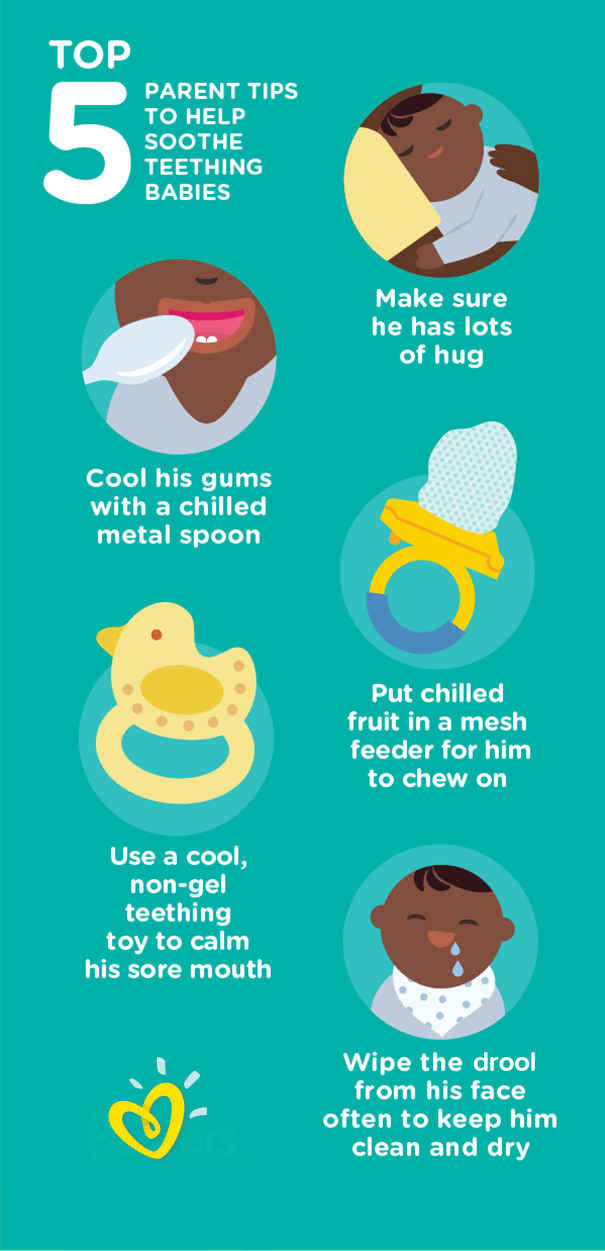
How teething can affect a baby’s sleep
Teething may cause sore or tender gums. Babies may chew more, drool more, rub their face, or act more fussy than usual. Some babies wake more often at night because lying down gives them fewer distractions from gum pain.


Most babies begin teething around 6 months, but the timing can vary. Some babies get a first tooth earlier, while others do not show a tooth until after their first birthday.
Common signs of teething include:
- Tender or swollen gums
- More drooling
- Chewing on fingers, toys, or clothing
- Mild fussiness
- A change in eating habits
- Trouble settling at bedtime
- More night waking
- A mild rise in body temperature, but not a true fever
Teething does not usually cause a high fever, repeated vomiting, severe diarrhea, cough, or breathing trouble. A sick baby may also happen to be teething at the same time. Do not assume that every symptom comes from a new tooth.
The American Academy of Pediatrics notes that teething symptoms are often mild. The U.S. Food and Drug Administration also warns parents to avoid certain teething products that may cause harm.

What to do before bedtime
The best bedtime plan combines gum comfort with a familiar sleep routine. Start about 20 to 30 minutes before your baby’s usual sleep time.
1. Check your baby first
Look for signs of illness, hunger, a wet diaper, or being too hot or cold. Teething may not be the main reason your baby is crying.
Take your baby’s temperature if they feel warm. Use a reliable thermometer and follow its instructions. For babies younger than 3 months, a rectal temperature of 100.4°F (38°C) or higher needs prompt medical advice.
2. Offer a safe chilled teether
Give your baby a teether that is made for their age and is too large to swallow. Chill it in the refrigerator, but do not freeze it unless the product instructions clearly allow it.
A very cold or frozen teether can hurt delicate gums. Hard objects can also damage the mouth. Check the teether for cracks before each use, and replace it when it becomes worn.
Other options include:
- A clean, cool, damp washcloth for your baby to chew
- A soft rubber teether made for infants
- Gentle gum pressure with a clean finger
- A calm feed if your baby is hungry
Always watch your baby while they use a teether or washcloth. Remove loose pieces at once.


3. Use gentle gum pressure
wash your hands. Then rub the sore gum with a clean finger for a short time. Gentle pressure may feel soothing because it gives the gum a firm sensation.
Stop if your baby resists or seems more upset. The goal is comfort, not force.
4. Keep the routine the same
Use the same short steps each night, such as:
- Feed your baby.
- Change the diaper.
- Dim the lights.
- Offer a cool teether.
- Cuddle or sing softly.
- Place your baby in the crib while drowsy or asleep.
A teething baby may need extra comfort. Try to keep the room dark and quiet so the added care does not turn into a long, active play period.
5. Put your baby down safely
Place your baby on their back for every sleep. Use a firm, flat crib, bassinet, or portable play yard with only a fitted sheet.
Keep pillows, blankets, bumpers, stuffed toys, and weighted sleep products out of the sleep space. Do not let your baby sleep with a teether, washcloth, bottle, or pacifier clip.
These steps follow guidance from the American Academy of Pediatrics safe-sleep recommendations and the National Institute of Child Health and Human Development Safe to Sleep program.

Pain relief for a teething baby
If comfort measures do not help, ask your baby’s pediatrician about pain relief. The correct medicine depends on your baby’s age, weight, health, and the product’s strength.
Acetaminophen
Acetaminophen may be an option for babies who are at least 2 months old, but use it only with guidance from your child’s doctor. Read the label carefully. Infant medicines can have different concentrations.
Use the oral syringe that comes with the medicine. Do not use a kitchen spoon. Never give more than the label or your doctor recommends.
Ibuprofen
Ibuprofen is generally not used in babies younger than 6 months unless a doctor tells you to use it. It may not be suitable if your baby is dehydrated, vomiting, or has certain health problems.
Ask a pediatrician before using it. Follow the label for the exact product and dose.
Avoid aspirin
Never give aspirin to a child unless a qualified clinician specifically directs you to do so. Aspirin can raise the risk of a serious illness called Reye’s syndrome.
Do not combine products without advice
Many cold and pain products contain the same active ingredients. Giving two products with the same ingredient can cause an overdose.


Keep a written record of the medicine name, strength, dose, and time given. The FDA’s guidance on children’s pain medicines advises parents to read labels and use the proper measuring device.

Teething products to avoid
Some products marketed for teething can cause injury, poisoning, choking, or breathing problems. Avoid these products unless your child’s doctor gives a clear, specific reason to use one.
Avoid benzocaine gels
Do not use benzocaine products for babies and young children. Benzocaine can cause methemoglobinemia, a rare but dangerous condition that reduces the blood’s ability to carry oxygen.
The FDA warns against using benzocaine oral products for children younger than 2 years.
Avoid lidocaine unless prescribed
Prescription lidocaine should never be used for teething unless a clinician gives exact instructions. Swallowing too much can cause seizures, heart problems, or severe harm.
Avoid homeopathic teething tablets and gels
Homeopathic teething products may contain ingredients that are not safe or may vary from one product to another. They have not been shown to reliably ease teething pain.
Avoid amber teething necklaces
Amber necklaces, bracelets, and anklets do not treat teething pain. They can cause strangulation or choking if the beads or cord break.
Do not place any necklace, cord, or jewelry around a sleeping baby’s neck.
Avoid alcohol and frozen foods
Never rub alcohol on your baby’s gums. Do not give frozen foods or hard pieces of food that can break off and cause choking.
Once your baby eats solid food, use only foods that match their stage of development. Stay with your baby while they eat.

How to protect sleep while your baby is teething
Teething may cause a few rough nights, but you can protect your baby’s sleep habits with small, steady changes.
Keep the usual wake time and bedtime when possible. A very late nap or an extra-long morning sleep can make it harder for your baby to settle at night.
During night wakings:
- Pause for a moment to see whether your baby settles.
- Respond with a quiet voice and low light.
- Check the diaper and temperature.
- Offer a feed if your baby normally feeds at that time.
- Use a short cuddle or gentle gum rub.
- Return your baby to the crib on their back.
Avoid starting a new habit that you do not want to keep, such as rocking for an hour at every wake-up. This does not mean you should ignore your baby. It means you can give comfort in a calm, brief, repeatable way.
If your baby falls asleep while being held, move them to their own safe sleep space when you can. Do not sleep with your baby on a couch, recliner, or adult bed. These places can trap a baby or block their airway.


A teething baby may sleep less for a few nights. Once the tooth breaks through and the soreness fades, many babies return to their usual pattern. If poor sleep continues for more than a short period, look for another cause, such as illness, reflux, hunger, a schedule change, or a room that is too warm.

When to call your baby’s doctor
Call your pediatrician if your baby has symptoms that do not fit mild teething. A doctor can help separate tooth pain from an infection or another health problem.
Seek medical advice for:
- A fever of 100.4°F (38°C) or higher in a baby younger than 3 months
- A high or lasting fever at any age
- Trouble breathing
- Extreme sleepiness or trouble waking
- Repeated vomiting
- Frequent watery diarrhea
- Signs of dehydration, such as very few wet diapers, a dry mouth, or no tears
- A rash that looks severe or spreads quickly
- Refusal to drink
- Crying that is intense and cannot be soothed
- Swelling of the face or gums
- Symptoms that keep getting worse
Call 911 for severe breathing trouble, blue or gray lips, a seizure, choking, or a baby who cannot be awakened.
If your baby’s sleep changes suddenly, do not focus only on the tooth. Check for illness, ear pain, constipation, hunger, or a change in the sleep setting.

A simple plan for tonight
Use this order:
- Check for fever or signs of illness.
- Offer a cool teether or clean cool washcloth.
- Massage the gum with a clean finger.
- Keep the bedtime routine short and familiar.
- Ask a pediatrician about pain medicine if your baby still seems to hurt.
- Place your baby on their back in a clear, firm, flat sleep space.
- Call the doctor if symptoms seem stronger than mild teething.
Key takeaways
- Cool, safe chewing tools and gentle gum pressure may ease teething discomfort.
- Keep bedtime calm, dark, and familiar.
- Ask a pediatrician before giving medicine, especially to a young baby.
- Avoid benzocaine, lidocaine without medical direction, homeopathic teething products, alcohol, aspirin, and amber necklaces.
- Teething should not be used to explain a high fever, breathing trouble, repeated vomiting, or dehydration.
- Safe sleep rules still apply during teething.
FAQs
Can teething cause a baby to wake up every hour?
It can lead to more waking, but waking every hour may have another cause too. Check for illness, hunger, a schedule problem, reflux, or a sleep association. Call your pediatrician if the pattern is severe or lasts.
Should I give my baby Tylenol before bed for teething?
Ask your baby’s doctor first. Acetaminophen may be used for some babies, but the dose must match the baby’s weight and the product strength. Do not give it just to prevent pain without medical guidance.
Can a teething baby sleep with a pacifier?
A pacifier may be used for sleep if your baby already uses one safely. Do not attach it to clothing, a cord, or a stuffed toy. If the pacifier falls out after your baby falls asleep, you do not need to replace it.
Is a low fever normal during teething?
Teething may cause a small rise in temperature, but a true fever is not a typical teething symptom. A temperature of 100.4°F (38°C) or higher should be taken seriously, especially in a baby younger than 3 months.
How long does teething pain last?
Pain and fussiness often come and go around the time a tooth moves through the gum. If your baby remains very uncomfortable, has worsening symptoms, or sleeps poorly for many days, ask the pediatrician to look for another cause.
Conclusion
To help a teething baby sleep, focus on safe comfort: offer a chilled teether, use gentle gum pressure, keep the bedtime routine steady, and follow safe-sleep guidance. Avoid numbing gels, necklaces, alcohol, frozen hard foods, and unapproved remedies.
When symptoms seem stronger than mild gum pain, contact your child’s doctor. A calm plan can protect both your baby’s comfort and your own sleep while the tooth comes in.


