
In the United States, most babies wear newborn diapers for a few days to about three weeks. Some babies outgrow them at birth, while smaller babies may wear them for a month or more. The real answer depends on your baby’s weight, body shape, growth rate, and the diaper brand’s size chart.
Newborn diapers usually fit babies who weigh up to about 10 pounds, but sizing is not the same across all US brands. Some babies skip newborn diapers and start in size 1.
The best time to move up is when the diaper feels tight, leaks often, leaves deep marks, or no longer covers your baby’s bottom well.
What Size Are Newborn Diapers?
Newborn diapers are the smallest standard disposable diapers made for babies after birth. They are often marked “NB” and may include a small cutout for the umbilical cord stump.


Most newborn diapers fit babies who weigh:
- Up to 10 pounds, in many major US brands
- Around 5 to 10 pounds in some brands
- Less than the lower limit of size 1 diapers
These ranges are only a guide. A diaper labeled newborn by one brand may fit differently from a newborn diaper made by another brand.
Newborn diaper size compared with size 1
| Diaper size | Common weight range in the US | Typical use |
|---|---|---|
| Newborn (NB) | Up to about 10 lb | Small newborns and early weeks |
| Size 1 | About 8–14 lb | Often the next size after newborn |
| Size 2 | About 12–18 lb | Larger infants |
The ranges overlap because babies have different shapes. A long, slim baby may need a different size than a shorter, wider baby at the same weight.
Always check the size chart printed on the package or listed on the brand’s US website. The manufacturer’s chart is more useful than age alone.

How Long Do Babies Usually Wear Newborn Diapers?
Most babies wear newborn diapers for one to three weeks, but the range is wide.
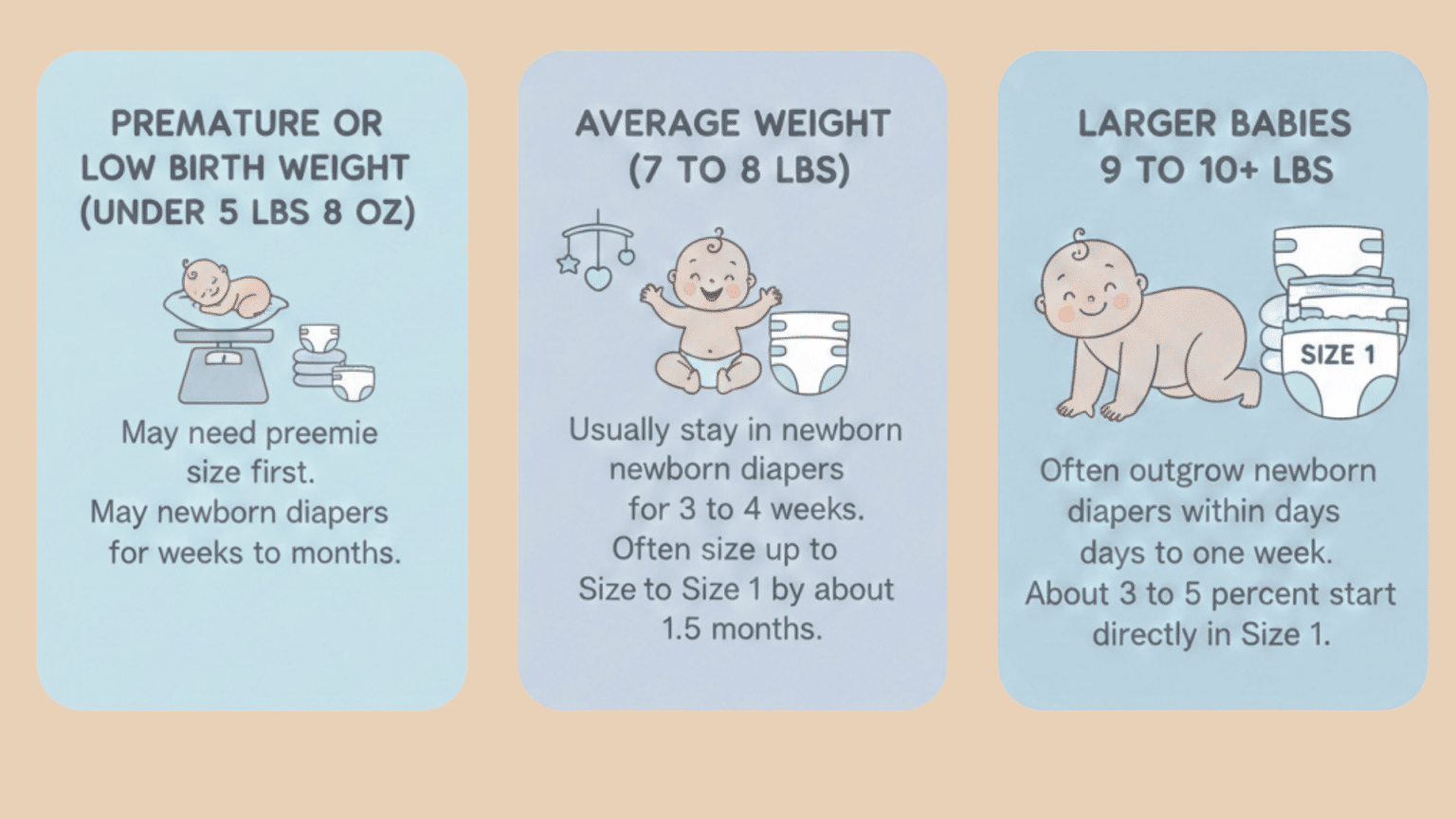
A baby born close to 7 or 8 pounds may wear newborn diapers for one to four weeks. A baby born at 9 or 10 pounds may fit better in size 1 from the start. A baby born early or with a lower birth weight may use newborn diapers for several weeks.
Your baby may wear newborn diapers for:
- No time at all if the diapers are too small at birth
- Several days if the baby is near the upper weight limit
- Two to four weeks in many cases
- A month or longer if the baby is small and the fit remains comfortable
Babies often gain weight quickly in the first months. Because of this, it is wise to buy only a small supply of newborn diapers before birth.
Why age is not a reliable guide
“Newborn” describes a stage of life, but newborn diaper sizes are based mainly on weight and fit. A 3-week-old baby may need size 1, while a 6-week-old baby may still fit newborn diapers.


The diaper should fit around the waist and legs without gaps or pressure. A baby’s age can help you estimate, but it should not decide the size by itself.

How Many Newborn Diapers Will You Need?
Most newborn babies use about 8 to 12 diapers per day. Some use more, especially during the first days when they pass small stools often.
A simple estimate is:
Diapers needed = diapers per day × number of days
For example, if your baby uses 10 diapers a day and wears newborn diapers for 14 days:
10 × 14 = 140 newborn diapers
That is only a planning example. Your baby may use fewer or more diapers, and you may change sizes sooner than expected.
A practical US buying plan
For many families, a cautious starting supply is:
- One small pack of newborn diapers
- Two or three packs of size 1 diapers
- Extra diapers only after you know which size and brand fit well
If you are having twins, expect more diapers per day, but do not assume both babies will use the same size for the same length of time.
If your baby is expected to be small or arrive early, ask the hospital or pediatrician which sizes may be useful. If your baby is expected to be large, buying mostly size 1 diapers may prevent waste.
How Do You Know When to Move Up From Newborn Diapers?
Move up to size 1 when the current diaper shows signs of being too small. Weight is helpful, but fit is the deciding factor.
Look for these signs:
Frequent leaks
Urine or stool leaks even when you change the diaper often and place it correctly.Deep red marks
Light marks can occur after wear, but deep or lasting marks around the waist or legs suggest pressure.The tabs barely reach
If the fastening tabs are hard to attach or cannot meet comfortably, the diaper may be too small.The diaper does not cover the bottom
The back and sides should cover your baby’s bottom without large gaps.The diaper looks full quickly
A small diaper may become saturated sooner. This can lead to leaks, though frequent leaks can also result from poor positioning or a poor brand fit.The diaper sits below the waist
The back should come up high enough to contain urine and stool. For newborn boys, point the penis downward before fastening the diaper.
One sign alone does not always mean you need to size up. Check the diaper’s weight range, then compare the fit on your baby.

How Should a Newborn Diaper Fit?
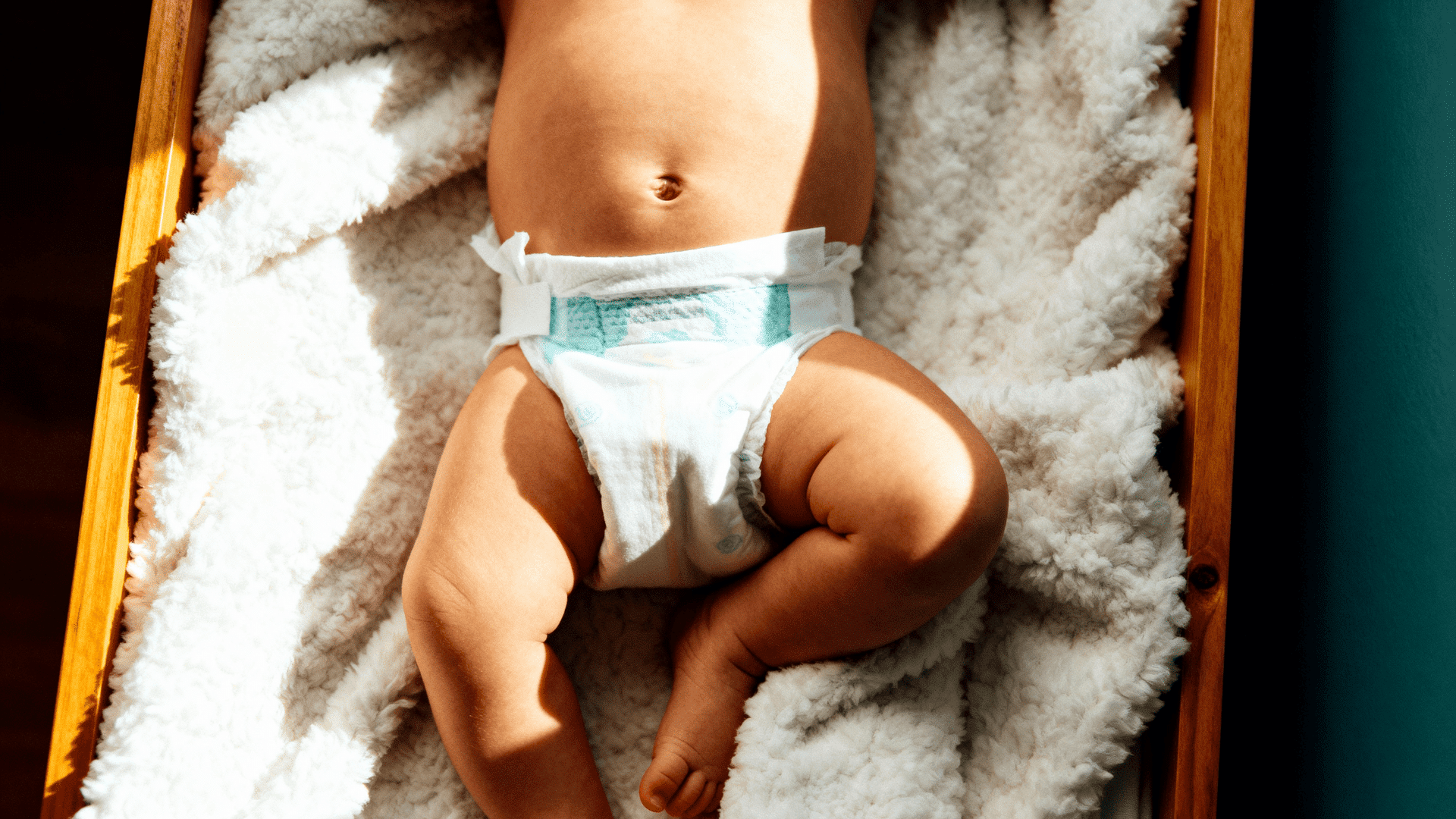
A well-fitting newborn diaper should be snug but not tight. You should be able to place about two fingers between the diaper and your baby’s belly without forcing them under the waistband.
Check the fit in four places:
- Waist: The diaper stays in place without digging into the skin.
- Legs: The elastic rests against the skin with no large gaps.
- Back: The diaper covers the bottom and reaches high enough to help prevent leaks.
- Front: The diaper sits below the umbilical cord stump when needed.
Pull out the ruffles around the legs after fastening the diaper. Tucked-in ruffles can cause leaks.
For a newborn with an umbilical cord stump, fold the front of the diaper down if it does not have a cord notch. Keep the area clean and dry. Follow your baby’s clinician’s instructions for umbilical cord care.


A simple fit test
After fastening the diaper:
- Run a finger around the waist and each leg.
- Check for large openings near the thighs.
- Make sure the diaper covers the bottom fully.
- Look for red marks after removal.
- Check whether urine or stool leaks despite correct placement.
If the diaper passes these checks, the size may be suitable even if your baby is near the top or bottom of the printed range.
Newborn Diapers vs. Size 1: Which Should You Choose?
Choose newborn diapers when your baby fits comfortably within the brand’s newborn range and the diaper stays secure without leaks. Choose size 1 when newborn diapers feel tight or when your baby is near the upper end of the newborn range.
A size 1 diaper may be the better starting choice when:
- Your baby weighs close to or above 10 pounds
- The newborn diaper tabs do not reach comfortably
- The diaper leaves deep marks
- Your baby has thick thighs or a broad waist
- The hospital or clinician says the baby is too large for newborn diapers
Newborn diapers may be better when:
- Your baby is small or has a narrow body
- Size 1 diapers leave gaps at the legs
- The newborn diaper covers the bottom more securely
- The newborn diaper has a useful umbilical cord cutout
Do not size up only because a diaper feels damp. A wet diaper needs changing, but dampness alone does not always mean the diaper is too small.
What If Newborn Diapers Leak?
Leaks do not always mean your baby needs a larger diaper. First, check placement and the type of leak.
If urine leaks from the legs
Check that the leg ruffles are pulled out. A gap may also mean the diaper is too large, not too small. Try a smaller size or a different brand if the gap continues.
If urine leaks from the back
Make sure the diaper sits high enough on the back. If the diaper is full or the tabs barely close, try size 1.
If stool leaks up the back
This may happen when the diaper is too small, especially after a large bowel movement. Move up a size if the diaper does not cover your baby’s bottom or the back panel sits low.
If leaks happen only at night
A longer sleep period can fill the diaper more than daytime use. Change the diaper before a long sleep when practical. If leaks continue, assess the fit and consider the next size.
A different brand may also fit better. Diaper shapes vary, and one brand may work well for a slim baby while another fits a baby with fuller thighs.


Should You Buy Newborn Diapers Before the Baby Arrives?
Buy a small supply, but avoid stocking up heavily. You cannot know your baby’s exact birth weight or body shape in advance, and some babies never use newborn diapers.
A sensible plan is to have:
- One small newborn pack
- Several packs of size 1
- A receipt or exchange option when possible
- A few diapers in the hospital or diaper bag
Check the package size before buying. A “box” may contain a different number of diapers from another brand or store pack.
If you receive many newborn diapers as gifts, keep them unopened until you know they fit. Some retailers allow unopened packages to be exchanged for a larger size, but store policies vary.

Can Premature Babies Use Newborn Diapers?
Some premature babies need preemie diapers rather than newborn diapers. Newborn diapers may be too large around the legs or waist for a very small baby.
Hospitals may use special preemie sizes based on the baby’s weight and medical needs. Follow the neonatal care team’s instructions, especially if your baby is still receiving hospital care.
After discharge, ask the pediatrician which diaper size is appropriate if the diaper gaps, rubs the skin, or leaks often. A premature baby may also have special skin-care needs.
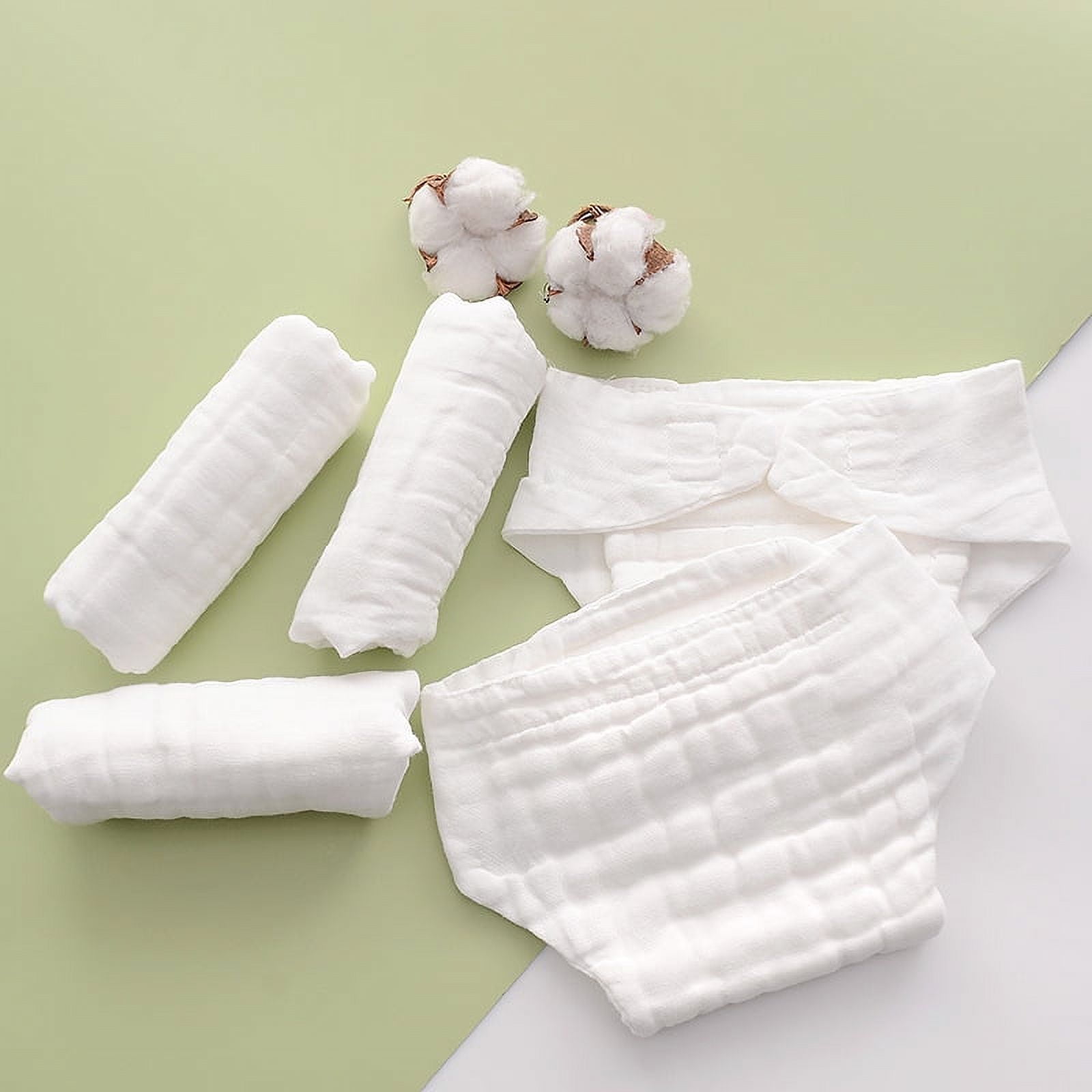
Do Cloth Diapers Have a Newborn Size?
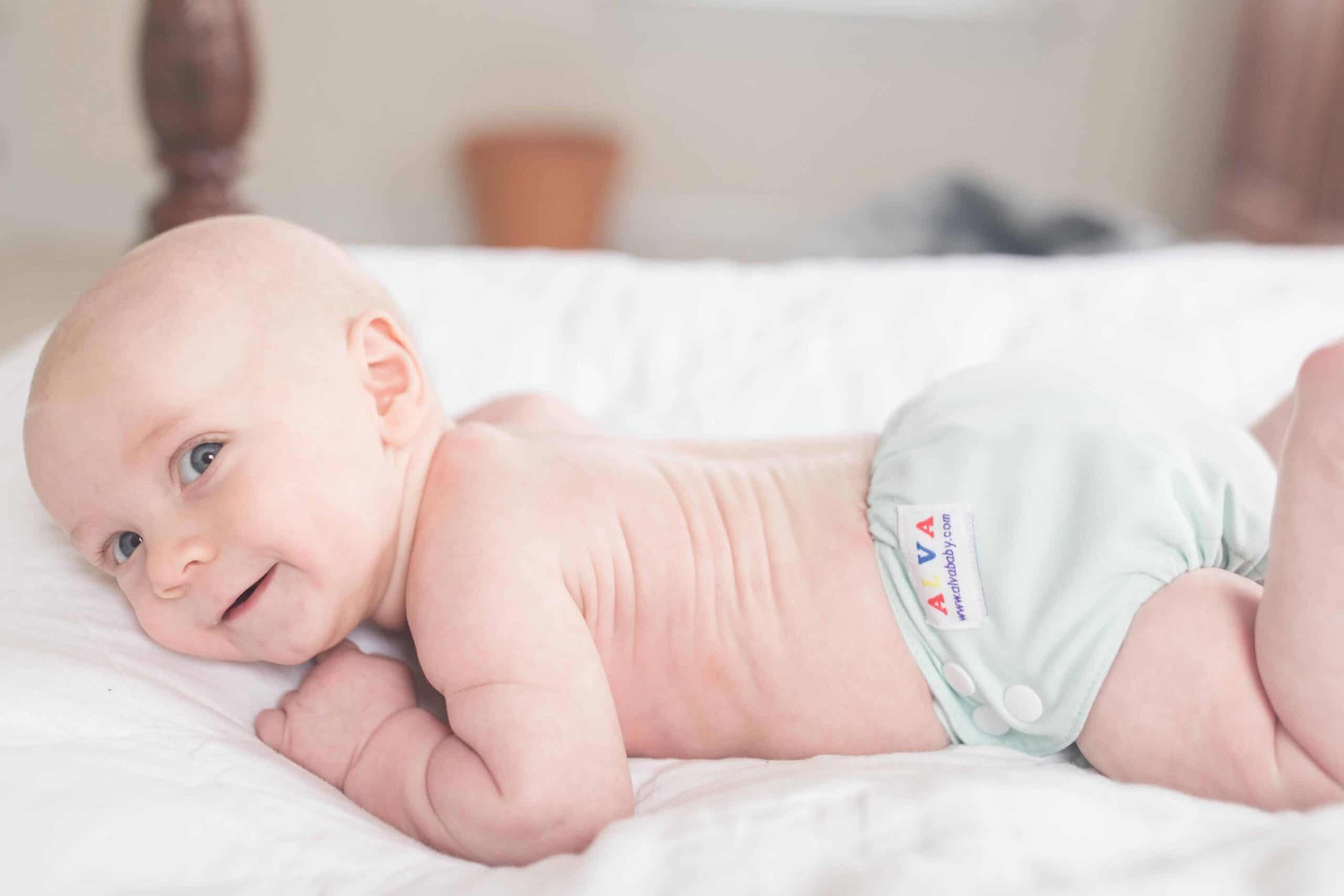
Many cloth diaper systems offer newborn sizes, but the fit is not directly comparable with disposable newborn diapers. Cloth diapers may be labeled by weight, age, rise setting, or diaper style.
Newborn cloth diapers are often useful for small babies, but they may be outgrown sooner than adjustable one-size diapers. One-size cloth diapers can be too bulky for very small newborns, especially around the legs.
Follow the cloth diaper maker’s fit instructions. The same signs still matter: secure leg openings, full bottom coverage, no painful pressure, and no repeated leaks.
Newborn Diaper Safety and Skin Care
Change wet or soiled diapers regularly to reduce skin irritation. Clean the diaper area gently, allow the skin to dry, and use a barrier cream if your baby’s clinician recommends one.
Contact your child’s health care professional if:
- A rash is severe, spreading, blistered, bleeding, or painful
- The rash does not improve with basic care
- Your baby has a fever or seems unwell
- The skin is broken or shows signs of infection
- Your newborn has fewer wet diapers than expected
Wet diaper counts vary by age and feeding. In the first days of life, the number may be lower than it is later. Your pediatrician can tell you what is expected for your baby’s age, feeding method, and health.
A diaper does not diagnose dehydration. If you are worried about feeding, urine output, sleepiness, or your baby’s behavior, call the baby’s clinician promptly.


Frequently Asked Questions
Do babies wear newborn diapers for one month?
Some do, but many do not. A baby may use newborn diapers for a few days, two to three weeks, or longer if the fit remains comfortable. Weight and fit matter more than age.
Can a 9-pound baby wear newborn diapers?
Possibly. Many US newborn diapers fit up to about 10 pounds, but a 9-pound baby may fit better in size 1 if the newborn diaper is tight or causes leaks. Check the specific brand’s chart.
Do newborn babies need newborn diapers?
No. Some newborns start in size 1, especially if they are large at birth or have fuller thighs. Other babies need newborn or preemie diapers.
How many newborn diapers should I bring to the hospital?
A small supply is usually enough because many hospitals provide diapers during the stay. Bring several newborn diapers and a few size 1 diapers if you are unsure of the size. Confirm your hospital’s policy before labor.
Why does my newborn diaper leak even though it is the right size?
The diaper may not be positioned correctly, the leg ruffles may be tucked in, or the brand may not match your baby’s body shape. A diaper can also leak when it is too large, too small, or not changed soon enough.
Key Takeaways
- Most babies wear newborn diapers for a few days to about three weeks.
- Some babies skip newborn diapers and start in size 1.
- Newborn diapers commonly fit babies up to about 10 pounds, but brands differ.
- Use weight and fit, not age alone, to choose a size.
- Move up when the diaper causes leaks, deep marks, poor coverage, or difficult fastening.
- Buy a small newborn supply before birth because babies may outgrow the size quickly.
Conclusion
Newborn diapers are often a short-term size. Many US babies use them for one to three weeks, while others need them only briefly or never use them at all.
Start with a small pack, check the brand’s weight chart, and watch how the diaper fits your baby. When the diaper becomes tight, leaks repeatedly, or leaves deep marks, try size 1. If your baby has a persistent rash, poor feeding, or concerning wet diaper changes, contact the pediatrician.
