
A fever in a baby can feel scary. In the United States, take a baby younger than 3 months to the emergency room right away for a rectal temperature of 100.4°F (38°C) or higher. Babies from 3 to 12 months may also need emergency care if they look very ill, have trouble breathing, cannot stay awake, have a seizure, or show signs of dehydration.
For any baby with a fever, call the child’s doctor for guidance. If your baby has severe symptoms, call 911 rather than driving.
When Is a Baby’s Fever an Emergency?
A fever is usually a body temperature of 100.4°F (38°C) or higher. For young babies, the number matters, but your baby’s behavior and symptoms matter too.


Go to the ER now or call 911 if your baby:
- Has trouble breathing, fast breathing, grunting, or ribs that pull in with each breath
- Has blue, gray, or very pale lips or skin
- Is hard to wake, limp, confused, or does not respond normally
- Has a seizure
- Has a stiff neck with fever
- Has a purple, red, or bruise-like rash that does not fade when pressed
- Cannot keep fluids down
- Has signs of severe dehydration
- Has a serious allergic reaction, such as facial swelling or trouble breathing
- Was injured, is unusually weak, or looks severely ill
If your baby is not breathing normally or is unresponsive, call 911 immediately.
Fever and age: a quick guide
| Baby’s age | Fever that needs urgent action |
|---|---|
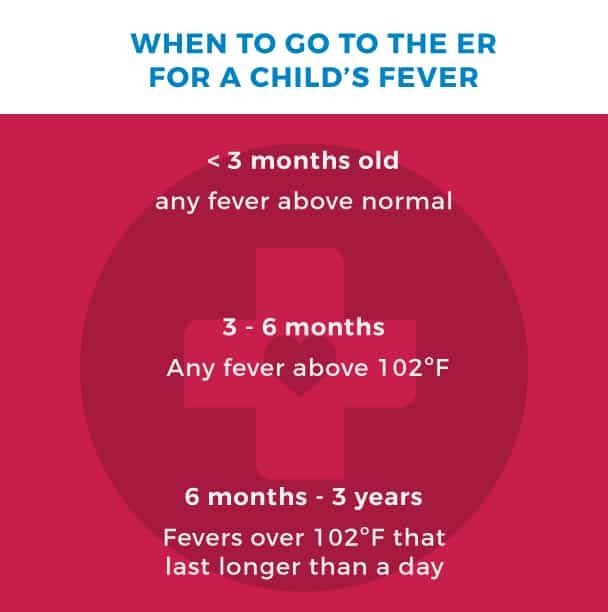
| Younger than 3 months | A rectal temperature of 100.4°F (38°C) or higher needs immediate medical evaluation |
| 3 to 6 months | Call the doctor promptly for a temperature of 102°F (38.9°C) or higher; seek emergency care for severe symptoms or a baby who looks very ill |
| Older than 6 months | The number alone is less important than breathing, alertness, hydration, pain, rash, and overall behavior |
The under-3-month rule is strict because newborns and young infants can have serious infections without many clear symptoms. Do not wait to see whether the fever goes away.
How to Check Your Baby’s Temperature Safely
Use a digital thermometer and record the result, time, and method. This helps the doctor judge the fever correctly.
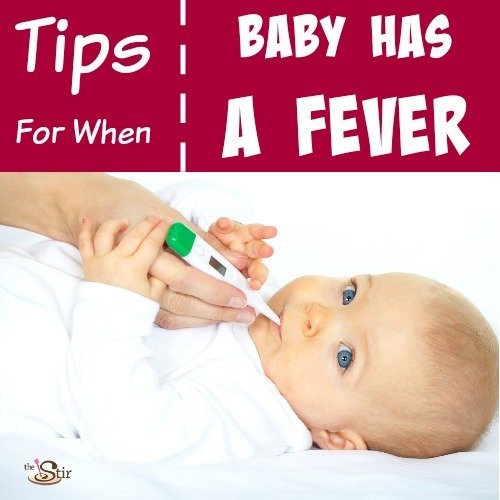
For babies younger than 3 months, a rectal temperature is the most dependable method. Use a digital thermometer made for rectal use, follow the product directions, and never force the thermometer. If you are not comfortable taking a rectal temperature, ask a health professional how to do it or seek care.
Other methods may be less exact:
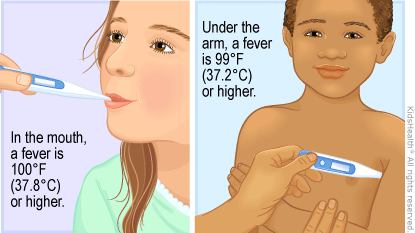
- Underarm temperature: Easy to take but may miss a fever.
- Forehead temperature: Can be useful when used as directed, but results may vary.
- Ear temperature: Often less reliable in very young babies because the ear canal is small.
- Oral temperature: Not suitable for most babies.
Do not rely on a forehead strip, touch alone, or a thermometer that has not been used as directed. If a reading seems high or does not match how your baby looks, repeat it with a reliable digital thermometer.

What to Do if Your Baby Is Younger Than 3 months
call your pediatrician or go to the ER immediately for a rectal temperature of 100.4°F (38°C) or higher. Do not give fever medicine first and then wait to see what happens unless a clinician specifically tells you to do so.
While you arrange care:
- Keep your baby in light, comfortable clothing.
- Continue breast milk or formula if your baby can feed.
- Write down the temperature, time, and thermometer method.
- Note feeding, wet diapers, vomiting, cough, rash, and changes in alertness.
- Bring a list of medicines and your baby’s health history.
A fever after a vaccine can sometimes occur. Even so, a baby under 3 months with a temperature of 100.4°F or higher needs prompt medical advice. Follow the instructions given by the baby’s clinician or vaccine provider.
When to Call the Doctor for Babies 3 Months and Older
Call your baby’s doctor promptly when the fever is high, lasts, returns, or comes with concerning symptoms. The doctor may direct you to the ER, an urgent care center, or a same-day office visit.


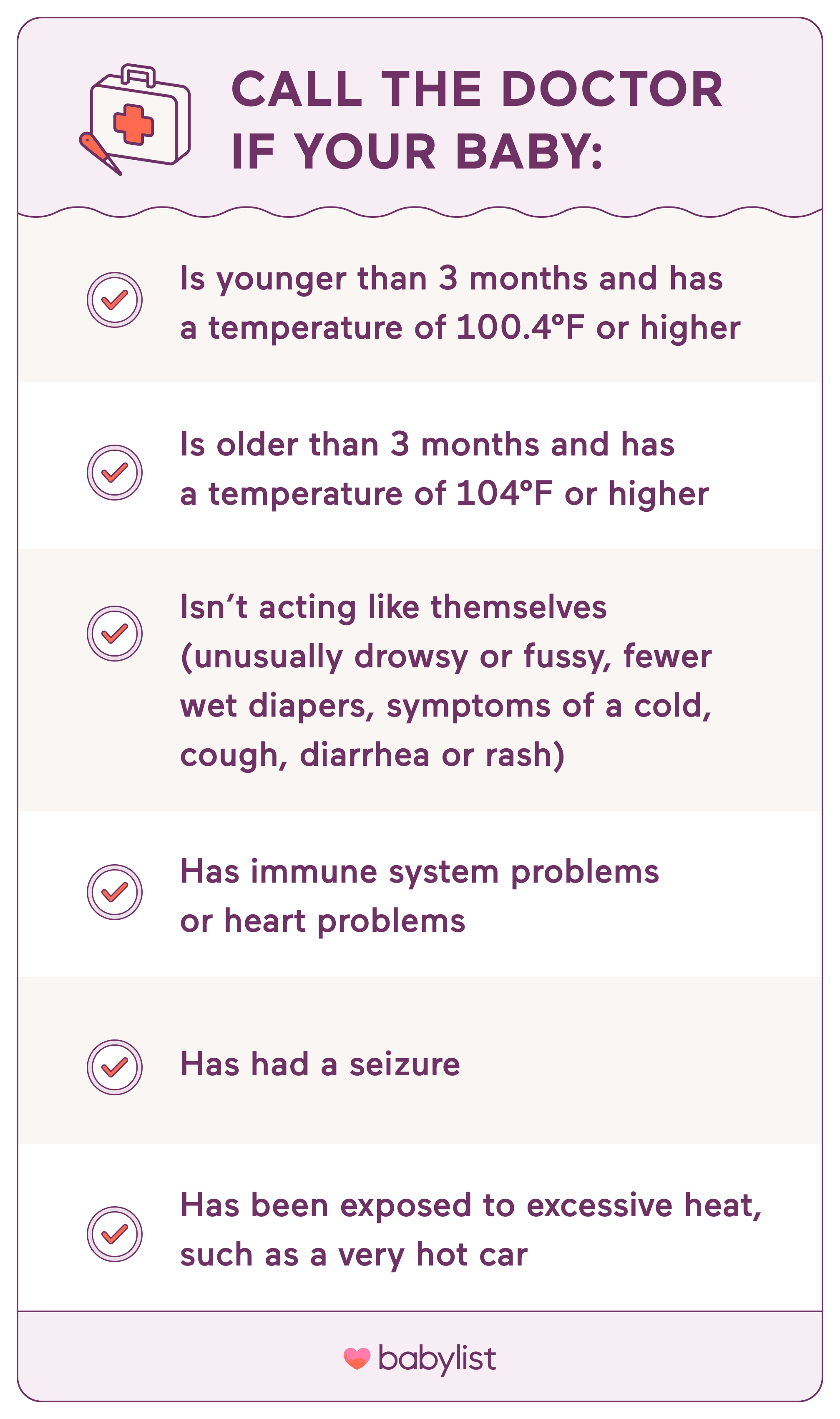
Contact the doctor if your baby:
- Is 3 to 6 months old and has a temperature of 102°F (38.9°C) or higher
- Has a fever of 104°F (40°C) or higher at any age
- Has fever that lasts more than 24 hours in a child under 2 years, unless the doctor gives different advice
- Has fever that keeps returning
- Is drinking much less than usual
- Has fewer wet diapers
- Has repeated vomiting or diarrhea
- Has ear pain, severe cough, worsening pain, or unusual crying
- Has a weakened immune system or a serious chronic condition
A baby with a lower fever may still need emergency care if the child is difficult to wake, breathing poorly, dehydrated, or acting very unlike them. A baby with a high fever who is alert, breathing well, drinking, and making wet diapers may need a prompt call to the doctor rather than an automatic ER visit. The symptoms and the baby’s age guide the decision.

Signs of Dehydration in a Baby With Fever
Fever can increase fluid loss. Babies can also become dehydrated when they feed poorly, vomit, or have diarrhea.
Seek urgent medical care if your baby has:
- Much fewer wet diapers than usual
- No wet diaper for about 8 hours
- A very dry mouth or tongue
- No tears when crying, if the baby usually makes tears
- Sunken eyes or a sunken soft spot
- Extreme sleepiness, weakness, or unusual fussiness
- Cold or mottled hands and feet with poor alertness
There is no single wet-diaper number that fits every baby. Newborns have different patterns from older infants, and diaper counts can vary. A clear drop from your baby’s normal pattern is a reason to call.
Offer breast milk or formula more often if your baby is willing. Do not dilute formula. Do not give plain water to a young infant unless a clinician tells you to do so.
Fever Medicine: What Parents Should Know
Fever medicine may improve comfort, but it does not treat the cause of an infection. It also does not remove the need for medical care in a young baby.
Acetaminophen
Acetaminophen, also called paracetamol, may be used in babies when a clinician recommends the correct dose. The dose depends on the baby’s current weight and the product strength.
Use the oral syringe that comes with the medicine. Read the label each time, because liquid strengths can differ. Do not use a kitchen spoon.
Ibuprofen
Ibuprofen is generally used only for babies 6 months and older, unless a clinician gives different advice. Avoid it if the baby is dehydrated or vomiting unless a health professional says it is safe.
Avoid these unsafe choices
- Do not give aspirin to a child or baby.
- Do not alternate acetaminophen and ibuprofen unless a clinician gives a clear schedule.
- Do not use adult medicines.
- Do not use cold baths, ice, or rubbing alcohol.
- Do not give cough and cold medicines to a baby unless prescribed or specifically directed.
- Do not force food or fluids if the baby cannot swallow safely.
For exact dosing, ask your pediatrician or pharmacist. In the United States, you can also call Poison Control at 1-800-222-1222 if you gave the wrong medicine or dose. Call 911 for trouble breathing, collapse, or severe symptoms.
What to Do While You Decide Where to Go
If your baby is stable but has a fever, gather the details a clinician will need:
- Age and current weight
- Temperature, number, and method used
- When the fever began
- Feeding pattern
- Wet-diaper count
- Vomiting or diarrhea
- Breathing changes
- Rash, cough, congestion, or pain
- Recent vaccines, travel, sick contacts, or known illness
- Medicines given, dose, and time


Keep your baby comfortable. Use light layers, offer normal feeds, and allow rest. Do not bundle the baby in blankets to “sweat out” the fever.
If the baby’s condition worsens while you are waiting for advice, do not keep calling. Go to the ER or call 911 based on the severity of the symptoms.
ER, Pediatrician, Urgent Care, or 911?
The right setting depends on both the fever and the baby’s condition.
| Situation | Best next step |
|---|---|
| Baby under 3 months with rectal fever of 100.4°F or higher | Immediate medical evaluation; call the pediatrician or go to the ER |
| Trouble breathing, blue color, seizure, or unresponsiveness | Call 911 |
| Baby looks severely ill or is difficult to wake | Go to the ER or call 911 |
| Baby is 3 to 6 months with a high fever but looks fairly well | Call the pediatrician promptly for direction |
| Older baby with fever, alert behavior, normal breathing, and good fluid intake | Call the pediatrician and monitor closely |
| Mild symptoms with no fever but poor feeding or unusual sleepiness | Call the pediatrician; symptoms can matter even without fever |
Urgent care may not be the best choice for a very young infant with fever. Some urgent care centers cannot perform the full evaluation that a newborn may need. Ask the pediatrician where to go, or choose the ER when the baby is very young or appears seriously ill.
Common Mistakes Parents Make
Waiting because the baby still seems happy
Some serious infections begin with few symptoms. For a baby younger than 3 months, a rectal fever of 100.4°F or higher needs prompt evaluation even if the baby smiles or feeds somewhat normally.
Using touch instead of a thermometer
A baby may feel warm from clothing, a warm room, crying, or skin-to-skin contact. Touch cannot confirm a fever. Use a digital thermometer.
Focusing only on the fever number
A temperature of 101°F can be serious in a newborn. A higher temperature in an older baby may be less urgent if the child is alert, hydrated, and breathing normally. Age and symptoms change the meaning of the number.
Delaying care after medicine lowers the fever
A lower temperature does not prove that the illness is minor. Medicine can reduce discomfort while an infection still needs treatment.
Giving the wrong dose
Use the baby’s current weight, the exact product strength, and the included syringe. When in doubt, call a pharmacist or pediatrician before giving a dose.
What Causes Fever in Babies?
Fever is a sign that the immune system is responding to something. Common causes include viral infections. Other causes include bacterial infections, urinary tract infections, ear infections, and, less often, serious infections such as meningitis or bloodstream infection.
Teething may make a baby fussy, but it usually does not cause a true fever of 100.4°F or higher. Do not assume that a fever is from teething when the temperature meets the fever threshold.
Vaccines can cause a short fever in some babies. If the fever is high, lasts longer than expected, or the baby looks ill, call the child’s clinician.
Only a medical professional can determine the cause. Do not use the likely cause to delay care when your baby meets an emergency warning sign.

Frequently Asked Questions
Should I take my 2-month-old to the ER for a 100.4°F fever?
Yes. A baby younger than 3 months with a rectal temperature of 100.4°F (38°C) or higher needs immediate medical evaluation. Call the pediatrician at once. If you cannot reach the pediatrician quickly, go to the ER.


Is 102°F dangerous for a baby?
It can be, depending on age and symptoms. In a baby 3 to 6 months old, call the doctor promptly for 102°F or higher. At any age, seek emergency care for breathing trouble, dehydration, a seizure, unusual sleepiness, a concerning rash, or a baby who looks very ill.
Can teething cause a fever?
Teething may cause mild discomfort and a small rise in temperature, but it should not explain a true fever of 100.4°F or higher. Treat a real fever as an illness sign and watch for other symptoms.
How many wet diapers should my sick baby have?
The usual number varies by age, feeding, and your baby’s normal pattern. A clear drop in wet diapers is more useful than one fixed number. No wet diaper for about 8 hours, a dry mouth, no tears, a sunken soft spot, or unusual weakness needs urgent medical advice.
Can I give Tylenol to a baby with a fever?
Acetaminophen may be appropriate when a clinician recommends the dose. For babies under 3 months, ask a medical professional before giving it. Use the baby’s weight and the product’s strength, and never give more than the label or clinician directs.
Trusted U.S. Health Sources
This guide follows guidance from:
- American Academy of Pediatrics: Fever and Your Baby
- American Academy of Pediatrics: How to Take a Child’s Temperature
- MedlinePlus: Fever
- Centers for Disease Control and Prevention: Infant and Toddler Nutrition
- Poison Control: Get Help
Conclusion
For a baby younger than 3 months, a rectal temperature of 100.4°F (38°C) or higher is an emergency that needs immediate medical evaluation. For older babies, seek emergency care for breathing problems, poor alertness, seizures, dehydration, a concerning rash, or any sign that the baby is seriously ill.
When unsure, call your pediatrician. If your baby seems severely ill or is not responding normally, call 911.
