
An umbrella stroller is a small, light stroller made for short trips with a child who can sit upright. In the United States, parents often use one for errands, travel, malls, parks, airports, and quick walks when a full-size stroller feels too large.
It is called an “umbrella” stroller because many models fold into a long, narrow shape that looks a bit like a closed umbrella. Most are easy to carry and store, but they usually offer less padding, storage, and support than a full-size stroller.
An umbrella stroller can be useful as a second stroller or as a simple option for an older baby, toddler, or preschooler. The right choice depends on the child’s age, size, development, and the stroller’s instructions.

What Is an Umbrella Stroller?
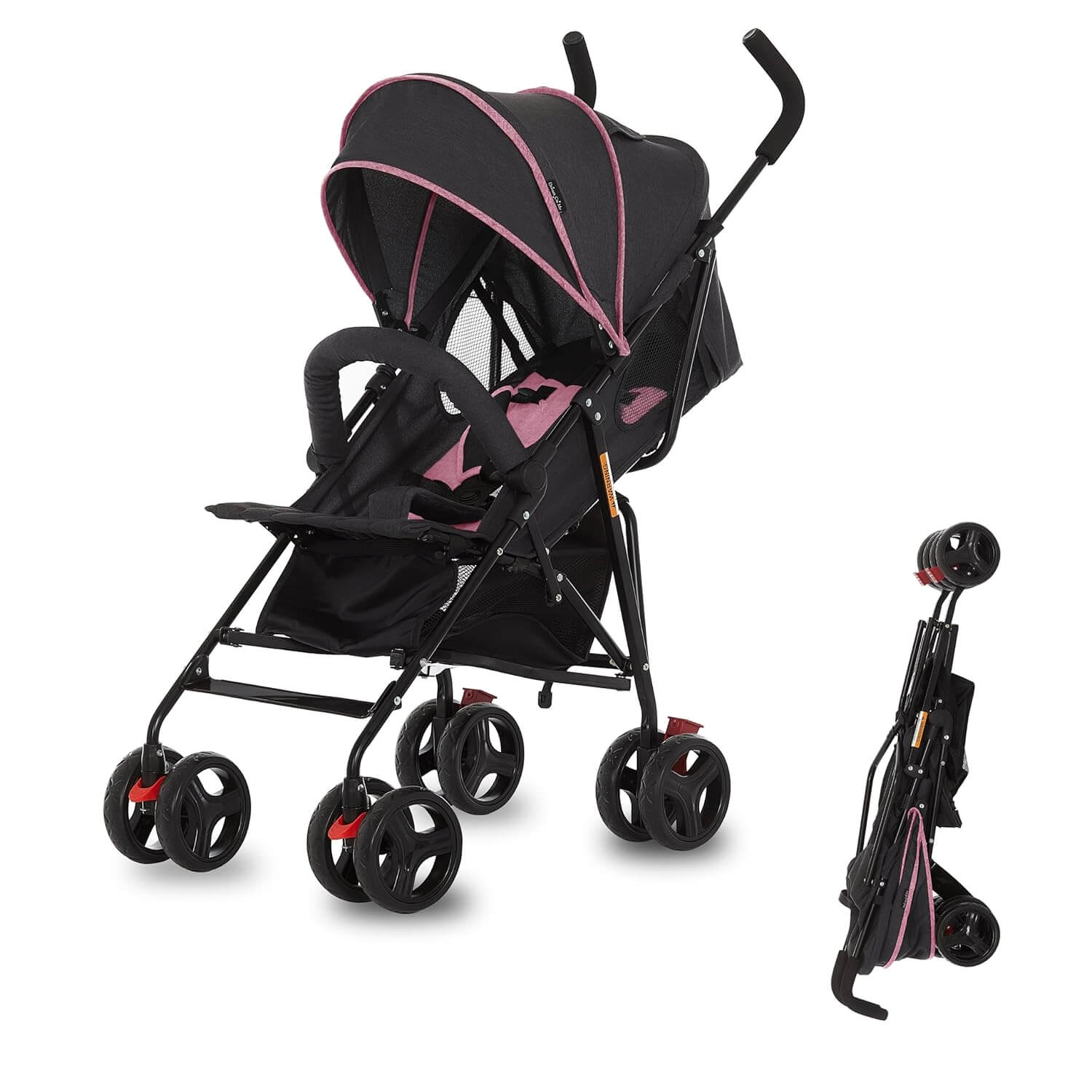
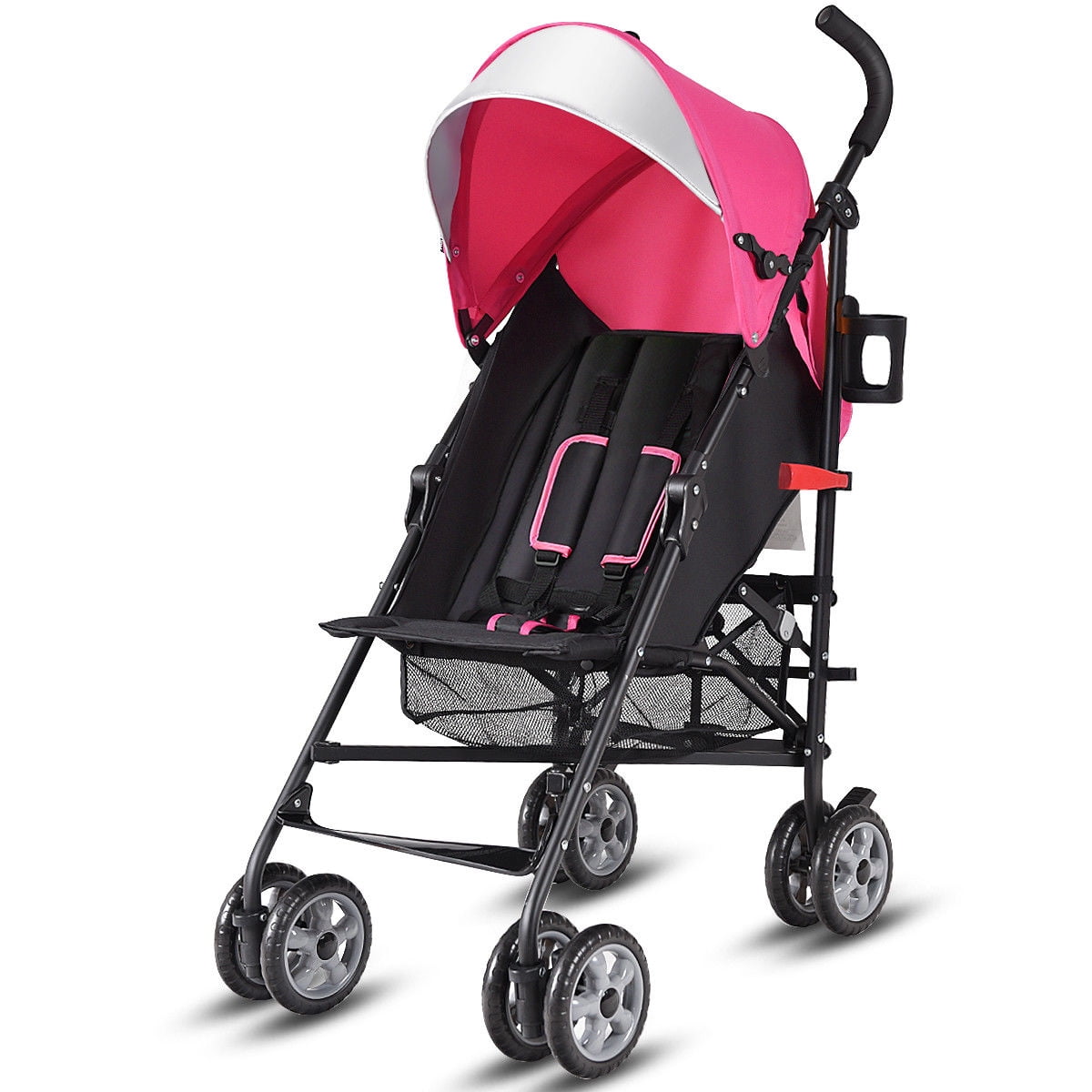
An umbrella stroller is a lightweight stroller with a simple frame, small wheels, and a compact fold. Many models have two separate handles, a basic seat, a canopy, and a lower storage basket.


Unlike a full-size stroller, an umbrella stroller is built more for portability than for comfort or heavy-duty use. It may weigh less and take up less room in a car trunk, closet, or airplane travel setup.
Common features include:
- A narrow, lightweight frame
- A quick fold
- A five-point safety harness or lap belt
- A small sun canopy
- A basic seat with limited padding
- Small swivel wheels
- A footrest
- A small storage basket
- A parking brake
Not every lightweight stroller uses an umbrella-style fold. Some compact travel strollers fold in half or into a small rectangle. In everyday speech, people may still call these “umbrella strollers,” but the designs can differ.
The term describes a stroller type, not a single safety rating or age group. Always check the specific model’s manual and labels before use.

What Is an Umbrella Stroller Used For?
An umbrella stroller is mainly used for short, simple outings where low weight and easy storage matter more than advanced comfort features.
Quick errands and local trips
An umbrella stroller works well for trips to:
- Grocery stores
- Shopping centers
- Libraries
- Restaurants
- Doctor visits
- Local parks
- Museums
- Community events
It is often easier to lift and move than a large stroller. This helps when you need to place it in a car, carry it up stairs, or store it in a small entryway.
Travel
Many families use an umbrella stroller during travel because it takes up less space than a full-size stroller. It can help at airports, hotels, theme parks, and tourist sites.
However, do not assume that every stroller can be taken into an airplane cabin. Airline rules vary by carrier, aircraft, and available storage space. A stroller may need to be checked at the ticket counter or gate.
A lightweight stroller can also make hotel and rental-car travel easier. Still, small wheels may perform poorly on gravel, sand, deep grass, cobblestones, or broken sidewalks.


Trips with an older child
An umbrella stroller can help when a child can walk but may become tired during a long outing. For example, a toddler may walk through part of a zoo and ride later.
This makes the stroller useful as a backup. It can give a tired child a place to sit without requiring parents to carry the child for the rest of the day.
Keeping a second stroller
Some families keep an umbrella stroller in the car or at a grandparent’s home. It can serve as a spare when the main stroller is being cleaned, repaired, or used by another child.
A second stroller may also help families who use a large stroller for daily walks but want a small one for quick trips.

When Can a Baby Use an Umbrella Stroller?
A baby should use an umbrella stroller only when the model allows it and the child meets the stated age, size, and development limits.
Many basic umbrella strollers have a seat that does not recline fully. These models are generally intended for a child who can sit upright without help. A young infant may not have enough head, neck, or trunk control for this type of seat.
Some lightweight strollers have a deeper recline or a seat approved for younger infants. That does not mean every reclined stroller is safe for a newborn. Check the product manual for the exact model.
Check these requirements first
Before placing a child in the stroller, confirm:
- Minimum age: Follow the manufacturer’s stated age guidance.
- Child development: The child should meet the model’s sitting and head-control requirements.
- Weight limit: Do not exceed the stroller’s maximum child weight.
- Height or fit: The child must fit safely within the seat and harness.
- Recline rules: Use only the recline positions allowed by the manual.
- Harness design: The harness must fit snugly and stay secured.
- Accessory rules: Use only approved accessories that do not affect balance or restraint.
If the manual is missing, look for the model name, model number, or date code on the stroller. The manufacturer may provide instructions online. If you cannot confirm the limits, do not guess.
Is an umbrella stroller safe for newborns?
Most simple umbrella strollers are not designed for newborns. A newborn needs strong support for the head and body and may not be ready for a typical upright stroller seat.
Some strollers can accept a compatible bassinet or infant car seat, but that feature must be approved for that exact stroller and accessory. Do not attach an infant car seat with homemade straps, adapters from another brand, or improvised supports.
The American Academy of Pediatrics advises moving a baby who falls asleep in a sitting device to a firm, flat sleep surface as soon as practical. A stroller is not a routine sleep space, even when the seat reclines.
Umbrella Stroller vs. Full-Size Stroller
The main trade-off is portability versus comfort and capability. An umbrella stroller is easier to carry, while a full-size stroller usually handles more terrain and offers more support.
| Feature | Umbrella stroller | Full-size stroller |
|---|---|---|
| Weight | Usually lighter | Usually heavier |
| Folded size | Smaller and narrow | Larger |
| Storage | Often limited | Usually more generous |
| Seat padding | Often basic | Often more supportive |
| Recline | May be limited | Often offers more positions |
| Wheels | Usually small | Often larger and stronger |
| Rough terrain | Less capable | Usually better |
| Newborn use | Model-dependent; often not allowed | More likely with approved accessories |
| Best use | Short trips and travel | Daily use and long outings |
A full-size stroller may be the better choice for long walks, uneven sidewalks, frequent naps, or daily outdoor use. It may also provide a larger canopy, adjustable handle, better suspension, and more room for supplies.


An umbrella stroller may be the better choice when the main problem is weight, storage, or transport. It can complement a full-size stroller rather than replace it.

How to Choose an Umbrella Stroller
Choose an umbrella stroller by matching its features to the places and situations where you will use it.
1. Check the child’s fit
Start with the child’s current weight, height, and ability to sit upright. A stroller that fits today may not fit for the full period you expect to use it.
The harness should sit in the correct position and tighten enough to keep the child safely in the seat. The child should not be able to slide under the harness or lean far over the side.
2. Test the fold
Try folding and opening the stroller before buying it when possible. Look for:
- A clear folding action
- A lock that keeps the stroller folded
- A frame that locks open
- No exposed pinch points during normal use
- A folded size that fits your car or storage space
Keep children away from the frame while folding. Small fingers can be caught in moving parts.
3. Inspect the brakes
A parking brake should hold the stroller in place on a level surface. Test both the brake and release before each use.
Do not rely on the brake to hold the stroller on a steep hill, escalator, moving walkway, or inside a moving vehicle. Never leave a child unattended in a stroller.
4. Look at the wheels and terrain
Small wheels are often fine on smooth indoor floors and paved sidewalks. They may struggle on:
- Gravel
- Sand
- Mud
- Thick grass
- Snow
- Broken pavement
- Brick or cobblestone paths
If your usual routes include rough ground, choose a stroller with larger wheels and stronger suspension, or use a different stroller.
5. Review the canopy and seat
A canopy can help block sun, but it may not provide full protection. Use shade, clothing, and other sun-safety measures suited to the child’s age and conditions.
Check how far the seat reclines. A deeper recline may improve comfort, but it does not automatically make the stroller suitable for a newborn or for unsupervised sleep.
6. Consider storage needs
Umbrella strollers often have small baskets. Think about what you really need to carry.


Never hang a heavy diaper bag or shopping bag from the handles unless the manufacturer specifically allows it. Extra weight can change the stroller’s balance and increase the risk of tipping.
How to Use an Umbrella Stroller Safely
Safe use starts with the manual, the harness, and the brake. A lightweight frame does not remove the need for careful setup.
Follow these steps:
- Open the stroller fully. Make sure the frame locks in the open position.
- Check the wheels. Confirm that they turn freely and show no damage.
- Set the brake while placing the child inside.
- Seat the child with the back against the seat.
- Fasten the harness. Adjust it so it is snug but not painfully tight.
- Keep hands, feet, and clothing inside the frame.
- Release the brake only when you are ready to move.
- Keep one hand on the stroller when it is in use.
- Use the brake whenever you stop.
- Fold the stroller away from the child.
Do not use a stroller as a substitute for a high chair, crib, or infant sleep space. Do not place thick blankets, pillows, or loose items around a baby in the seat.
Do not let a child stand on the seat or footrest. Do not allow another child to ride on the frame unless the stroller was designed for that use.
Inspect the stroller often. Stop using it if you find a cracked frame, loose fastener, damaged harness, broken wheel, failed brake, or folding lock that does not work.
In the U.S., check the U.S. Consumer Product Safety Commission’s recall database for the stroller model. A product can look fine and still be subject to a safety recall.

Common Umbrella Stroller Mistakes
The most common mistakes come from treating a lightweight stroller like a full-size stroller.
Using it too early
A child who cannot sit upright may need a different stroller setup. Do not place a young infant in a basic upright seat just because the child seems calm.
Hanging bags from the handles
A heavy bag can pull the stroller backward when the child gets out or when the stroller is empty. Use the stroller basket only within its stated limit.
Leaving the child unattended
A stroller can roll, tip, or become exposed to heat, cold, or other hazards. Stay close and keep control of the stroller.
Using it on stairs
Do not carry a child in an open stroller down stairs. Remove the child first, fold the stroller if needed, and carry each separately.
Assuming a recline means safe sleep
A reclined stroller seat is still a stroller seat. If a baby falls asleep, follow the American Academy of Pediatrics’ safe-sleep guidance and move the baby to a firm, flat sleep surface when practical.
Skipping maintenance
Food, sand, and dirt can affect wheels, brakes, and folding joints. Clean the stroller according to the manual. Do not use oil or cleaning products that the manufacturer does not recommend.

Key Takeaways
- An umbrella stroller is made for light, portable travel and short outings.
- It is often best for an older baby, toddler, or preschooler who meets the model’s requirements.
- Many umbrella strollers are not suitable for newborns.
- Check the manual for age, weight, height, recline, and harness limits.
- Use the brake when stopped and the harness whenever the child rides.
- Do not hang heavy bags from the handles.
- A full-size stroller may be better for rough terrain, long walks, naps, or daily use.
- A stroller is not a routine sleep space.


Frequently Asked Questions
Is an umbrella stroller worth having?
It can be worthwhile if you travel often, have limited storage, or need a light stroller for quick trips. It may be less useful if you take long walks, use rough paths, or need a stroller for a newborn.
Can a toddler sleep in an umbrella stroller?
A toddler may fall asleep during a supervised outing, but an umbrella stroller is not designed as a routine sleep space. Follow the stroller manual and move the child to a safe sleep surface when practical.
Can I take an umbrella stroller on a plane?
You may be able to use it through part of an airport, but airline rules differ. Ask the airline about gate checking, cabin storage, folded size, and weight limits before travel.
Are umbrella strollers allowed at Disney parks and other U.S. attractions?
Policies vary by venue and can change. Check the attraction’s current stroller rules before visiting. Some places limit stroller width or restrict certain stroller types.
What should I do if my umbrella stroller tips backward?
Remove the child and inspect the stroller for excess weight, a heavy handle bag, uneven ground, or a damaged frame. Check the manual for load limits. Do not continue using the stroller if it does not remain stable under normal use.
Conclusion
An umbrella stroller is for convenient, lightweight transport during short trips, travel, and outings with a child who can safely use the seat. Its small size is its main strength, but that same compact design can mean less padding, storage, recline, and terrain control.
Before using one, confirm the model’s instructions, check the child’s fit, secure the harness, use the brake, and keep heavy items off the handles. For newborns, long walks, rough ground, or frequent naps, a different stroller may be the safer and more practical choice.
