
In the United States, a bassinet gives a newborn a small, separate place to sleep during the early months. It is often kept in the parents’ bedroom, which supports the American Academy of Pediatrics (AAP) recommendation to room-share without bed-sharing. A bassinet can also make nighttime care easier because it keeps the baby close to the adult’s bed.
A bassinet is not required for safe infant sleep. A full-size crib, portable crib, or play yard that meets current U.S. safety standards can serve the same basic purpose. The key factors are a firm, flat, level sleep surface; a fitted sheet; and no loose items around the baby.
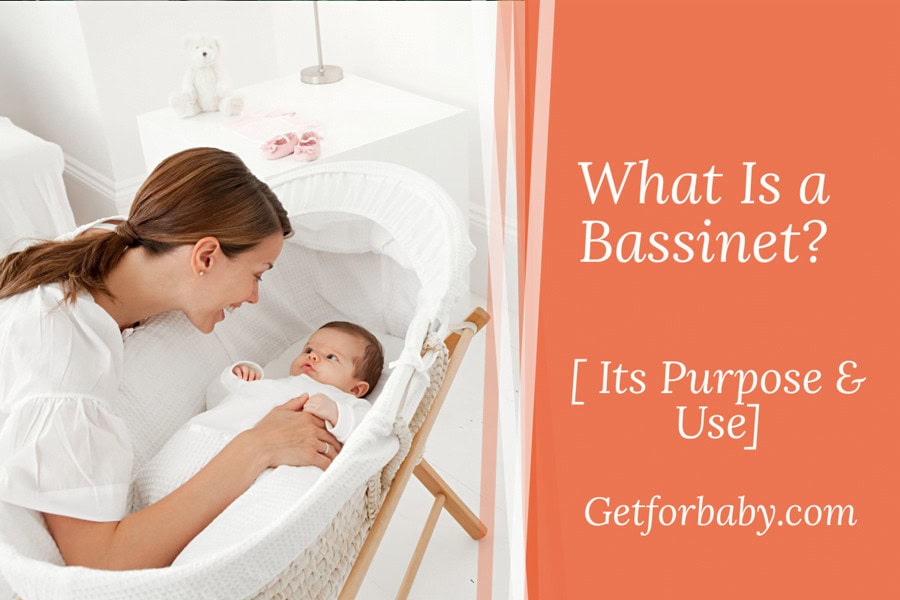
What Is a Bassinet?
A bassinet is a small, sleep space made for young infants. It usually has low sides, a compact frame, and a mattress or sleep pad. Some models have wheels, handles, a rocking base, or a stand that places the bassinet beside an adult bed.
In the United States, the Consumer Product Safety Commission (CPSC) regulates bassinets and cradles under federal safety rules. The product should also have clear instructions, warnings, and information about its weight and age limits.


A bassinet is different from a changing basket, lounger, or soft baby nest. Those products may look comfortable, but they may not be designed or tested for unsupervised sleep. A product made for play or rest is not automatically a safe sleep product.
Bassinet, bedside sleeper, and crib
These terms often overlap, but they do not mean the same thing:
| Product | Main use | Typical benefit | Key limit |
|---|---|---|---|
| Bassinet | Sleep for a young infant | Small and easy to keep near the bed | Short use period |
| Bedside sleeper | Infant sleep next to an adult bed | Easier nighttime access | Must be used as directed |
| Full-size crib | Infant sleep from early months onward | Larger and longer-lasting | Takes more space |
| Portable crib or play yard | Sleep and travel | Folds for transport | Must have an approved sleep surface |
| Baby lounger | Supervised awake time, if allowed by its maker | Soft place to sit or rest | Not a routine sleep space |
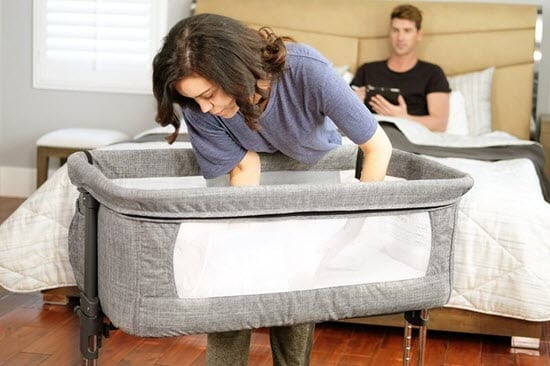
A bedside sleeper may be considered a type of bassinet, but not every bassinet attaches to an adult bed. Never remove a side, tie a bassinet to a bed, or modify a product unless the manufacturer specifically designed it for that use.
What Is the Purpose of a Bassinet?
The main purpose of a bassinet is to provide a separate, nearby sleep space for a newborn. Its small size fits well in a bedroom, and its low height can make it easier to see and reach the baby during the night.
A bassinet serves several practical purposes:
- It supports room-sharing. The baby can sleep in the same room as a parent while staying on a separate surface.
- It saves space. A bassinet often takes up less room than a full-size crib.
- It makes newborn care easier. Parents can check, feed, and comfort the baby without walking to another room.
- It can support short-term sleep needs. Many families use one during the first weeks or months.
- It may travel more easily. Some bassinets are designed for movement within the home or for approved travel use.
A bassinet does not prevent sudden infant death syndrome (SIDS) by itself. Its value comes from how it supports safe sleep practices. The sleep surface, the baby’s position, the absence of loose items, and proper product use matter more than the bassinet’s brand or appearance.
Is a bassinet necessary?
No. A bassinet is useful, but it is optional. A properly assembled crib, portable crib, or play yard can be used from the beginning if it has a firm, flat mattress and meets U.S. safety requirements.
Some families choose a bassinet because it fits beside the bed. Others skip it because they prefer a crib that can be used longer. The best choice depends on your space, budget, mobility, and plan for nighttime care.
How Does a Bassinet Support Safe Sleep?
A bassinet supports safe sleep when it provides a firm, flat, level surface and is used according to its instructions. The AAP recommends that babies sleep on their backs for every sleep, including naps, on a separate sleep surface designed for infants.
Follow these basic steps:
- Place the bassinet on a stable, level floor. Do not put it on a bed, sofa, table, counter, or other raised surface unless the product is specifically designed and approved for that location.
- Use only the mattress or pad made for that bassinet. Do not add a second mattress, cushion, topper, or folded blanket.
- Cover the mattress with the correct fitted sheet. The sheet should fit tightly and stay in place.
- Put the baby on their back. Use this position for naps and nighttime sleep.
- Keep the sleep area bare. Remove pillows, quilts, comforters, stuffed toys, bumper pads, positioners, and loose blankets.
- Keep the bassinet near the parents’ bed, but not in the adult bed. Room-sharing is different from bed-sharing.
- Check the product before each use. Look for loose parts, torn fabric, broken locks, missing hardware, or a mattress that does not fit correctly.


If the baby falls asleep in a car seat, swing, stroller, bouncer, or sling, move the baby to a firm, flat sleep surface as soon as it is practical and safe to do so. These products are not usually intended for routine sleep.
What should go inside a bassinet?
Usually, the only items inside the bassinet should be:
- The manufacturer-approved mattress or pad
- One tight-fitting sheet
- The baby
Dress the baby in clothing suitable for the room temperature. A wearable blanket may be used if it fits correctly and does not cover the baby’s head or face. Weighted sleep sacks and weighted swaddles require extra caution; the AAP advises against weighted sleep products for infants.
Can a baby sleep in a rocking bassinet?
A rocking feature does not change the rules for safe sleep. If the bassinet rocks, lock it when the baby is sleeping if the instructions require that step. Do not use a product that places the baby at an incline or allows the baby to slump.
Automatic movement, vibration, or sound may soothe some babies, but these features do not make an unsafe sleep surface safe. Stop swaddling when the baby shows signs of trying to roll. Never use restraints that were not supplied and approved for that exact product.
When Should a Baby Stop Using a Bassinet?
A baby should stop using a bassinet when the manufacturer’s limit is reached or when the baby can push up, roll, sit, kneel, or move enough to climb out. The exact limit varies by product, so read the manual rather than relying on a general age.
Many bassinets are intended for the newborn period only. A baby may outgrow one because of movement before reaching its listed maximum weight. This is normal. Developmental milestones can make a product unsafe even when the baby still fits by size.
Move the baby to a crib, portable crib, or play yard that meets current safety standards when:
- The product’s weight or age limit has been reached.
- The baby can roll or push up.
- The baby’s body reaches the manufacturer’s stated limit.
- The bassinet shows damage or instability.
- The baby’s head or limbs can become trapped between parts.
- The mattress no longer fits tightly.
- The product has been recalled.
Do not wait for a dramatic climbing attempt. A baby who can pull up may be able to tip or leave a small sleep space quickly.
Bassinet vs. Crib: Which Is Better?
Neither is universally better. A bassinet is usually better for a small, nearby sleep space during the newborn stage. A crib is usually better for long-term use because it offers more room and often lasts through the toddler years when used according to its instructions.
| Consideration | Bassinet | Crib |
|---|---|---|
| Space | Uses less floor space | Needs more room |
| Portability | Often easier to move | Some models are stationary |
| Newborn access | Usually very convenient | May be farther from the adult bed |
| Length of use | Usually short term | Often much longer |
| Cost over time | May require a later purchase | Can serve for more years |
| Storage | Usually easy to store | Larger and less compact |
A bassinet may be a good fit if you want the baby near your bed and have limited bedroom space. A crib may be the better choice if you want one sleep space from birth onward or want to avoid buying two products.
A portable crib or play yard can be a middle option. Confirm that the model is approved for infant sleep and use only the mattress and sheet specified by the maker.
How to Choose a Safe Bassinet in the United States
Choose a bassinet based on safety, fit, and proper use rather than decoration or extra features. Before buying, check the following points.


1. Confirm that it is made for infant sleep
Read the product label and manual. The product should clearly state that it is intended for infant sleep. A lounger, nest, pod, or soft cushion should not be treated as a bassinet unless the manufacturer identifies it as a sleep product.
2. Check for a firm, flat, level surface
The mattress should not sag or create a deep dip. The baby’s head and body should remain on a flat surface. Avoid products with a built-in incline for routine sleep.
3. Look for a tight mattress fit
There should be no wide gaps between the mattress and the bassinet walls. A loose mattress or an added pad can create an entrapment or suffocation hazard.
4. Review the limits
Find the product’s:
- Maximum weight
- Maximum age, if listed
- Height or developmental limits
- Requirements for locking wheels or rocking parts
- Rules for folding, travel, and storage
5. Check the product history
Search the CPSC recall database for the exact model. Ask whether a used bassinet has been damaged, modified, or recalled. Do not use a product with missing instructions or unknown parts if you cannot verify that it is complete and safe.
6. Avoid unsafe add-ons
Do not add:
- Aftermarket mattresses
- Mattress toppers
- Padded liners
- Bumper pads
- Sleep positioners
- Pillows
- Loose blankets
- Hanging toys within the baby’s reach
A product with more padding is not necessarily more comfortable or safer. Soft padding can increase the risk of the baby’s face becoming covered.
Common Bassinet Mistakes to Avoid
The most common mistake is treating a bassinet as a general-purpose baby station. A bassinet is designed for sleep only within its stated limits. It should not become a place for storage, pillows, toys, or extra padding.
Avoid these errors:
- Using an inclined sleeper for routine sleep. A surface that looks cozy may allow the baby’s head to fall forward.
- Adding a blanket under the sheet. This can change the firmness and create loose material.
- Using a sleep positioner. Positioners can trap a baby and are not needed for back sleeping.
- Leaving a baby unattended in a lounger. A lounger is not automatically a safe sleep space.
- Using a recalled or altered product. Home repairs can change the product’s strength or shape.
- Ignoring a developmental change. Rolling and pushing up matter more than age alone.
- Putting the bassinet near cords or window coverings. Keep it away from hazards that a baby may later reach.
- Assuming a bedside sleeper is attached safely. Follow the maker’s attachment and gap instructions every time.
If a bassinet has a tear, loose screw, bent frame, unstable base, or missing part, stop using it until the issue is resolved with an approved replacement or repair.
Does a Bassinet Help Prevent SIDS?
A bassinet does not directly prevent SIDS. Safe sleep guidance focuses on the complete sleep setting, not on one type of furniture.
The AAP recommends that infants sleep:
- On their backs for every sleep
- On a firm, flat, non-inclined surface
- In a crib, bassinet, portable crib, or play yard that meets safety standards
- Without loose bedding or soft objects
- In the parents’ room, ideally for at least the first six months, but on a separate surface
Breastfeeding, avoiding smoke exposure, and offering a pacifier at sleep time may also be associated with a lower risk of sleep-related infant death, but families should discuss feeding and pacifier questions with a pediatrician. A pacifier should not be forced, and a sleeping baby does not need it replaced after it falls out.


No bassinet, monitor, mattress, swaddle, or wearable product can guarantee that a baby will not die during sleep. Be cautious about products that make broad safety claims without explaining their limits.
Frequently Asked Questions
How long can a baby sleep in a bassinet?
A baby can sleep in a bassinet until the product’s stated limit is reached or until the baby shows a developmental sign that makes continued use unsafe. Rolling, pushing up, sitting, or trying to climb out are common reasons to move sooner.
Can a newborn sleep in a crib instead of a bassinet?
Yes. A newborn can sleep in a properly assembled crib from the beginning. Use the crib’s approved firm mattress and a fitted sheet, and keep the sleep area free of loose items.
Is a bedside bassinet safer than a regular bassinet?
Not automatically. A bedside model may make room-sharing easier, but it must be assembled and attached exactly as directed. A regular bassinet placed near the bed can also support room-sharing if it remains stable and separate from the adult bed.
Can a baby sleep in a bassinet overnight?
Yes, if the bassinet is approved for infant sleep, is used within its limits, and has a firm, flat, level surface with no loose items. Follow the product manual and current safe-sleep guidance.
What if the baby rolls over in the bassinet?
Stop swaddling once the baby shows signs of trying to roll. If the baby can roll, push up, or otherwise outgrow the bassinet’s safe-use limits, move the baby to a suitable crib, portable crib, or play yard.
Key Takeaways
- A bassinet is a small sleep space for a young infant.
- Its main purpose is to keep the baby close while maintaining a separate sleep surface.
- A bassinet is optional; a compliant crib, portable crib, or play yard can serve the same basic role.
- Use a firm, flat, level mattress with only a fitted sheet.
- Always place the baby on their back for sleep.
- Stop using the bassinet when the baby reaches its limits or can roll, push up, sit, or climb.
- Check the CPSC recall database and follow the exact product manual.
Conclusion
The purpose of a bassinet is simple: it gives a newborn a small, nearby, separate place to sleep. Its compact design can make room-sharing and nighttime care easier, but it does not replace safe sleep practices or make an unsafe product safe.
Choose a bassinet only if it fits your space and routine. Whether you use a bassinet or a crib, the safest setup is a firm, flat, bare sleep surface that is used within the product’s limits.
