
Yes. bassinet mattresses are usually thin by design. A thin mattress can be safe when it is firm, flat, fits the bassinet correctly, and is approved by the manufacturer.
In the United States, safe sleep depends more on firmness, fit, and a flat surface than on mattress thickness. The American Academy of Pediatrics (AAP) advises placing babies on a firm, flat, noninclined sleep surface with only a fitted sheet. The U.S. Consumer Product Safety Commission (CPSC) gives similar guidance for bassinets and cradles.
A thick, soft, or plush mattress is not automatically safer or more comfortable. It may create gaps, allow a baby’s face to press into the surface, or change the bassinet’s design. Always follow the bassinet manual and use only the mattress or pad made for that model.



Why are bassinet mattresses so thin?
Bassinet mattresses are thin because a bassinet needs a firm, stable sleep surface that fits inside a small frame. A thick mattress may raise the baby too close to the upper edge or prevent the sides, hood, restraint, or folding parts from working as designed.
A thin mattress also helps limit soft materials. For infant sleep, extra padding can increase the risk of a baby’s nose or mouth becoming covered. The goal is not a soft bed like an adult mattress. The goal is a flat surface with enough firmness to support the baby without deep sinking.
The CPSC’s federal bassinet rule, 16 CFR Part 1229, focuses on safety performance and design requirements. It does not set one universal mattress thickness for every bassinet. Different models may use different mattress materials and dimensions.
Thin does not mean unsafe
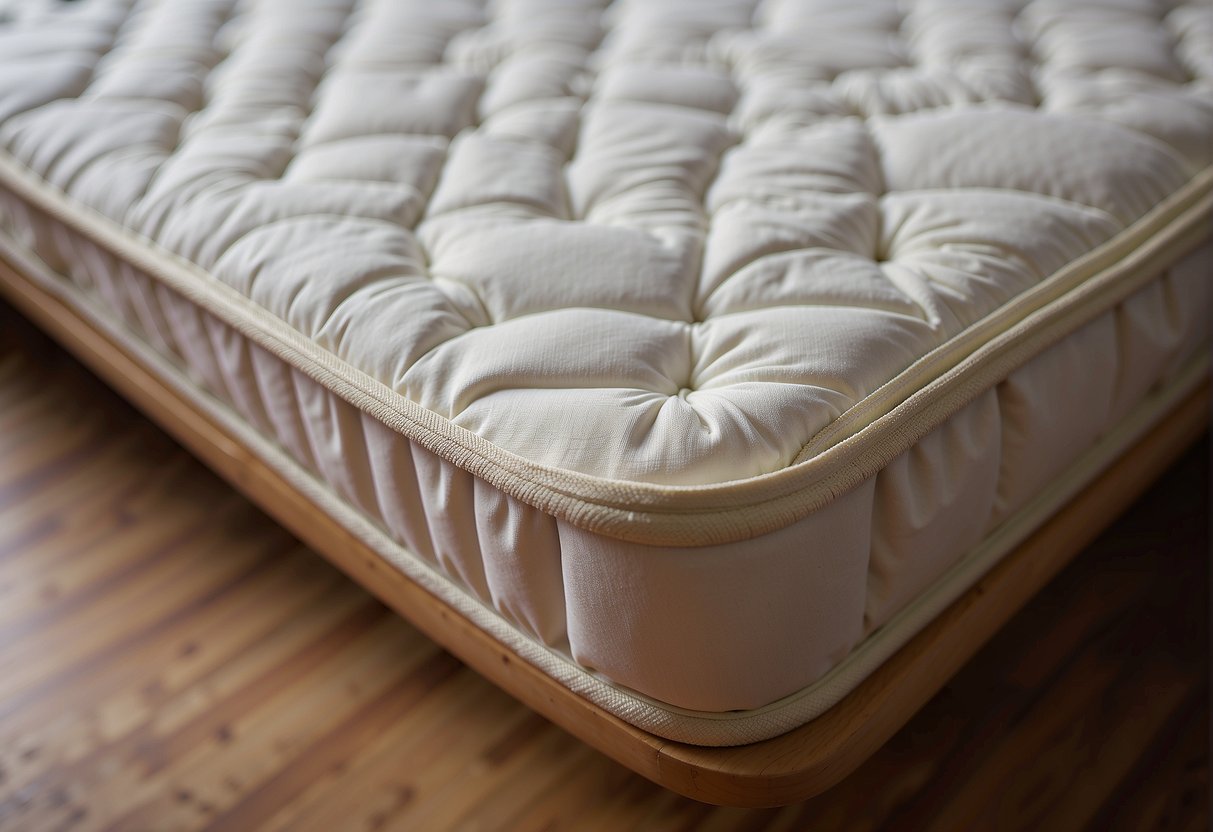
Many adults expect a mattress to be several inches thick. That comparison does not work well for bassinets. A bassinet mattress is closer to a firm sleep pad than a traditional bed mattress.
A safe bassinet mattress should generally be:
- Firm rather than plush
- Flat rather than tilted
- Designed for the exact bassinet model
- Covered by a tight-fitting sheet
- Free of tears, sagging, folds, or loose parts
- Seated fully inside the bassinet frame
The mattress should not feel like a pillow or memory-foam topper. It should not form a deep dip when the baby lies on it.
Is there a standard thickness?
No single U.S. thickness applies to all bassinet mattresses. A manufacturer may specify a mattress thickness, height, or replacement part for a particular model. That measurement is important because the bassinet was tested and designed around its original components.
Do not assume that a thicker mattress is an upgrade. If a manual says to use only the included mattress, that instruction should control. If the original mattress is lost or damaged, contact the manufacturer for the correct replacement.


What makes a bassinet mattress safe?
The key safety features are firmness, a close fit, a flat position, and compatibility with the bassinet. Thickness is only one physical feature, and it is not the main measure of safety.
1. The mattress is firm
A firm mattress keeps the baby’s head and face from sinking into the surface. The surface should not feel soft, springy, or deeply padded.
Do not add a foam topper, quilted pad, pillow, blanket, or folded towel to make the bassinet feel softer. These items can change the firmness and create loose material in the sleep space.
2. The mattress lies flat
The mattress should rest evenly on the bassinet base. It should not bow, fold, slide, or create a raised area.
The AAP recommends a flat, noninclined sleep surface. Inclined products can allow a baby’s head to fall forward, which may affect breathing. If the bassinet frame, mattress, or support appears tilted when it should be level, stop using it and check the manual or contact the manufacturer.
3. The fit is close
A mattress that is too small can leave gaps between the mattress and the bassinet wall. A baby can become trapped in such a space.
The mattress should not move freely from side to side. It should sit fully against the intended supports. Do not fill gaps with towels, blankets, foam strips, or homemade inserts.
The CPSC recommends using only a mattress that fits the product properly. A replacement that is “almost the same size” may still be unsafe.
4. The mattress is made for that bassinet
A mattress from one bassinet may not be safe in another, even if both products look similar. Bassinets can vary in length, width, corner shape, base support, wall height, and folding design.
Use the product’s model number when ordering a replacement. The model number is often printed on a label near the frame, base, or underside of the product.
5. The cover stays tight
Use the fitted sheet listed or approved by the manufacturer. The sheet should stay tight around the mattress and should not bunch under the baby.
Keep the sleep surface bare apart from the fitted sheet. The AAP advises against loose blankets, pillows, bumpers, toys, and other soft items in the baby’s sleep area.

How can you tell if a bassinet mattress is too thin?
A mattress is not necessarily too thin just because it looks low. Instead, check whether it meets the manufacturer’s requirements and remains firm, flat, and properly fitted.
Look for these warning signs:
- The bassinet base can be felt through the mattress in a way the manual does not allow.
- The mattress bends, folds, or curls at the edges.
- The mattress slides when you apply light hand pressure.
- The mattress leaves visible gaps around the sides.
- The baby’s body causes a deep dip.
- The cover is loose or bunches under the baby.
- The mattress has damage, waterlogging, mold, or a broken support layer.
- The mattress is not the original part or an approved replacement.
- The bassinet is missing a support board or another required component.
A thin mattress that passes these checks may be appropriate. A thicker mattress with soft padding or poor fit may not be.


Do not use the “two-finger gap” rule as a replacement for the manual
Parents sometimes use a finger-gap test to judge mattress fit. A large gap is clearly a problem, but a homemade test cannot replace the bassinet’s instructions or the manufacturer’s measurements.
If the mattress does not fit snugly, do not try to repair the gap yourself. Ask the manufacturer for the correct part or stop using the bassinet.
What if the bassinet mattress feels hard?
A firm surface may feel harder than an adult mattress. That is expected. Babies do not need a soft pillow-like sleep surface.
Do not add padding because the mattress feels uncomfortable to an adult hand. Adult comfort is not the safety standard for an infant sleep product.

Should you add a mattress pad, topper, or blanket?
No. Do not add extra padding to a bassinet unless the manufacturer specifically provides and approves that part for the model.
Common unsafe additions include:
- Mattress toppers
- Extra foam pads
- Quilted mattress covers
- Padded liners
- Folded towels
- Blankets under the sheet
- Pillows or positioners
- Makeshift wedges or anti-reflux inserts
These items can make the surface softer, raise the baby’s position, or create folds and gaps. They may also interfere with the bassinet’s ability to meet its tested design.
If you want to protect the mattress from leaks, use a properly fitted waterproof cover only when the manufacturer allows it. The cover must not make the mattress loose, thick, soft, or uneven.
What about a replacement mattress?
A replacement mattress may be suitable only when it is made for the exact product or expressly approved by the manufacturer. Check:
- The bassinet brand and model number
- The manual’s replacement-part instructions
- The mattress dimensions
- The required thickness or height, if listed
- The warning labels and product notices
- The CPSC recall database for the product
Avoid generic “universal” bassinet mattresses unless the bassinet maker confirms compatibility. A product listing that says “fits most bassinets” does not prove that it fits your model safely.
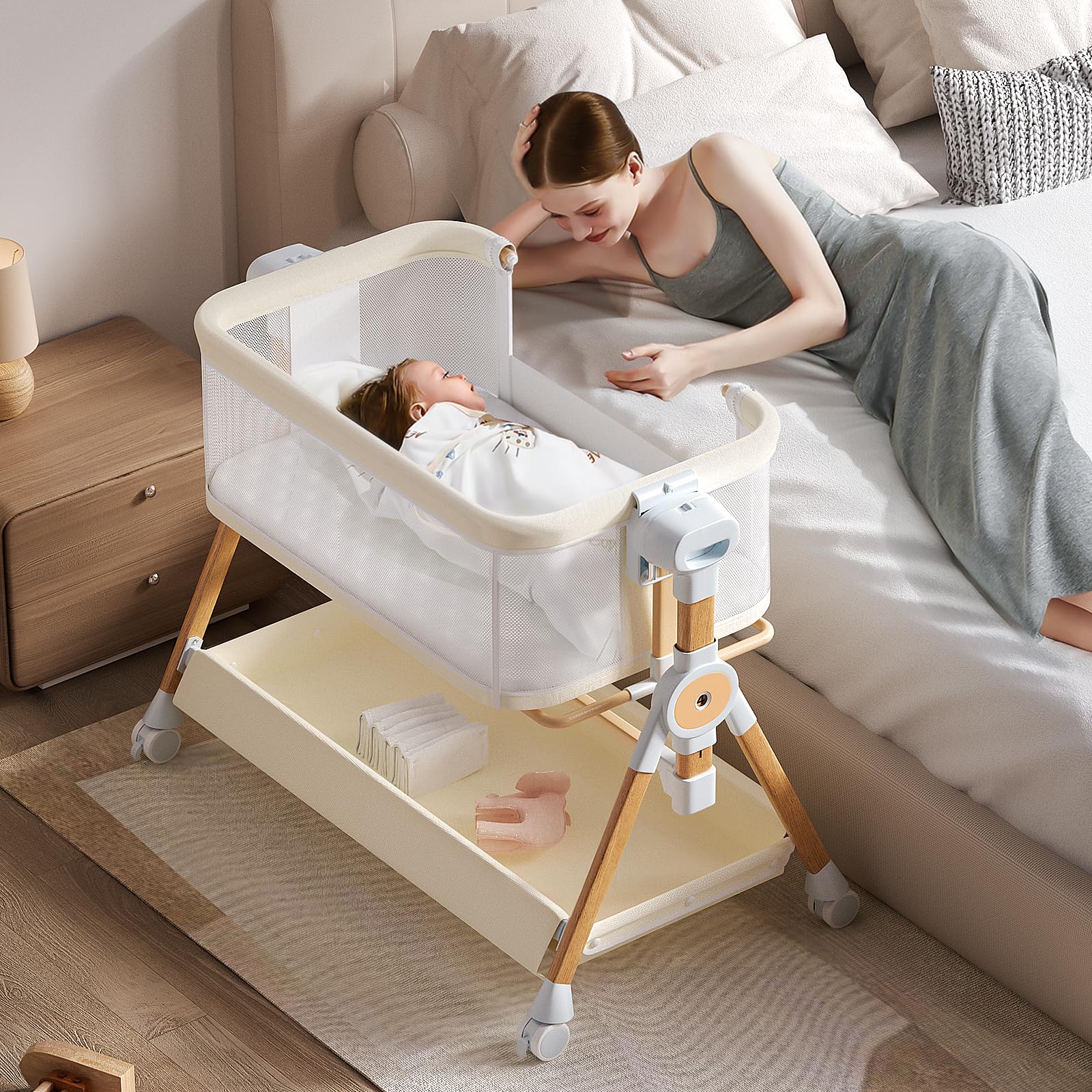
Bassinet mattress safety checklist
Use this quick checklist before placing a baby in the bassinet:
| Check | What to look for |
|---|---|
| Mattress | Original or approved replacement for the exact model |
| Firmness | Firm surface with no deep sinking |
| Position | Flat and level, unless the product is specifically designed otherwise and meets current safety requirements |
| Fit | No meaningful gaps between the mattress and bassinet walls |
| Movement | Mattress stays in place |
| Cover | Tight fitted sheet only |
| Surface | No pillows, blankets, toys, toppers, or loose pads |
| Condition | No tears, sagging, mold, broken parts, or water damage |
| Product status | No active recall or safety notice |
| Use | Baby sleeps on their back, according to AAP guidance |
The bassinet should also be used within its stated limits. Check the manual for weight, age, developmental, and movement limits. Many bassinets should no longer be used when a baby can roll, push up, sit, or reach the product’s stated limit. The exact stopping point depends on the model.
What to do if the mattress seems wrong
Stop using the bassinet for sleep if the mattress is missing, damaged, badly fitted, soft, or not approved for the product. Do not try to correct the problem with household materials.


Contact the manufacturer with the model number and a description of the issue. If you cannot obtain the correct part, use a different sleep product that meets current U.S. safety guidance.

Bassinet mattress vs. crib mattress: what is the difference?
A bassinet mattress is made for a smaller, usually portable sleep product. A crib mattress is made for a full-size crib and follows different dimensions and design requirements.
A crib mattress should not be cut down to fit a bassinet. A bassinet mattress should not be placed in a crib unless the crib manufacturer specifically approves it. Improvised sizing can create gaps or affect the product’s safety features.
For any infant sleep product, use the mattress specified for that product. The correct question is not, “Which mattress is thickest?” It is, “Which approved mattress fits this product and provides a firm, flat surface?”

Common mistakes to avoid
Mistake 1: Buying the thickest mattress available
Thickness alone does not show safety. A thick mattress can be too soft, too high, or too large for the bassinet.
Mistake 2: Using an adult idea of comfort
A firm bassinet surface may seem uncomfortable compared with an adult bed. Infants need a firm, clear sleep surface, not a plush one.
Mistake 3: Adding padding under the sheet
A folded towel or extra pad can create an incline, a ridge, or a loose layer. It can also change how the baby’s body rests on the surface.
Mistake 4: Ignoring the product manual
The manual may list the exact mattress size, approved replacement parts, cleaning limits, and when to stop using the bassinet.
Mistake 5: Buying used without checking recalls
A used bassinet may be missing parts or subject to a recall. Find the model number, review the instructions, and search the official CPSC recalls database before use.
Mistake 6: Using a bassinet after the baby outgrows it
A bassinet is not a substitute for a crib once the baby reaches the product’s limits. Follow the manufacturer’s directions on weight, movement, and development.
Frequently asked questions
Are all thin bassinet mattresses safe?
No. Thinness alone does not make a mattress safe. It must also be firm, flat, intact, correctly fitted, and approved for the bassinet.
Can I use a crib sheet on a bassinet mattress?
Only if the sheet is made for that exact bassinet mattress and fits tightly. A loose crib sheet can bunch or come off. Use the sheet recommended by the bassinet manufacturer whenever possible.
Can I put a waterproof cover on a bassinet mattress?
Only if the manufacturer allows it and the cover fits tightly without adding unsafe thickness or softness. Check the manual before using one.
What should I do if my bassinet did not come with a mattress?
Do not use a homemade mattress or a random replacement. Contact the manufacturer for the correct part. If you cannot identify an approved mattress, choose another sleep product with all required components.
Is a firm bassinet mattress better than a soft one?
Yes. A firm surface is the safer choice for infant sleep because it reduces sinking and keeps the baby’s face from pressing into soft material. The surface should still be flat and properly fitted.


Bottom line
Bassinet mattresses are supposed to be relatively thin, but they must be firm, flat, and made to fit the exact bassinet. There is no universal U.S. thickness that makes every bassinet mattress safe.
Use the original mattress or an approved replacement. Keep the bassinet’s sleep surface bare except for a tight fitted sheet. Never add a topper, blanket, towel, pillow, or homemade insert to make the mattress thicker or softer.
If the mattress is damaged, loose, soft, tilted, or missing, do not use the bassinet for sleep until the manufacturer confirms the correct replacement.
