
In the United States, most babies can face out in a baby carrier at about 5 to 6 months, but age alone is not enough. Your baby should have strong, steady head and neck control, fit the carrier’s size limits, and meet the maker’s instructions. Some babies are ready later.
The safest rule is simple: follow the carrier manual and wait until your baby can sit upright with little support and keep their head from falling forward. If your baby slumps, their chin rests on their chest, or their face is covered, turn them inward and stop the carry.

What “face out” means
A face-out carry places your baby’s chest against your body while your baby looks toward the room. It is also called a forward-facing carry or outward-facing carry.
A baby who faces out has less support from your chest. This changes the load on the baby’s head, neck, hips, and back. It also gives the baby more sights and sounds to take in.


That extra input can be fun. It can also be too much. A face-out carry may not suit a tired, hungry, sick, or easily upset baby.
Face in versus face out
| Carry position | Usual benefit | Main safety point |
|---|---|---|
| Face in | More support, easier rest, and better protection from noise | Keep the airway clear and the face visible |
| Face out | More room to look around | Use only when the baby has firm head and neck control |
| Hip carry | A wider view with some side support | Use only when the carrier allows it and the baby fits well |
| Back carry | Good for older babies in some carriers | Use only at the age and skill level listed in the manual |
A face-out position is not a required stage. Many babies remain happy facing in. You do not need to turn your baby outward unless your baby seems ready and the carrier allows it.
The signs your baby is ready to face out
Your baby may be ready when all of these signs are present:
- Your baby is at least the minimum age listed in the carrier manual.
- Your baby meets the carrier’s minimum weight and height.
- Your baby can hold their head upright without help.
- Your baby does not slump to one side.
- Your baby’s chin stays off their chest.
- Your baby’s upper back stays supported.
- Your baby’s legs fit the carrier’s design.
- Your baby can face outward without their head hitting your chest or the carrier edge.
- Your baby remains calm and alert in the position.
Strong head control is the key sign. A baby may be able to sit with help but still lack enough neck strength for a forward-facing carry.
Why sitting alone is not the only test
Some babies sit early. Others sit later. Sitting skill can help show that your baby has gained trunk strength, but it does not replace the carrier maker’s age and fit rules.
A baby needs to control their head while your body moves. Walking, bending, and turning create motion. A baby who can sit on the floor may still need more support in a carrier.
Check your specific carrier before turning baby outward
Carrier rules vary. One model may allow outward facing at 5 months. Another may require a higher weight, better torso control, or a different seat setting.
Read the manual for:
- The minimum age
- The minimum and maximum weight
- The required height
- The allowed carry positions
- The correct seat width
- The time limit, if one is listed
- Whether the model supports face-out use at all
Do not use a face-out position if the manual does not allow it. Do not rely on a photo of a similar carrier. Small changes in the panel, straps, seat, and buckles can affect fit.
If you no longer have the manual, look for the exact model name and version on the maker’s U.S. website. You can also contact the maker. Avoid guessing from a carrier that looks similar.


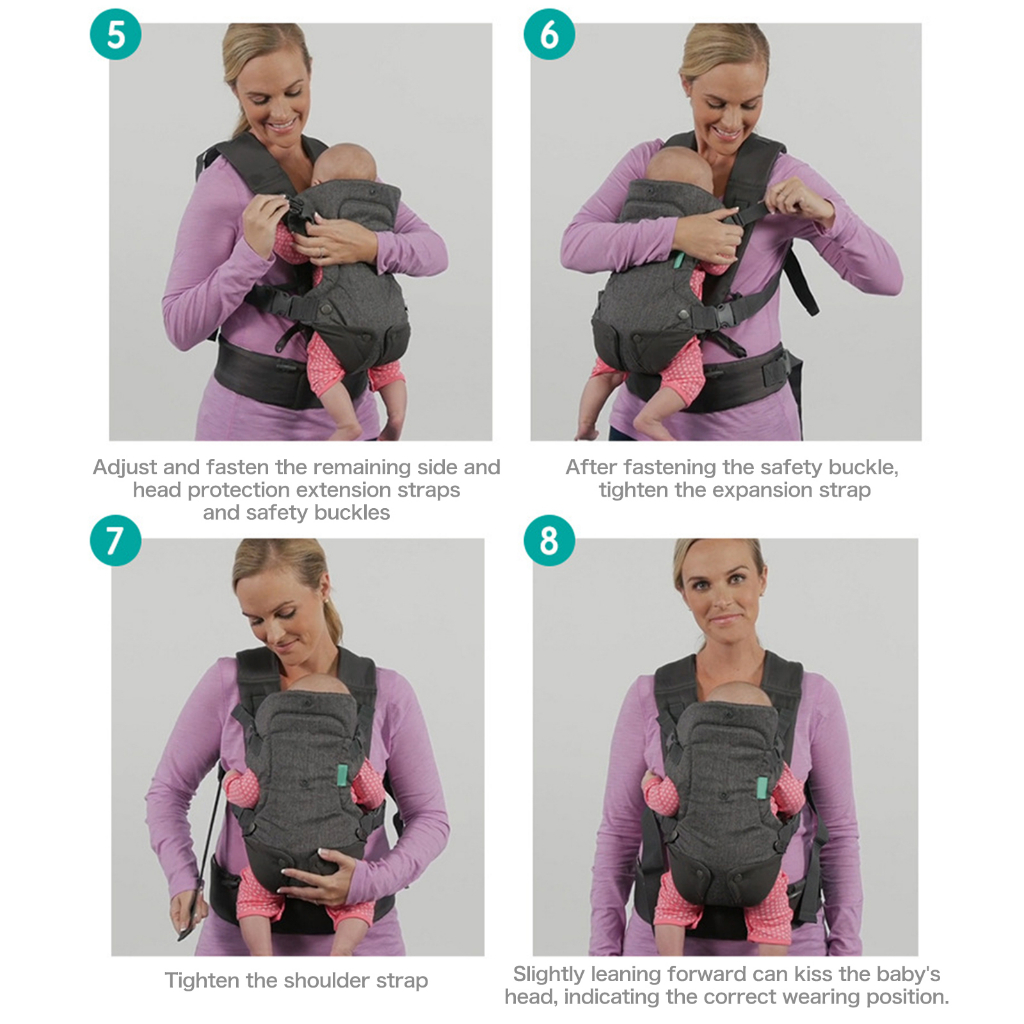
How to put a baby face out safely
Use these steps each time. Practice at home before you go outside.
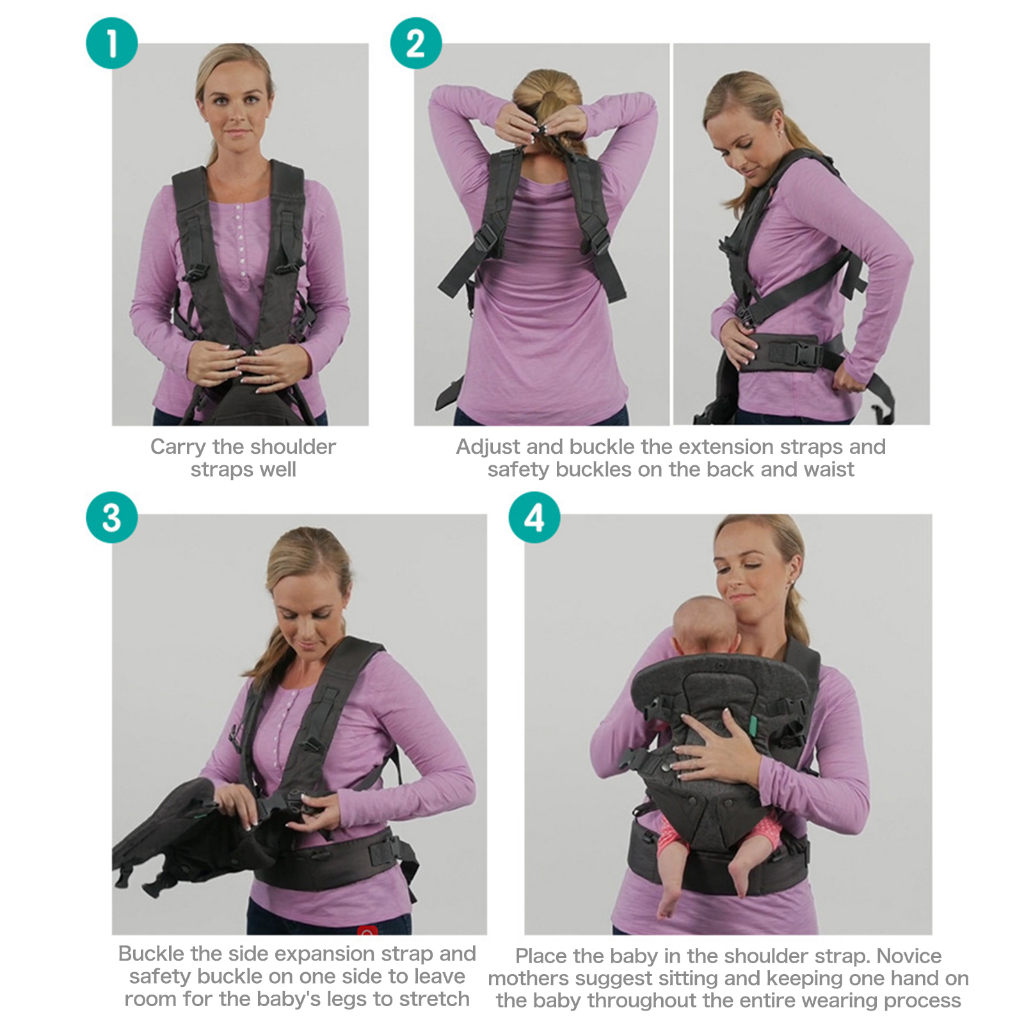
1. Check the carrier first
Inspect the carrier for:
- Torn fabric
- Loose stitching
- Damaged buckles
- Missing snaps
- Stretched straps
- A seat that no longer holds its shape
Do not use a damaged carrier. Check for product recalls through the U.S. Consumer Product Safety Commission.
2. Set the carrier for outward facing
Adjust the seat and panel before placing your baby inside. The carrier should support your baby’s upper body without pressing on the throat or covering the face.
Use the narrow or wide seat setting listed for your baby’s size. The correct setting helps keep the hips and legs in a healthy position.
3. Place your baby in the carrier
Keep one hand on your baby until all clips or ties are secure. Your baby should sit deep in the carrier rather than hang from the straps.
Your baby’s chest should face away from you. Their back should stay supported. Their head should remain above the top edge of the panel.
4. Tighten the carrier
Pull the straps until your baby feels close and secure. The carrier should hold your baby against your body without squeezing.
You should not see a gap between your baby and the carrier. At the same time, your baby should breathe with no pressure on the ribs or neck.
5. Perform an airway check
Use the basic checks recommended by the American Academy of Pediatrics for safe babywearing:
- Keep your baby’s face visible.
- Keep your baby close enough to kiss.
- Keep the chin off the chest.
- Keep the back supported.
- Check your baby often.
The American Academy of Pediatrics explains that a baby’s airway can become blocked when the chin presses down toward the chest. Young babies may not have the strength to move their heads back into a safe position.
6. Start with a short trial
Try the outward position for a short time while you stay close to home. Watch your baby’s face, breathing, color, and body position.
Stop if your baby cries hard, turns pale or blue, becomes limp, struggles to breathe, or seems unable to hold their head up. Turn the baby inward only if you can do so safely. If your baby has trouble breathing or has a change in color, remove them from the carrier and call 911.


How long can a baby face out in a carrier?
There is no single time limit for every carrier or every baby. Use the time limit in your manual first. If the manual gives no clear limit, keep face-out trips short and take regular breaks.
A face-out position can be tiring because your baby must process more sights and sounds. Your baby also cannot easily curl up against your chest to sleep.
Turn your baby inward or take them out when your baby:
- Looks sleepy
- Starts to slump
- Drops their chin
- Rubs their eyes
- Turns their head away
- Cries or becomes fussy
- Seems stiff, hot, or overwhelmed
Never let a baby sleep in a face-out position. If your baby falls asleep, move them to a safe sleep space, such as a firm, flat crib or bassinet on their back. A carrier is not a substitute for a safe sleep surface.
A practical starting plan
This example is a cautious plan, not a universal rule:
- Try face out for 5 to 10 minutes.
- Stay alert and check the airway often.
- Return to face in before your baby becomes tired.
- Increase time only when your baby stays well-positioned and calm.
- Stop using face out when your baby can no longer keep their head and back steady.
Your carrier’s manual may set a different limit. Follow it.
How should a baby’s hips and legs look?
A safe carrier should support the baby’s thighs and keep the legs in a natural spread position. The knees should sit higher than, or level with, the bottom. This is often called the M position.
Avoid a position in which:
- The legs hang straight down.
- The baby’s weight rests on the crotch.
- The knees are squeezed together.
- The carrier presses hard behind the knees.
- One leg sits outside the carrier by mistake.
- The baby’s hips are forced into a flat, straight position.
The International Hip Dysplasia Institute advises using carriers that support the thighs and allow the hips to move freely. This matters for both inward- and outward-facing carries.
A baby’s legs may look different in different carriers. Use the manual’s fit pictures, not a general image from another brand.
When should a baby not face out?
Do not use a face-out carry when your baby lacks steady head control or does not meet the carrier’s minimum size. Also avoid it when your baby is sick, very tired, or already upset.
Use extra care if your baby was born early, has low muscle tone, has breathing problems, or has a medical condition that affects posture or muscle control. Ask your child’s pediatrician or a qualified physical therapist for individual advice.
Do not face your baby outward during activities that can cause a fall or crush injury. Avoid:


- Running
- Cycling
- Cooking over a hot stove
- Using power tools
- Climbing
- Contact sports
- Driving
- Sleeping
A carrier does not replace a car seat. In a vehicle, use a properly installed rear-facing car seat that meets U.S. safety rules.
Common mistakes to avoid
Starting because the baby is a certain age
Age gives a rough guide. It does not prove readiness. Head control, body fit, and the carrier’s instructions matter more.
Letting the baby lean away
A baby should not hang forward from the straps. Tighten the carrier and check the seat. If the baby still leans or slumps, stop the outward carry.
Covering the baby’s face
Do not place a blanket, nursing cover, coat, or scarf over your baby’s face. Air must move freely around the nose and mouth.
Using a bulky coat under the straps
A thick coat can create a gap between the baby and the carrier. Dress the baby in thin layers and place a carrier cover over both of you only if it does not cover the face.
Letting the baby face out for a nap
Face out is for an awake, alert baby. Move a sleeping baby to a safe sleep space.
Ignoring the parent’s balance
Outward-facing carries can shift your center of gravity. Take smaller steps, use handrails, and avoid bending at the waist. Bend your knees and support your baby with one hand when needed.
Copying a different carrier
A picture or video may show a different model, a different size, or an unsafe setup. Use the instructions for your exact carrier.

Face-out carrier safety checklist
Before each use, ask:
- Does my baby meet the manual’s age, weight, and height rules?
- Can my baby hold their head steady?
- Is the face visible?
- Is the chin away from the chest?
- Is the back supported?
- Are the thighs supported?
- Are the knees bent and free?
- Is the carrier snug but not tight?
- Is my baby awake and calm?
- Can I see and check my baby at all times?
If any answer is no, use an inward carry or wait.
When to ask for help
Contact your baby’s pediatrician if you are unsure whether your baby has enough head, neck, or trunk control. Ask for help sooner if your baby was premature or has a known muscle, bone, nerve, or breathing issue.
A trained babywearing educator can also check the fit. Look for a professional who can show safe use of your exact carrier, not just a similar style.
Seek urgent help if your baby has trouble breathing, turns blue or gray, becomes unresponsive, or cannot be roused. Remove the baby from the carrier and call 911.


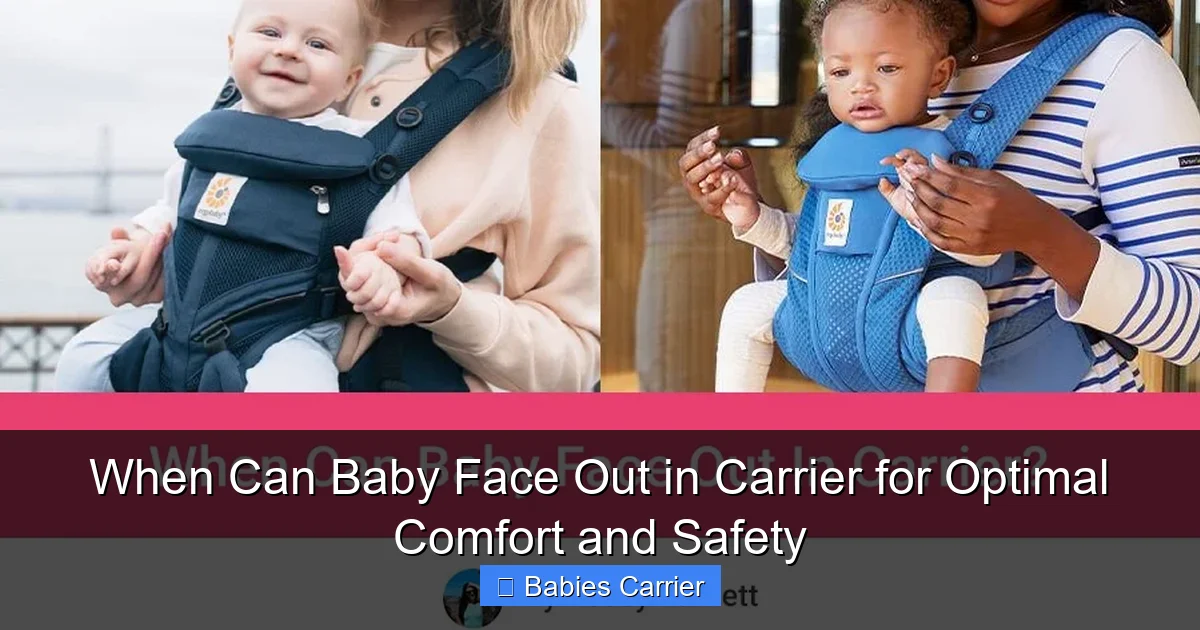
FAQs about babies facing out in carriers
Can a 3-month-old face out in a carrier?
Usually, no. Most 3-month-old babies do not have enough steady head and neck control for a face-out position. Follow the minimum age in your carrier manual and wait until your baby can keep their head upright without help.
Can a baby face out at 4 months?
Some carriers may allow it for babies who meet their fit rules, but many babies are not ready at 4 months. Do not use age alone. Your baby must have firm head control and fit the carrier correctly.
Is facing out bad for a baby’s hips?
Facing out is not automatically harmful when the carrier supports the thighs and allows a natural hip position. The legs should not dangle straight down or be forced together. Follow the carrier’s seat instructions.
Can my baby sleep while facing out?
No. A face-out carry is not a safe sleep position. If your baby falls asleep, move them to a firm, flat sleep surface on their back.
How do I know if my baby is overstimulated?
Your baby may look away, fuss, cry, stiffen, rub their eyes, yawn, or become quiet and hard to engage. Turn your baby inward or take a break. A calm baby is not required to face out.
Key takeaway
Most babies are ready to face out in a carrier around 5 to 6 months, but the right time depends on your baby and your exact carrier. Wait for strong head and neck control, follow the manual, keep the airway clear, support the thighs, and use face out only while your baby is awake and well-positioned.
When in doubt, keep your baby facing in and ask your pediatrician or a trained babywearing educator to check the fit.
Sources
- American Academy of Pediatrics: Baby Carriers, Slings, and Backpacks
- International Hip Dysplasia Institute: Baby Carriers
- U.S. Consumer Product Safety Commission: Recalls
- U.S. Consumer Product Safety Commission: Infant and Toddler Products
- Carrier-specific instructions from the manufacturer of the exact model in use

