
Introduction
The best baby registry includes items that support safe sleep, feeding, diaper changes, travel, and basic care. In the United States, you do not need every product in a baby store. A small, well-planned registry can cover the first weeks without wasting money or filling your home with items you may rarely use.
Start with essentials that meet current guidance from U.S. organizations such as the American Academy of Pediatrics (AAP), the U.S. Consumer Product Safety Commission (CPSC), and the National Highway Traffic Safety Administration (NHTSA). Then add items that fit your space, budget, feeding plan, climate, and daily routine.

Key Takeaways
- Put a crib, bassinet, or play yard with a firm, flat sleep surface at the top of the list.
- Add a properly fitted rear-facing car seat before the baby comes home.
- Plan for diapers, wipes, diaper cream, clothes, feeding supplies, and a simple first-aid kit.
- Choose items that serve more than one purpose when possible.
- Skip products that add risk, clutter, or cost without solving a clear problem.
- Check product recalls before buying and register eligible products with the maker.


The Core Baby Registry Checklist
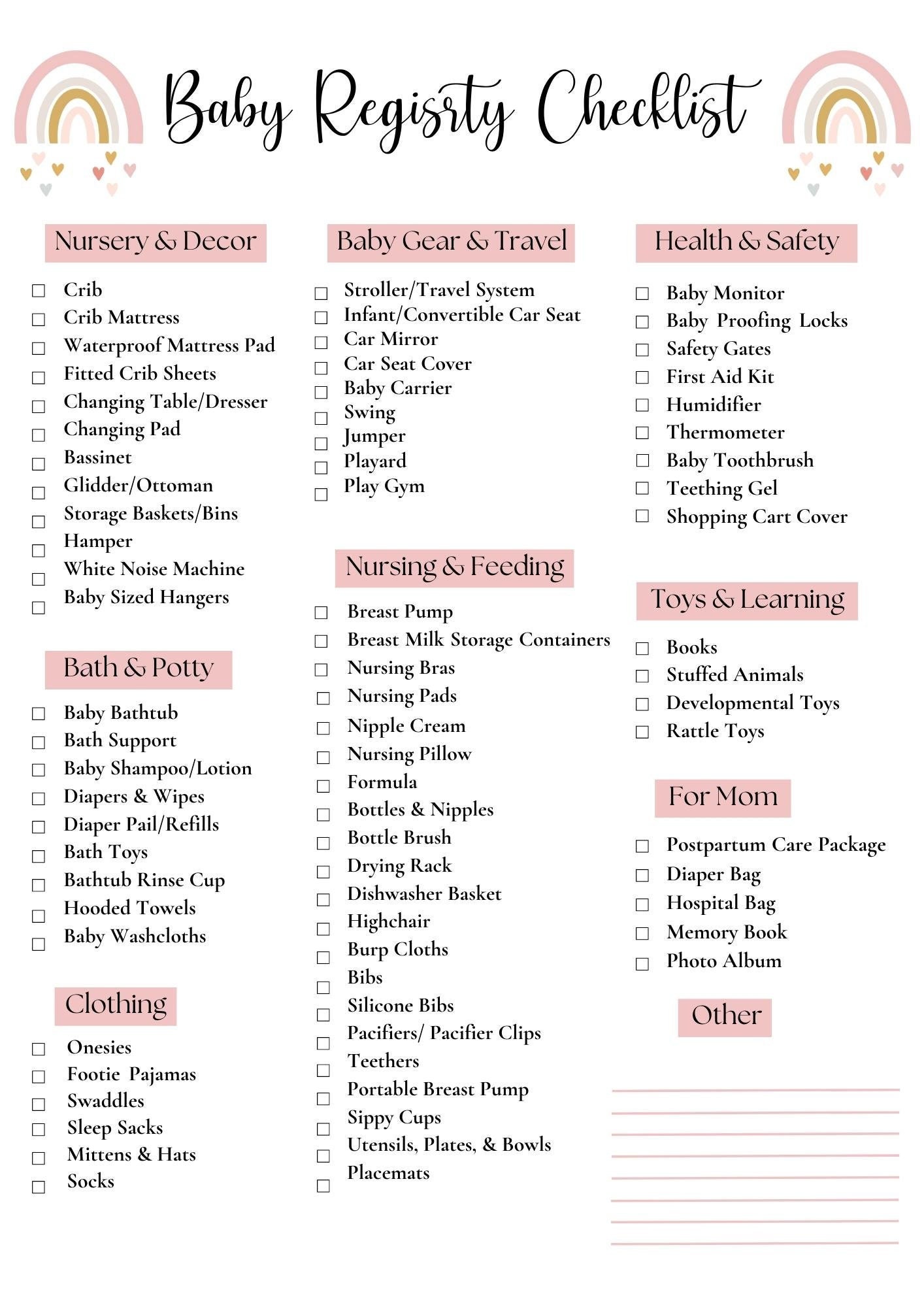
You can build a useful registry with about 25 to 35 well-chosen items. The exact number depends on whether you plan to breastfeed, use formula, pump, cloth diaper, or share care with family.
| Category | Must-have items | Helpful amount or guide |
|---|---|---|
| Sleep | Bassinet, crib, or play yard; fitted sheets; wearable blanket | One safe sleep space; two to four sheets |
| Travel | Rear-facing car seat; stroller or baby carrier | One car seat; one travel method |
| Diapering | Newborn or size 1 diapers; wipes; changing pad; diaper cream | Start with a small supply of newborn diapers |
| Feeding | Burp cloths; bottles if needed; nursing supplies if wanted | Four to eight bottles if bottle-feeding |
| Clothing | Bodysuits; sleepers; socks; weather-ready layers | A few sizes, not too many newborn clothes |
| Bath and health | Infant tub; washcloths; digital thermometer; nail file | One of each basic care item |
| Home care | Laundry detergent; basic storage; night-light | Choose fragrance-free options if preferred |
These amounts are starting points, not rules. Babies grow at different rates. A baby may outgrow newborn clothing and diapers within days, while another may use them for several weeks.
Safe Sleep Essentials
A safe sleep setup is the most important part of a baby registry. The AAP recommends that babies sleep on their backs, on a firm, flat, non-inclined surface made for infant sleep.
Add these items
- Crib, bassinet, or portable play yard
- Firm mattress designed for that product
- Two to four fitted sheets
- Wearable blankets or sleep sacks
- A room thermometer, if useful for your home
The sleep space should have only the baby and a fitted sheet. Do not add pillows, quilts, loose blankets, crib bumpers, stuffed toys, or positioners. These items can raise the risk of suffocation and other sleep-related harm.
A wearable blanket can replace a loose blanket. Choose the right size and follow the product’s weight and age limits. Stop swaddling when the baby shows signs of trying to roll. Never use a weighted sleep sack or weighted swaddle unless your child’s health care provider gives specific advice.
What not to place on the registry
Avoid inclined sleepers, crib tents, sleep positioners, and products that claim to prevent sudden infant death syndrome (SIDS). No product can guarantee protection from SIDS. Check the CPSC recall database for older or secondhand sleep products.
The safest location is a separate infant sleep surface in the parents’ room. Room-sharing without bed-sharing can make nighttime care easier while reducing some sleep risks. Ask your baby’s clinician for advice if your baby was born early or has a health condition.
Car Seat and Travel Gear
A rear-facing car seat is essential for most U.S. families who travel by car. NHTSA recommends keeping children rear-facing as long as possible, within the height and weight limits of the seat.
Car seat checklist
Choose a car seat that:
- Fits your vehicle and the baby’s size.
- Meets current U.S. federal safety standards.
- Has clear instructions and an expiration date.
- Can be installed tightly in the vehicle.
- Has not been in a crash.
- Is not missing parts, labels, or the manual.


Do not buy a used car seat unless you know its full history. Avoid seats with unknown crash exposure, missing parts, or expired labels.
Install the seat before the due date. Many local hospitals, fire departments, police departments, and certified child passenger safety technicians offer installation help. A technician can check the fit, but the caregiver remains responsible for reading and following the car seat manual and vehicle manual.
Stroller or baby carrier?
A stroller helps with longer walks and errands. A soft-structured carrier or wrap can help when you need both hands. You may not need both right away.
If you use a carrier, keep the baby’s face visible. The chin should not press against the chest. Follow the carrier’s age, weight, and positioning instructions. Do not let a baby sleep in a carrier while you are driving or when you cannot watch the baby closely.
A stroller should not be used as a substitute for a safe sleep space. If the baby falls asleep during travel, move the baby to a firm, flat sleep surface when practical.

Diapering Supplies
Diapering takes place many times each day, so simple supplies can make a large difference.
Basic diaper station
- Disposable diapers or cloth diapers
- Unscented wipes or soft cloths with water
- Waterproof changing pad
- Diaper cream
- Disposable or washable changing pad covers
- Diaper pail or lined trash can
- Hand sanitizer for use when soap and water are not nearby
A changing table is optional. A changing pad on the floor can work well and may reduce fall risk. Never leave a baby alone on a raised surface, even for a moment.
Buy a small package of newborn diapers first. Some babies never fit them well. Size 1 may be a better starting point for larger babies, but you will not know until birth.
For cloth diapers, start with a manageable number rather than buying a complete system at once. You will need a washing plan, storage for used diapers, and a reliable supply of inserts or covers.
Diaper rash care
Change wet or soiled diapers often. Clean gently and let the skin dry before applying a barrier cream. Ask a pediatric clinician about a rash that spreads, bleeds, blisters, lasts several days, or comes with fever.
Do not use baby powder near the baby’s face. Powders can become airborne and may harm the lungs if inhaled.

Feeding and Breastfeeding Supplies
Feeding needs vary. A registry should support your feeding plan without treating one method as the only correct choice.
If you plan to breastfeed
Useful items may include:
- Nursing bras or comfortable feeding tops
- Breast pads
- Burp cloths
- Nipple cream, if needed
- A supportive pillow for feeding
- A breast pump, if you expect to pump or your insurance provides one


Many U.S. health plans cover breast pumps under the Affordable Care Act, but coverage rules differ. Check your plan before adding an expensive pump to the registry.
A nursing pillow can improve comfort, but it should not be used as a sleep surface. A baby should not sleep on a feeding pillow, couch, or adult bed.
If you plan to use formula
Consider:
- Four to eight bottles
- Slow-flow nipples suitable for a newborn
- Bottle brush
- Formula container
- A way to warm or prepare bottles safely
You do not need a bottle warmer. Warm formula in a safe way if you choose to warm it, and never use a microwave because it can create hot spots.
Follow the formula label exactly. Do not dilute formula or add extra powder. Use safe water and clean preparation tools. The CDC provides current guidance on preparation, storage, and cleaning.
If you are unsure
You can register for a small number of bottles and add more later. Babies may prefer certain nipple shapes, and feeding plans can change. A flexible registry is often more useful than buying every feeding product before birth.

Clothing, Bath, and Health Items
Newborns need comfort and warmth, but they do not need a large wardrobe.
Clothing basics
- Five to seven bodysuits
- Four to six sleepers
- Two or three hats for outdoor weather
- Two to four pairs of socks
- Seasonal layers
- One or two outfits for going home or photos
Choose clothes with easy snaps or zippers. Avoid loose strings, small decorations, and clothing that can cover the face. Check the fit often, especially around the neck and legs.
Do not use hats indoors for long periods unless a health care professional recommends them. Babies can overheat.
Bath supplies
- Infant tub or a safe sink setup
- Two or three washcloths
- Mild baby cleanser
- Hooded towel
- Soft brush
- Fragrance-free lotion, if needed
A baby does not need a daily bath. Never leave a baby alone in or near water, even when the water is shallow.
Health and grooming supplies
- Digital thermometer
- Infant nail file or baby nail clippers
- Nasal bulb or saline drops
- Small first-aid kit
- Several burp cloths
- A list of important phone numbers
Ask a clinician before giving medicine to a baby. Do not rely on an app, spoon, or guess for dosing. Keep medicines, creams, and grooming tools out of reach.


Items That Are Helpful but Not Essential
Some products can make daily life easier, but they are not required for every family.
Possible additions
- White-noise machine placed outside the sleep space
- Baby monitor
- Glider or comfortable chair
- Portable changing pad
- Stroller rain cover made for that stroller
- Extra bottle storage
- Baby carrier
- Freezer meal containers
- Night-light with a soft glow
- Waterproof mattress protector made for the mattress
A baby monitor is most useful when it supports supervision. It does not replace checking the baby in person or following safe sleep practices. Avoid monitors that encourage unsafe responses, such as moving the baby to an inclined product because of an alert.
A wipe warmer, bottle warmer, fancy diaper pail, and newborn shoes may be convenient. They are not core needs. Add them only if they solve a problem in your home.

Baby Registry Items You Can Usually Skip
A short “do not need” list can save as much money as a shopping list.
You can usually delay or skip:
- Large newborn shoe collections
- Many newborn-size outfits
- Crib bumpers
- Loose crib blankets and pillows
- Baby food makers
- A dedicated changing table
- Multiple types of swings and loungers
- Scented baby products
- Wipe warmers
- Special sleep positioners
- Large quantities of one bottle brand
- Decorative items that cannot be washed
Do not use infant loungers, bouncers, or car seats for routine sleep. These products may be useful while an awake adult watches the baby, but they are not a safe replacement for a crib, bassinet, or play yard.
Product recalls also change over time. Check the CPSC recall list before buying new or used baby gear. Register products with the manufacturer so you can receive safety notices.

How to Build a Registry on a Budget
Begin with the items that protect health and support daily care. Add comfort items only after the basics are covered.
A simple order of purchase
- Choose a safe sleep space.
- Buy and install a rear-facing car seat.
- Add diapers, wipes, clothes, and feeding basics.
- Add a stroller, carrier, or both based on your routine.
- Add bath, health, and grooming supplies.
- Add optional items after you know what your baby and household need.
Compare the total cost of an item, not just the starting price. A low-cost product may need special parts, batteries, refills, or replacement covers. A more expensive product may be useful if it lasts longer, but a high price does not prove better safety or performance.
Think about your home, too. A small apartment may favor a portable play yard and a compact stroller. A home with stairs may make a lightweight carrier more useful. A family that uses public transit may prioritize a carrier over a full-size stroller.

Common Baby Registry Mistakes
The most common mistake is buying for an imagined baby instead of the baby and home you have. Registry choices should match your space, budget, support system, and daily travel.
Other mistakes include:
- Buying too many diapers in one size
- Choosing products before checking measurements
- Forgetting replacement sheets and washable covers
- Ignoring product expiration dates
- Buying used sleep gear without checking recalls
- Skipping the car seat installation check
- Adding products that are not safe for sleep
- Treating marketing claims as medical advice
- Assuming every baby likes the same bottle, pacifier, or carrier
Read the manual before using complex gear. Keep manuals in a phone folder or labeled box. Take a few minutes each month to check for loose parts, damage, outgrown limits, and recalls.


Frequently Asked Questions
How many baby registry items do I need?
Most families can start with about 25 to 35 useful items. The number depends on feeding, diapering, laundry, travel, and available support. Focus on categories, not a target count.
What should I buy before the baby is born?
Have a safe sleep space, fitted sheets, a rear-facing car seat, diapers, basic clothing, feeding supplies, and a thermometer ready. Install the car seat before the due date.
Do I need both a stroller and a baby carrier?
No. Either can work as a first travel option. A stroller may be better for long outings, while a carrier may work better in small spaces, on stairs, or during quick errands.
How many bottles should I register for?
If you expect to bottle-feed often, four to eight bottles can provide a workable start. Buy a small set first because babies may prefer one nipple style over another.
What baby products are unsafe for sleep?
Avoid inclined sleepers, loungers, positioners, crib bumpers, loose bedding, pillows, weighted swaddles, and stuffed toys in the sleep area. Use a firm, flat surface with a fitted sheet and place the baby on the back.
Final Checklist
Before your baby arrives, confirm that you have:
- A safe crib, bassinet, or play yard
- Firm mattress and fitted sheets
- Rear-facing car seat installed correctly
- Diapers and wipes
- Basic clothes in more than one size
- Feeding supplies that fit your current plan
- Digital thermometer
- Nail file or baby clippers
- Bath supplies
- A plan for laundry and nighttime care
- Recall and registration checks completed
A good baby registry is not a test of how much you can buy. It is a practical plan for safe sleep, daily care, feeding, and getting around in your own U.S. home. Start with the essentials, wait on uncertain purchases, and let real life guide the rest.
