
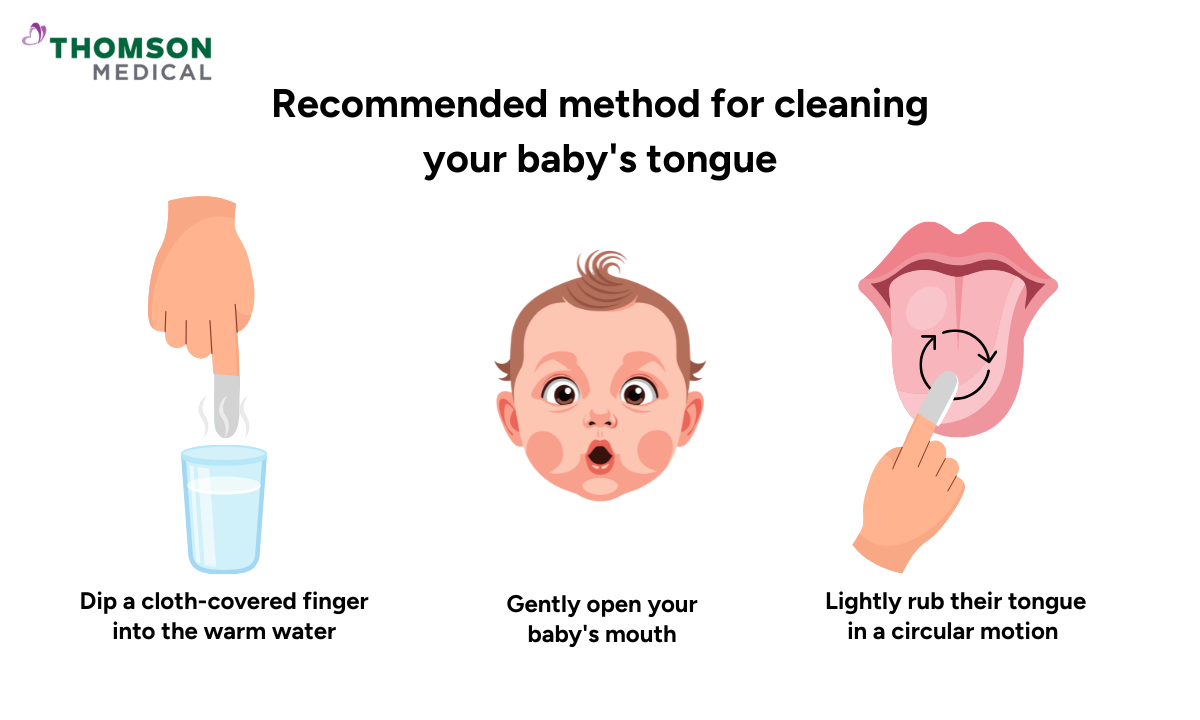
To clean a baby’s tongue, wash your hands, wrap a clean, damp, soft cloth or gauze around your finger, and gently wipe the tongue from back to front. Use only water. Do not scrub, scrape, or reach far into your baby’s mouth.
For most babies in the United States, tongue cleaning is mainly a comfort and hygiene step. It does not need to happen after every feed. Once the first tooth appears, dental care becomes more important: brush twice a day with a soft baby toothbrush and a tiny smear of fluoride toothpaste, as advised by the American Dental Association.

Why clean a baby’s tongue?
A baby’s tongue can collect milk, formula, and normal mouth fluids. A gentle wipe may remove this coating and help you notice changes in your baby’s mouth.
Still, a white tongue does not always mean poor hygiene. Milk residue often sits on the top of the tongue and may wipe away with a damp cloth. Oral thrush usually looks different and needs advice from a pediatrician or other health professional.


Tongue cleaning does not replace brushing. The first tooth can decay, even in a young baby. The American Academy of Pediatric Dentistry recommends cleaning a baby’s mouth before teeth appear and brushing erupted teeth with fluoride toothpaste.
What you need
Gather these simple items:
- Clean water
- A clean, soft washcloth or piece of gauze
- A clean, dry towel
- A safe place to hold your baby
You do not need a special tongue scraper, mouthwash, gel, or flavored cleaner. Baby mouth tissue is delicate. Simple tools are safer.
How to clean a baby’s tongue step by step
Use this gentle routine once a day or when you see milk buildup. Choose a time when your baby is calm, such as after a bath or during a diaper change. Avoid doing it right after a feed if your baby tends to spit up.
1. Wash your hands
Wash your hands with soap and clean running water. Dry them with a clean towel.
This step lowers the chance of bringing germs into your baby’s mouth. Keep your fingernails short and smooth. Remove rings that could scratch your baby.
2. Prepare a clean, damp cloth
Wet a clean, soft cloth or gauze with drinking-safe water. Wring it out well so it is damp, not dripping.
Do not share the cloth with another child. Use a fresh cloth each time, then wash it with hot water and detergent before using it again.
3. Hold your baby securely
Place your baby in a safe, supported position. You can hold your baby’s head against your chest or lay the baby across your lap.
Keep the head steady without pressing on the neck. Never clean the mouth while your baby is lying flat and unattended.


4. Wipe the gums and tongue gently
Wrap the damp cloth around your clean finger. With a light touch, wipe the gums, the roof of the mouth, and the front and top of the tongue.
Use short, gentle strokes. Start near the front of the tongue and move toward the middle. Do not push your finger deep into the mouth. Your baby may gag if you touch the back of the tongue.
You do not need to remove every mark. The goal is gentle cleaning, not a spotless mouth.
5. Stop if your baby becomes upset
Pause if your baby cries hard, gags repeatedly, coughs, turns blue, has trouble breathing, or seems distressed. Comfort your baby and try another time if needed.
If your baby has breathing trouble, call 911 in the United States. If gagging or coughing continues after you stop, contact your child’s health care professional.
A successful cleaning is brief and gentle. Your baby’s gums and tongue should look normal, without bleeding, swelling, or raw spots afterward.

How often should you clean a baby’s tongue?
Once a day is usually enough for routine cleaning. You can also wipe the mouth when you notice visible milk residue. Cleaning after every feeding is not required and may irritate the mouth if you rub too much.
A simple schedule can help:
| Baby’s stage | Recommended mouth care |
|---|---|
| Before teeth appear | Wipe the gums and tongue gently with a clean, damp cloth |
| When the first tooth appears | Brush twice daily with a soft baby toothbrush and a rice-sized smear of fluoride toothpaste |
| By the first birthday | Arrange a first dental visit, or sooner if your child’s dentist recommends it |
The American Academy of Pediatric Dentistry recommends a first dental visit by age 1. Early visits help identify risk and give parents guidance on feeding, fluoride, brushing, and teeth.
Breast milk and formula are normal foods for infants. However, frequent exposure to sugary drinks, juice, or sweetened foods can raise the risk of tooth decay once teeth are present. The American Academy of Pediatrics advises against putting a baby to bed with a bottle containing milk, formula, juice, or other sweet liquids.

Milk coating or oral thrush: How can you tell?
A coating that wipes away easily is more likely to be milk residue. Thrush often causes thicker white patches that do not wipe away easily.
Milk residue may:
- Sit mostly on the top of the tongue
- Appear after feeding
- Wipe away with a damp cloth
- Leave normal-looking tissue underneath
- Cause no pain or feeding problems
Oral thrush may:
- Appear as creamy white patches on the tongue, gums, roof of the mouth, or inner cheeks
- Stay in place when you gently try to wipe it
- Cause red or irritated tissue underneath
- Make feeding uncomfortable
- Cause a baby to fuss, pull away, or feed less
Do not scrape suspected thrush. Scraping can make the tissue sore or cause bleeding.
Contact your baby’s pediatrician if white patches do not wipe away, keep returning, spread to other parts of the mouth, or affect feeding. Your baby may need an examination and prescription treatment. Do not use leftover medicine or an over-the-counter product unless a clinician says it is safe for your baby.
Some babies with thrush may also have a diaper rash with bright red skin or small red spots nearby. Tell the pediatrician about both symptoms.


What should you avoid when cleaning a baby’s tongue?
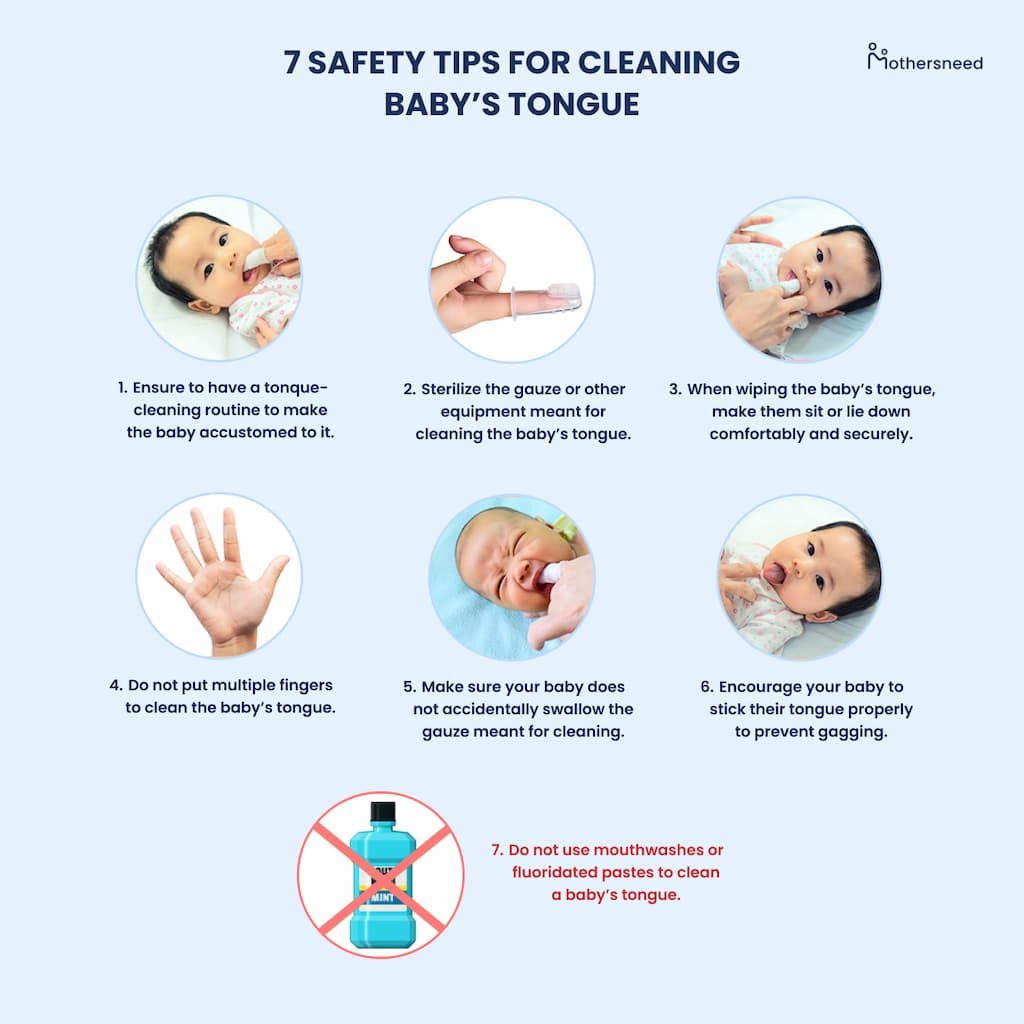
Avoid anything that can irritate the mouth, cause choking, or expose a baby to unsafe ingredients.
Do not:
- Use a metal or plastic tongue scraper
- Brush the tongue hard
- Push a finger toward the back of the throat
- Use adult toothpaste
- Give mouthwash
- Use alcohol-based mouth products
- Apply essential oils
- Use numbing gels without medical advice
- Put honey on a pacifier, finger, or cloth
- Share a spoon, toothbrush, or cloth
- Use an unwashed finger or cloth
- Force your baby’s mouth open
Honey should not be given to children younger than 12 months because it can cause infant botulism, a serious illness. The Centers for Disease Control and Prevention advises against honey for infants under 1 year.
Do not use baking soda, salt, hydrogen peroxide, or homemade mouth rinses. These products can irritate delicate tissue, and babies cannot safely spit them out.
If your baby bites your finger, do not jerk your hand away. Remove it slowly and use a soft cloth or baby toothbrush as your child grows.
When should a baby start using a toothbrush?
Start brushing when the first tooth breaks through the gum. Use a small, soft-bristled baby toothbrush and a rice-sized smear of fluoride toothpaste.
Brush twice each day, especially before bed. Adults should do the brushing because babies and toddlers cannot clean their teeth well on their own.
A rice-sized smear is a small amount, about the size of a grain of rice. You do not need to rinse your baby’s mouth after brushing. Spitting is not expected at this age, and the small amount recommended by dental guidance is designed for young children.
As more teeth appear, brush all tooth surfaces, including the gum line. Lift the lip gently so you can see the front teeth. Replace the toothbrush when the bristles wear out or after an illness if your dental professional recommends it.
Fluoride toothpaste helps prevent cavities, but the right amount matters. If your home uses well water or you are unsure about fluoride in your drinking water, ask your child’s dentist or pediatrician whether your baby needs fluoride supplements. Do not start supplements without professional advice.

What if your baby refuses tongue cleaning?
Do not force the routine. A baby may resist because of hunger, tiredness, teething pain, a strong gag reflex, or simple discomfort with a finger in the mouth.
Try these changes:
- Wait until your baby is calm and alert.
- Clean the mouth before a feed rather than after one.
- Use less pressure.
- Use a smaller piece of gauze.
- Let your baby hold a clean baby toothbrush.
- Make the routine short.
- Sing or talk in a calm voice.
- Stop and try again later.
You do not need to clean away every bit of coating. Avoiding injury matters more than completing the task.
If your baby consistently cries during feeds, refuses to eat, has fewer wet diapers, or seems to have mouth pain, contact a pediatrician. These signs may point to a problem that tongue cleaning cannot solve.

When should you call a pediatrician or dentist?
Call your baby’s health care professional if you notice:


- White patches that do not wipe away
- Bleeding after gentle contact
- Swelling, sores, blisters, or a strong mouth odor
- Fever with mouth changes
- Trouble sucking, swallowing, or breathing
- Refusal to feed
- Fewer wet diapers
- Poor weight gain
- Repeated mouth infections
- A tooth that appears dark, chalky, or damaged
Seek urgent help for breathing trouble, blue lips or skin, choking that does not stop, severe lethargy, or signs of dehydration.
A pediatric dentist can also help if you are unsure whether a coating is normal, your baby has an increased risk of tooth decay, or brushing is difficult. The first dental visit is recommended by age 1 in guidance from the American Academy of Pediatric Dentistry.

Key takeaways
- Clean a baby’s tongue with a clean, damp, soft cloth or gauze.
- Use gentle strokes and do not reach far into the mouth.
- Once a tooth appears, brush twice a day with a rice-sized smear of fluoride toothpaste.
- Milk residue often wipes away; thrush usually does not.
- Do not scrape white patches or use honey, mouthwash, alcohol, essential oils, or adult dental products.
- Contact a pediatrician for persistent patches, feeding trouble, pain, bleeding, or other concerning symptoms.
- Schedule the first dental visit by your baby’s first birthday.
FAQs
Can I clean my baby’s tongue with a toothbrush?
Before teeth appear, a clean, damp cloth or gauze is enough. After the first tooth appears, use a small, soft-bristled baby toothbrush with a rice-sized smear of fluoride toothpaste. Do not scrub the tongue hard.
Should I clean my baby’s tongue after every feeding?
No. Once-a-day cleaning is generally enough for routine care. You can wipe away visible milk residue, but repeated rubbing after every feed may irritate the mouth.
Is a white tongue always thrush?
No. Milk residue is common and often wipes away. Thrush tends to form thicker patches that remain in place and may affect the cheeks, gums, or roof of the mouth. A pediatrician should diagnose and treat suspected thrush.
Can I use a wet wipe to clean my baby’s mouth?
Use a clean cloth or gauze moistened with safe drinking water instead. Many household or baby wipes contain ingredients that are not meant for use inside the mouth.
Can I use honey to soothe my baby’s mouth?
No. Never give honey to a child younger than 12 months. Honey can cause infant botulism. Ask your pediatrician about safe ways to soothe mouth discomfort.
Conclusion
The safest way to clean a baby’s tongue is simple: wash your hands, use a clean damp cloth, and wipe gently without scraping. Clean only as much as your baby allows.
Treat persistent white patches, pain, bleeding, and feeding problems as health concerns rather than hygiene problems. Once the first tooth appears, shift the focus to twice-daily brushing with fluoride toothpaste and plan a dental visit by age 1.
