
In the United States, many babies like pacifiers because sucking is a natural reflex that helps them feel calm. A pacifier can meet the need to suck after feeding, help a baby settle, and may lower the risk of sleep-related infant death when offered at naps and bedtime. It does not replace feeding, close contact, or safe sleep practices.
Most babies do not “like” pacifiers for one single reason. Sucking can soothe the nervous system, reduce fussing, and give babies a simple way to comfort themselves. Some babies love pacifiers, while others spit them out or never use them.
This guide explains why pacifiers work, when they may help, how to use them safely, and when to stop.

Why do babies find pacifiers soothing?
Babies are born with a strong sucking reflex. It helps them feed and also gives them a way to calm their bodies. A pacifier provides sucking without adding milk or formula.


Sucking may help a baby:
- Settle after a feed
- Cope with tiredness or mild stress
- Stay calm during brief procedures
- Transition into sleep
- Feel comfort when being held, rocked, or carried
- Practice self-soothing
A pacifier may also give a baby a steady, repeated rhythm. That rhythm can act like a quiet anchor when the baby feels overstimulated. The effect is not magic, but it can be useful during common fussy periods.
Sucking is more than a feeding skill
Babies use two kinds of sucking:
- Nutritive sucking: Sucking that provides breast milk or formula
- Non-nutritive sucking: Sucking without taking in food
Breastfeeding and bottle-feeding use nutritive sucking. Pacifiers provide non-nutritive sucking. Both can feel satisfying, but they serve different purposes.
A baby who has just eaten may still want to suck. This does not always mean the baby needs more milk. The baby may be tired, seeking comfort, or trying to settle. However, parents should check for hunger cues before offering a pacifier.
Early hunger cues can include:
- Turning the head toward a breast or bottle
- Bringing hands to the mouth
- Opening the mouth
- Licking or smacking the lips
- Becoming more alert
Crying is a late hunger cue. A pacifier should not be used to delay a feeding when a baby shows signs of hunger.
Why some babies reject pacifiers
Not every baby enjoys a pacifier. A baby may reject one because:
- The shape feels unfamiliar
- The baby prefers a breast, bottle, thumb, or fingers
- The pacifier is offered when the baby is hungry
- The baby is too upset to learn how to use it
- The nipple size or shape does not suit the baby
- The baby has a stuffy nose or trouble breathing through the nose
Parents do not need to force pacifier use. If a baby does not want one, comfort through feeding, holding, rocking, talking, or skin-to-skin contact may work just as well.


Can pacifiers help babies sleep?
Yes. Offering a pacifier at naps and bedtime may reduce the risk of sudden infant death syndrome, or SIDS. The American Academy of Pediatrics includes pacifier use as one part of a broader safe sleep plan.
The exact reason for this possible benefit is not fully known. Researchers have proposed that a pacifier may:
- Help keep a baby in a lighter sleep state
- Support airway muscle activity
- Change how a baby responds to low oxygen
- Keep soft bedding away from the mouth
- Encourage a consistent sleep routine
These are proposed explanations, not proven reasons. The strongest practical point is that pacifier use during sleep is linked with a lower risk of SIDS in population studies.
Safe sleep still matters more than the pacifier
A pacifier does not make an unsafe sleep space safe. In the United States, the AAP recommends that babies sleep:
- On their backs for every sleep
- On a firm, flat sleep surface
- In a crib, bassinet, or play yard that meets current safety standards
- With only a fitted sheet
- Without pillows, blankets, bumpers, stuffed toys, or positioners
Room-sharing without bed-sharing is recommended, especially during the first six months. A pacifier is only one small part of this plan.
If the pacifier falls out after the baby falls asleep, you do not need to put it back. Do not attach it to the baby with a cord, ribbon, strap, or clothing clip during sleep.
What if the baby refuses a pacifier?
Do not force it. Pacifier use is not required for safe sleep, and some babies settle well without one.
You can try offering it:
- When the baby is calm
- After a feed
- Before the baby becomes overtired
- During a nap or bedtime routine
- While holding the baby
If the baby turns away, gags, cries, or repeatedly spits it out, stop and try another comfort method. Never prop a pacifier in a baby’s mouth or use a bottle nipple as a substitute.

When should you introduce a pacifier?
The best time depends on how the baby is fed and whether feeding is going well.
For a breastfed newborn, the AAP advises waiting until breastfeeding is well established before introducing a pacifier. This often takes about three to four weeks, but there is no fixed date for every family. Signs that feeding is going well include a comfortable latch, regular feeds, and appropriate weight gain as checked by the baby’s clinician.
For a formula-fed baby, a pacifier can usually be offered earlier if the baby is feeding well. Ask the pediatrician if the baby was born early, has trouble gaining weight, or has a medical condition that affects feeding.
The main concern is not that pacifiers always cause feeding problems. The concern is that a pacifier could hide hunger cues or replace needed breast or bottle time in a baby who is still learning to feed.


A simple decision guide
| Situation | Practical approach |
|---|---|
| Baby shows clear hunger cues | Offer breast milk or formula first |
| Baby has just fed and remains calm but wants to suck | A pacifier may provide comfort |
| Breastfeeding is painful or weight gain is poor | Ask a lactation professional or pediatrician before relying on a pacifier |
| Baby is healthy and settles with a pacifier at sleep time | Offer it when placing the baby down |
| Baby refuses the pacifier | Do not force it |
| Baby was born preterm or has feeding problems | Get individualized advice |
A pacifier should support feeding, not compete with it. If you are unsure whether a baby is hungry, offer a feed or ask the baby’s health care professional for guidance.

Are pacifiers safe for babies?
Pacifiers are generally safe when they are made, used, and cleaned correctly. They also have limits. The main concerns include choking, strangulation, infection, feeding disruption, ear infections, and dental changes.
Follow basic pacifier safety rules
Choose a one-piece pacifier made for the baby’s age. The shield should be large enough that the pacifier cannot fit fully into the baby’s mouth. It should also have ventilation holes.
Use these safety steps:
- Check the pacifier before each use.
- Throw it away if it is cracked, torn, sticky, or damaged.
- Replace it according to the manufacturer’s instructions.
- Clean it as directed, especially for young infants.
- Never dip it in honey, sugar, juice, or other sweet foods.
- Never attach it to a cord or necklace.
- Do not use a homemade pacifier or a modified bottle nipple.
- Keep pacifiers away from pets and dirty surfaces.
- Use the correct size for the baby’s age.
Honey is unsafe for babies younger than 12 months because it can cause infant botulism. Sweet coatings can also raise the risk of tooth decay.
The U.S. Consumer Product Safety Commission has recalled some pacifiers and pacifier accessories over the years. Check for current recalls when buying or using a product.
Do pacifiers cause ear infections?
Frequent pacifier use may be linked with a higher risk of acute middle-ear infections, especially as babies get older. The reason may involve changes in pressure or fluid movement near the middle ear.
This does not mean that every baby who uses a pacifier will get ear infections. It does mean that families may want to reduce pacifier use during waking hours after infancy, particularly if a child has repeated ear infections.
Can pacifiers affect teeth?
Long-term, frequent pacifier use can affect the way the teeth and jaws develop. Possible changes include an open bite, crossbite, or changes in the roof of the mouth.
The risk tends to rise when pacifier use continues well into the toddler years. The American Academy of Pediatric Dentistry recommends stopping non-nutritive sucking habits by about age 3, and earlier weaning may reduce dental risk.
A first dental visit should occur by the first birthday or within six months of the first tooth, whichever comes first. A pediatric dentist can give advice based on the child’s teeth, bite, and habit.
Avoid unsafe pacifier products
Do not use:
- Pacifier necklaces during sleep
- Weighted pacifiers
- Pacifiers with loose parts
- Products filled with liquid or gel unless specifically cleared and used as directed
- Pacifiers with damaged shields or handles
- Teething products attached to strings
- Pacifiers coated with food or medicine
A pacifier should never be used to deliver medicine unless a clinician specifically instructs you to do so.

How can you help a baby use a pacifier without problems?
Offer the pacifier as a comfort tool, not as an automatic response to every sound. First check the basics: feeding, a wet diaper, temperature, burping, illness, and the need for contact.


If those needs are met, try this approach:
- Hold the baby close and help the baby calm down.
- Offer the pacifier gently.
- Let the baby draw it in rather than pushing it deep into the mouth.
- Use it during a short calming period or at sleep time.
- Remove it when the baby is awake and no longer needs it.
- Stop if the baby resists.
Some babies need several calm attempts before they accept a pacifier. Others never do. Neither response means that something is wrong.
Signs the pacifier may be causing a problem
Talk with the baby’s pediatrician or another qualified clinician if:
- The baby misses feeds or feeds for much less time
- Weight gain is poor
- The baby has fewer wet diapers than expected
- Breastfeeding becomes painful or difficult
- The baby has repeated ear infections
- The pacifier causes skin irritation
- The baby cannot settle without it at every waking
- You see a change in the teeth or bite
A pacifier does not treat illness. Call the pediatrician if the baby has trouble breathing, a high fever, unusual sleepiness, signs of dehydration, or refuses several feeds.
How to wean from a pacifier
There is no single perfect age, but gradual weaning often works best. Many families begin by limiting the pacifier during the day, then keep it only for naps and bedtime.
Helpful steps include:
- Start with one small limit
- Use other calming tools, such as a song or cuddling
- Keep the rule steady
- Praise the child for trying
- Avoid cutting or damaging the pacifier
- Remove all pacifiers if a broken one could become a choking hazard
- Ask a pediatric dentist for help if the habit continues near age 3
Toddlers may resist at first. A calm, steady plan usually works better than sudden punishment or shame.
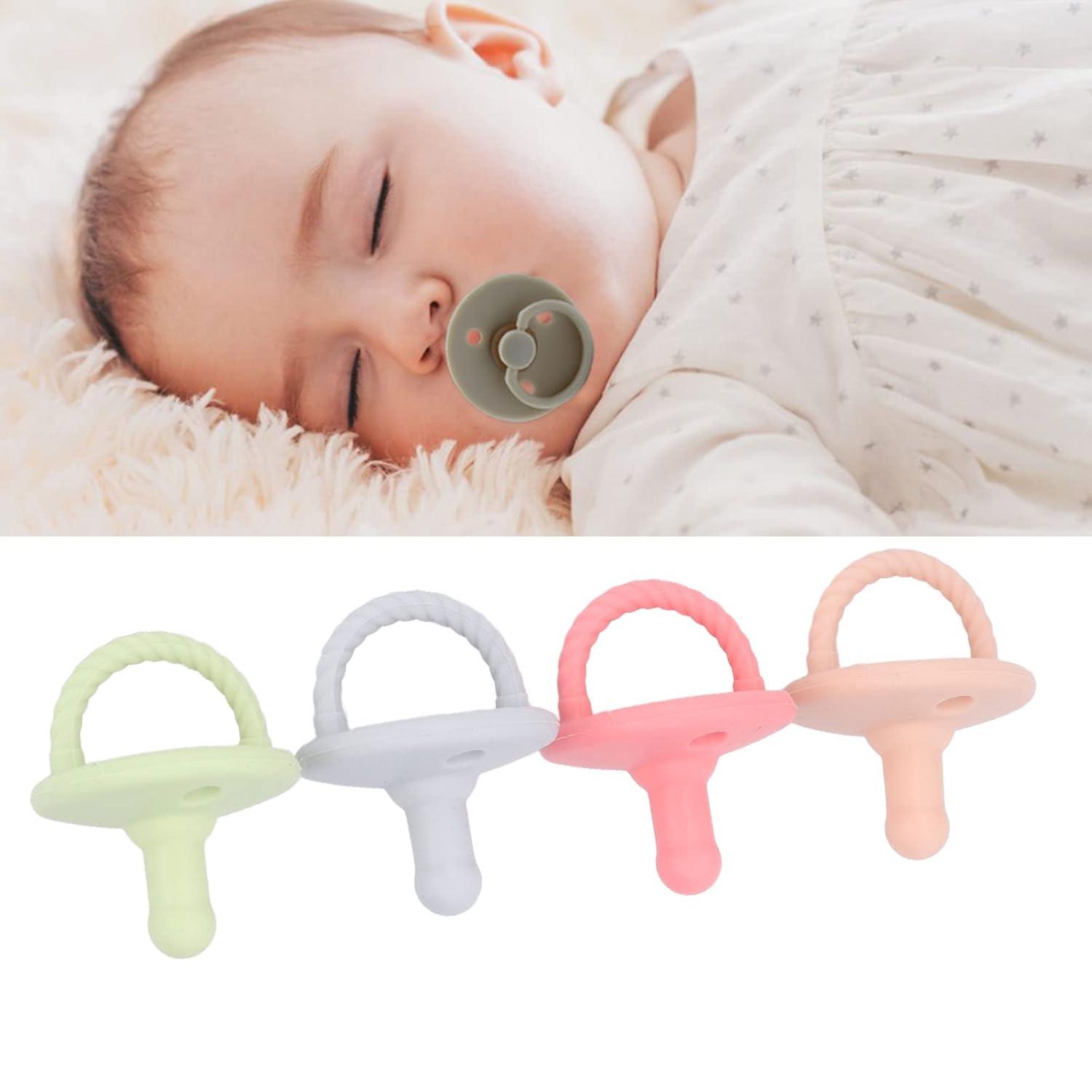
Pacifier versus thumb sucking: which is better?
Neither choice is perfect for every child. A pacifier is easier for a parent to limit and remove. Thumb sucking is always available, so it may be harder to stop.
A pacifier may have one practical advantage: parents can control when it is offered. They can limit it to sleep and remove it when the child is ready to stop. A thumb cannot be taken away in the same way.
Both habits can affect the teeth and jaw when they continue for a long time. The type of habit, how often it occurs, how strongly the child sucks, and how long it lasts all matter.
Do not shame a child for thumb sucking or pacifier use. Fear and punishment can make the habit harder to stop. A dentist or pediatrician can suggest a plan if the habit affects speech, sleep, teeth, or the child’s daily life.

Common mistakes parents make with pacifiers
The most common mistake is using a pacifier to delay feeding. A calm baby may still be hungry, especially during the early weeks. Check feeding cues first.
Other mistakes include:
- Putting a pacifier in a baby’s mouth while the baby sleeps on an unsafe surface
- Attaching it to the baby’s clothing during sleep
- Reusing a damaged pacifier
- Sharing pacifiers between children
- Coating it with honey or sugar
- Washing it with harsh products that leave a residue
- Giving a pacifier every time the baby fusses without checking the cause
- Continuing unlimited use into the toddler years


A pacifier works best as one part of a broader care routine. It should not replace feeding, touch, responsive care, or medical advice.
Frequently asked questions
Do pacifiers cause nipple confusion?
Pacifiers do not automatically cause nipple confusion. Some babies move between breast, bottle, and pacifier without trouble. However, early pacifier use may make feeding problems harder to notice in a newborn who is still learning to breastfeed. If latch, milk transfer, or weight gain is a concern, ask a lactation consultant or pediatrician for help.
Should I give my baby a pacifier at night?
If your baby is healthy and feeds well, you may offer a pacifier when placing the baby down for a nap or nighttime sleep. Follow safe sleep rules. If the pacifier falls out, you do not need to replace it.
How long can a baby use a pacifier?
Many families limit pacifier use to naps and bedtime during the second half of infancy and begin weaning during the toddler years. Long-term use can affect the ears, teeth, and bite, so ask your child’s clinician or dentist for advice. The American Academy of Pediatric Dentistry recommends ending the habit by about age 3.
Can a newborn sleep with a pacifier?
A newborn may sleep with a pacifier if the pacifier is offered safely and the baby is placed on the back in an approved sleep space. For a breastfed newborn, consider waiting until breastfeeding is well established unless the baby’s clinician recommends otherwise.
What should I do if my baby will not take a pacifier?
Do nothing unless your baby needs another form of comfort. Offer it once or twice when the baby is calm, but never force it. Holding, rocking, feeding, skin-to-skin contact, and a steady bedtime routine can all help a baby settle.
Key takeaways
- Babies like pacifiers because sucking is a natural reflex that can calm them.
- Pacifiers provide non-nutritive sucking, so they should not replace breast milk or formula.
- Offering a pacifier at naps and bedtime may lower the risk of SIDS.
- Use a safe, intact, age-appropriate pacifier and never attach it with a cord during sleep.
- Check hunger cues before offering a pacifier.
- Long-term use may raise the risk of ear infections and dental changes.
- If a baby refuses a pacifier, do not force it.
- Ask a pediatrician, lactation professional, or pediatric dentist when feeding, growth, ears, or teeth are concerns.
Conclusion
Babies often like pacifiers because sucking helps them feel calm, organized, and ready for sleep. Used correctly, a pacifier can be a helpful comfort tool and may provide a sleep-related benefit. The safest approach is to use it thoughtfully: feed the baby when hungry, follow U.S. safe sleep guidance, inspect the pacifier often, and begin limiting the habit as the child grows.
Sources
- American Academy of Pediatrics: How to Keep Your Sleeping Baby Safe
- American Academy of Pediatrics: Pacifiers and Thumb Sucking
- American Academy of Pediatric Dentistry: Policy on Pacifiers
- U.S. Consumer Product Safety Commission: Pacifier Safety
- Centers for Disease Control and Prevention: Infant Botulism Prevention
