
A baby may wake up crying because they are hungry, wet, uncomfortable, startled, overtired, or still learning how to move between sleep cycles. Crying is your baby’s main way to signal a need. It does not always mean something is wrong.
The best response depends on your baby’s age, feeding pattern, sleep setting, and other symptoms. Start with a calm safety check, then look for simple causes such as hunger, a dirty diaper, temperature, gas, or the need for comfort.
Introduction
For parents in the United States, frequent crying after sleep is a common part of infant care. The American Academy of Pediatrics (AAP) notes that babies have short sleep cycles and may wake often, especially during the first months of life. Many infants need help settling back to sleep.
A crying baby can also be reacting to pain or illness. The key is to look at the whole picture: your baby’s age, how long they have been crying, whether they feed normally, and whether they show any warning signs.


This guide explains the most likely causes, what to check first, how to soothe your baby safely, and when to call a doctor.

Why does my baby wake up crying?
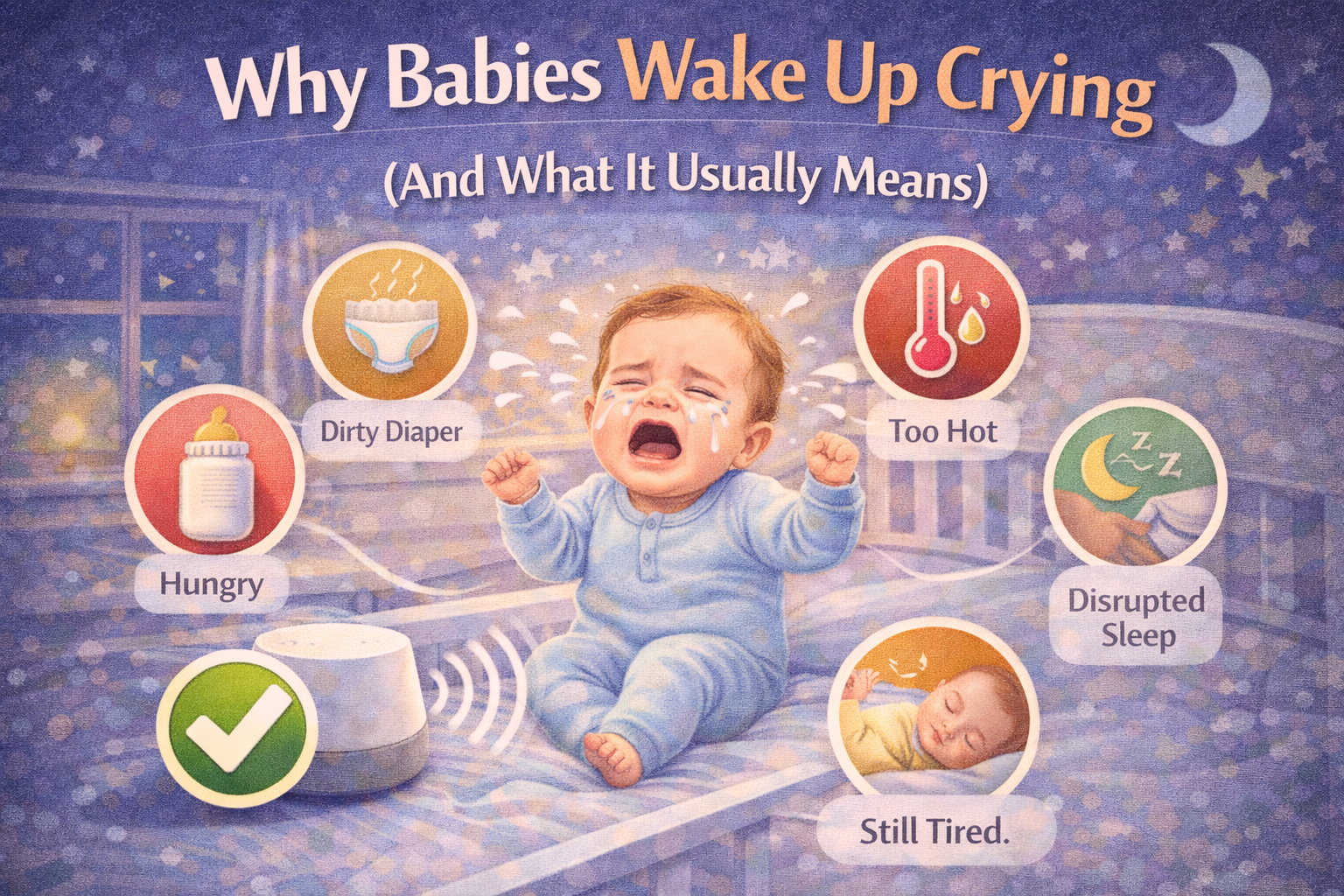
Your baby may wake up crying because of a normal sleep transition or because a need has changed during sleep. Common causes include:
- Hunger or a need to feed
- A wet or dirty diaper
- Gas, reflux, or a bowel movement
- Being too hot or too cold
- A loud sound, light, or sudden movement
- A lost pacifier
- Overtiredness
- A need for contact and reassurance
- Teething discomfort
- Illness, pain, or breathing trouble
Babies do not wake in the same way adults do. A baby may move from deep sleep into light sleep, stir, and cry before fully waking. Some babies need a few moments to settle. Others need feeding, a diaper change, or a parent’s touch.
Hunger is often the cause
Newborns have small stomachs and may need to eat often, including at night. Breastfed babies may feed more frequently than babies who receive formula, though every baby’s pattern differs.
Look for hunger cues before the crying becomes strong. These may include:
- Turning toward a breast or bottle
- Opening the mouth
- Sucking on hands
- Lip smacking
- Moving the head from side to side
Crying is a late hunger cue. If your baby is a newborn or has feeding or weight concerns, follow the feeding plan from your pediatrician. Do not stretch feeds at night without medical advice.
Sleep cycles can cause brief waking
Infants often wake as they move between sleep cycles. A baby may grunt, wiggle, whimper, or cry for a short time. This can happen even when the baby is still tired.
Pause briefly if your baby is safe and the cry is mild. Your baby may settle without help. If the cry grows louder or your baby seems distressed, offer comfort.
Discomfort can interrupt sleep
A baby may sleep well at first and then wake after a wet diaper, gas, spit-up, or a bowel movement. Check the diaper and clothing. Feel your baby’s chest or back rather than their hands to judge body warmth.


Dress your baby in about one more light layer than an adult would wear in the same room. Avoid overheating. Sweating, hot skin, flushed cheeks, or a damp neck can be signs that your baby is too warm.
Your baby may need reassurance
Young babies often calm through touch, a familiar voice, rocking, or feeding. This is not a sign that you have “spoiled” your baby. Infants are still developing the ability to calm themselves.
As babies grow, separation anxiety may also lead to crying after waking. A baby may wake, notice that a parent is not nearby, and cry for help. This is common in later infancy and does not mean your baby is unsafe or unusually dependent.

Common causes by age
Age changes the most likely reason for waking. It also changes what is safe to expect from sleep.
| Baby’s age | Common reasons for waking and crying | What to consider |
|---|---|---|
| Newborn to 3 months | Hunger, wet diaper, startle reflex, gas, temperature, need for contact | Frequent waking and night feeds are normal |
| 3 to 6 months | Sleep-cycle changes, hunger, pacifier loss, overtiredness, rolling or movement | Some babies begin longer sleep periods, but many still wake |
| 6 to 12 months | Teething, separation anxiety, new motor skills, illness, hunger | Crawling, standing, or pulling up can disrupt sleep |
| 12 months and older | Night fears, limits, illness, teething, schedule changes | A steady bedtime routine often helps |
These age ranges are general. Babies develop at different rates. A change in sleep is more useful to notice than a comparison with another child.
Newborns and young infants
A newborn may wake crying every few hours to feed. This is expected because newborn sleep is spread across the day and night. Some newborns are also difficult to settle because their body clock is still developing.
Safe sleep remains essential at every sleep. Place your baby on their back for naps and nighttime sleep on a firm, flat surface designed for infant sleep. Keep pillows, blankets, crib bumpers, and stuffed toys out of the sleep space. The AAP recommends room-sharing without bed-sharing, ideally for at least the first six months.
Babies around 4 to 6 months
At this age, sleep patterns may change. A baby who once slept for a longer stretch may start waking and crying more often. This can happen as sleep becomes more organized and the baby spends more time in lighter sleep.
Your baby may also wake because they are overtired. Paradoxically, an overtired baby may cry more and sleep less easily. Watch for early sleepy signs such as staring, yawning, reduced activity, or rubbing the eyes.
Older infants
Older babies may wake because they are learning new skills. Rolling, crawling, sitting, and pulling up can make sleep more active. Teething may also cause sore gums, though not every night waking is due to teething.
Separation anxiety often becomes more noticeable during the second half of the first year. A calm, repeated response can reassure your baby without turning every waking into a long play session.

What to do when your baby wakes crying
Use the same calm check each time. This helps you find a physical need before trying sleep strategies.
- Check breathing and color. Make sure your baby is breathing normally and does not look blue, gray, or unusually pale.
- Listen to the cry. A hungry cry, pain cry, and tired cry may sound different, but no single cry can diagnose a problem.
- Check the diaper. Change it if it is wet or soiled.
- Consider feeding. Offer a feed when hunger cues are present or when your baby’s care plan calls for one.
- Check comfort. Look for tight clothing, a hair wrapped around a toe or finger, spit-up, gas, or an uncomfortable position.
- Reduce stimulation. Dim the lights, speak softly, and avoid play.
- Soothe with safe methods. Hold, rock, pat, or gently sing to your baby.
- Return your baby to a safe sleep space. Place your baby on their back in a bare, firm, flat sleep area.


If your baby falls asleep in a car seat, swing, stroller, or infant carrier, move them to a firm, flat sleep surface as soon as practical. These products are not intended for routine sleep.
When should you wait before responding?
If your baby makes a brief whimper or cries softly, pause for a moment and observe. Some babies settle on their own. You do not need to ignore intense or unusual crying.
Respond sooner if your baby is very young, sick, hungry, or showing signs of pain. If you feel overwhelmed, place your baby on their back in a safe crib and step away for a few minutes. Never shake, hit, or jerk a baby.
What if feeding seems to be the only way to settle?
Feeding can be a normal and effective way to comfort a baby. It is especially common in the newborn period. Over time, you can also add other calming cues, such as a quiet song, a sleep sack, or a short routine.
Do not dilute formula, add cereal to a bottle, or use sleep medicines to make a baby sleep longer. Ask your pediatrician before changing feeds or using any medicine.

How to tell whether crying may signal a health problem
Crying is more concerning when it is sudden, intense, unusual for your baby, or paired with other symptoms. Contact your child’s health care professional if your baby:
- Has a fever or feels unusually hot
- Is feeding poorly or refusing several feeds
- Has fewer wet diapers than usual
- Vomits repeatedly
- Has diarrhea or blood in the stool
- Has a swollen belly
- Seems unusually sleepy, weak, or hard to wake
- Cries when you touch or move a specific area
- Has a new rash or signs of dehydration
- Has repeated episodes of inconsolable crying
For infants younger than 3 months, a rectal temperature of 100.4°F (38°C) or higher needs prompt medical advice. Call your pediatrician or seek urgent care based on the instructions you receive.
Call 911 in the United States for severe breathing trouble, blue or gray lips or skin, a seizure, unresponsiveness, or a baby who cannot be awakened normally.
A baby with a hair wrapped tightly around a toe, finger, or penis needs prompt attention. The hair can reduce blood flow and may be hard to see.
Sleep habits that may reduce crying after waking
No routine prevents every wake-up, but consistent habits can make settling easier.
Keep a short, repeatable bedtime routine
Try the same order each night:
- Feed your baby
- Change the diaper
- Put on sleep clothing
- Dim the lights
- Read or sing quietly
- Place your baby in the sleep space
The routine does not need to be long. Repetition helps your baby connect these steps with sleep.
Use a clear day-and-night pattern
During the day, use normal light and household sounds. At night, keep feeds and diaper changes quiet and brief. This helps your baby learn that nighttime is for sleep.


Watch for overtiredness
Do not wait until your baby is crying hard before starting sleep. Early signs may include:
- Looking away
- Losing interest in play
- Yawning
- Rubbing the eyes
- Becoming less active
- Fussing
A simple log can help. Record feeds, naps, wake-ups, diapers, and crying for three to five days. Patterns may reveal that crying follows a missed nap, a long gap between feeds, or a late bedtime.
Keep the sleep space safe
The CDC and AAP recommend these core safe-sleep practices:
- Place your baby on their back for every sleep.
- Use a firm, flat mattress with a fitted sheet.
- Keep the crib, bassinet, or play yard free of loose items.
- Share a room, but not a bed.
- Avoid smoke and nicotine exposure.
- Stop swaddling when your baby shows signs of rolling.
- Do not use weighted sleep sacks or weighted swaddles.
A pacifier at sleep time may lower the risk of sudden infant death syndrome (SIDS), according to the AAP. If you breastfeed, the AAP advises waiting until breastfeeding is well established before introducing a pacifier. Never attach a pacifier to a cord or clip during sleep.

Common mistakes to avoid
Some well-meant responses can make sleep harder or create safety risks.
Assuming every cry means hunger
Hunger is common, but crying may also come from discomfort, tiredness, or illness. Check feeding cues and your baby’s usual pattern rather than feeding automatically after every brief stir.
Overheating your baby
Heavy blankets, hats indoors, and multiple thick layers can increase overheating risk. Use light clothing and check the chest or back for warmth.
Putting unsafe items in the crib
Pillows, positioners, inclined sleepers, crib bumpers, and loose blankets do not make routine sleep safer. They can increase the risk of suffocation or entrapment.
Using medicine for unexplained crying
Do not give acetaminophen, ibuprofen, gas drops, herbal products, or sleep aids without checking the dose and need with a pediatrician. Ibuprofen is generally not used in babies younger than 6 months unless a clinician directs it.
Trying to stay calm without getting help
Caring for a crying baby can be exhausting. Ask a trusted adult to take over for a short break. If you fear you might hurt your baby, put the baby safely in the crib, leave the room, and call someone you trust or call 988 for immediate emotional support in the United States.

Frequently asked questions
Is it normal for a baby to wake up crying every night?
It can be normal, especially during the newborn months. Babies often wake for feeds, comfort, or help moving between sleep cycles. Frequent crying is less reassuring when it is new, severe, or linked with poor feeding, fever, breathing problems, or unusual sleepiness.
Should I pick up my baby every time they cry at night?
Not always. If the cry is brief and mild, you can pause and observe. If your baby is upset, hungry, very young, or showing signs of pain, pick them up and respond. Comforting your baby does not spoil them.


Why does my baby wake up crying after a short nap?
A short nap may end during a light sleep phase. Your baby may also be overtired, hungry, uncomfortable, or disturbed by noise or light. Check the basic needs first, then keep the room calm and dark while you try to resettle your baby.
Why does my baby wake up crying but seem fine during the day?
Some babies have normal night waking even when they are happy and well during the day. Sleep-cycle changes, separation anxiety, teething, and a developing body clock can all play a role. Keep watching for new symptoms or a major change from your baby’s usual behavior.
Can teething cause a baby to wake up crying?
Teething can cause sore gums and more fussiness, but it should not be used to explain every symptom. High fever, repeated vomiting, breathing trouble, or severe diarrhea is not typical teething and needs medical advice.
Conclusion
Most babies wake up crying because they need something simple: food, a dry diaper, comfort, or help settling between sleep cycles. Check safety and basic needs first, then use a quiet, consistent response.
Keep your baby’s sleep space firm, flat, and free of loose items. Call a pediatrician for unusual or persistent crying, poor feeding, fever, fewer wet diapers, or other signs of illness. Seek emergency help for breathing trouble, blue or gray skin, unresponsiveness, or a seizure.
The next useful step is to track your baby’s feeds, naps, wet diapers, and crying for several days. Bring that pattern to your pediatrician if the wake-ups continue or feel different from normal.
