
Introduction
Parents across the United States often notice the same surprising thing: a newborn can grip a finger with great force, push against a caregiver’s chest, or seem to “stand” when held upright. These actions can make babies look much stronger than they are.
The short answer is that babies are not stronger than adults in overall muscle power. Their impressive grip and movements mainly come from primitive reflexes, small body size, body mechanics, and intense effort. A baby’s nervous system can trigger a firm response before the baby has learned to control that movement.
The grasp may feel strong, but it does not mean a baby has mature muscles or the ability to support their own body safely. The American Academy of Pediatrics and the Centers for Disease Control and Prevention both stress that young infants need careful head, neck, and body support.

What makes a baby’s grip feel so strong?
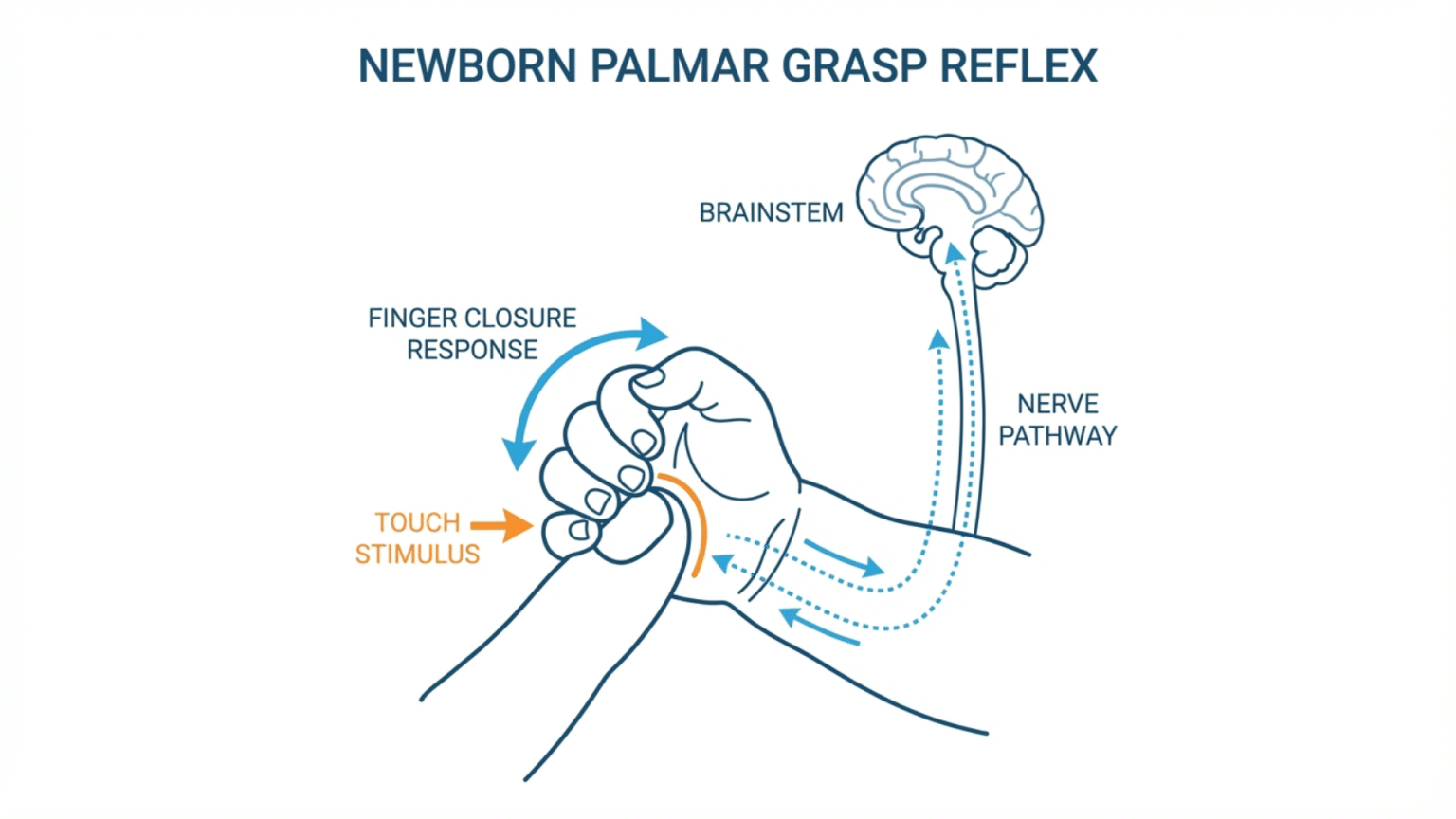
A baby’s grip feels strong because the hand closes through an automatic reflex, not because the baby has adult-level muscle strength.


When you touch the palm of a newborn, sensory nerves send a signal through the spinal cord. The fingers then curl around the object. The baby does not need to plan the movement or decide to hold on. This response is called the palmar grasp reflex.
Several factors make the grip seem powerful:
- The fingers curl around the object quickly.
- The thumb and fingers may press from several directions.
- The baby’s small hand can wrap tightly around one adult finger.
- The baby may pull with the whole arm and shoulder.
- The adult may feel the force through one narrow point on the finger.
This is much like the difference between a small clamp and a large open hand. A clamp can feel tight even when it cannot lift a heavy load.
A newborn’s grip also has a helpful mechanical advantage. The hand is small, so a short movement can create a firm squeeze around a finger. The adult’s finger fills most of the baby’s palm, which gives the reflex a clear surface to close around.
The grasp reflex is automatic
The palmar grasp reflex begins before birth and is present in most healthy newborns. It is one of several early reflexes that help a baby respond to touch.
Other common infant reflexes include:
- Moro reflex: The baby spreads the arms, then brings them inward after a sudden movement or loud sound.
- Rooting reflex: The baby turns toward a touch near the mouth.
- Sucking reflex: The baby begins sucking when the roof of the mouth is stimulated.
- Stepping response: The baby may make stepping motions when held upright with the feet touching a firm surface.
These reflexes are controlled by early nervous system pathways. They do not require the deliberate motor planning that older children use.
The grasp reflex usually becomes less obvious during the first several months as voluntary hand control develops. The exact timing varies. A baby may keep some reflex activity while also learning to open the hand, reach, and release objects on purpose.


Are babies actually stronger than adults?
No. Babies may show strong-looking movements, but they have far less total muscle strength and control than adults.
A baby’s body is small. This changes how force feels. If a 9-pound infant pulls with both arms, the movement may feel sharp or sudden because the adult is holding a small body close to the hand. The force is concentrated rather than spread across a larger body.
A baby also has a high amount of movement compared with its size. Kicking, twisting, and waving can look intense because the limbs move often. This does not mean the muscles can perform adult tasks such as lifting, climbing, or holding the body upright for long.
Relative strength is different from total strength
Researchers often distinguish between absolute strength and relative strength.
- Absolute strength is the total force a person can produce.
- Relative strength is force compared with body weight or body size.
An infant may produce enough force to move a small limb or tighten a grip. That force can seem large compared with the size of the hand. But the same infant cannot produce the total force needed to control an adult-sized body.
This explains why a baby may grip an adult finger tightly but cannot safely hold their head up. The hand muscles and reflex pathways can work before the neck muscles and balance systems are ready.
Why baby movements can feel sudden
Infant movements are often quick and poorly controlled. A baby may jerk an arm, kick both legs, or pull inward without warning.
This happens because:
- The brain is still learning to control movement.
- Reflex pathways are active.
- Muscle tone changes during sleep, crying, hunger, and excitement.
- The baby cannot yet grade force smoothly.
- Balance and body awareness are still developing.
Adults usually adjust force without thinking. We use just enough pressure to hold a cup or turn a page. Young babies have not learned this fine control. Their movements may be all-or-nothing: open or close, kick or stop, pull or release.
Why do babies have such strong reflexes?
Strong reflexes help newborns respond to the world before voluntary movement is mature. They are part of early nervous system development.
A reflex is a fast response to a stimulus. It follows a pathway that can include the spinal cord and lower parts of the brain. The response does not need the same conscious planning used for walking, reaching, or writing.
The palmar grasp reflex may have evolutionary roots, but its exact purpose in modern newborns is not fully established. Some explanations connect it to early contact between infants and caregivers. However, parents should not treat the reflex as proof that a baby can safely hang, hold body weight, or cling during transport.
Reflexes are not the same as learned skills
A reflex happens automatically. A skill develops through practice and brain maturation.


For example:
- A newborn may close the hand when the palm is touched.
- Later, the baby learns to reach toward a toy.
- After that, the baby learns to hold, move, and release the toy.
- With more practice, the baby learns to pick up small objects using the thumb and finger.
This change from reflex action to purposeful control is a major part of infant motor development.
The Centers for Disease Control and Prevention tracks developmental milestones such as reaching, grasping, and moving objects between hands. These milestones describe what many children can do at certain ages. They are not strict deadlines, and children develop at different rates.
Strong reflexes can sometimes need medical review
A reflex may need attention if it is absent, very weak, clearly different on one side, or still strongly present when it should have faded. A single observation does not diagnose a problem. Birth history, age, muscle tone, movement, and the full neurological exam all matter.
Parents should contact the child’s pediatrician if they notice:
- One hand stays closed much more than the other.
- One arm or leg moves far less than the other.
- The baby seems unusually stiff or unusually floppy.
- The baby loses a skill they had already gained.
- The baby does not respond normally to touch or sound.
- Movements look repetitive, rhythmic, or seizure-like.
- The baby has trouble feeding, breathing, or staying awake.
Call 911 in the United States for a baby who has severe trouble breathing, turns blue or gray, becomes unresponsive, or has a prolonged seizure.

Why can babies grip but not hold up their heads?
Babies can grip because the hand-closing response is ready early. Head control requires a much larger network of muscles, balance signals, and brain control.
A newborn’s head is large compared with the rest of the body. The neck muscles are still developing, and the nervous system has not yet learned to keep the head aligned during movement. This is why a young baby’s head can suddenly fall backward or forward when lifted.
Head control depends on:
- Neck and upper back strength
- Trunk stability
- Balance information from the inner ear
- Vision
- Brain control of posture
- Practice during safe, supervised movement
These systems mature over time. Many babies gain much better head control during the first four months, but the pace varies.
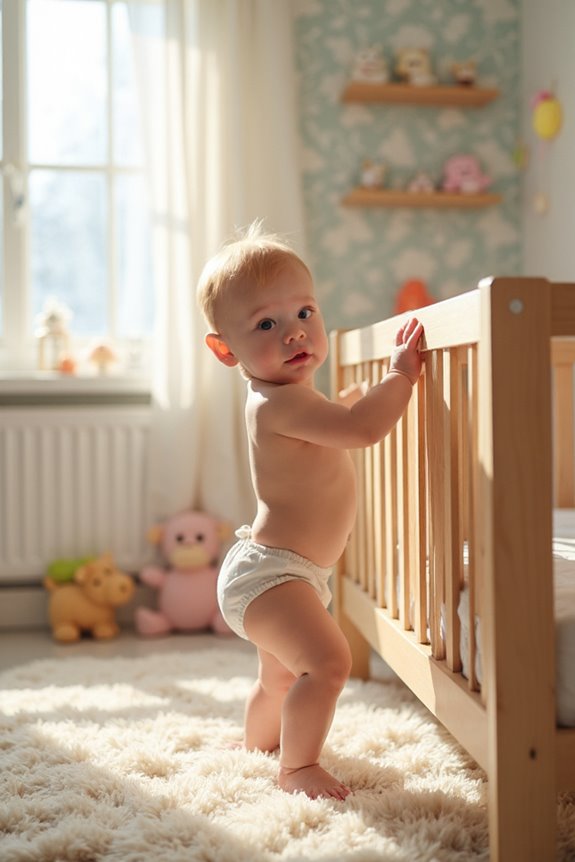
Why babies may “stand” when held
Some newborns make stepping motions when an adult holds them upright with the feet touching a firm surface. This is a reflexive response, not evidence that the baby is ready to stand or walk.
The legs may stiffen briefly. The baby may push down or move one foot forward. Yet the baby still lacks the balance, hip control, trunk strength, and judgment needed for independent standing.
Do not use this response to train a newborn to stand. Never place a young baby on a table, counter, bed, or other raised surface to test the movement.
Why does a baby’s cry sound so powerful?
A loud cry does not show that a baby is physically strong. It shows that the baby can produce a forceful sound using the lungs, vocal cords, chest muscles, and nervous system.


Crying is an infant’s main way to communicate. Hunger, discomfort, pain, fatigue, temperature, and the need for contact can all trigger it. The sound can seem surprisingly loud because it is sudden and directed close to the caregiver’s ears.
A baby who cries hard may also stiffen the arms, clench the hands, arch the back, or kick. These whole-body actions can make the baby appear very strong. In many cases, the movements reflect arousal and distress rather than unusually powerful muscles.
Persistent or unusual crying deserves attention. Seek medical advice if crying is sudden, severe, difficult to soothe, or paired with fever, vomiting, poor feeding, breathing trouble, injury, a swollen abdomen, or a change in alertness.
How does baby strength change during the first year?
Strength develops along with motor control. Babies usually move from reflexive actions to purposeful movement, then to skills that use the whole body.
The exact timeline varies, but this general pattern is common:
| Approximate stage | Typical movement change | What it means |
|---|---|---|
| Newborn period | Reflexive hand closing and jerky limb movement | Early nerve pathways are active |
| Around 2 months | Better head movement and more active kicking | Neck and trunk control begin to improve |
| Around 3–4 months | Hands open more often; baby may reach | Voluntary control begins to replace some reflex action |
| Around 4–6 months | Baby may grasp toys and bring them to the mouth | Hand and eye control are improving |
| Around 6–9 months | Baby may sit, roll, transfer objects, or bear weight with help | Trunk and limb strength are becoming more useful |
| Around 9–12 months | Many babies crawl, pull up, cruise, or move between positions | Strength, balance, and motor planning work together |
These are broad ranges, not promises. Premature babies may be assessed using corrected age for part of early development. A pediatrician can explain how that applies to an individual child.
Strength is only one part of movement
A baby may have enough strength for a task but lack the balance or planning to complete it. Another baby may have good control but need more time to build endurance.
Motor development depends on several systems:
- Muscle strength
- Joint movement
- Balance
- Coordination
- Vision
- Sensory feedback
- Motivation and practice
- Sleep and general health
This is why one baby may roll early while another reaches or sits first. Development does not always follow one exact order.
Is it safe to let a baby hang from a finger?
No. Parents should never test a baby’s grip by lifting, swinging, or hanging the baby from a finger, toy, bar, or adult’s hands.
The grasp reflex can close the fingers, but it does not guarantee that the grip will last. The hand may suddenly open. The shoulder, elbow, wrist, and finger joints are also immature. A fall could cause a serious injury.
Safe ways to support early movement include:
- Hold the baby’s head and neck until the baby has reliable control.
- Offer supervised tummy time while the baby is awake.
- Place toys within easy reach on a safe, flat surface.
- Let the baby move freely on the floor rather than in restrictive equipment for long periods.
- Stop if the baby becomes tired, upset, or overstimulated.
- Follow safe sleep guidance: place the baby on the back on a firm, flat sleep surface.


Tummy time helps babies practice head, neck, shoulder, and trunk control. It should be awake, supervised, and appropriate for the baby’s age and medical needs. It is not a reason to leave a baby face down during sleep.
Avoid forceful stretching or “strength training”
Babies do not need adult-style exercise. Pulling a baby by the arms, forcing a stretch, or repeatedly making the baby stand can strain joints and soft tissue.
Instead, support natural movement. Give the baby time to kick, reach, turn, and push against a safe surface. If you have concerns about muscle tone or movement, ask the child’s pediatrician before starting exercises.
A pediatrician may refer a child to a physical or occupational therapist when targeted support is needed.

When is a baby’s strength or movement unusual?
The most useful sign is not how hard a baby grips. It is whether movement is balanced, age-appropriate, and progressing over time.
Discuss movement with a pediatrician when a baby:
- Rarely moves one side of the body
- Keeps one arm or leg unusually stiff
- Feels very floppy when held
- Uses only one hand much earlier than expected
- Cannot open the hands at all after the early newborn period
- Has trouble feeding or coordinating sucking and swallowing
- Stops using a skill they previously used
- Does not seem to improve in head control
- Has repeated shaking, unusual jerking, or episodes of unresponsiveness
A strong grip alone is usually not a concern. A weak grip alone may also have a simple explanation, such as sleep, hunger, illness, or the baby’s position. The pattern across time matters more than one moment.
Parents can make useful observations by noting:
- Which side moves more
- Whether both hands open and close
- Whether the baby responds to touch
- Whether the baby can move freely
- Whether skills are increasing over several weeks
Record a short video only if it is safe to do so and share it with the pediatrician. Do not delay urgent care to capture a video.
Common myths about baby strength
Myth: A baby’s grip proves the baby is unusually strong
A firm grip usually reflects the palmar grasp reflex. It does not measure overall muscle strength.
Myth: Babies can safely hang because they can hold a finger
A reflexive grip can release without warning. It cannot safely support a baby’s body weight.
Myth: A baby who pushes down is ready to stand
The stepping and supporting responses can appear long before balance and voluntary standing skills develop.
Myth: A loud cry means the baby has strong lungs
A loud cry can be normal, but it does not measure lung health or physical strength. Breathing rate, color, feeding, and alertness matter more.
Myth: Babies need strength workouts
Healthy babies usually build strength through normal movement, supervised tummy time, reaching, rolling, and play. Forceful exercise is not needed.

Key takeaways
- Babies are not stronger than adults overall.
- Their grip feels strong mainly because of the automatic palmar grasp reflex.
- Small hands, short limbs, and whole-body pulling can make the force feel greater.
- Reflexes are different from voluntary motor skills.
- A baby may grip before gaining head control because different muscles and brain pathways mature at different rates.
- Never lift, swing, or hang a baby by the hands or fingers.
- Ask a pediatrician about one-sided movement, unusual stiffness or floppiness, loss of skills, or abnormal repetitive movements.
Frequently asked questions
Why do babies grab your finger so tightly?
Touching a newborn’s palm can trigger the palmar grasp reflex. The fingers close automatically. The grip may feel tight because the small hand wraps around one adult finger, but the response does not show adult-level strength.
At what age do babies lose the grasp reflex?
The grasp reflex often becomes less noticeable during the first few months as voluntary hand control develops. Timing varies from baby to baby. A pediatrician should assess a reflex that seems absent, strongly unequal, or persistent along with other movement concerns.
Can a newborn support their own weight?
No. A newborn may briefly push with the legs or stiffen when held upright, but this is not safe weight-bearing. Always support the baby’s head, neck, and body.
Why does my baby seem stronger when crying?
Crying increases whole-body muscle activity. A baby may clench the hands, stiffen the legs, arch the back, and kick. The intense movement reflects distress or arousal more than unusual physical strength.
When should I call a pediatrician about my baby’s movements?
Call the pediatrician if the baby uses one side much more than the other, seems very stiff or floppy, loses a skill, has trouble feeding, or shows unusual repeated movements. Seek emergency help for severe breathing trouble, blue or gray color, unresponsiveness, or a prolonged seizure.
Conclusion
Babies seem strong because their reflexes are fast, their hands are small, and their movements can involve the whole body. The palmar grasp reflex is a normal early response, but it is not the same as mature strength or control.
The safest approach is to support the baby’s head and body, allow supervised free movement, and avoid testing the grip. If movement seems uneven, unusually stiff, unusually floppy, or stops progressing, contact a pediatrician for an individual assessment.
