
Most babies do not need a daily bath. For many infants in the United States, bathing two or three times a week is enough during the first year, as long as you clean the diaper area, face, neck folds, and hands as needed.
You may give your baby a short daily bath if your baby enjoys it and their skin stays healthy. However, daily baths can dry or irritate infant skin. Wait until the umbilical cord stump falls off and the skin heals before giving a tub bath. Until then, give sponge baths.
The safest plan is simple: bathe your baby when needed, keep each bath short, and watch your baby’s skin.

When can a baby start having tub baths?
A baby can usually start having tub baths after the umbilical cord stump falls off and the skin around the navel heals. This often takes about one to two weeks, but timing varies.


Until the stump falls off:
- Give sponge baths.
- Keep the cord stump dry.
- Do not submerge your baby in a tub.
- Fold the diaper below the stump.
- Let the stump fall off on its own.
The American Academy of Pediatrics advises parents to use sponge baths until the umbilical cord heals. Follow your baby’s clinician’s advice if the cord was treated, looks unusual, or has not fallen off after several weeks.
How to give a sponge bath
Gather everything before you begin:
- A flat, warm surface
- A clean towel
- A basin of warm water
- A clean washcloth
- A fresh diaper
- Clean clothes
Keep your baby wrapped in a towel. Wash one area at a time and uncover only the part you are cleaning. Clean the face first, then the body, and wash the diaper area last.
Never leave your baby alone on a bed, counter, or changing table. Even a young baby can move or roll without warning.
How to know the cord area is healed
The skin should be closed and dry. A small amount of dried blood may appear when the stump separates. Call your baby’s health care professional if you notice:
- Redness that spreads from the navel
- Pus or cloudy drainage
- A bad smell
- Swelling or warmth
- Fever
- Bleeding that does not stop with gentle pressure
- A baby who seems very ill or unusually sleepy

Does a baby need a bath every day?
No. Daily bathing is not required for most babies. The AAP says that bathing about three times a week may be enough during the first year. More frequent bathing may remove natural oils from the skin and cause dryness.
A daily bath may be reasonable when:


- Your baby enjoys it.
- The bath is brief.
- The water is warm, not hot.
- You use little or no cleanser.
- Your baby’s skin does not become dry, red, or rough.
- An adult stays within arm’s reach the entire time.
A bath is not the same as daily cleaning. You can keep your baby fresh between baths by wiping the areas that collect sweat, milk, or stool.
Clean these areas as needed:
- The diaper area
- The neck folds
- Behind the ears
- The hands
- The face
- Skin folds under the arms and legs
Bath frequency by age
There is no single bath schedule for every baby. Use this table as a general guide.
| Baby’s age or stage | Usual bath plan | What to remember |
|---|---|---|
| Before the cord heals | Sponge baths | Keep the cord stump dry |
| Newborn period | About two or three baths a week | Clean the diaper area daily |
| About 1 to 12 months | Two or three baths a week is often enough | A short daily bath is optional |
| After crawling or eating solids | Bathe more often if needed | Food, dirt, and sweat may require extra baths |
| Dry or sensitive skin | Fewer baths may help | Use plain water or mild cleanser and moisturize |
These are general guidelines, not strict rules. A baby who spits up often, sweats in hot weather, or gets food on their skin may need extra cleaning. That does not always mean a full bath is needed.

How to bathe a baby safely
The safest baby bath is short, calm, and fully supervised. Set up the room and supplies before you bring your baby to the water.
1. Prepare the room and supplies
Keep these items close:
- A baby bathtub or clean sink
- A towel
- A washcloth
- Mild, fragrance-free cleanser, if needed
- A clean diaper
- Clean clothes
- Moisturizer for dry skin
Place the tub on a stable, level surface. Do not use a baby bath seat as a safety device. Bath seats can tip or allow a baby to slide under the water.
2. Check the water
Use warm water, not hot water. The AAP recommends setting the home water heater to no higher than 120°F (49°C) to reduce the risk of scald burns.
Check the bath water with your wrist or elbow. Better still, use a bath thermometer and aim for about 100°F (38°C). The water should feel warm, not hot.
Fill the tub with only a small amount of water. The U.S. Consumer Product Safety Commission warns that young children can drown in very little water.
3. Keep one hand on your baby
Lower your baby into the water feet first. Support the head and neck. Keep your baby’s face and head above the water.
Stay within arm’s reach for the entire bath. Do not step away to answer the phone, open the door, or get a towel. If you must leave, take your baby with you.
A baby can drown silently in seconds. Never rely on a bath ring, seat, flotation device, or older child to supervise.


4. Wash gently
Use plain water for most areas. If you use cleanser, choose a mild, fragrance-free product and use a small amount.
Wash in this order:
- Face and eyes
- Neck folds
- Chest and arms
- Back
- Legs and feet
- Diaper area
Do not scrub. Clean the outside of the ears only. Do not put cotton swabs, soap, or water deep inside the ear canal.
For an uncircumcised penis, wash the outside only. Do not pull back the foreskin. It usually separates naturally over time.
For a circumcised penis, follow the care instructions from the clinician who performed the circumcision.
5. Dry and dress your baby
Lift your baby out while supporting the head and neck. Wrap your baby in a towel right away.
Pat the skin dry, paying close attention to folds. Do not rub hard. If your baby’s skin is dry, apply a plain, fragrance-free moisturizer soon after drying.
Keep the bath short. About five to ten minutes is usually enough.

What time of day is best for a baby’s bath?
The best time is when your baby is calm, awake, and not hungry. Many parents choose the evening because a warm bath can become part of a bedtime routine. A bath does not make every baby sleepy, though. Some babies become more alert after bathing.
Avoid bathing your baby:
- Right after a full feeding
- When your baby is very hungry
- When your baby is overtired
- When your baby is cold
- When you feel rushed or distracted
Wait about 30 minutes after feeding if your baby often spits up. You do not need to follow a strict clock. A calm caregiver and a safe setup matter more than the exact time.
A simple routine might look like this:
- Dim the lights.
- Prepare the supplies.
- Give a short bath.
- Pat the baby dry.
- Apply moisturizer if needed.
- Put on a clean diaper and pajamas.
- Feed, read, or cuddle.

Can daily baths cause dry skin?
Yes. Frequent baths, hot water, long soaking, and scented products can dry a baby’s skin. Bathing removes some of the oils that help protect the skin barrier.


Signs that your baby may be getting too many baths include:
- Rough or flaky skin
- Red patches
- Cracks
- Itching
- Increased fussiness during or after bathing
- Eczema that seems worse after baths
If this happens, reduce the number of baths and make each bath shorter. Use warm water rather than hot water. Skip bubble bath and scented products. Apply a thick, fragrance-free cream or ointment after bathing if your child’s clinician agrees.
Do not assume every rash comes from dry skin. Contact your baby’s clinician if the rash spreads, blisters, oozes, bleeds, causes strong itching, or does not improve.
Babies with eczema may still bathe regularly, but they often need a tailored skin-care plan. The American Academy of Dermatology recommends gentle bathing practices and moisturizing for children with dry or eczema-prone skin. Your baby’s clinician can advise you about cleansers, moisturizers, and medicine.
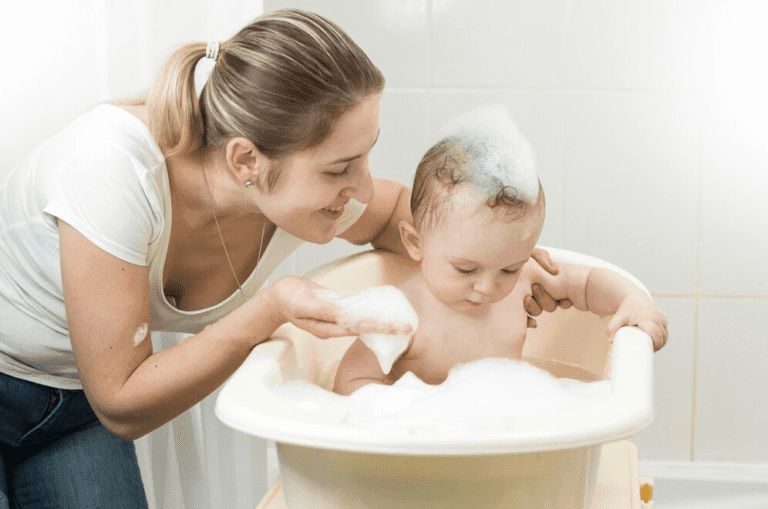
What should you use in a baby bath?
For most babies, warm water and a soft washcloth are enough for much of the body. If you use a cleanser, choose one that is:
- Mild
- Fragrance-free
- Made for sensitive skin
- Easy to rinse away
Avoid:
- Bubble bath
- Strong fragrances
- Essential oils
- Adult body wash
- Antibacterial soap unless prescribed
- Rough sponges
- Talcum powder near the face
- Products that sting the eyes
“Natural” does not always mean gentle. Essential oils and plant extracts can irritate infant skin. Read the label and stop using a product if redness or dryness develops.
You do not need shampoo at every bath. Wash the scalp when it looks dirty or oily. Use a small amount of mild baby shampoo and rinse it well.
What about cradle cap?
Cradle cap causes greasy, scaly patches on a baby’s scalp. It is common and usually harmless. Gentle washing may help. Do not scratch or pick the scales.
Ask your baby’s clinician before using medicated shampoo or oils. Some products can irritate a baby’s scalp, especially if they are used too often.

Common baby-bathing mistakes to avoid
Most bath injuries happen when an adult underestimates how quickly a baby can slip, cool down, or reach hot water. Avoid these common mistakes.
Leaving the baby alone “for one second”
Do not leave the room, even if the water is shallow. Take your baby with you if you need to step away.
Checking the water only once
Water temperature can change as hot and cold water mix. Check it before placing your baby in the tub.


Using a bath seat as protection
A bath seat may help position a baby, but it does not prevent drowning. Keep your hand on your baby and stay close.
Making the bath too long
Long baths can cool and dry the skin. End the bath if your baby shivers, cries hard, or looks uncomfortable.
Washing too hard
A baby’s skin is delicate. Gentle hands work better than scrubbing.
Adding products to every bath
Soap is not needed for every body part or every bath. Too much cleanser can cause dryness.
Bathing after every diaper change
Clean the diaper area with a gentle wipe or wet cloth when needed. A full bath after each bowel movement is usually unnecessary.

When should you call a health care professional?
Call your baby’s clinician if your baby has a skin problem that is severe, spreading, painful, or not improving. Ask for advice if your baby has eczema, a chronic skin condition, or a history of allergic reactions.
Seek urgent medical help after a burn. Cool the burned area with clean, running water. Do not put ice, butter, or greasy ointment on a fresh burn. For a serious burn, a burn on the face or genitals, or a burn in a young infant, get medical care right away.
Call 911 if your baby is unresponsive, has trouble breathing, or may have drowned. Even if a baby seems fine after a water emergency, contact a health care professional promptly because breathing problems can develop later.
For a fever, use your baby’s age and temperature as the guide. A baby younger than 3 months with a rectal temperature of 100.4°F (38°C) or higher needs prompt medical evaluation. Do not use a bath to treat a fever.

Frequently asked questions
Is it okay to bathe a newborn every day?
It can be safe if the umbilical cord has healed, the bath is short, and your baby’s skin stays healthy. But most newborns do not need daily baths. Two or three baths each week, plus daily cleaning of dirty areas, is usually enough.
Should I bathe my baby in the morning or at night?
Either time is fine. Choose a time when your baby is calm and you can give full attention. An evening bath may fit a bedtime routine, but it does not reliably make every baby sleepy.
Can I bathe my baby before the umbilical cord falls off?
Use sponge baths until the cord stump falls off and the skin heals. Keeping the stump dry helps reduce irritation and supports normal healing.
How often should I wash my baby’s hair?
Wash the hair when it looks dirty or oily. Many babies need shampoo only once or twice a week. Use a mild, fragrance-free shampoo and keep it out of the eyes.
What if my baby cries during every bath?
Check the water temperature, room temperature, hunger, tiredness, and cleanser. Keep the bath short and hold your baby securely. Try again later. If your baby remains very distressed or seems to have pain, speak with the pediatrician.
Conclusion
You do not need to wait for a specific age to begin daily bathing. The key milestone is that the umbilical cord stump has fallen off and healed before your baby takes a tub bath.
After that, daily baths are optional. For most babies, bathing two or three times a week is enough. Clean the diaper area and skin folds as needed, use warm water, avoid harsh products, and keep one hand on your baby at all times.
When in doubt, choose the gentler routine: short baths, mild products, and close supervision.
