
Introduction
Yes. Both parents can sleep while a newborn sleeps in a bassinet if the baby is placed on a firm, flat, separate sleep surface that meets U.S. safety standards. You do not need one parent to stay awake and watch the baby all night.
The safest setup is simple: place the bassinet in the parents’ room, put the newborn on their back, keep the bassinet empty, and use only a fitted sheet. The baby should sleep in the same room as the parents, but not in the adult bed.
This guidance comes from the American Academy of Pediatrics (AAP), the CDC, the U.S. Consumer Product Safety Commission (CPSC), and the NIH Safe to Sleep program. These groups advise room-sharing without bed-sharing because it lowers the risk of sleep-related infant death.

Why Both Parents Can Sleep at the Same Time
A safe bassinet is designed to give a newborn a separate sleep space. When the bassinet is used correctly, constant adult watching is not required.


Parents often feel that someone must stay awake because newborns make sounds, move, and change breathing patterns during sleep. Most of these sounds are normal. Newborns may grunt, squeak, twitch, or breathe unevenly for short periods. These actions do not mean that a parent must keep watch every minute.
Safe sleep works by reducing hazards before the adults fall asleep:
- The baby sleeps alone in the bassinet.
- The baby sleeps on their back for every sleep.
- The bassinet has a firm, flat, level mattress.
- The sleep space has only a fitted sheet.
- The bassinet stays close to the parents’ bed.
- No adult, pet, pillow, blanket, toy, or loose item shares the sleep space.
The AAP recommends room-sharing without bed-sharing, ideally for at least the first six months. Room-sharing means the infant sleeps in the parents’ room, while bed-sharing means the infant sleeps on the same surface as an adult.
A parent does not need to be awake simply because the baby is asleep nearby. The safety of the sleep environment matters more than continuous visual monitoring.

What a Safe Newborn Bassinet Setup Looks Like
A safe bassinet has a firm, flat, level sleep surface and enough space for the baby to lie on their back without soft items around them. Use the product only as the manufacturer allows.
Before using a bassinet, check these points:
Use a separate sleep surface
The baby should sleep in a bassinet, crib, or portable play yard made for infant sleep. Do not use a couch, adult bed, recliner, nursing pillow, swing, or inclined sleeper as a routine sleep surface.
If the baby falls asleep in a car seat, stroller, swing, or carrier, move them to a firm, flat sleep surface on their back as soon as practical.
Keep the bassinet empty
The bassinet should contain:


- The baby
- A firm mattress
- A fitted sheet made for that mattress
Do not add:
- Pillows
- Quilts
- Loose blankets
- Stuffed toys
- Bumper pads
- Positioners
- Wedges
- Sleep pods or nests
- Weighted blankets or weighted swaddles
Soft items can cover a baby’s face or restrict breathing. Newborns cannot reliably move away from an object that blocks their nose or mouth.
Put the baby on their back
place the baby on their back for naps and nighttime sleep. Side and stomach sleeping can raise the risk of suffocation and sleep-related death.
If a baby can roll from back to stomach and stomach to back, continue placing the baby on their back at the start of sleep. Do not use products that claim to keep the baby in one position unless a qualified clinician gives specific medical advice.
Keep the bassinet near the parents
Place the bassinet in the parents’ bedroom, close enough to hear and reach the baby. Do not attach it to the adult bed unless it is a compliant bedside sleeper used exactly as directed.
Room-sharing makes feeding and checking the baby easier. It also avoids the hazards of sleeping with a newborn in an adult bed.
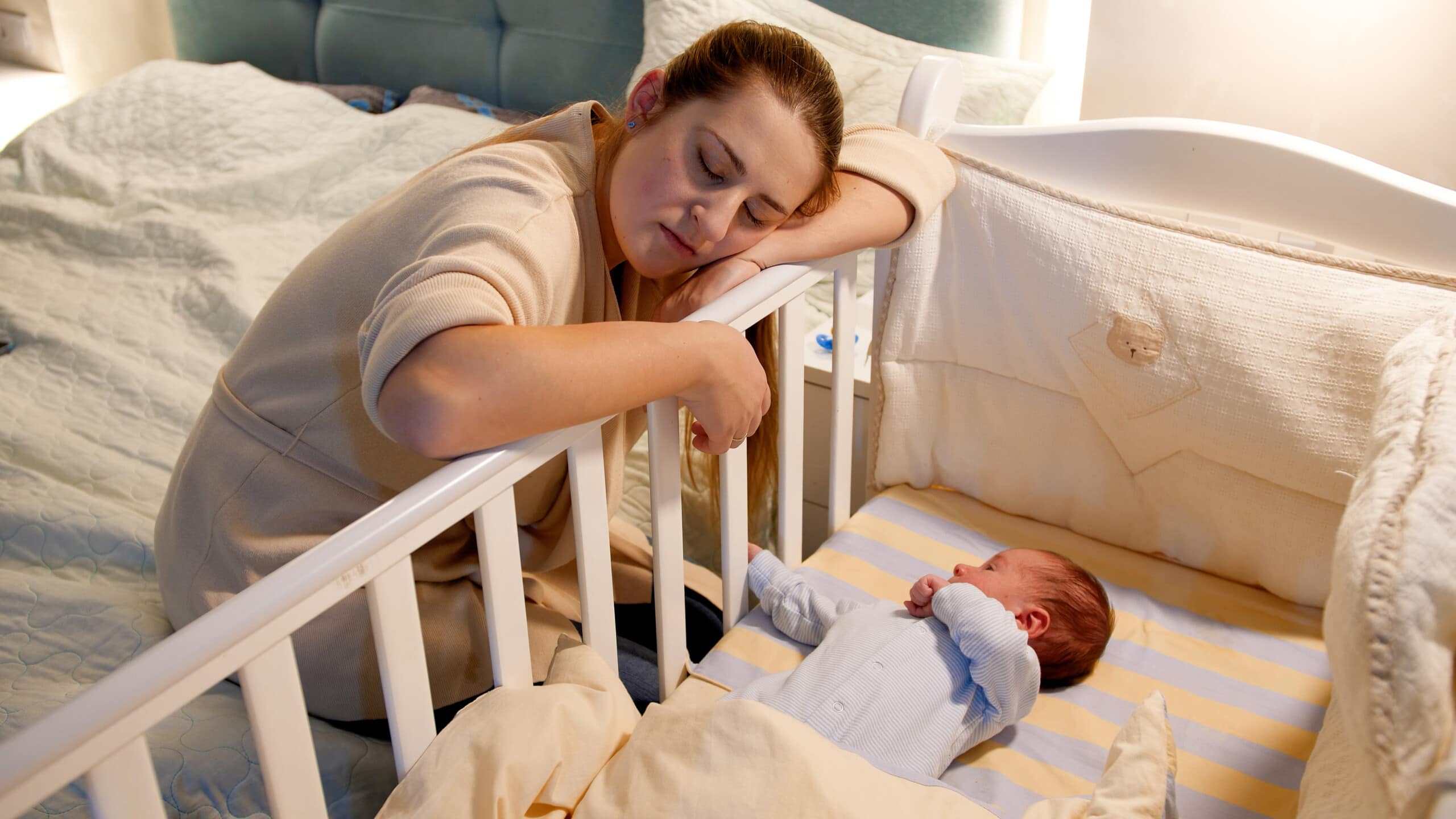
Bassinet Safety Checklist Before Both Parents Go to Sleep
Use this short check each night. It should take less than a minute once the setup is correct.
- Check the surface. Make sure the mattress is firm, flat, level, and fitted to the bassinet.
- Check the baby’s position. Place the newborn on their back, with the head and face uncovered.
- Remove loose items. Take out blankets, pillows, toys, pacifiers attached to cords, and other objects.
- Check the clothing. Dress the baby in light layers that do not cause overheating. A wearable blanket may replace a loose blanket.
- Check the bassinet location. Keep it away from cords, curtains, heaters, windows, pets, and other hazards.
- Check the product. Confirm that it is not damaged, recalled, modified, or missing parts.
- Check the parents’ sleep plan. If either parent may fall asleep while feeding, avoid couches and recliners. Return the baby to the bassinet after feeding.
The CPSC’s safe sleep product rules apply to products sold for infant sleep in the United States. You can search for recalls at CPSC.gov before using a bassinet, especially if it was borrowed, bought used, or received as a gift.
A product marketed as “soothing,” “anti-roll,” or “cosleeping” is not automatically safe for unsupervised sleep. Marketing language does not replace safety instructions or federal requirements.

When a Bassinet Is Not Safe for Overnight Sleep
Not every small baby bed is suitable for nighttime sleep. Some products are meant only for supervised use, lounging, or travel.
Do not let both parents go to sleep if the newborn is:
- In an adult bed
- On a couch or recliner
- In a swing, bouncer, or infant lounger
- In a car seat outside the car
- On an inclined sleeper
- In a bassinet with a thick, soft, or tilted mattress
- Sharing the bassinet with a twin, sibling, pet, or adult
- Under a loose blanket or surrounded by pillows
- In a product with a known recall or missing safety parts
A bedside bassinet can be useful, but the baby should remain on the bassinet’s sleep surface. Do not remove a side panel or push the bassinet against the adult bed unless the manufacturer specifically designed and approved that configuration.


Also avoid sleeping with the baby on your chest. Skin-to-skin contact is helpful while the adult is awake and alert. If the adult feels sleepy, place the baby in the bassinet.
This matters most on a sofa or recliner. The AAP warns that sleeping with an infant on these surfaces can be especially dangerous because the baby may become trapped between the adult and the cushions.
What to Do During Night Feedings
Night feeding is the main time when an otherwise safe plan can become risky. A tired parent may unintentionally fall asleep while holding or feeding the baby.
If possible, feed the baby in a safe place while fully awake. Keep loose pillows and blankets away from the baby. When feeding is complete, place the newborn back in the bassinet on their back.
If you think you may fall asleep during a feeding, do not feed the baby on a couch or recliner. The NIH Safe to Sleep program advises parents to plan ahead for these moments and return the baby to their own sleep space as soon as they wake.
A practical plan may include:
- Setting up the feeding area before bedtime
- Keeping the bassinet within arm’s reach
- Asking the other parent to take over after feeding
- Using a dim light instead of feeding in total darkness
- Avoiding alcohol, cannabis, sedating medicines, and other substances that increase sleepiness
- Moving the baby back to the bassinet before the feeding parent goes to sleep
If you wake up with the baby in your bed, do not panic. Move the baby to the bassinet as soon as you wake. Then remove pillows, sheets, and blankets from the baby’s area before the next sleep.
When Parents Should Seek Medical Help
Safe sleep guidance does not replace medical care. Call your pediatrician or seek urgent help if the baby has signs of illness or breathing trouble.
Call 911 in the United States if the baby:
- Is not breathing normally
- Turns blue, gray, or very pale
- Is limp or cannot be awakened
- Has severe trouble breathing
- Chokes and does not recover
Contact the baby’s health care provider promptly for concerns such as fever, poor feeding, repeated vomiting, unusual sleepiness, or breathing that seems abnormal. For babies younger than 3 months, a rectal temperature of 100.4°F (38°C) or higher generally requires immediate medical advice. Ask the baby’s clinician about the best way to measure temperature.
Premature babies, babies with breathing disorders, and babies with other medical conditions may need individualized instructions. Do not use home monitors, oxygen devices, wedges, or positioning products as a substitute for medical advice. Consumer heart-rate and oxygen monitors have not been proven to prevent sudden infant death syndrome.
Common Questions About Parents Sleeping While a Newborn Sleeps
Does one parent need to stay awake while the other sleeps?
No. If the newborn is sleeping safely in a compliant bassinet, both parents may sleep. One parent does not need to provide continuous visual supervision.
Can a newborn sleep in a bassinet all night?
Yes, if the bassinet is approved for overnight sleep and the baby remains within its weight, age, and developmental limits. Stop using it when the manufacturer says to stop or when the baby begins trying to roll, push up, or sit, depending on the product instructions.
Should the bassinet be in the parents’ bedroom?
Yes. The AAP recommends room-sharing without bed-sharing. Keeping the bassinet near the parents’ bed supports safer sleep and makes nighttime care easier.


Can the baby sleep with a swaddle in the bassinet?
A properly fitted, nonweighted swaddle may be used if the baby is placed on their back and cannot roll. Stop swaddling as soon as the baby shows signs of trying to roll. Never use a weighted swaddle, tight wrapping that restricts breathing, or a swaddle that allows the baby to overheat.
Should parents use a baby monitor?
A monitor may help parents hear or check on the baby, but it is not required for safe sleep. A monitor cannot make an unsafe sleep surface safe and cannot replace room-sharing, back sleeping, and an empty bassinet.
Key Takeaways
- Yes, both parents can sleep while a newborn sleeps in a bassinet.
- The baby should sleep alone, on their back, on a firm, flat, level surface.
- Keep the bassinet in the parents’ room, but do not place the baby in the adult bed.
- Use only a fitted sheet. Keep blankets, pillows, toys, and positioners out.
- Avoid couches, recliners, inclined products, and adult beds for infant sleep.
- Plan carefully for night feedings, since exhausted parents may fall asleep while holding the baby.
- Follow the bassinet’s instructions and check for recalls.
- Ask the baby’s pediatrician for special guidance if the baby was premature or has a medical condition.
Conclusion
Both parents can sleep when a newborn is sleeping in a bassinet. The key is not constant watching. The key is a safe sleep space: a firm, flat mattress; a baby placed on their back; no loose items; and a bassinet in the parents’ room.
Before going to bed, do a quick safety check and make a plan for night feedings. If the baby has breathing problems, a fever, or a medical condition, contact the pediatrician or emergency services as appropriate.
