
Yes, you can usually bring a wagon stroller on a plane in the United States. However, you will probably need to check it at the ticket counter or gate rather than take it into the cabin.
The key factors are the airline’s stroller policy, the wagon’s folded size, its weight, and whether it fits through airport security. A compact, foldable wagon stroller may be treated like a regular stroller. A large, heavy, or non-folding wagon may be treated as oversized baggage.
Airlines set the rules for carriage. The Transportation Security Administration (TSA) handles security screening, but TSA does not decide whether your wagon can go in the aircraft cabin. That decision belongs to the airline and its gate staff.

Can a wagon stroller go through airport security?
Yes. A wagon stroller can usually go through TSA screening, but you may need to remove your child and fold or partially collapse the wagon.


The TSA allows travelers to bring strollers through the security checkpoint. Officers may inspect the wagon by hand, send it through an X-ray machine if it fits, or use other screening methods if it is too large.
Before reaching the checkpoint:
- Remove bags, toys, blankets, and loose items from the wagon.
- Take your child out of the wagon when instructed.
- Fold the wagon if it can fold.
- Tell the TSA officer if the wagon cannot collapse.
- Be ready for extra screening of the frame, wheels, and storage areas.
A wagon stroller is not a substitute for an approved child restraint system on the aircraft. If your child will sit in their own airplane seat, use an FAA-approved child restraint when appropriate. A stroller or wagon cannot be used as an in-flight safety seat.
You can check the current rules on the official TSA page for traveling with children.

Can you take a wagon stroller into the airplane cabin?
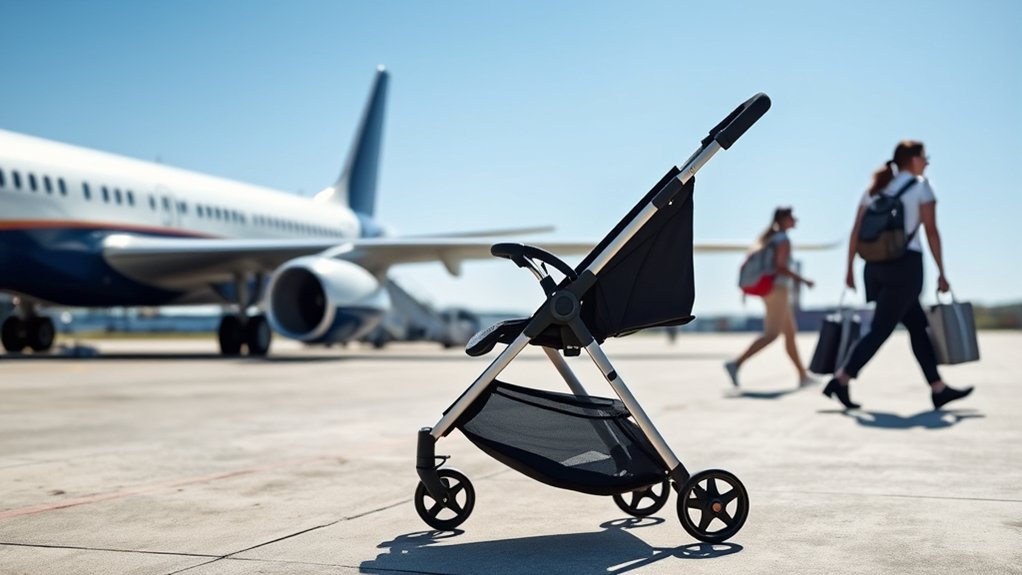
Usually, no. Most wagon strollers are too large for the aircraft cabin, even when folded.
To carry a stroller or wagon into the cabin, it must meet the airline’s carry-on size rules and fit in an approved storage area. The crew may also require it to be checked if the flight is full or if the item blocks an aisle, exit, or storage space.
A wagon may be accepted at the gate in some cases but still be placed in the aircraft’s cargo hold. Gate staff make the final decision based on:
- Folded dimensions
- Weight
- Available overhead-bin space
- Aircraft type
- Boarding conditions
- Safety around aisles and emergency exits
- The airline’s specific stroller policy
Do not assume that a wagon labeled “carry-on size” will be accepted in the cabin. The airline’s published dimensions matter more than the manufacturer’s marketing claim.
Overhead-bin storage
A small, fully folded wagon might fit in an overhead bin. Even then, it must not exceed the airline’s carry-on limits.
Most U.S. airlines use different limits for carry-on bags. Some allow slightly larger bags than others, and smaller regional aircraft may have less storage space. If the wagon does not fit easily, the airline may gate-check it.


Never force a wagon into an overhead bin. It could damage the bin, delay boarding, or prevent other travelers from storing bags safely.
Under-seat storage
A wagon stroller almost never fits under an airplane seat. Even compact models are usually too wide or too long once folded. Under-seat space is meant for small personal items, not full-size strollers.
How do airlines handle wagon strollers?
Airline policies differ, and many do not list “wagon stroller” as a separate category. Some airlines treat a foldable wagon as a stroller. Others may classify it as oversized baggage or require it to be checked at the ticket counter.
The safest approach is to look for the airline’s rules for:
- Strollers
- Stroller wagons
- Child equipment
- Gate-checked items
- Oversized baggage
Here is the general pattern used by major U.S. carriers:
| Situation | What usually happens |
|---|---|
| Small, folded wagon within carry-on limits | May be allowed in the cabin if space is available |
| Standard folding wagon | Usually gate-checked |
| Large or heavy wagon | May need ticket-counter or baggage-counter check-in |
| Non-folding wagon | Often treated as checked or oversized baggage |
| Wagon with a car-seat feature | The wagon is still usually treated as a stroller, not a certified aircraft seat |
| Wagon used for a child with a disability | Special assistance rules may apply; contact the airline before travel |
Policies can change. Confirm the rule with the airline before departure and again at the airport if the wagon is unusual in size or design.
Useful official policy pages include:
- American Airlines: Strollers and car seats
- Delta Air Lines: Traveling with children
- United Airlines: Children and infants
- Southwest Airlines: Family travel
These pages may use different terms and conditions. Read the policy for the airline operating your flight, not only the airline that sold the ticket.
Should you gate-check a wagon stroller or check it at the counter?
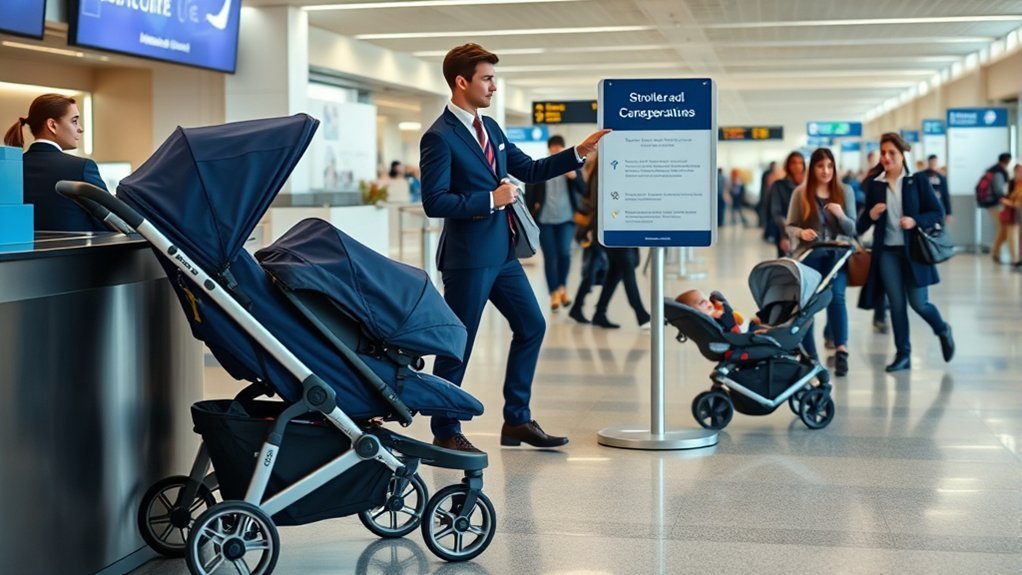
For most families, gate-checking is more convenient because you can use the wagon through the airport. You may be able to keep it until you reach the aircraft door, then collect it near the plane after landing.
However, gate-checking is not always available. An airline may require counter check-in when the wagon is:
- Too large to pass through the gate area
- Too heavy for staff to handle safely
- Unable to fold
- Packed in a large protective case
- Outside the airline’s stroller equipment rules
Ask the airline agent where the wagon will be returned after landing. Some airports return gate-checked items at the aircraft door. Others send them to the baggage claim area.
Gate-check process
- Ask at check-in. Confirm whether the wagon can go to the gate.
- Ask for a gate-check tag. Attach it to the wagon’s handle or frame.
- Remove loose items. Take out cups, toys, diaper bags, and detachable parts.
- Fold and secure the wagon. Use its latch, strap, or a separate tie if permitted.
- Bring a protective cover. A marked stroller bag can help reduce dirt and scratches.
- Leave it at the marked location. Staff may collect it at the jet bridge or aircraft door.
- Confirm the return point. Ask whether you should wait at the aircraft door after landing.


Do not leave valuables in the wagon. Gate-checked equipment can be moved by hand, vehicle, or conveyor system.

Is it free to check a wagon stroller?
Many U.S. airlines allow one stroller per child to be checked without a standard checked-bag fee. That does not guarantee that every wagon qualifies.
A large wagon may be subject to different rules if the airline classifies it as oversized baggage. Fees may also apply when the wagon is checked as regular luggage instead of child equipment.
Ask these questions before your trip:
- Is a stroller wagon included as a free child item?
- Must it be checked at the ticket counter?
- Is there a weight or size limit?
- Does a protective bag count as part of the stroller’s size?
- Will the wagon be returned at the gate or baggage claim?
- Does the rule apply to every passenger or only the child’s accompanying adult?
A policy that says “stroller” may not clearly include a four-wheel wagon. If the wording is unclear, contact the airline and keep the answer with your travel documents.

What should you look for in a wagon stroller for air travel?
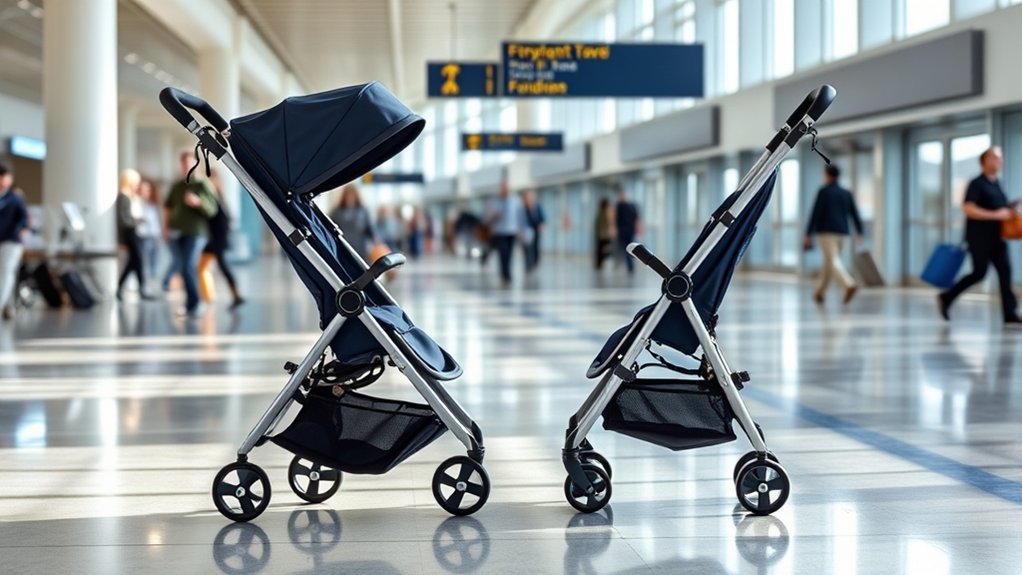
A travel-friendly wagon should fold quickly, stay closed, and be easy for one adult to move.
The most useful features are:
- A compact folded shape
- A built-in folding lock
- A clear weight rating
- A handle that remains accessible when folded
- Smooth wheels for airport floors
- A removable canopy or cup holder
- A visible luggage tag
- A sturdy, padded travel cover
- No loose parts that can fall off during handling
Measure the wagon when it is folded. Record the height, width, length, and weight. Do not rely only on the open size listed on the product page.
A wagon with a removable seat, canopy, or basket may become easier to check when those parts are removed. Keep small parts in a labeled bag so they do not get lost.
Can a child ride in the wagon at the airport?
Usually, yes, if the wagon is being used as a stroller and the airport permits it. Your child must come out during security screening and may need to come out at other points.
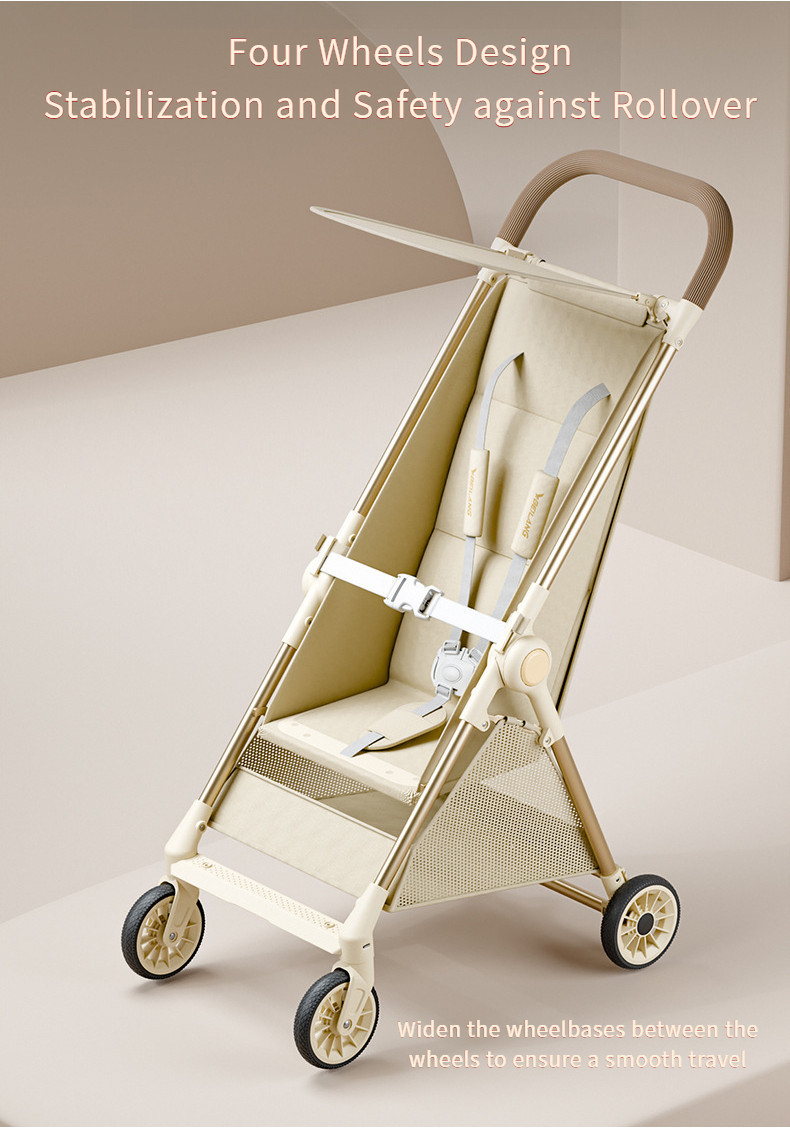
Do not let a child stand while the wagon is moving. Keep the safety harness fastened when the manufacturer requires it, and follow the wagon’s weight and age limits.
Avoid loading the wagon with heavy bags. A high load can make it harder to control and may cause the wagon to tip when turning or stopping.
How should you protect a wagon stroller when flying?
Use a strong, clearly labeled stroller travel bag if you plan to check the wagon. A bag will not prevent all damage, but it can help protect the fabric and keep loose parts together.
Before handing it over:
- Photograph the wagon from several sides.
- Photograph the wheels, handle, frame, and folding latch.
- Remove detachable accessories.
- Secure the folded frame.
- Add your name and phone number inside and outside the bag.
- Keep the receipt or proof of purchase if the wagon is new.
- Do not pack medication, passports, electronics, or fragile items inside.


Inspect the wagon before leaving the airport. If you find damage, report it to the airline’s baggage service desk before you leave. Keep the baggage tag and photographs.
Airlines may have different deadlines and limits for damage claims. Prompt reporting gives you the best chance of receiving instructions while the handling record is still available.

What if the airline refuses your wagon at the gate?
Stay calm and ask where the airline wants the wagon checked. A refusal at the gate does not always mean you cannot travel with it.
Possible reasons include:
- The wagon exceeds the airline’s published size or weight limits.
- The aircraft has limited storage.
- The wagon cannot be safely handled.
- The flight is full.
- The airline’s policy excludes wagon-style strollers.
- The item was not tagged correctly.
Ask the agent whether the wagon must go to the ticket counter, baggage counter, or aircraft hold. If you need the wagon for mobility or a disability-related reason, explain that clearly and request the airline’s assistance process.
Do not argue that TSA approved the wagon. TSA approval only addresses security screening. It does not override the airline’s baggage or cabin-storage rules.

Common mistakes when flying with a wagon stroller
The most common problems come from assuming that all strollers receive the same treatment.
Avoid these mistakes:
- Assuming every wagon is free to check: Large wagons may fall outside the airline’s free stroller allowance.
- Measuring the wagon while open: Airlines usually care about the folded size for storage.
- Packing loose items inside: Accessories can fall out or be removed during handling.
- Waiting until boarding to ask: An airline may require counter check-in.
- Using the wagon as a child restraint: A wagon is not automatically approved for use during flight.
- Leaving the travel bag at home: A bare wagon is more exposed to dirt and damage.
- Ignoring the operating carrier: A codeshare flight may follow the rules of the airline actually operating the aircraft.
- Assuming gate return is guaranteed: Some airports deliver gate-checked items to baggage claim.

Quick decision guide
Use this simple guide before leaving for the airport:
- Small and folded within carry-on limits: Ask whether it may go in the cabin, but be prepared to gate-check it.
- Regular folding wagon: Plan to gate-check it.
- Large, heavy, or rigid wagon: Plan to check it at the counter.
- Non-folding wagon: Confirm acceptance with the airline before travel.
- Wagon needed for medical or disability-related mobility: Contact the airline’s accessibility department before the flight.
- International itinerary: Check every airline and airport in the journey, since rules may differ outside the United States.
The best option depends on your child, airport layout, connection time, and the wagon’s size. A wagon can be useful for long walks through a large airport, but a compact stroller may be easier to check and retrieve.
Frequently asked questions
Can I bring a Radio Flyer wagon on a plane?
Usually, you can bring a Radio Flyer wagon to the airport, but the airline may require it to be checked. The exact result depends on the model’s folded size, weight, and the airline’s stroller policy. Confirm the rules before travel, especially for large models.
Can a stroller wagon be gate-checked?
Often, yes. Many airlines allow stroller-style equipment to be gate-checked, but some limit the size or type of wagon they accept. Ask for a gate-check tag and confirm where the wagon will be returned after landing.
Can I bring a wagon stroller for a child under 2?
Yes, you can usually use a wagon stroller in the airport for a child under 2. The child must leave the wagon during TSA screening when instructed. On the plane, the child must follow the airline’s infant travel rules and cannot use the wagon as an aircraft seat.
Does a wagon stroller count as a carry-on bag?
It may count as a carry-on if the airline allows it in the cabin and it fits the published carry-on limits. If the airline treats it as free child equipment, it may not count against your regular carry-on allowance. Ask the operating airline for a clear answer.


Can I check diapers and baby gear inside the wagon?
Do not assume that items packed inside a checked wagon are protected or permitted. Remove valuables, medication, documents, and fragile goods. Pack only items that you can safely lose or that the airline specifically allows.
Conclusion
You can usually bring a wagon stroller on a U.S. flight, but you should expect to gate-check it unless it is small enough for the cabin and the airline approves it. TSA screening and airline baggage acceptance are separate issues.
Before your trip, measure the folded wagon, check the operating airline’s stroller policy, ask whether wagon strollers qualify for free checking, and confirm where the item will be returned. A travel cover, clear labels, and photos can also make the process easier.
The safest next step is to contact the airline with the wagon’s exact brand, model, folded dimensions, and weight.
